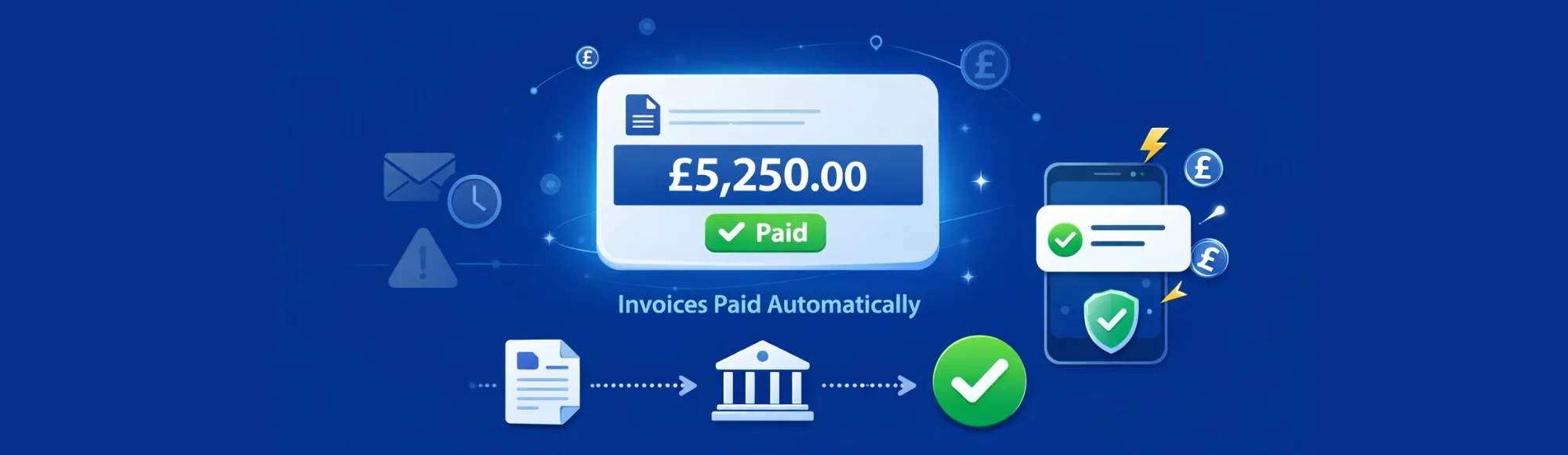
Invoicing automation isn’t about generating invoices faster. That part’s easy. Any accounting platform can create an invoice in seconds.
The hard part is getting them paid.
You send an invoice. You wait. You send a reminder. You wait again. You call. You email. You reconcile mismatched payments. You chase missing references.
This isn’t an invoicing problem. It’s a payment collection problem.
Real invoicing automation means automating how invoices get paid-not just how they’re created. That’s where payment APIs fit.
This article explains what invoicing automation actually means. Where invoice workflows break. How payment APIs fix the collection problem. And what platforms need to look for in invoice payment automation infrastructure.
What Most People Mean by Invoicing Automation (and Why It’s Incomplete)
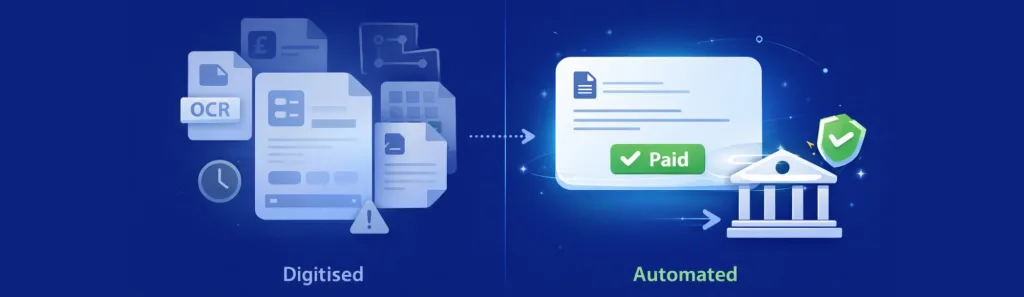
When people talk about invoicing automation, they usually mean:
- OCR scanning of PDF invoices
- Approval workflow tools
- Invoice generation software
- Auto-categorisation of expenses
These are useful features. But they don’t solve the payment collection problem.
A platform can generate thousands of invoices automatically. But if those invoices still require manual bank transfers, email reminders, and reconciliation spreadsheets-the workflow isn’t automated. It’s just digitised.
Real automation happens when invoice payment collection runs without human intervention. When customers receive an invoice and can pay instantly. When payments arrive with correct references. When reconciliation happens automatically.
That’s what invoice payment automation actually delivers.
From Our Experience: Where Invoice Workflows Break
We work with SaaS platforms, accounting tools, and marketplaces that send thousands of invoices monthly. The same bottlenecks appear across every vertical.
Late payments become the default Customers receive an invoice. They open their banking app. They manually enter account details. They forget the payment reference. They delay payment until next week. The invoice sits unpaid for 30, 60, 90 days.
Chasing becomes a full-time job Operations teams spend hours sending payment reminders. Finance teams track who paid, who didn’t, and why. Support handles “I already paid” tickets when references don’t match.
Reconciliation takes days Payments arrive with wrong references, missing customer IDs, or partial amounts. Someone has to manually match bank statements to invoices. Every month.
Card fees add up Platforms that accept card payments for invoices typically lose 1.5-2.9% per transaction to card networks. At scale, these fees become a significant operational cost.
These aren’t edge cases. They’re standard operating procedure for platforms still relying on manual bank transfers or card payments for invoicing and payroll.
How Does API-Based Invoicing Automation Work?
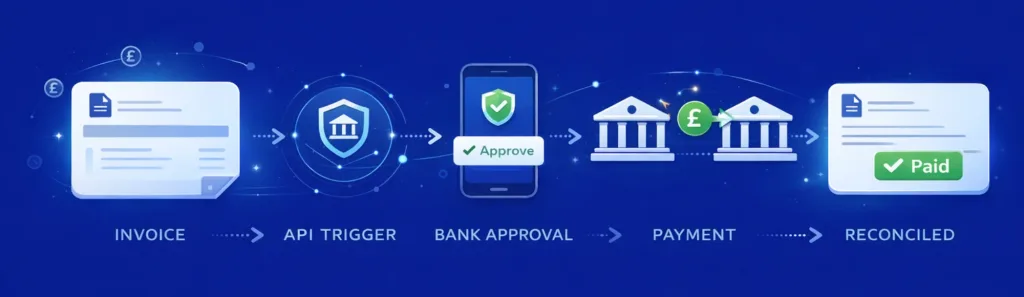
Invoice payment automation uses Open Banking APIs to trigger payments directly from customer bank accounts. No manual transfers. No card fees. No missing references.
Here’s how it works in practice:
Pay by invoice links When your platform generates an invoice, it includes a payment link powered by Open Banking. The customer clicks the link. Authorises the payment from their bank. The payment processes instantly with the correct invoice reference attached.
Request to Pay flows Your platform sends a Request to Pay via API. The customer receives a notification in their banking app. They approve the payment. Your platform gets real-time confirmation. The invoice is marked and paid automatically.
Real-time payment confirmation Unlike bank transfers that take hours to confirm, Open Banking payments return instant confirmation. Your platform knows the invoice is paid within seconds-not days.
Automatic reconciliation Every payment includes structured data: invoice ID, customer reference, amount, timestamp. Your platform matches payments to invoices automatically. No manual reconciliation required.
This is how automated invoice processing works when payment collection is built into the workflow-not bolted on afterward.
What Changes After Automating Invoice Payments?
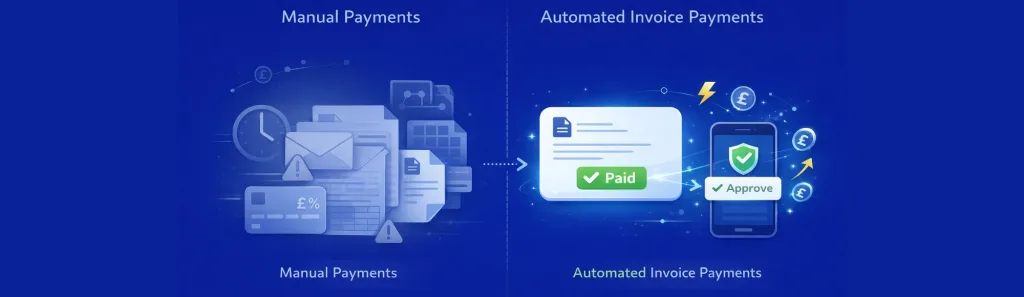
Platforms that move from manual bank transfers to API-based invoice payment automation see immediate operational improvements.
Faster cash flow Invoices get paid within hours instead of weeks. Customers don’t need to log into banking portals or remember account details. They click a link and approve.
Fewer manual chasers When payments happen automatically, finance teams stop sending reminder emails. Operations teams stop tracking who paid and who didn’t. Support stops handling reconciliation queries.
Better reconciliation accuracy Payments arrive with correct references every time. Bank statements match invoice records automatically. Month-end close takes hours instead of days.
Higher payment completion rates Pay by invoice flows reduce friction. Customers approve payments in their banking app without typing account numbers or reference codes. Fewer steps means fewer drop-offs.
Lower transaction costs Open Banking payments cost a fraction of card fees. Card processing typically charges 1.5-2.9% per transaction. Platforms processing high invoice volumes can reduce payment costs significantly by avoiding card networks.
What Should You Look For in an Invoicing Automation?
If your platform is evaluating payment APIs to automate invoice collection, these are the critical capabilities:
UK bank coverage Your customers bank with dozens of different providers. The API needs to support 99% of UK banks-not just the major ones.
REST API with webhooks Your development team needs clean API documentation and webhook support for real-time payment notifications. No polling. No batch processing.
Usage-based pricing Platforms serving SMBs need pricing that scales with transaction volume. Not fixed enterprise contracts that lock you into commitments before you’ve validated product-market fit.
Sandbox environment Your team should be able to test payment flows, error handling, and reconciliation logic before going live with real customer payments.
3-5 weeks of onboarding assistance Payment API integration isn’t plug-and-play. Look for providers offering hands-on technical support during implementation.
Pay by invoice and Request to Pay Different use cases need different payment triggers. Invoicing platforms need both one-click payment links and push-notification payment requests.
Who Is This For? Who Isn’t This For?
This is for:
- SaaS platforms sending recurring invoices
- Accounting tools handling client billing
- Marketplaces managing vendor payouts
- Vertical software with invoicing features
- B2B platforms tired of chasing payments
This isn’t for:
- Consumer apps with impulse purchases
- Platforms primarily using subscriptions
- Businesses focused on international payments
- Companies needing invoice creation software (this is about payment collection, not invoice generation)
How Does Finexer Enable Invoicing Automation?
Finexer provides the Open Banking payment infrastructure that platforms use to automate invoice payment collection.
We handle:
- Bank connectivity across 99% of UK banks
- Pay by invoice link generation
- Request to Pay API
- Real-time payment confirmation
- Webhook notifications
- FCA-authorised compliance
Your platform handles:
- Invoice creation
- Customer communication
- Reconciliation logic
- Business rules
Finexer isn’t invoicing software. We’re the payment layer that makes invoice payment automation possible.
Platforms use our APIs to move from manual bank transfers to instant, automated invoice payments. Without card fees. Without chasing. Without reconciliation delays.
If your platform is still asking customers to manually transfer payment for invoices, that’s the operational bottleneck Finexer removes.
We work with platforms making this transition because we’ve seen how much friction it eliminates. Not just for customers. But for finance teams, operations teams, and product teams managing batch payment processing at scale.
What I Feel About Invoicing Automation
Invoicing automation has been misunderstood for years. Most tools focus on creating invoices faster or automating approval workflows. Those features matter. But they don’t solve the payment collection problem.
I’ve watched platforms spend thousands on invoicing software, only to realise their customers still pay manually. Still forget payment references. Still delay for weeks.
The breakthrough happens when payment collection is automated-not just invoice creation.
That’s why payment APIs matter. They remove the step where invoices sit unpaid waiting for someone to manually transfer funds. They eliminate the chasing. The reconciliation delays. The missing references.
When platforms integrate invoice payment automation properly, the entire billing experience changes. Customers pay faster. Finance teams work less. Cash flow improves.
That’s what invoicing automation should mean. And that’s what payment APIs actually deliver.
What is invoicing automation?
Invoicing automation is the process of automating invoice payment collection using APIs, eliminating manual bank transfers, chasing, and reconciliation delays.
What is invoice payment automation?
Invoice payment automation uses Open Banking APIs to trigger payments directly from customer bank accounts when invoices are issued, with real-time confirmation and automatic reconciliation.
How does pay by invoice work?
Pay by invoice uses Open Banking payment links embedded in invoices. Customers click the link, authorise payment from their bank, and the invoice is marked paid automatically with correct references.
Does automated invoice processing replace invoicing software?
No. Automated invoice processing focuses on payment collection. You still need invoicing software to create invoices-payment APIs to handle how those invoices get paid.
How long does it take to integrate invoicing automation APIs?
Most platforms complete integration in 3-5 weeks with technical support from the API provider, including sandbox testing and production deployment.
Ready to Automate Invoice Payments?
See how Finexer’s Open Banking APIs eliminate manual payment chasing and speed up invoice collection.
Book Demo NowAbout the Author

Ravi Ranjan
Ravi Ranjan is Co founder & CEO of Finexer