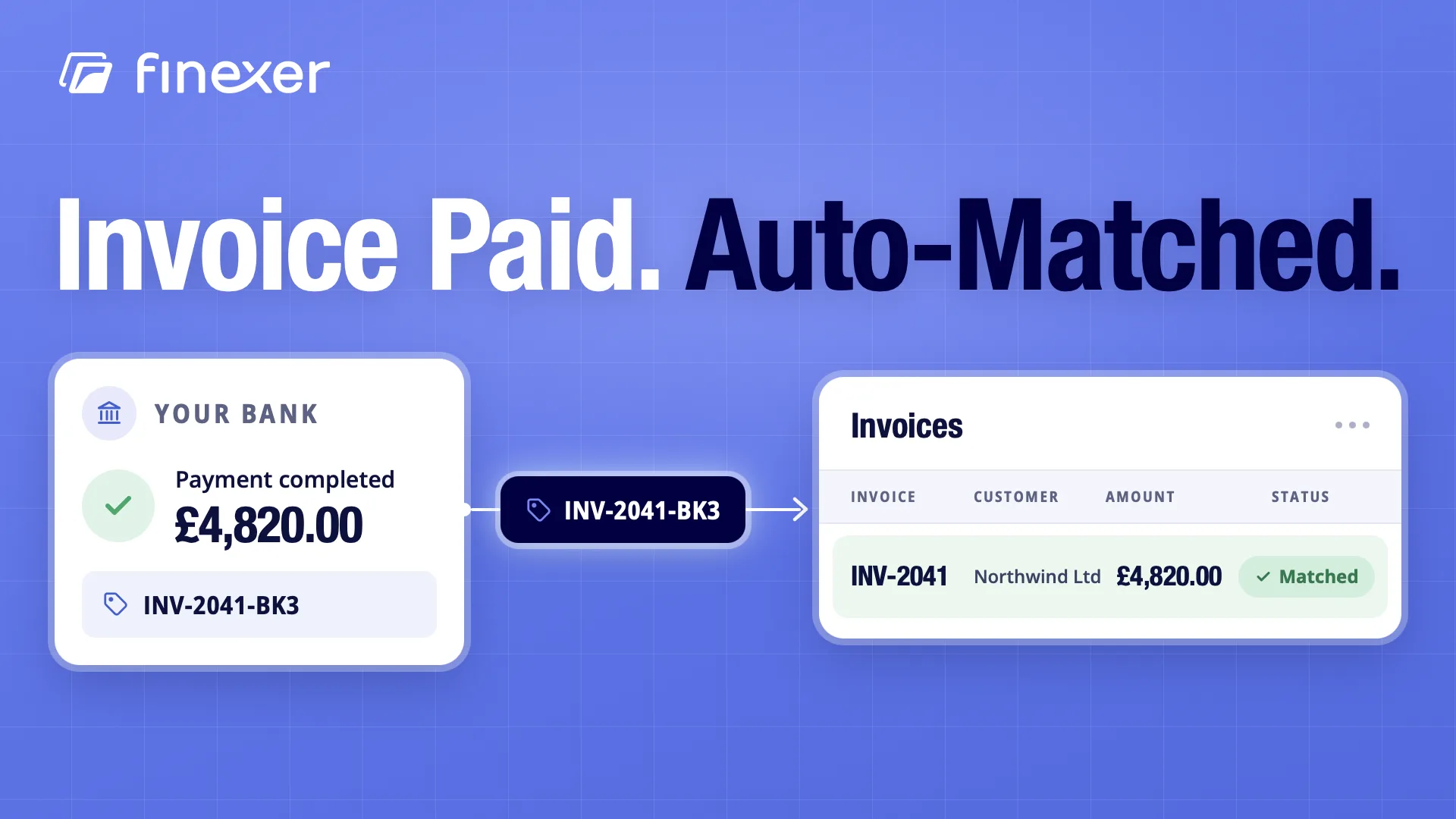
Invoice reconciliation starts where most finance teams assume the work ends. Money landing in the account is the easy part. Knowing which invoice it settled is the actual problem, and this video walks the full chain from invoice created through to payment matched.
The sequence runs like this: an invoice is created on the platform, a payment request goes out carrying a unique reference attached at the source, the payer authorises at their own bank using that reference, a webhook confirms the payment has reached the account, and that same reference lets the platform match the payment back to the original invoice.
The video also covers what happens when a payment does not match cleanly:
- Partial payments
- Overpayments
- Expired payment requests
- Payments that fail outright
Each of these lands in an exception queue rather than being forced into a match. Exceptions are normal in any real finance workflow, and handling them openly is what separates working reconciliation from a demo reel.
Paid and reconciled are not the same thing. Money arriving tells you something happened. It does not tell you which invoice it settled. Finexer’s Invoice Reconciliation Tracker handles the payment initiation and the banking data behind it, with status on every individual payment. The platform still owns the matching, built on data it can trust.
For the full written breakdown, read Invoice Tracking: Open Banking Status from Sent to Matched.
FCA-Authorised · FRN 925695
Coverage across almost all UK banks · high street, challenger, and business accounts
Direct one-to-one bank connection · multiple data pulls and refreshes
3-5 weeks onboarding support · included with every integration
See the Invoice Reconciliation Tracker
Payment initiation, banking data and per-payment status, feeding the matching engine your platform already owns.
Book a demoExplore with AI