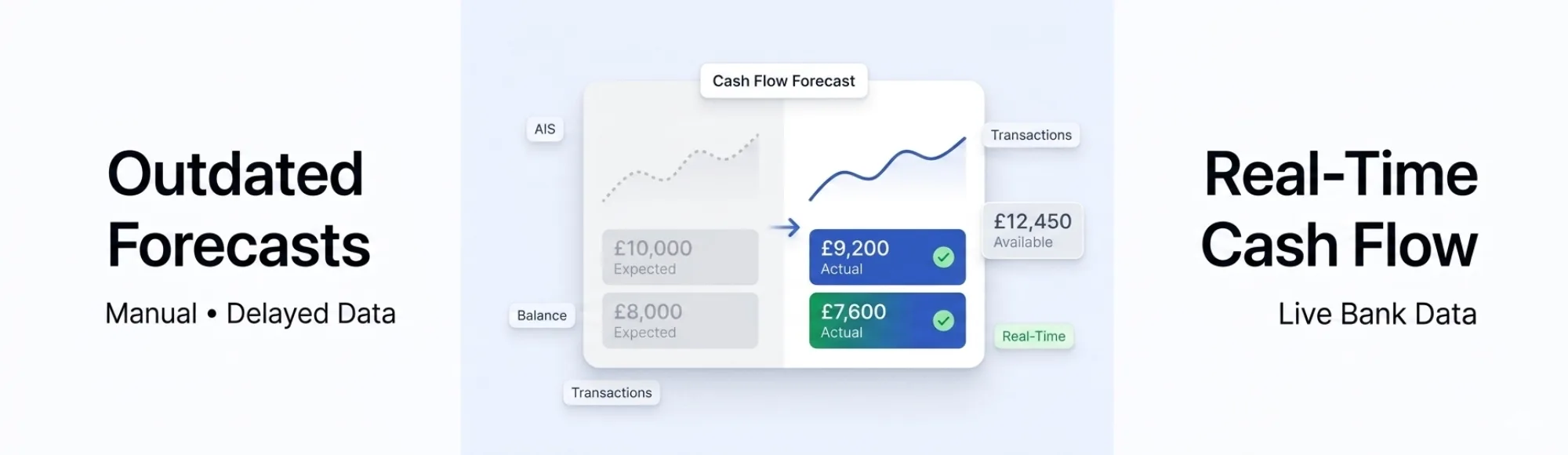
Real-time bank data. Accurate forecasts. Better decisions.
Bank transaction data infrastructure for startup cash flow forecasting.
A cash flow forecast for startup business estimates future cash inflows and outflows to maintain liquidity and plan for upcoming financial obligations.
Accurate cash flow forecast financial planning depends on one thing above all: the quality of the underlying data.
A forecast built on estimates and manual bank statement reviews is only as reliable as its last update. For startups managing tight cash positions, that lag between actual and forecast creates real exposure.
At Finexer, I work with accounting SaaS platforms and startup finance tools that build cash flow features. The forecasting problem is almost always a data problem, not a model problem.
TL;DR
A cash flow forecast for startup business tracks expected inflows – revenue, funding, grants – and outflows – salaries, rent, VAT, supplier payments – across a rolling 12-month period. The forecast becomes more accurate when built on real-time bank transaction data rather than manual inputs or delayed statements. Accounting SaaS, ERP, and startup finance platforms that feed forecasts from live bank data deliver more reliable cash flow forecast financial planning than tools relying on manual updates.
Key Takeaways
What does a cash flow forecast for startup business include?
A cash flow forecast covers three elements:
- Cash inflows – revenue received (not invoiced), funding drawdowns, grants, interest
- Cash outflows – operating costs, payroll, VAT to HMRC, supplier payments, capital expenditure
- Opening and closing balances – the closing balance each month becomes the opening balance the next
What makes cash flow forecast financial planning accurate?
Accuracy depends on how current the underlying financial data is. A forecast updated from real-time bank transaction data reflects actual cash movement. A forecast updated from month-end bank statements or manual entries is already outdated when it is built.
Why do startups struggle with cash flow forecasting?
Three common gaps:
- Delayed data – bank statements or accounting records updated weekly or monthly rather than continuously
- Manual entry errors – transactions entered incorrectly or missed between update cycles
- Incomplete visibility – forecasts built without full visibility of all bank accounts the business operates
What Does a Cash Flow Forecast for Startup Business Actually Require?
What Are the Components of an Accurate Startup Cash Flow Forecast?
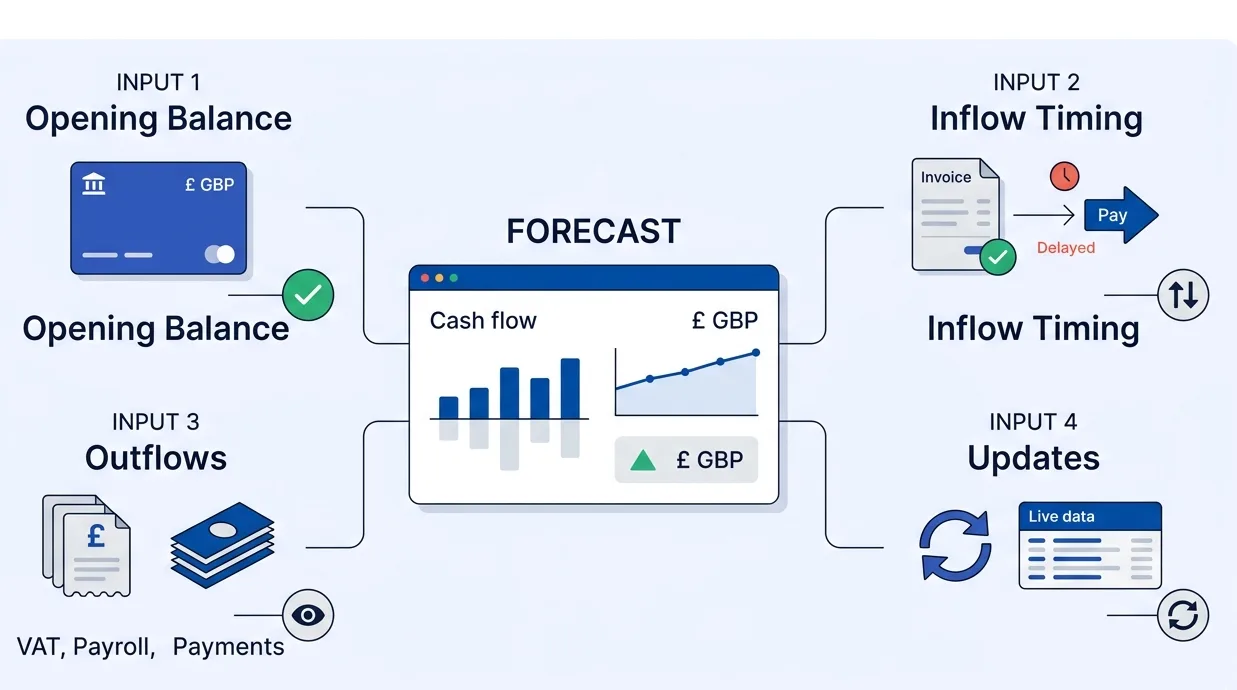
A reliable cash flow forecast for startup business needs four inputs working together:
- Current opening bank balance, confirmed from actual bank data
- Accurate inflow timing – when cash actually lands, not when it is invoiced
- Complete outflow visibility – all fixed and variable costs including VAT, PAYE, and loan repayments
- Regular updates – ideally continuous, not monthly
The most common point of failure is inflow timing. UK startups that invoice on 30-day terms often build forecasts assuming payment on the invoice date. Actual payment frequently arrives later – and the gap creates a forecast shortfall that was not visible until the funds did not arrive.
Cash flow forecasting for UK platforms – how data quality drives accuracy covers how bank data integration changes forecast reliability for accounting SaaS and startup finance tools.
“Cash flow forecast financial planning for startups is not about building a better model. It is about feeding the model better data. A spreadsheet updated daily with real bank transactions outperforms an automated tool fed from monthly imports.” – Ravi, Finexer
Where Does Traditional Cash Flow Forecasting Struggle?
What Are the Limitations of Manual Cash Flow Forecast Approaches?
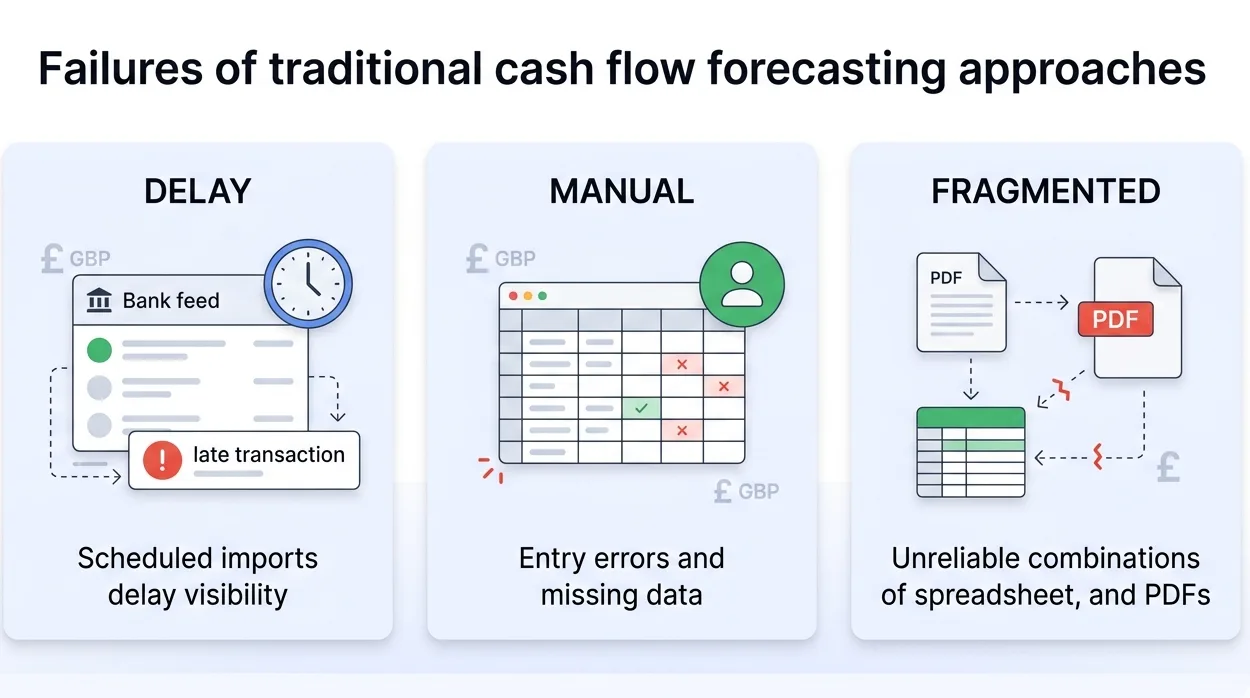
Traditional approaches to cash flow forecast financial planning share a common weakness: the data is old by the time it is used.
Delayed bank feeds:
- Scheduled imports update once daily or once weekly
- Transactions processed on Tuesday may not appear in the forecast until Friday
- High-volume weeks create larger gaps between actual and forecast position
Manual data entry:
- Transactions entered manually are subject to timing errors and misclassification
- Missed entries create forecast drift that compounds over a quarter
- Corrections require retrospective adjustments that distort trend visibility
Spreadsheet-based tracking:
- Manual updates against bank statement PDFs create reconciliation gaps
- No automatic categorisation – every transaction requires human classification
- Updating bank balance from a PDF statement is already one step behind real position
| Approach | Data Frequency | Forecast Accuracy | Manual Overhead |
|---|---|---|---|
| Manual bank statement | Monthly | Low – always lagging | High |
| Scheduled bank feed import | Daily or weekly | Moderate – gap between updates | Medium |
| Real-time bank data via AIS | Continuous (per transaction) | High – reflects actual position | Low |
Accurate cash flow forecasting for UK businesses in 2026 covers how bank data integration changes forecast reliability and what accounting platforms need to deliver continuous cash flow visibility.
How Does Real-Time Bank Data Improve Cash Flow Forecast Financial Planning?
What Changes When Forecasts Are Built on Live Bank Transaction Data?
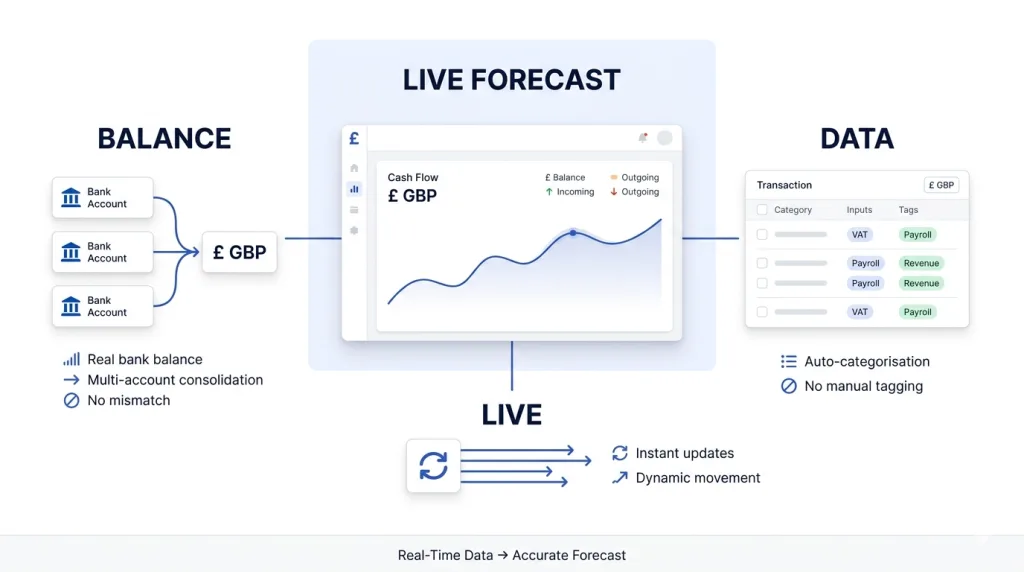
When a cash flow forecast for startup business is built on real-time bank transaction data rather than manual inputs, three things change:
Opening balance accuracy:
- The forecast starts from the confirmed current bank balance – not last month’s statement figure
- Multi-account balances are consolidated automatically – no manual cross-account aggregation
Inflow and outflow categorisation:
- Transactions arrive with category codes already applied
- Revenue, payroll, VAT, and supplier payments are classified at source – not manually tagged after the fact
- Categorisation errors that distort forecasts are reduced
Continuous update:
- Each transaction updates the running balance in real time
- Forecast variance is visible immediately when actual cash movement differs from projection
- No end-of-week reconciliation required to bring the forecast current
Cash flow automation for accounting and startup finance platforms covers how automated bank data feeds replace manual inputs in cash flow forecasting workflows.
How Does Finexer Support Cash Flow Forecast Financial Planning?
What Does Finexer’s AIS Provide for Startup Cash Flow Forecasting?
Accurate cash flow forecast financial planning requires a continuous, structured source of bank transaction data. For a cash flow forecast for startup business to reflect real-time position, the data feeding it must be current. Finexer’s FCA-authorised AIS provides that data layer for accounting SaaS, ERP, and startup finance platforms.
Finexer does not provide forecasting models or replace accounting software. It provides the bank transaction data that feeds the forecast.
- Real-time webhooks – each transaction delivered at occurrence, opening balance always current
- Category codes at source – revenue, payroll, VAT, and supplier transactions classified before reaching the platform
- Merchant IDs per transaction – consistent categorisation across payment methods
- Up to 7 years of transaction history – historical data depth for trend-based projections
- Multi-account access in one consent flow – full cash position across all business bank accounts
- Structured JSON – consistent schema across almost all major UK banks
- 99% UK bank coverage – high street, challenger, and business accounts
- Usage-based pricing, 3-5 weeks to production with active onboarding support
Better cash flow management with Open Banking – 2026 guide covers how Finexer’s AIS integrates with accounting and cash flow platforms to replace manual bank data collection.
“The value of Finexer’s AIS for cash flow forecasting is not in the forecast itself. It is in removing the data gap between the bank and the platform. When that gap closes, the forecast stops lagging behind reality.” – Ravi, Finexer
What I Feel
Cash flow forecasting gets treated as a modelling problem.
Better models, more scenarios, more sophisticated projections.
But a sophisticated projection built on data that is three days old is less useful than a simple projection built on yesterday’s actual transactions.
The data problem is simpler to solve than the model problem – and it delivers more immediate improvement to cash flow forecast financial planning accuracy.
Common Use Cases
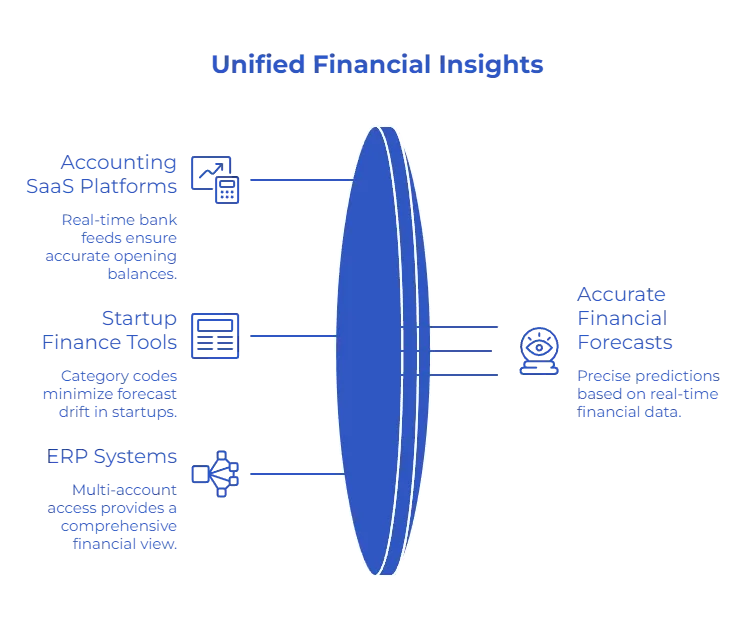
Accounting SaaS Platforms
Real-time AIS bank feeds replace scheduled imports, ensuring the opening balance in every client forecast reflects the actual confirmed bank position rather than the last import cycle.
Startup Finance Tools
Category codes at source reduce the manual classification step that introduces forecast drift. Revenue, VAT, and payroll are correctly categorised before the transaction reaches the forecasting model.
ERP Systems
Multi-account access in a single consent flow consolidates cash positions across all business accounts. Forecasts reflect the full financial picture – not a subset of accounts manually tracked.
How do you build a cash flow forecast for startup business?
Build a startup cash flow forecast by listing expected cash inflows per month – revenue, funding, grants – and outflows – salaries, rent, VAT, supplier payments. Calculate net cash flow per period and carry the closing balance forward as the next opening balance. Update it continuously using real bank transaction data, not monthly statement reviews.
How often should a startup update its cash flow forecast?
Startups should update their cash flow forecast as frequently as their data allows. Monthly updates against bank statements are a minimum – but continuous updates from real-time bank transaction data are significantly more reliable. Each new transaction changes the actual cash position, and forecasts that do not reflect current balances accumulate error over time.
What is the difference between a cash flow forecast and a profit and loss statement?
A cash flow forecast tracks when cash physically enters and leaves the bank account. A profit and loss statement records revenue and expenses when they occur, regardless of when cash moves. For startups managing liquidity, the cash flow forecast is the more operationally critical document – it shows when money is actually available, not when it was earned.
Build accurate cash flow forecasting on real-time bank transaction data from Finexer’s FCA-authorised AIS.
About the Author

Ravi Ranjan
Ravi Ranjan is Co founder & CEO of Finexer