Category: Accounting & ERP
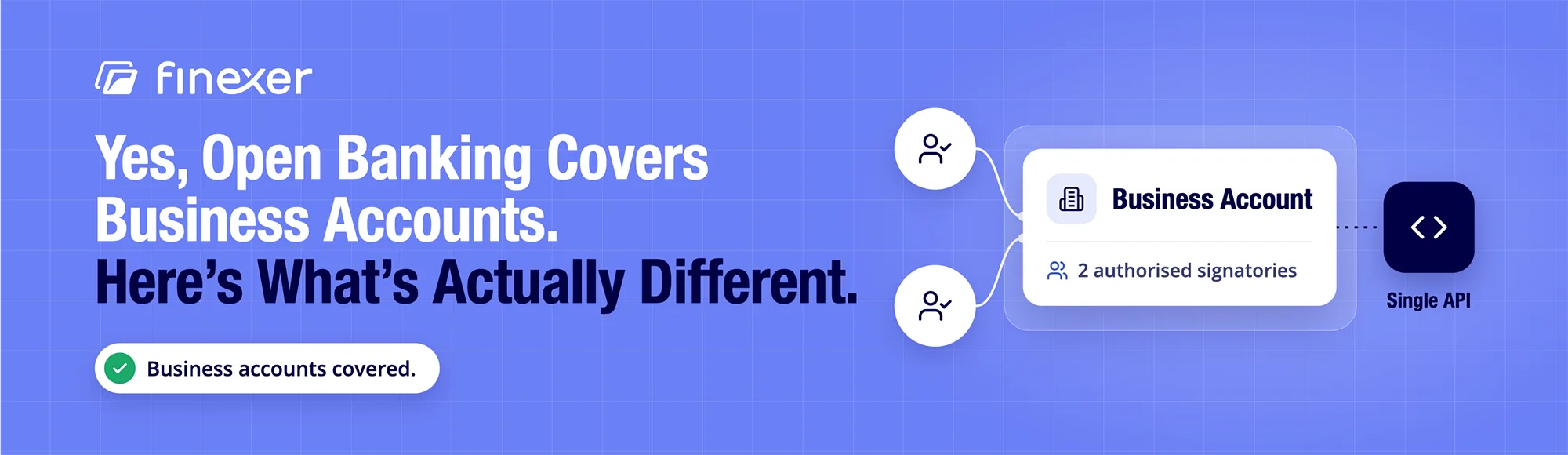
Open Banking for Business Accounts: Complete UK Guide
Open banking for business accounts works across UK banks today, but coverage and consent rules differ from personal accounts. This guide covers signatory-based consent, real business account coverage, what access unlocks for platforms, and how Finexer handles business accounts through the same FCA-authorised integration used for personal ones.
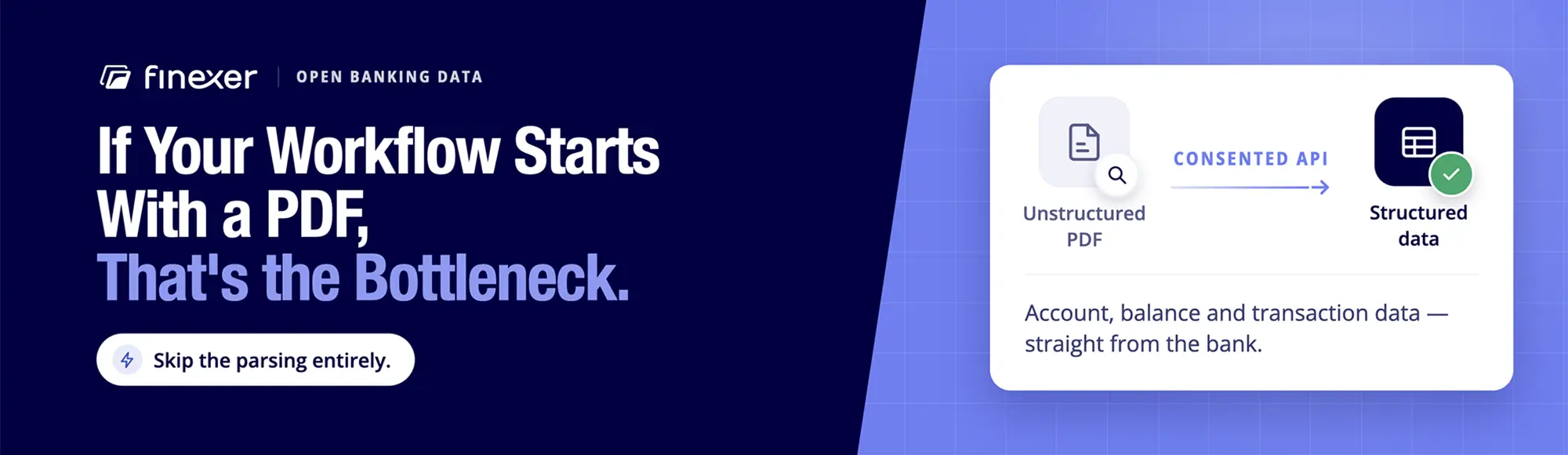
Extract Data From Bank Statements: Best UK Methods
Extract data from bank statements without turning finance operations into a document-processing exercise. Comparing manual entry, CSV exports, PDF parsing, OCR and consented Open Banking access for bank statements, with practical guidance on accuracy, freshness, audit trails, data quality and direct banking data, makes better sense for UK accounting and platform workflows at scale.
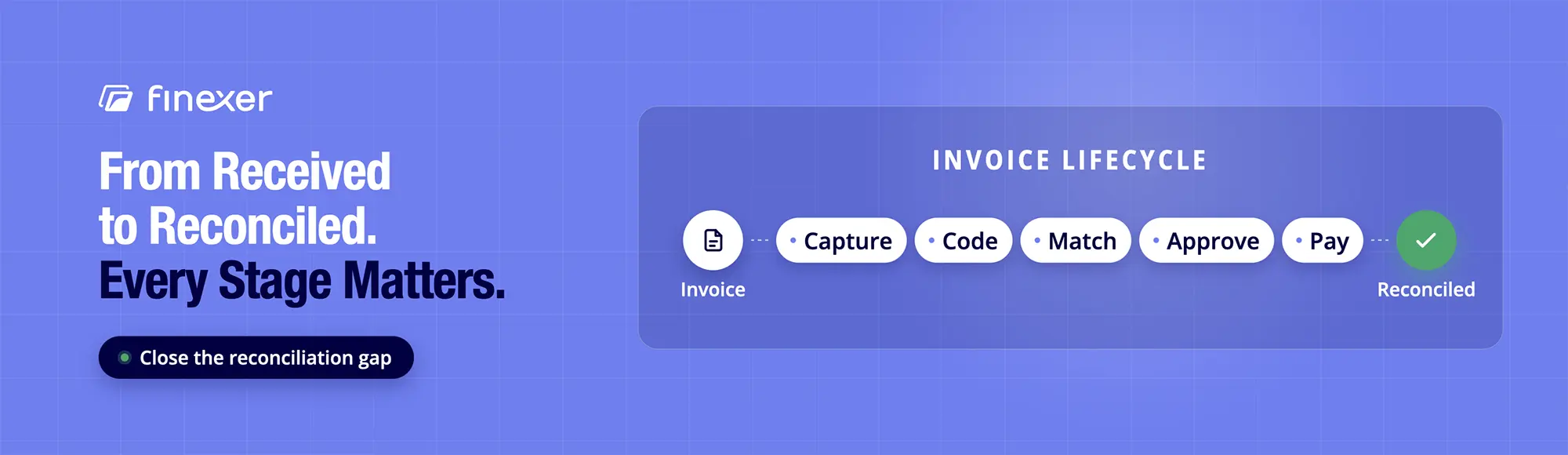
Invoice Processing: Complete UK Guide for 2026
Modern invoice processing turns received billing documents into approved, settled transactions. Understanding invoice processing in accounts payable requires evaluating data extraction, matching workflows and invoice processing solutions. By connecting workflow platforms to live banking data, finance teams eliminate manual keying while bridging the operational gap between payment execution and bank reconciliation.
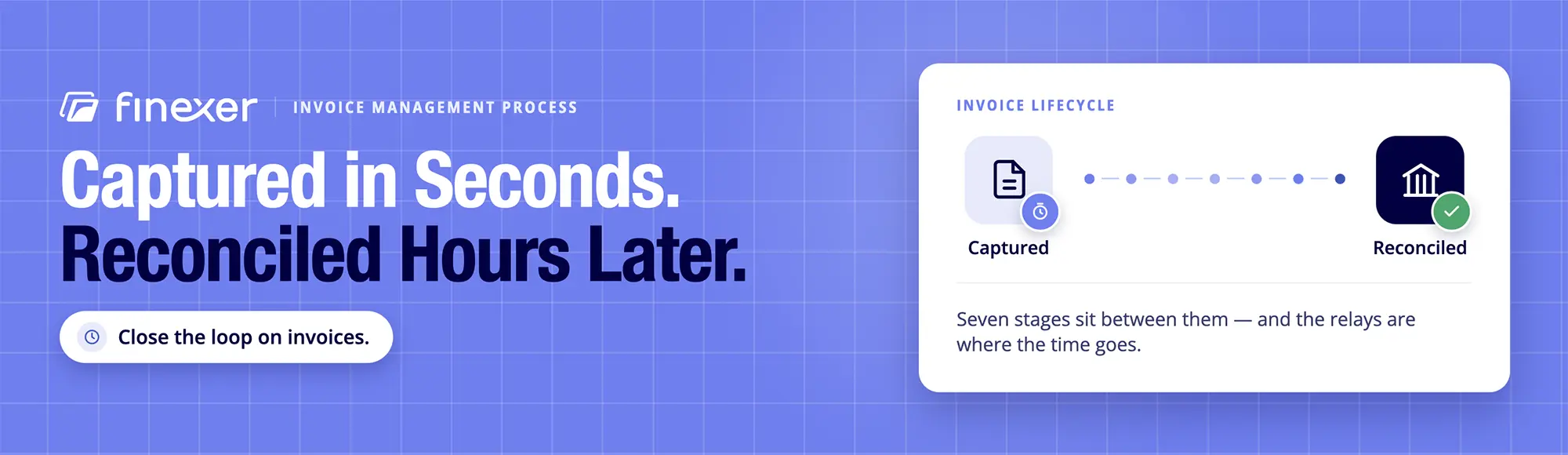
Invoice Management Process: From Invoice Receipt to Reconciliation
An invoice management process takes an invoice from receipt through coding, matching, approval, payment and reconciliation. This article shows where invoice process automation can remove repetitive work, where finance teams still need controls, how to measure the workflow and how real-time banking data and payment references can connect invoices with the transactions that settle them.

Rent Reconciliation: Why Matching Money to Tenancies Is Harder Than It Sounds
Rent reconciliation matches money received against rent due per tenancy, so arrears show up immediately rather than at month end. This guide covers why matching breaks down in practice, what makes it reliable, and how rental checks and a rental reference check fit into tenant screening separately, entirely apart from being confused with reconciliation itself.

Screen Scraping: Why UK Firms Must Move to APIs
Screen scraping is under direct pressure after HMRC’s 2026 policy update reaffirmed that browser automation and robotic process automation breach Government Gateway terms. This guide explains what screen scraping is, what HMRC actually said, why regulated APIs already replaced it in banking, and what accounting platforms should audit in their stack now.

Reconciliation of Payments: The Complete UK Guide for Finance Teams and Platforms
Reconciliation of payments confirms that money recorded in your books has actually moved through the bank, but payment reconciliation still breaks more often than most UK finance teams openly admit. This guide explains what a bank reconciliation statement shows, why matching fails, what makes it solvable, and how platforms build dependable reconciliation of payments today.

Account Holder Name Check: How UK Verification Actually Works
An account holder name check confirms whose name actually sits on a bank account before you pay it. This guide explains how to check bank account holder name details against the bank record, what full match, close match, and no match mean, and where bank account verification belongs in an individual or business payment process.

Rent Affordability Check: Verify Tenants with Bank-Verified Data
A rent affordability check no longer has to rely on payslips alone. Learn how bank-verified income strengthens every affordability check rent workflow, reduces fraud, shortens verification times and gives letting agents greater confidence when assessing tenants. Discover why Open Banking is reshaping tenant referencing across the UK property market today.

Bookkeeping Automation Software in the UK: What Actually Powers It
Compare bookkeeping automation software with manual bookkeeping to see how OCR receipt capture, bank-feed reconciliation and MTD compliance reduce repetitive work. Learn why accounting process automation increasingly depends on reliable bank data, helping UK businesses spend less time on admin and more time running their business with confidence.
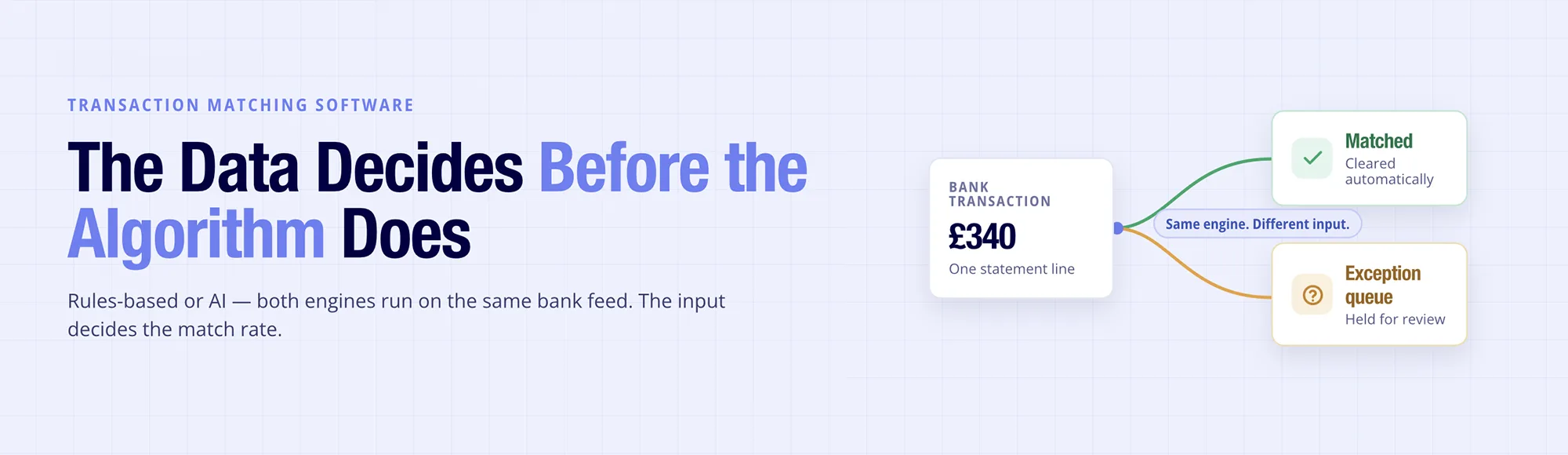
Why AI Transaction Matching Still Fails Without Structured Bank Data
Transaction matching software fails on data before it fails on logic. This technical explainer covers rules-based versus AI matching, why partial payments and batches break deterministic engines, the clean-data assumption enterprise close tools make, and why fixing the bank-data layer lifts every matching engine on your shortlist at once.
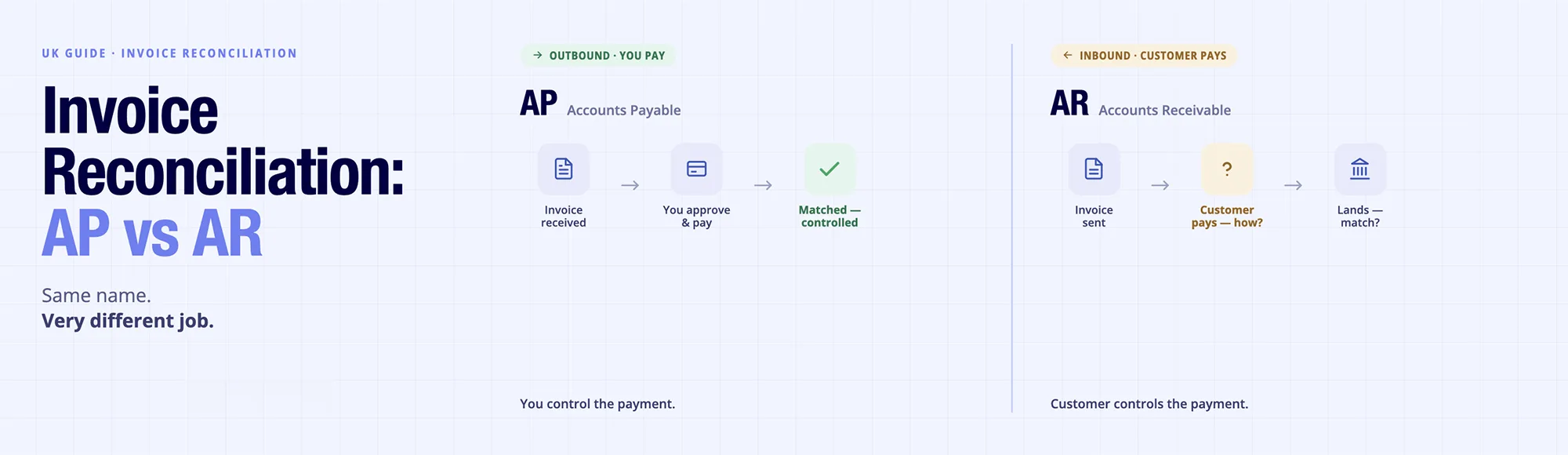
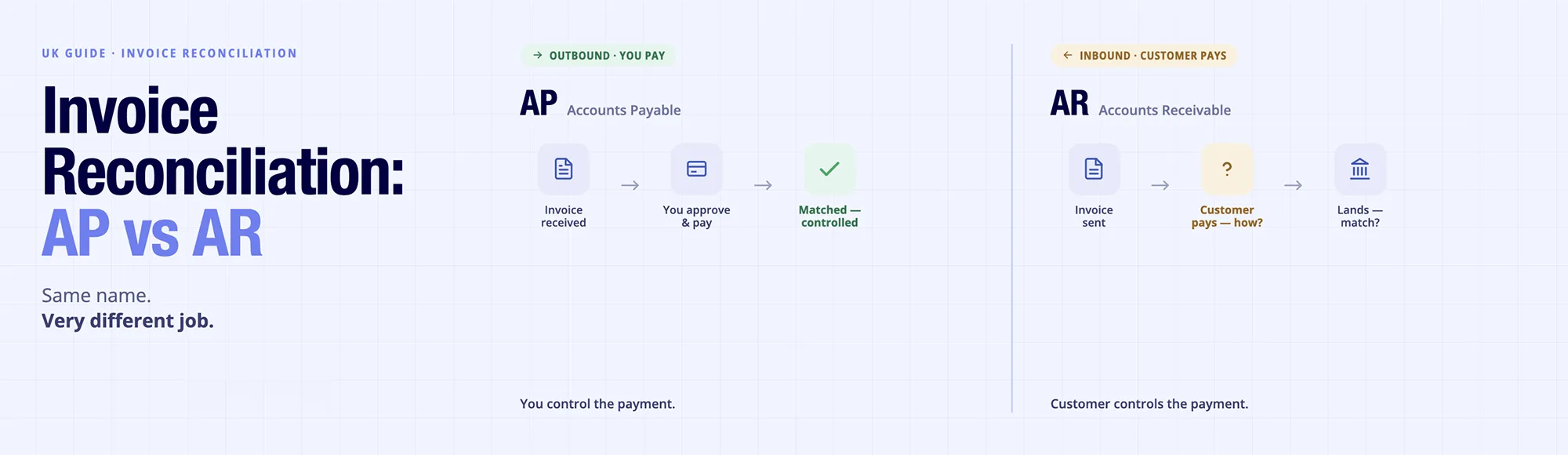
Why Invoice Reconciliation Still Breaks in Modern Finance Workflows
Invoice reconciliation covers two different jobs: checking supplier invoices before you pay them (AP) and matching incoming payments to the invoices you’ve issued (AR). This UK guide explains both sides, the matching methods involved, and a step-by-step process for reconciling invoices accurately with current government data and the 2026 MTD context.
Automated Bank Reconciliation: ROI Calculator (UK)
Automated bank reconciliation ROI depends on transaction volume, not firm size. This guide runs the hours-saved maths across three tiers of client load, compares manual matching against automatic bank reconciliation and shows why MTD for ITSA’s quarterly cycle makes reconciliation automation a 2026 necessity rather than a nice-to-have for UK accounting firms.
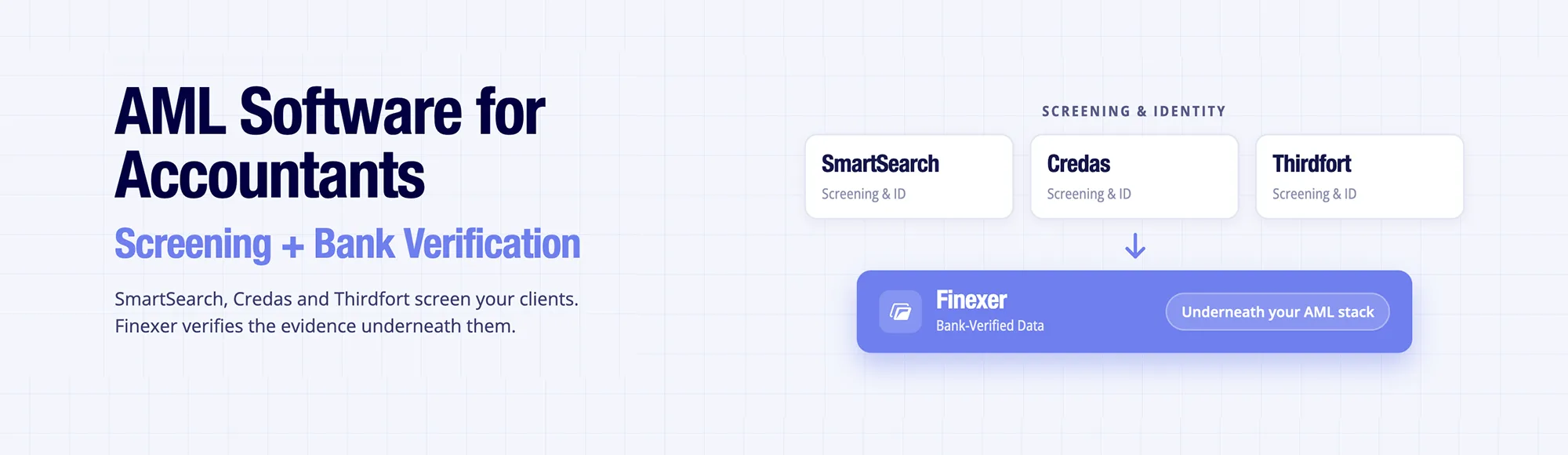
AML Software for Accountants: Transform Compliance with Bank-Verified Data
Choosing AML software for accountants means comparing SmartSearch, Credas and Thirdfort on sanctions and PEP screening, then deciding whether bank-verified data should sit underneath your compliance stack. This guide covers evaluation criteria, a full comparison table, the verification gap most tools leave open, and how Open Banking closes it for UK accounting and bookkeeping firms.
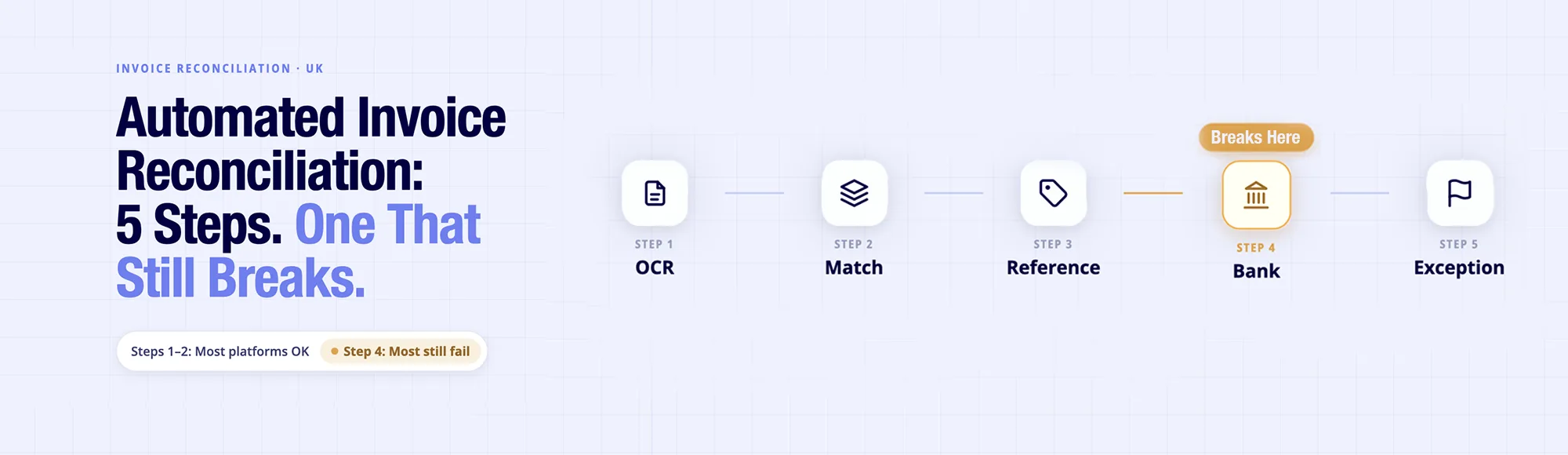
Automated Invoice Reconciliation: The 5-Step UK Process Flow
Automated invoice reconciliation only works when the invoice reconciliation process flow is built correctly from the start. This guide breaks the process into five numbered steps: OCR extraction, three-way matching, payment initiation, bank confirmation, and exception routing, so UK finance teams can see exactly where automation succeeds and where most platforms still fail.
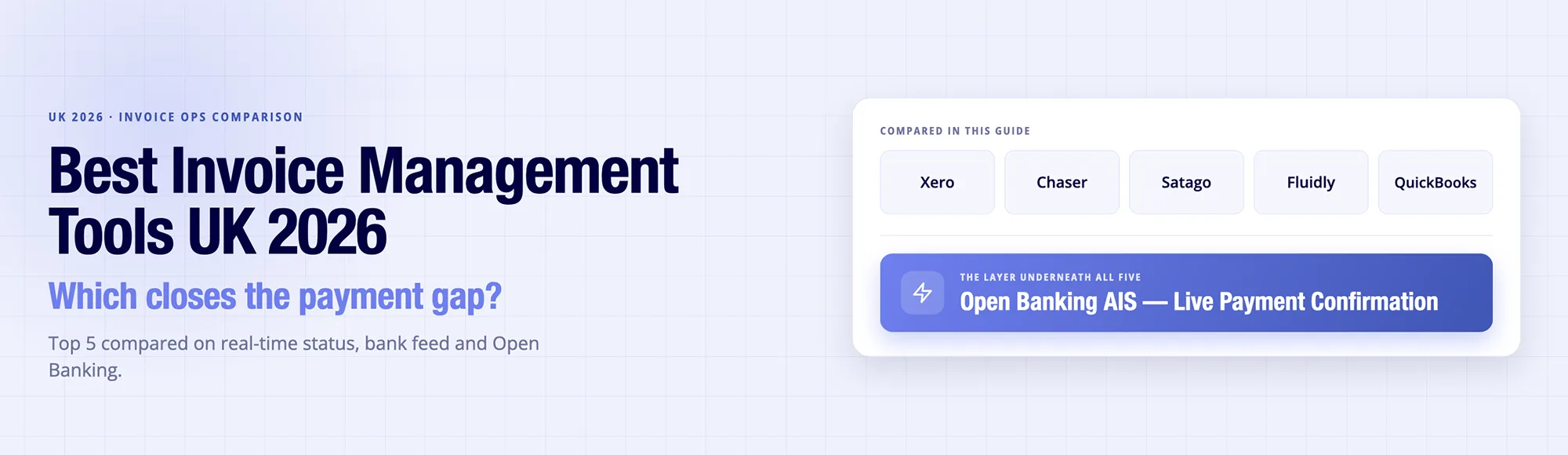
Best Invoice Management Tools UK 2026: Top 5 Compared
Compare the best invoice management tools in the UK, including Xero, Chaser, Satago, Fluidly and QuickBooks. Learn how they differ on payment tracking, bank connectivity, invoice management process and where Open Banking improves payment visibility.
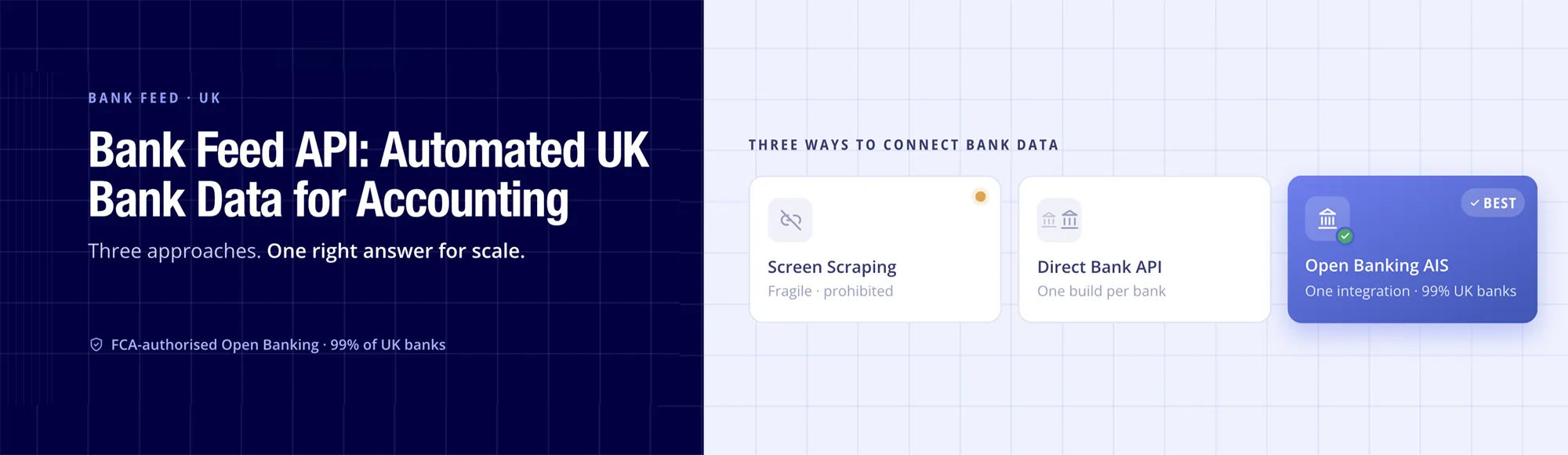
Bank Feed API: Automated UK Bank Data for Accounting
Bank feed solutions for accounting platforms- real-time data syncing from UK banks without manual CSV uploads. Learn how screen-scraping differs from Open Banking PIS, refresh frequency, and build vs buy decisions for accounting SaaS.
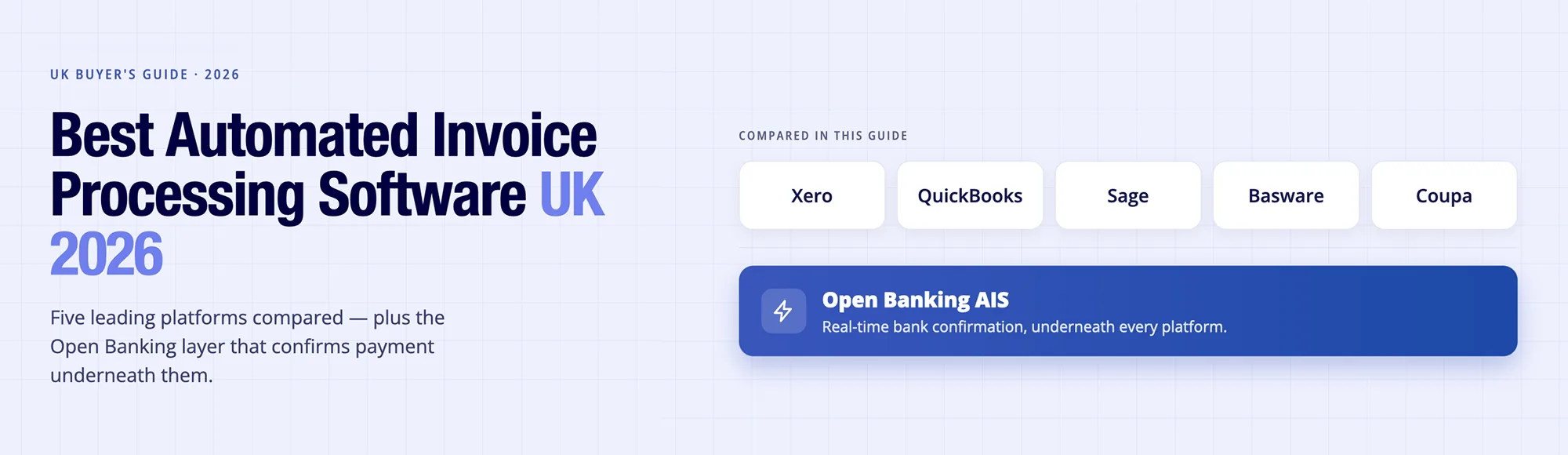
UK’s 5 Best Automated Invoice Processing Software for 2026 Compared
Compare the UK’s leading automated invoice processing software for 2026, including Xero, QuickBooks, Sage, Basware and Coupa. Learn how each platform handles OCR, approvals and reconciliation invoice workflows, and why Open Banking AIS enables faster, real-time payment matching beyond traditional bank feeds.
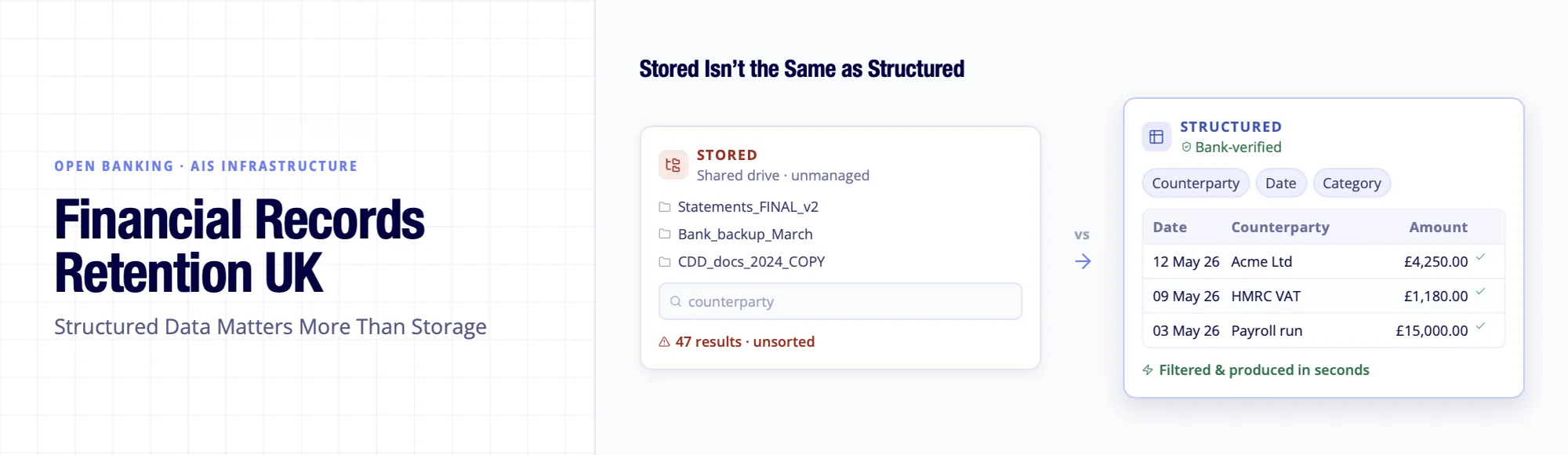
Financial Records Retention UK: Structured Data Over Storage
Financial records retention UK requirements have not changed dramatically in 2026. What has changed is what regulators, auditors, and sanctions investigators actually expect to find when they request evidence. Stored documents are not enough. Structured, accessible, and bank-verifiable transaction data is what regulated platforms need to demonstrate compliance when it is tested rather than assumed.
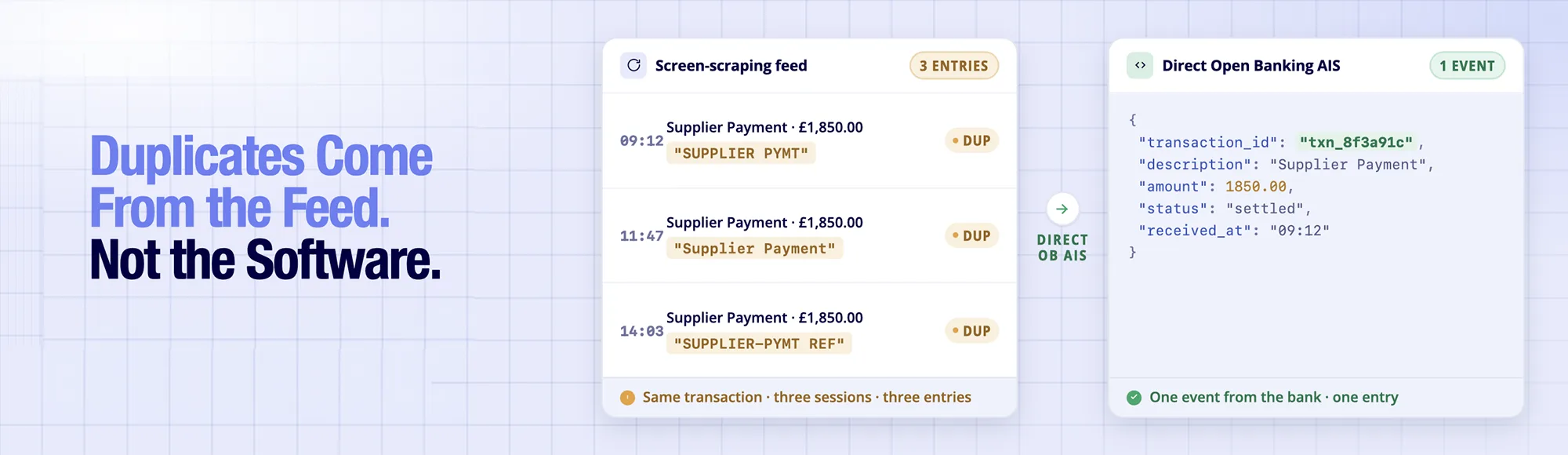
Why Duplicate Transactions Appear in Bank Feeds (and How Direct Open Banking Prevents Them)
Most duplicate transactions in bank feeds are not software bugs. They are predictable consequences of how the feed collects data – screen-scraping refresh cycles, batch sync gaps, and reconnection re-imports generate duplicates at source. This blog explains each cause and why direct Open Banking AIS eliminates most of them before they reach your accounting system.

How to Fix Data Inconsistencies in Simply Accounting for Good
How to fix data inconsistencies in Simply Accounting is a question most finance teams answer with a repair tool. The inconsistency clears. It returns three weeks later. The repair addressed the symptom – not the import workflow that created it. What is breaking upstream and what changes the pattern permanently is what this blog examines.
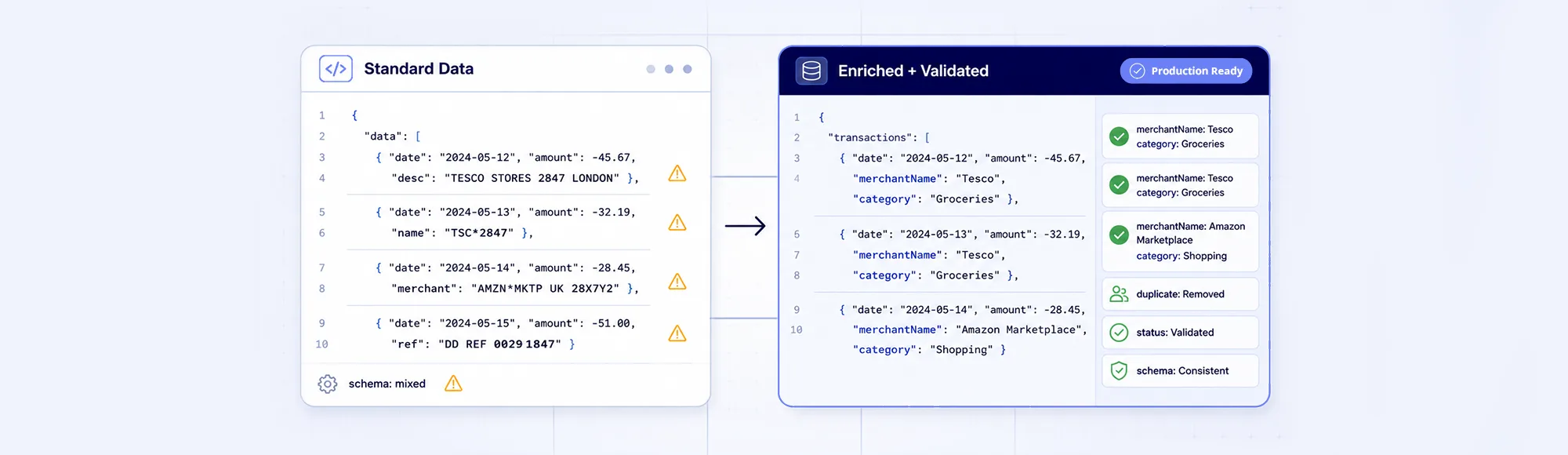
Standard Bank Transaction Data Is the Foundation. Why Enrichment and Validation Both Matter.
Standard bank transaction data gives platforms the foundation they need – account activity, balances, amounts, and payment references. Financial data enrichment adds merchant context and spending categories on top of that. But enrichment alone, without validation and verification of data, still breaks production workflows at scale. Both layers together determine whether financial automation holds up.
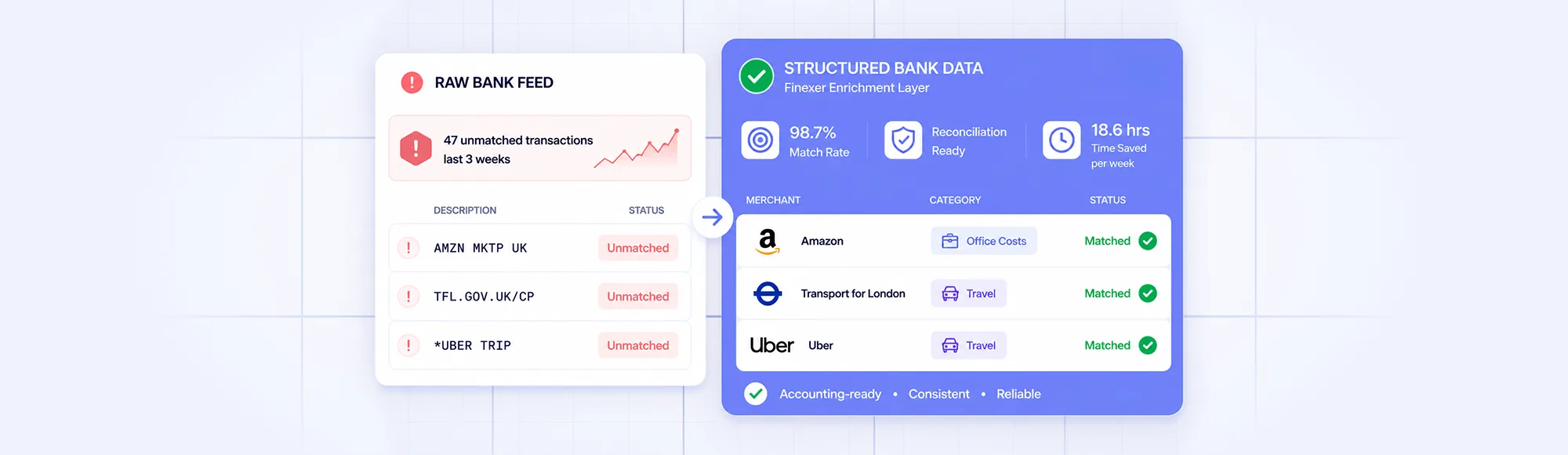
Why Automated Bank Feeds Still Fail in Production Accounting Workflows
Automated bank feeds work in the development sandbox. They break in production. Inconsistent transaction formats, missing webhooks, and incomplete UK bank coverage all create the reconciliation failures accounting platforms discover only at month-end. This blog covers why automated bank feeds fail in real accounting workflows and what UK financial data infrastructure actually determines their reliability.
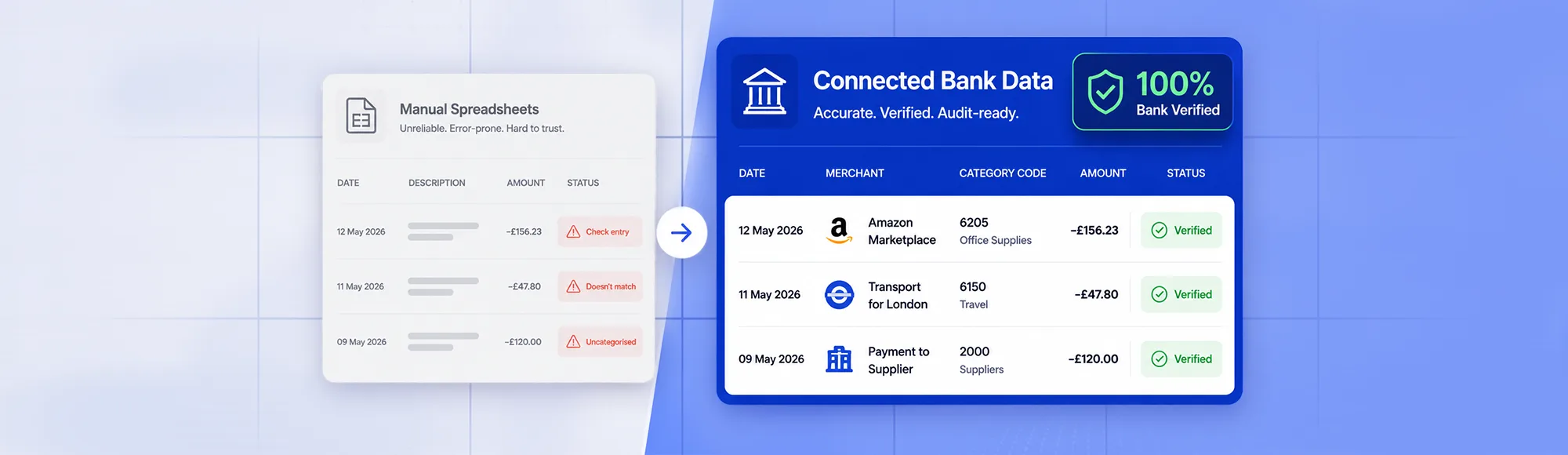
Why Is Accurate Record Keeping Important? The Operational Answer
Accurate record keeping matters for compliance. But that is only the start. Finance teams that struggle at month-end or fail audits almost always share the same root problem: transaction data that is incomplete, delayed, or manually entered. This blog covers why keeping financial records accurately is an operational issue – not just a regulatory one.
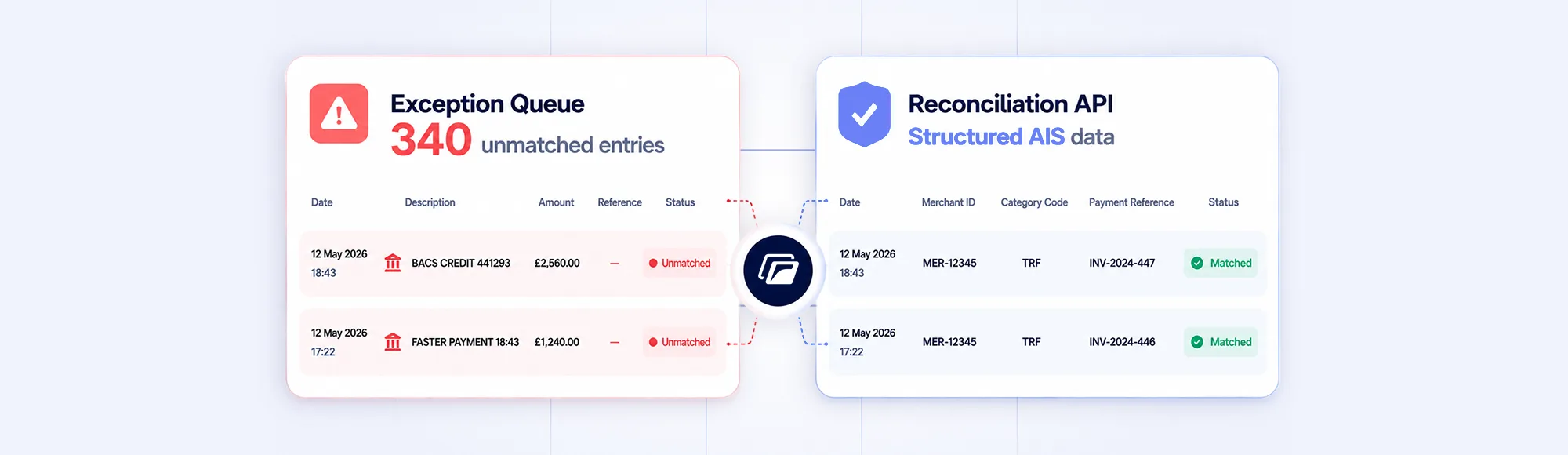
Why Accurate Reconciliation Depends on Better Reconciliation API Infrastructure
Most reconciliation API failures are not algorithm failures. They are data failures. The matching logic works. The bank transaction data feeding it is delayed, generic, or disconnected from the payment that triggered it. This blog covers why accurate reconciliation depends on infrastructure-level data connectivity, and what a reconciliation API needs to do beyond transaction matching.

What the HMRC Expenses List Gets Wrong About How Businesses Actually Track Costs
The HMRC expenses list tells businesses what to claim. It does not tell them how to track those claims accurately. For accounting SaaS, ERP systems, and expense management tools, that gap is where compliance breaks down. This blog covers the HMRC expense categories, where tracking fails in practice, and how structured bank data changes it.

Why Multi-Bank Connectivity Still Breaks in Modern Finance Stacks
Multi-bank connectivity sounds like a solved problem. Connect the right APIs and unified bank access should follow. In practice, each bank behaves differently. APIs time out at different rates. Data formats vary. Consent cycles expire at different intervals. This blog covers why fragmented bank integrations create operational problems and what reliable multi-bank infrastructure actually requires.
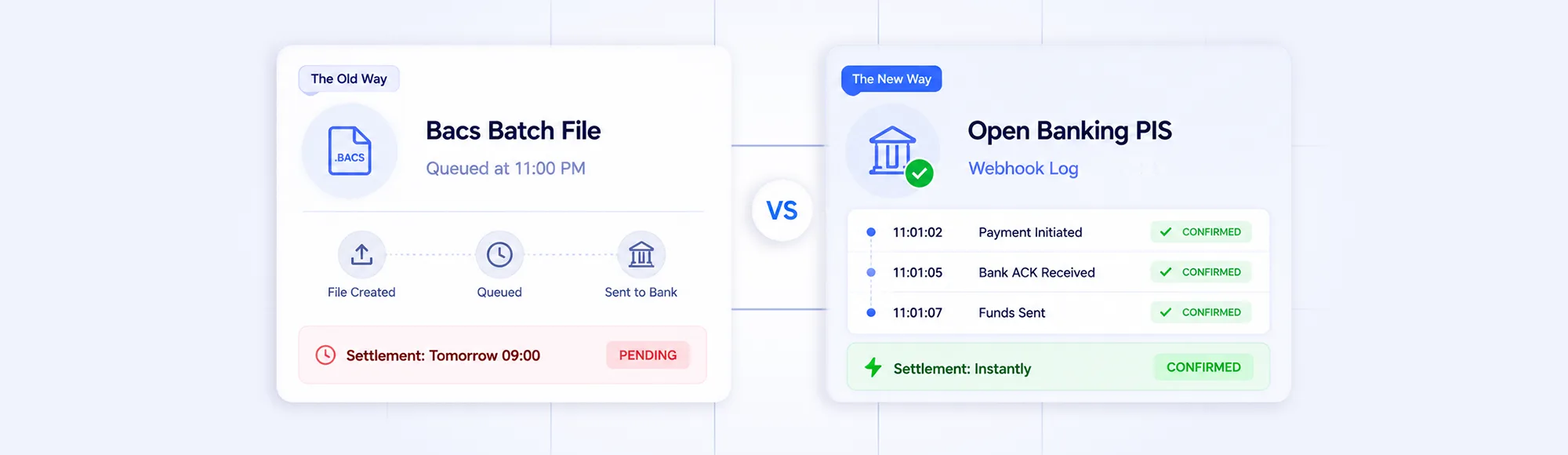
Best Payroll System UK 2026: 6 Options for Accounting Firms
Payroll system UK comparisons usually stop at RTI compliance and feature lists. The differences that matter for accounting firms in 2026 are multi-client bureau scale, cloud migration readiness, accounting integrations, and whether payroll services disburse salaries on the same day or wait three business days for BACS. This review covers all six on those criteria.

Why Payment Tracking Still Breaks in Modern Financial Workflows
Payment tracking sounds like a solved problem. Most platforms have a status page. Most finance teams have a spreadsheet. Neither tells you what happened at the bank. This blog covers why payment tracking breaks operationally, what online payment tracking requires beyond status updates, and how connecting payment initiation to bank transaction data changes the workflow.

Manual Bank Reconciliation Is Not the Problem. Your Transaction Processing Is.
Finance teams spending hours on manual bank reconciliation are solving the wrong problem. The real issue is upstream – in how transactions are processed and referenced. This blog covers why transaction processing failures create reconciliation backlogs, what structured bank data changes, and how accounting and ERP platforms fix the root cause instead of the symptom.