Category: Open banking Data
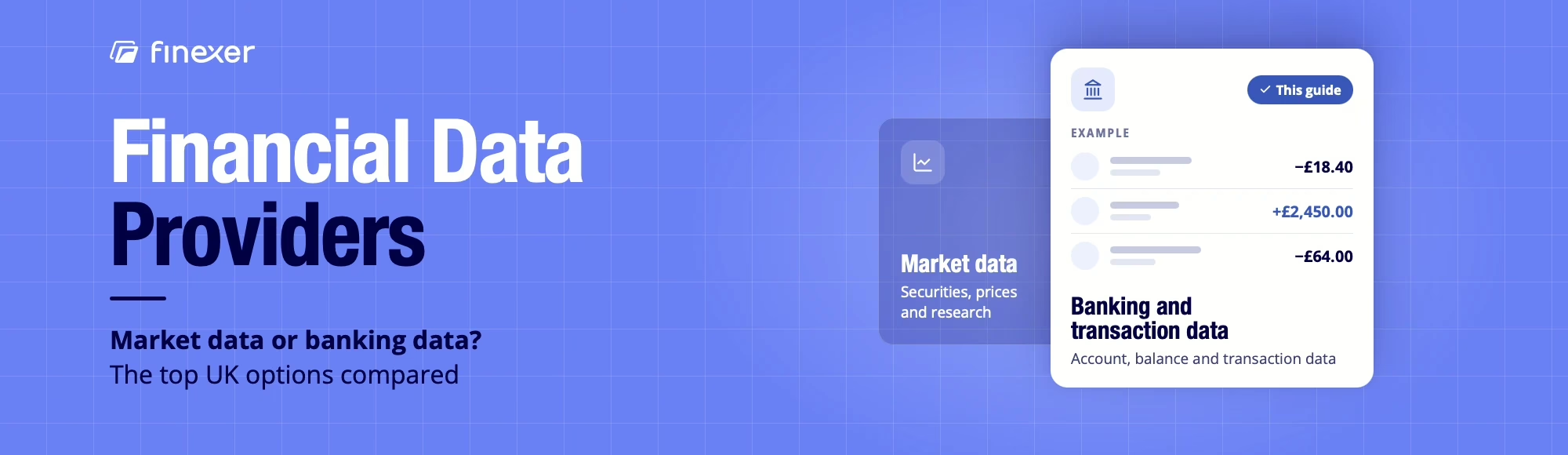
Financial Data Providers: Top UK Options Compared
Financial data providers serve different buyer needs, from market intelligence to banking connectivity. This guide compares top financial data providers for UK platforms, focusing on Open Banking access, account coverage, data freshness, enrichment, consent handling and FCA authorisation, with a practical shortlist for accounting, Proptech, WealthTech and utility billing teams when choosing a provider today.
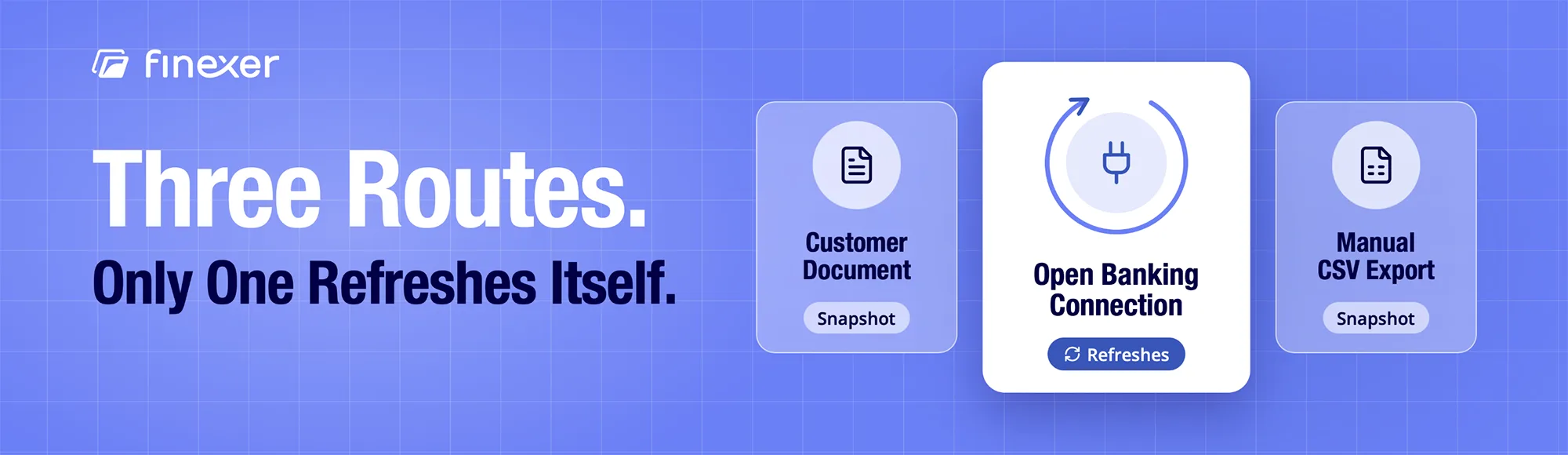
What are the ways to pull customer banking transactions with consent?
There are three legitimate ways to pull banking transactions with consent: a direct Open Banking AIS connection, a customer-supplied document, or a manual export. Only Open Banking AIS refreshes transaction data automatically once the customer connects, without asking for another file each time. This guide compares all three routes and explains exactly where Finexer fits.
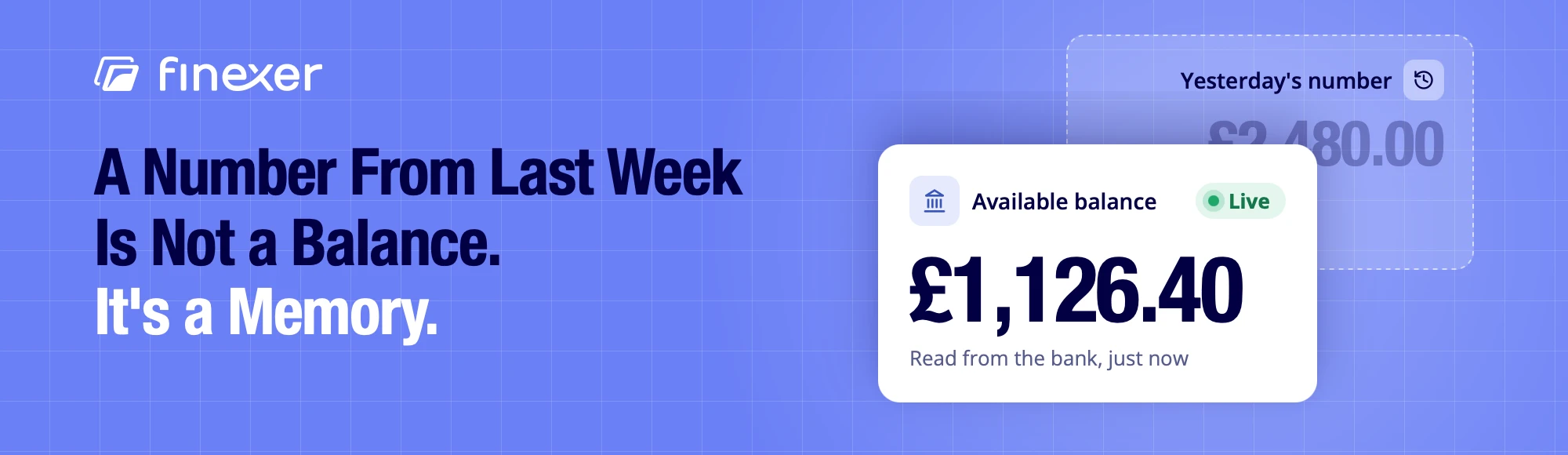
Check Account Balance: Verified UK Methods Guide
This article covers how to check account balance yourself in seconds, then answers the question platforms actually search for: how to check account balance online for a customer, with consent, before money moves. It walks through available balance versus current balance, what a live read confirms and where UK platforms fit Finexer into the picture.
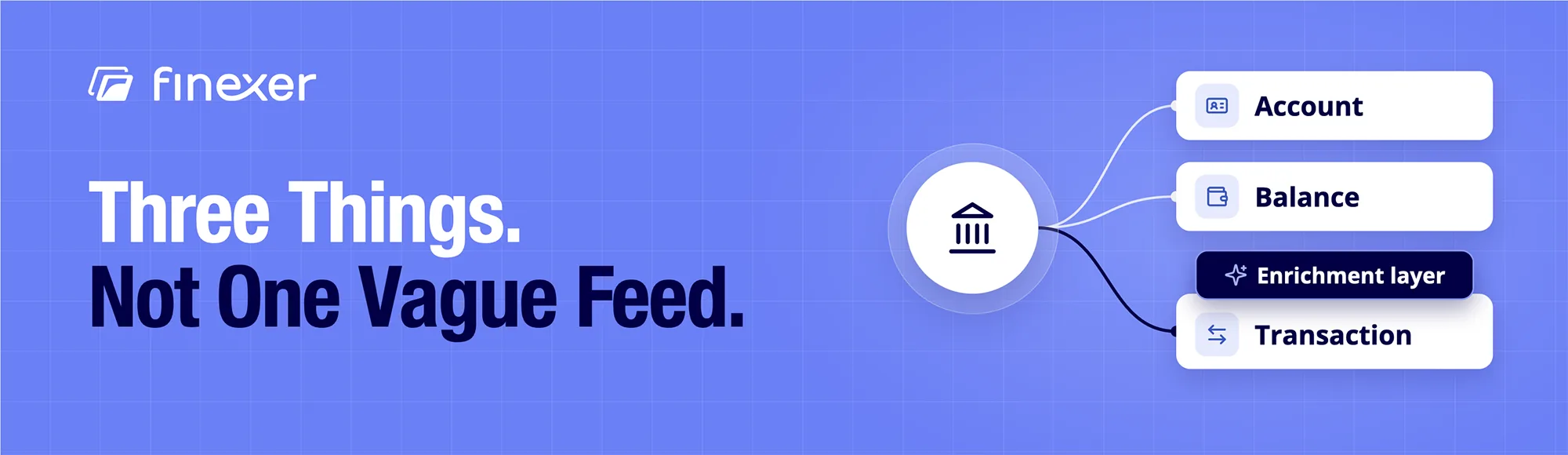
Banking statement API data: What actually returned ?
Banking statement api data is not one single thing. A UK Open Banking connection returns account data, balance data and transaction data, structured through the same consented request rather than parsed from a document. This article covers what each type actually contains and what a platform can build once a document is no longer needed.
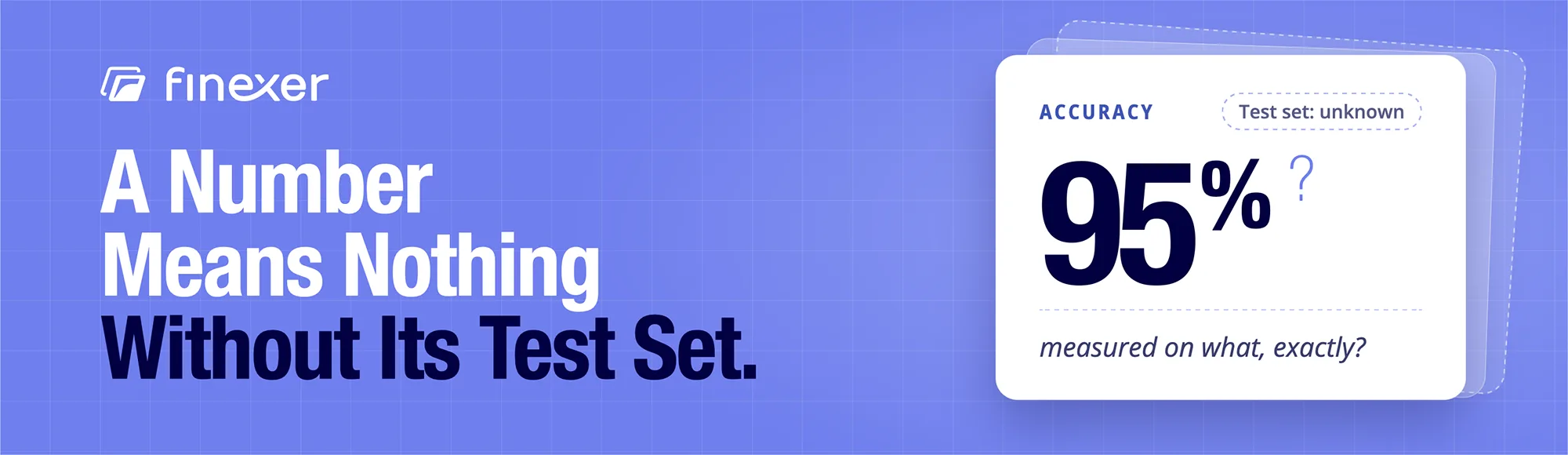
How accurate is automated transaction categorisation?
Transaction categorisation accuracy depends on more than a headline percentage. This guide explains how merchant coverage, transaction descriptors, test sets and use cases affect results and how transaction enrichment can add context. Learn what to test, what accuracy means in practice and which questions to ask before choosing an automated categorisation provider for your product.
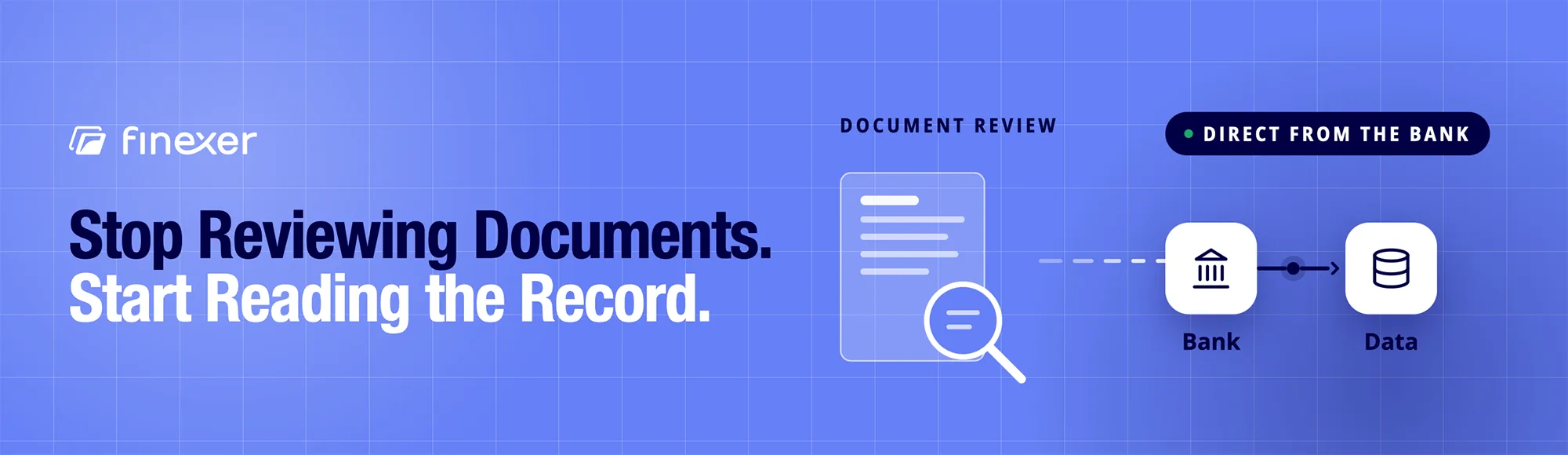
How Do You Detect Fake or Edited Bank Statements?
Fake bank statement detection by eye catches only obvious cases: mismatched fonts, totals that visibly do not add up correctly. A competent edit passes most manual checks without much trouble. This article covers what manual review actually catches, why a document is structurally weak, and what changes once data comes straight from the bank instead.
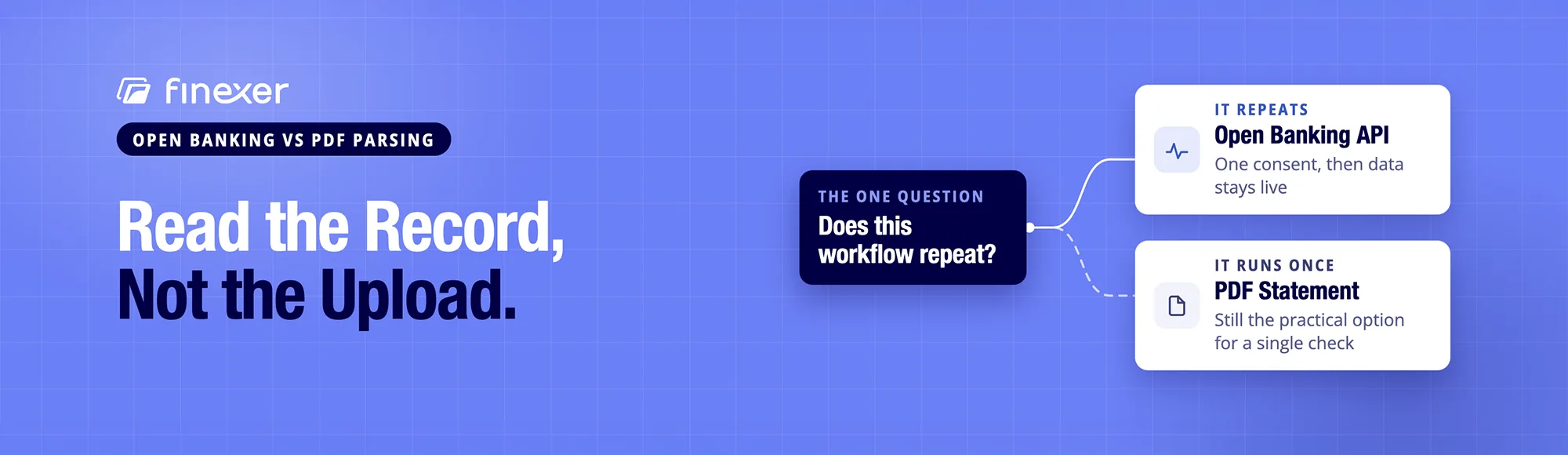
Open Banking vs PDF Bank Statement Parsing: Which Should We Use?
Open banking vs bank statement parsing is not a close call for a workflow that genuinely repeats month after month. PDF parsing depends on a document a customer has to find, download and upload, one that can be edited before it ever reaches you. This article compares both methods on accuracy, effort and completion rate.
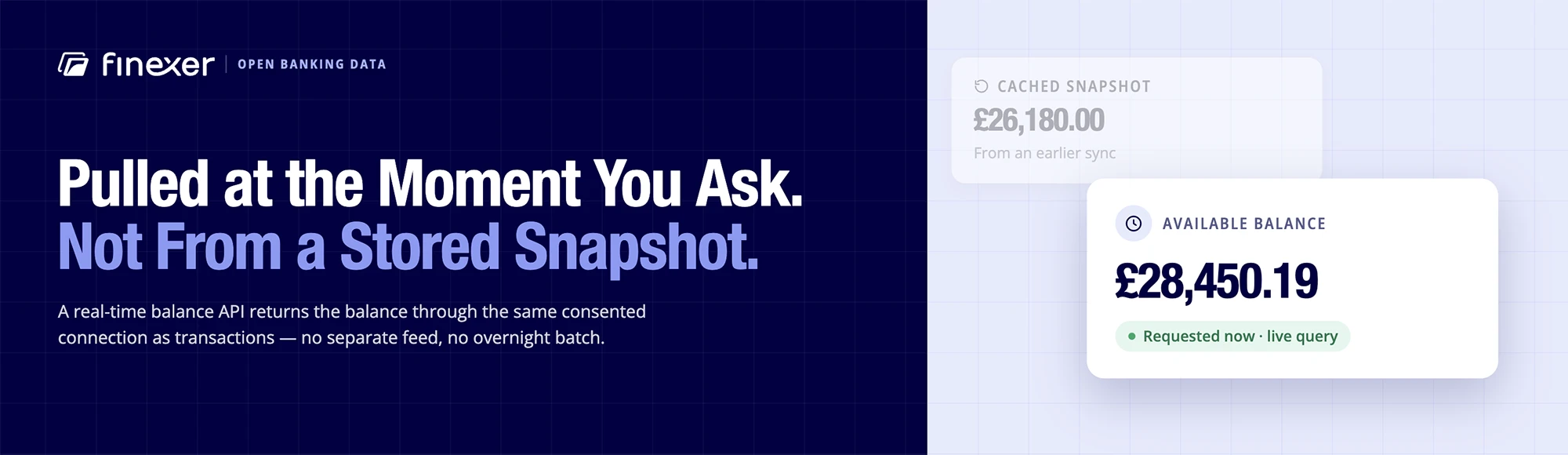
How Can I Get Real-Time Balance Information From a UK Bank Account?
A real-time balance API returns balance data through the same consented connection used for transactions, pulled at the moment you request it rather than from an earlier stored snapshot, not a cached one. This article covers why current and available balances differ, where platforms actually use live balance checks and how providers actually compare.
Can You Get Banking Statement Data Digitally Instead of PDF Uploads?
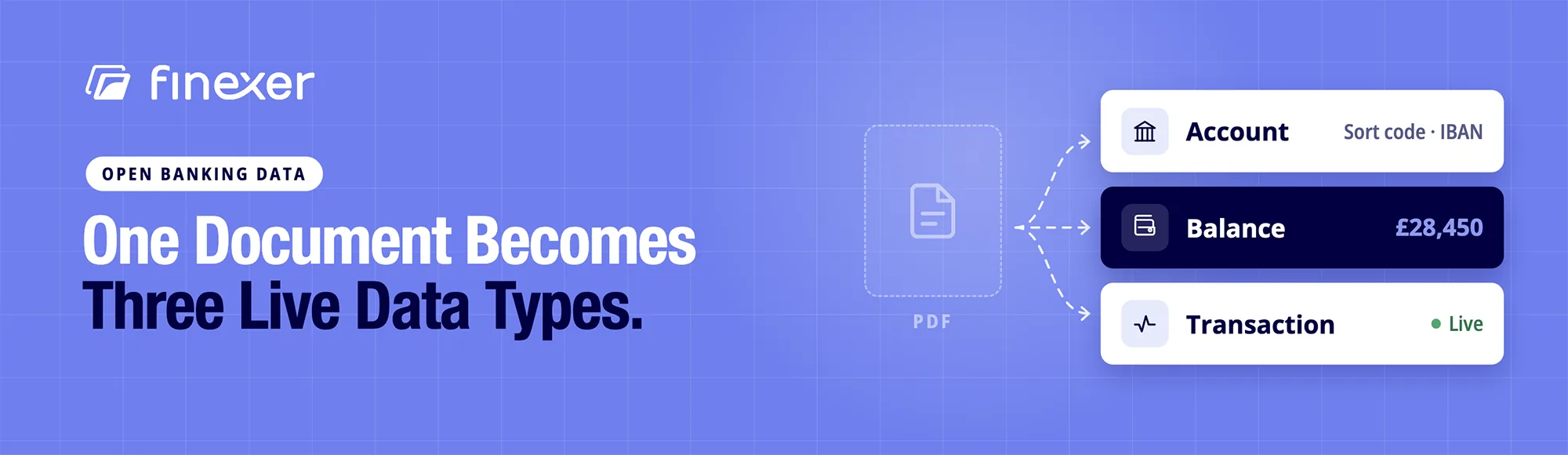
Digital banking statement data comes straight from the bank through an API once a customer gives their consent, with no document to find, download or upload. This article covers the three data types that replace a PDF, why statement uploads cause drop-off on mobile, and where a document still has a genuine job to do.
How Accurate Is Open Banking Data Compared to Uploaded Bank Statements?
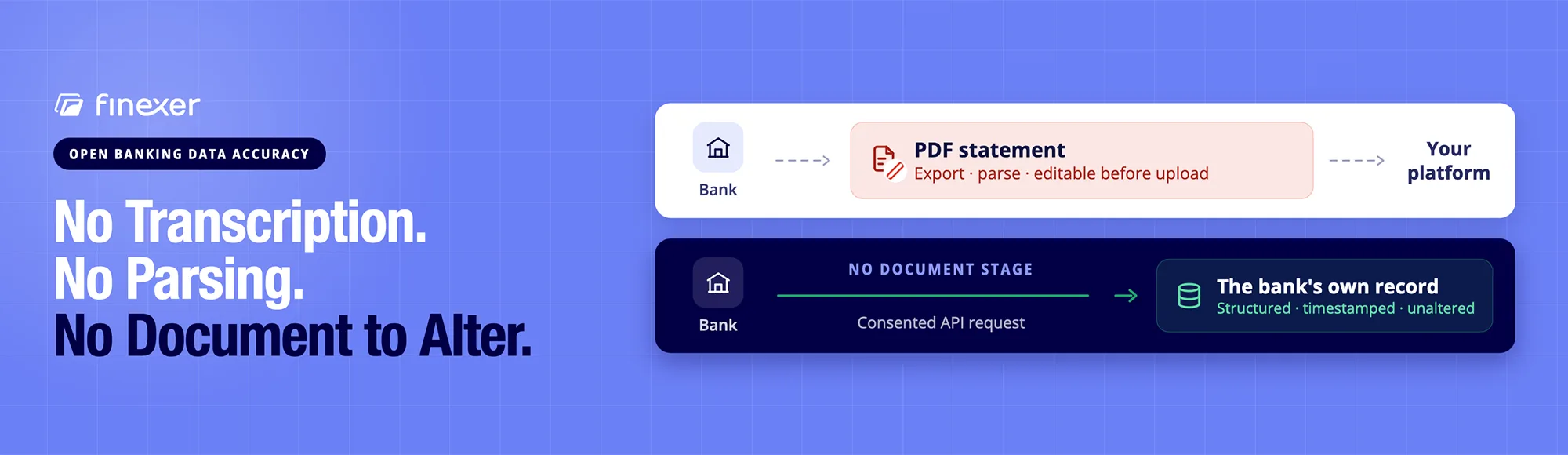
Open banking data accuracy comes from the bank’s own record, with no transcription step, no parsing tool, and no document that can be altered before it reaches you. An uploaded PDF statement has already passed through both. This article compares the two on accuracy, completeness and audit trail, then covers what API data still needs.
How Do Apps Turn Messy Bank Transaction Strings into Merchant Names?
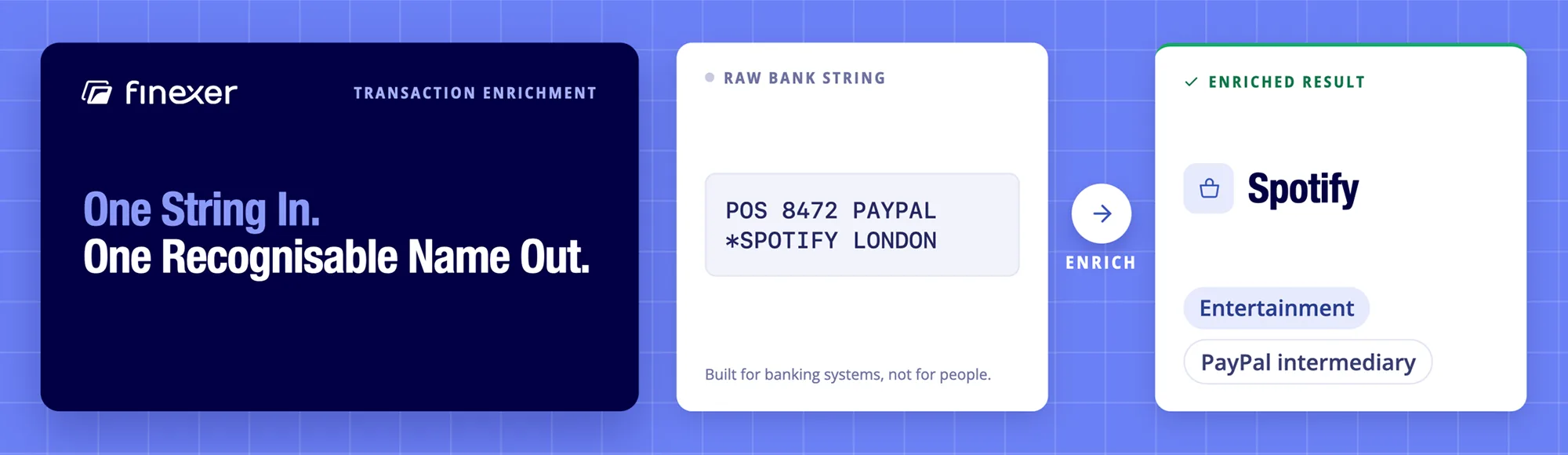
Bank transaction strings like POS 8472 PAYPAL SPOTIFY LONDON mean little to a user. Merchant name enrichment matches these strings against merchant intelligence to return a recognisable name, category and confidence score. This article covers how transaction enrichment actually works, how providers compare and exactly where Finexer fits for platforms already using Open Banking connectivity.
PFM Meaning: What Personal Financial Management Actually Covers
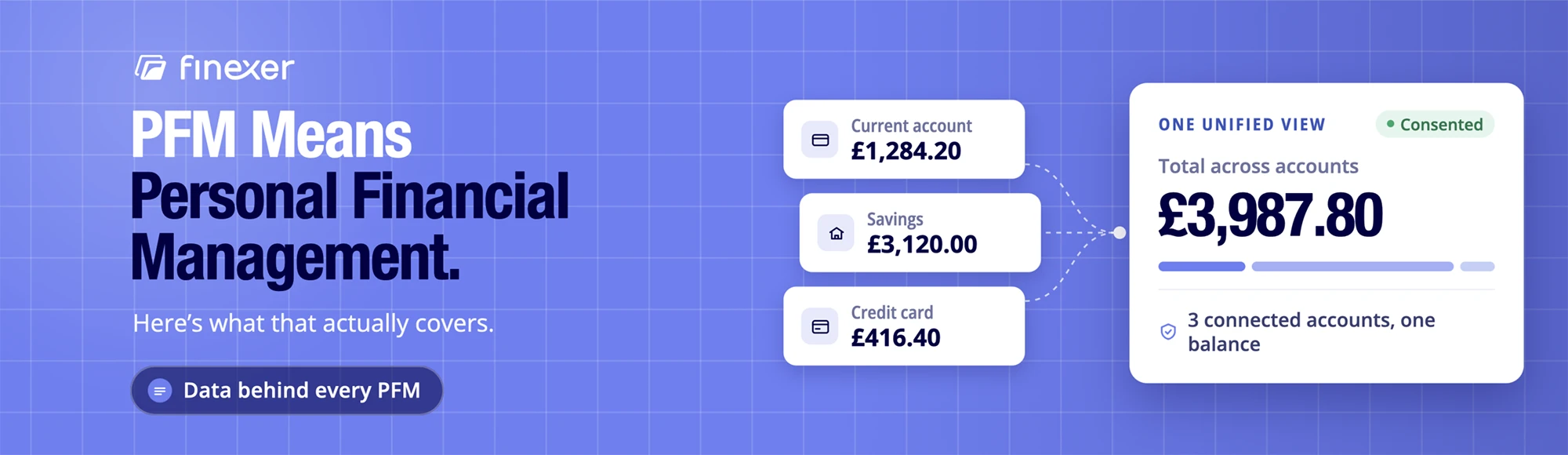
PFM, meaning Personal Financial Management, is a category of tools bringing forth account balances, categorising everyday spending and flagging upcoming bills before they land. This guide’s coverage extends to what PFM represents, ways a PFM tool reads banking data behind the scenes and the needs that a platform may have before it properly builds one.
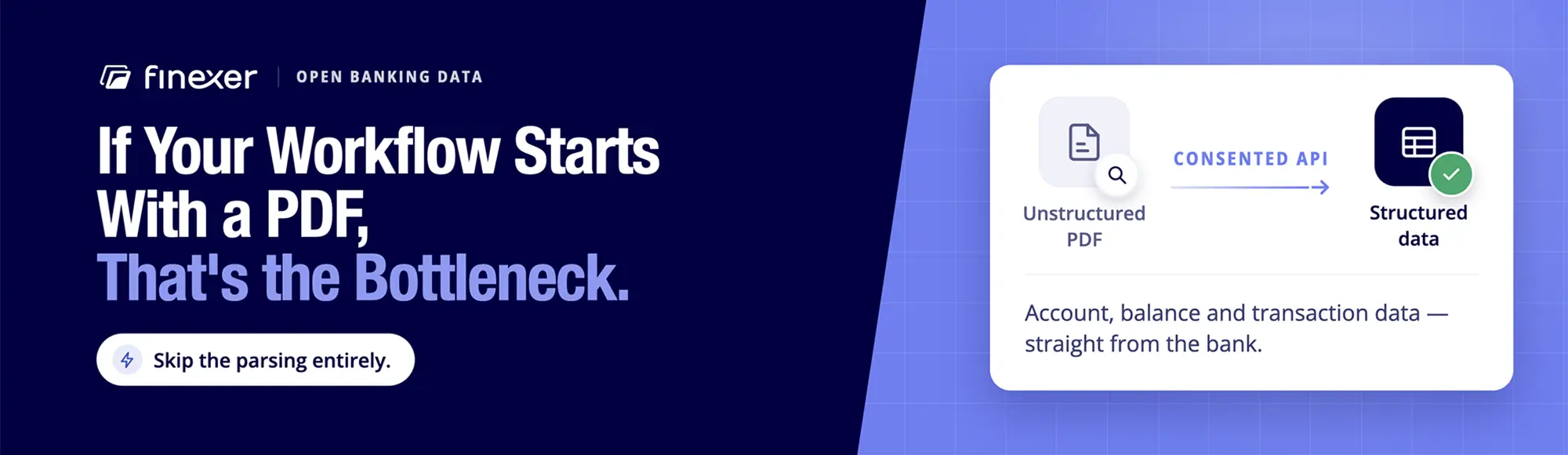
Extract Data From Bank Statements: Best UK Methods
Extract data from bank statements without turning finance operations into a document-processing exercise. Comparing manual entry, CSV exports, PDF parsing, OCR and consented Open Banking access for bank statements, with practical guidance on accuracy, freshness, audit trails, data quality and direct banking data, makes better sense for UK accounting and platform workflows at scale.

UK Financial Data: Verified Access Routes Explained
UK financial data can be accessed three ways: manual upload, credential scraping, or consented Open Banking connections. Only one is built for regulated, verified access at scale. This guide covers what UK financial data actually includes, how consent works, and what separates a legitimate access route from a declining one.

Inside Spending Data: What UK Platforms Actually Build Once the Merchant Names Are Right
Spending data shows exactly where money goes, merchant by merchant, once transactional data is enriched with category, confidence, and location. This guide explains what spending data actually contains, how bank descriptors become usable merchant names, and what UK platforms build with it: budgeting, affordability views, and expense categorisation, without touching lending or credit decisions here.

Reconciliation of Payments: The Complete UK Guide for Finance Teams and Platforms
Reconciliation of payments confirms that money recorded in your books has actually moved through the bank, but payment reconciliation still breaks more often than most UK finance teams openly admit. This guide explains what a bank reconciliation statement shows, why matching fails, what makes it solvable, and how platforms build dependable reconciliation of payments today.

6 Open Banking API Use Cases: What Developers Actually Build
Most guides show business outcomes. This one shows what developers actually integrate. Concrete AIS endpoint structures, PIS payment flows, real data schemas, and worked examples of account aggregation, affordability checks, and Pay by Bank checkouts – the technical depth developers need before writing their first API call.
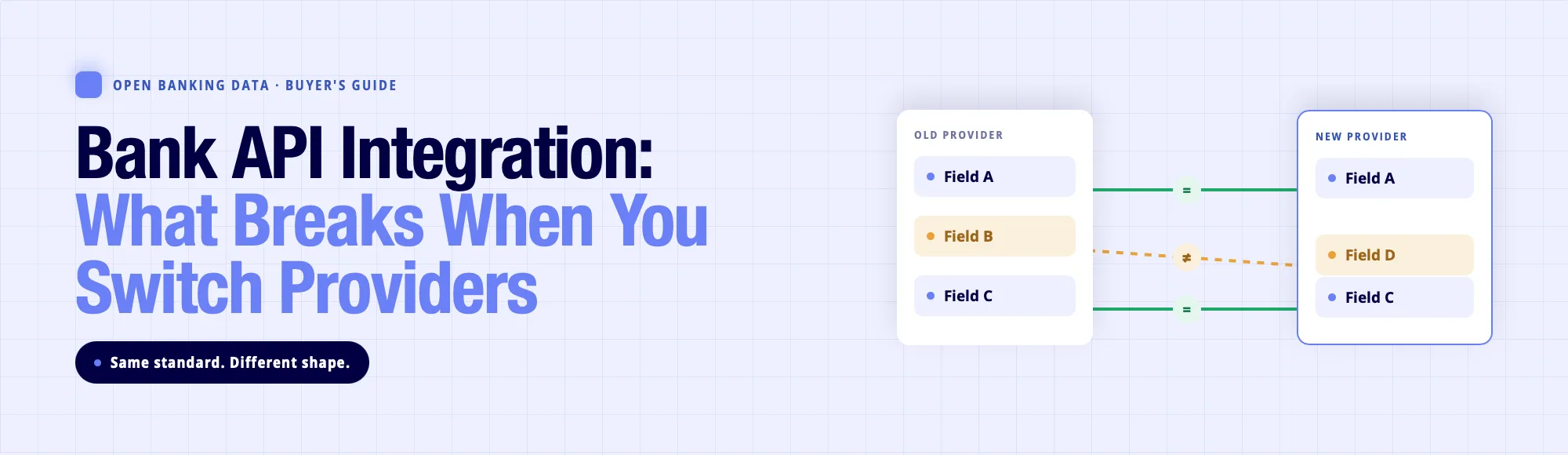
Bank API Integration: What Breaks When You Switch Providers
Switching bank API integration providers is riskier than a first-time build, because ten banks return ten variations of the same data standard, and migrations inherit whatever format quirks the old provider was quietly absorbing. This guide covers what breaks during a bank integration API migration, why format mismatches cause roughly a third of failures and…
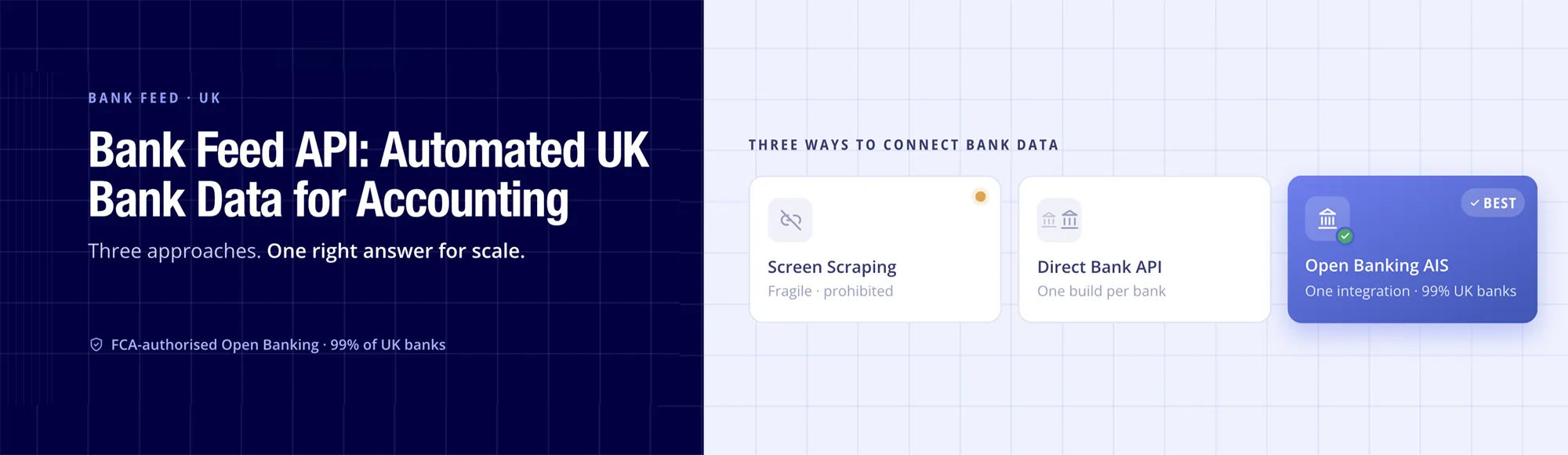
Bank Feed API: Automated UK Bank Data for Accounting
Bank feed solutions for accounting platforms- real-time data syncing from UK banks without manual CSV uploads. Learn how screen-scraping differs from Open Banking PIS, refresh frequency, and build vs buy decisions for accounting SaaS.
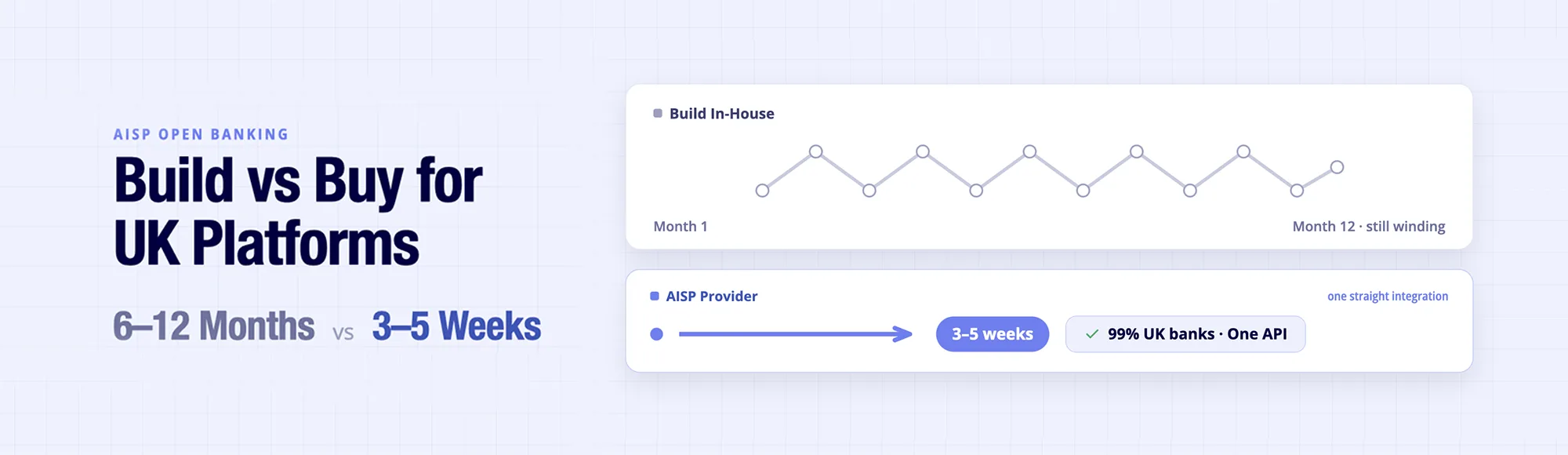
AISP Open Banking: Build vs Buy for UK Platforms
Deciding whether to build direct bank connections or use an AISP Open Banking provider comes down to engineering time and ongoing maintenance cost. This guide compares in-house integration against open banking AISP infrastructure on timeline, FCA authorisation, consent handling and reliability, so UK platform teams can evaluate the real cost of each path.
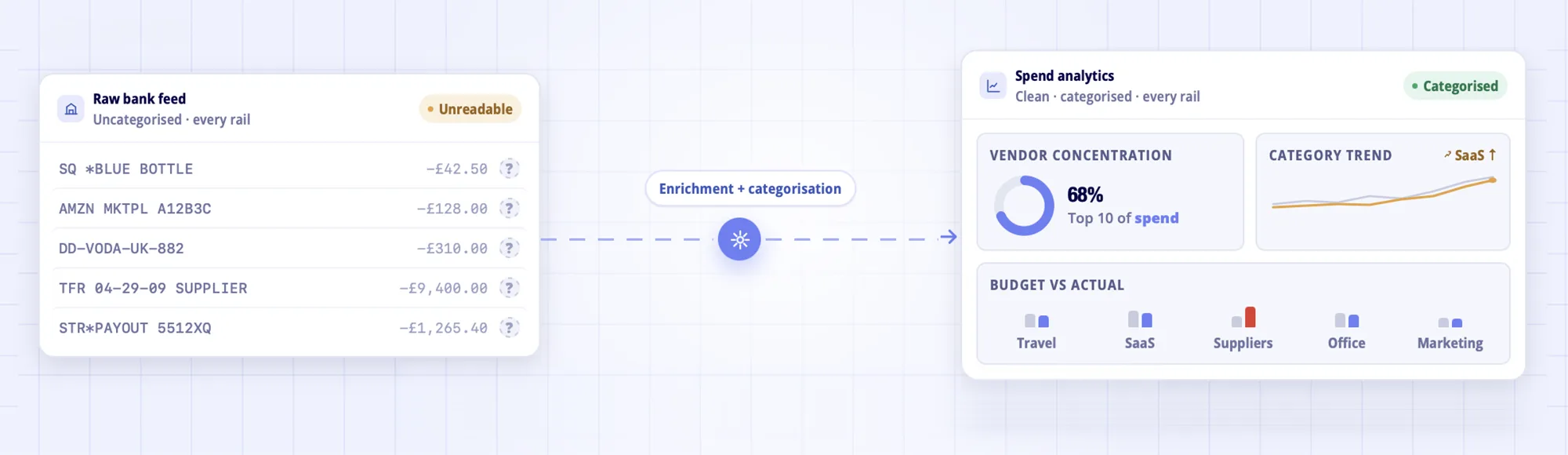
Spend Analytics UK: How Clean Bank Data Powers Finance Visibility
Spend analytics is the layer that turns raw transaction data into vendor, category, and budget insight. Most finance teams already capture their spend. What they lack is clean, categorised data across every payment rail. This blog explains what spend analytics is, why card-only tools fall short, and what a clean bank-data feed actually makes possible.
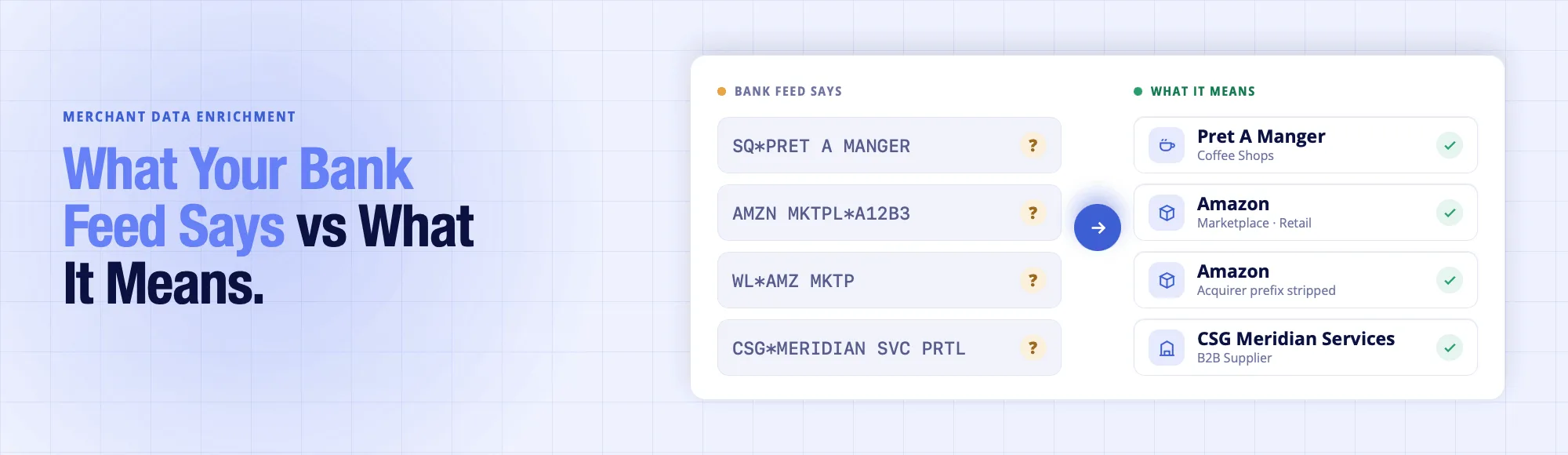
Merchant Data Enrichment APIs Compared: From Cryptic Strings to Clean Merchant Names
Merchant data enrichment resolves raw bank transaction strings – SQPRET A MANGER, AMZN MKTPLA12B3 – into clean merchant names, categories, logos and locations. This comparison covers how five merchant data enrichment APIs process those strings, what each provider returns, which fits your UK platform use case and coverage requirements, and what to test before choosing.
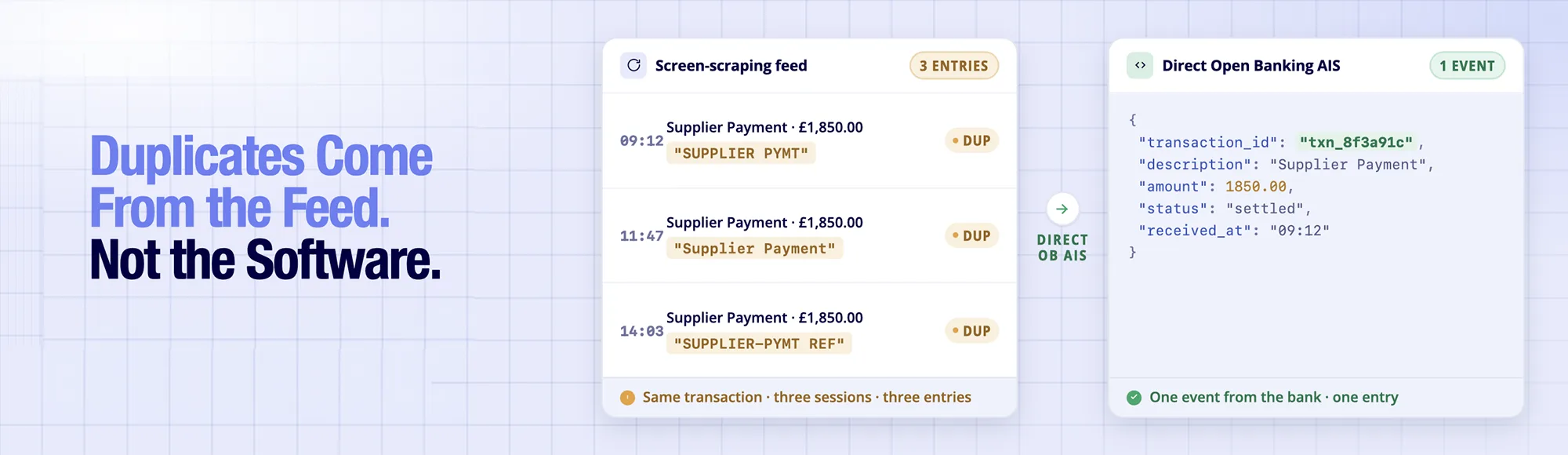
Why Duplicate Transactions Appear in Bank Feeds (and How Direct Open Banking Prevents Them)
Most duplicate transactions in bank feeds are not software bugs. They are predictable consequences of how the feed collects data – screen-scraping refresh cycles, batch sync gaps, and reconnection re-imports generate duplicates at source. This blog explains each cause and why direct Open Banking AIS eliminates most of them before they reach your accounting system.
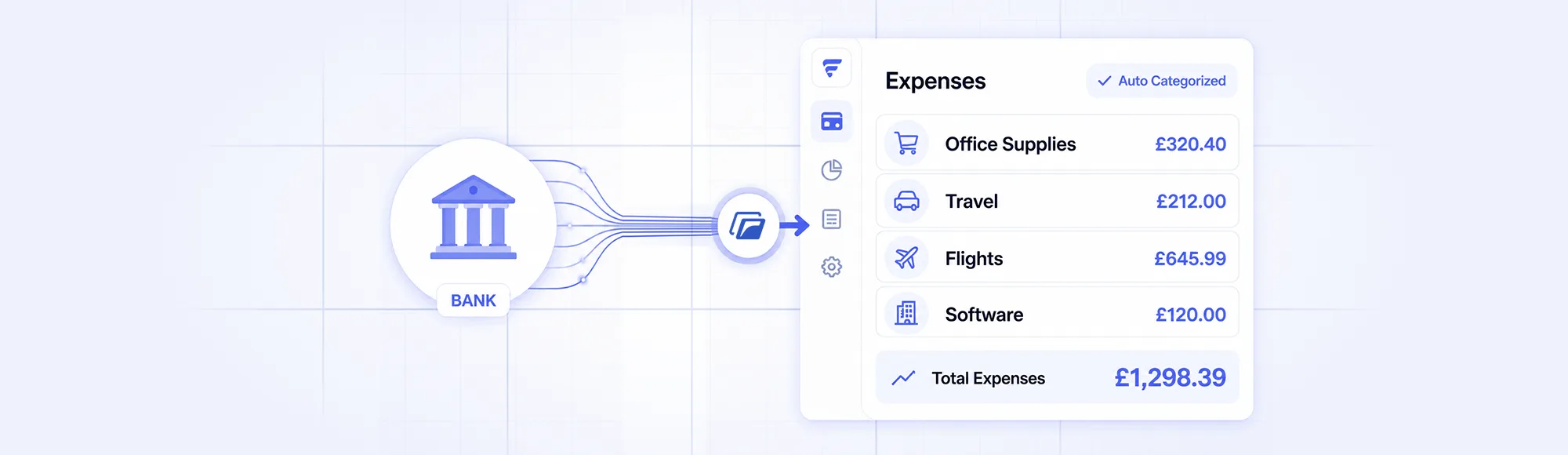
Automated Expense System: Building Reliable Financial Workflows
An automated expense system is only as reliable as the data feeding it. Receipt scanning captures submitted claims. Bank transaction data captures actual financial reality. This blog covers what powers reliable expense automation for accounting SaaS, ERP, and expense management platforms – and how structured bank transaction data fundamentally changes automated expenses accuracy at scale.

Best Payment Gateways UK 2026: 7 Top Providers Reviewed
Most UK businesses pick a payment gateway at launch and never revisit it. Six months in, they are paying 2.5% effective rates on a 1.5% gateway. International surcharges, chargebacks, and FX fees compound in ways the headline rate never shows. This comparison covers 7 UK payment gateway providers with verified 2026 fees and honest trade-offs.
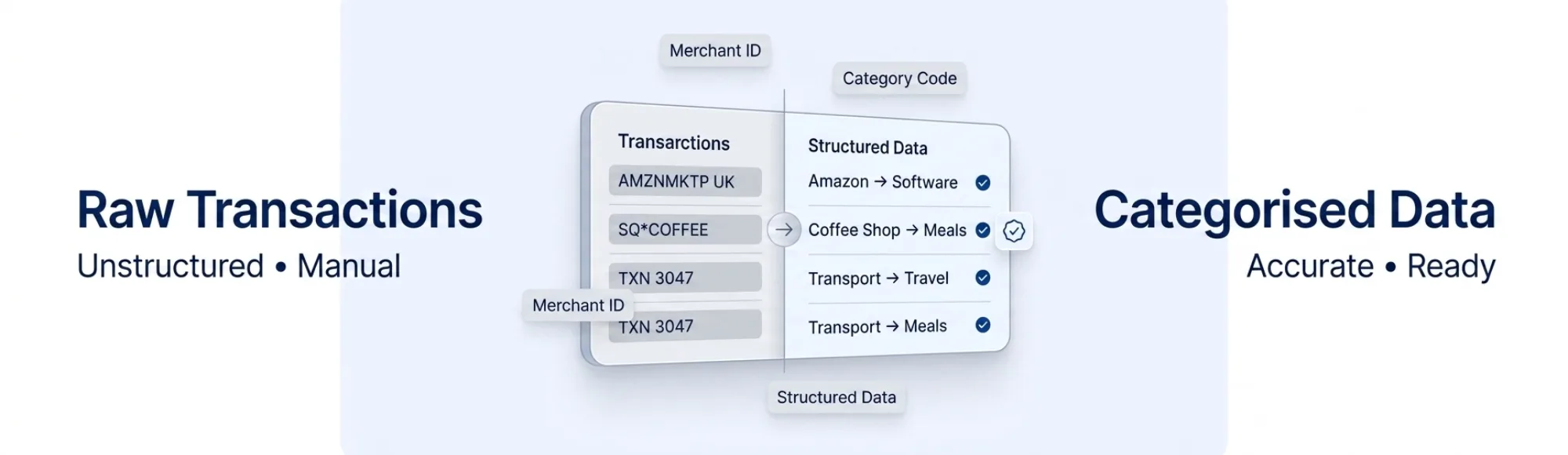
Expense Categorisation: Building Accurate Financial Workflows
Expense categorisation determines the accuracy of every financial report, reconciliation cycle, and HMRC submission a platform produces. This blog covers what actually drives accurate expense categorisation at scale, how transaction categorisation accuracy improves when structured bank data arrives at source, and where Finexer’s AIS fits as the data layer for UK accounting and ERP platforms.
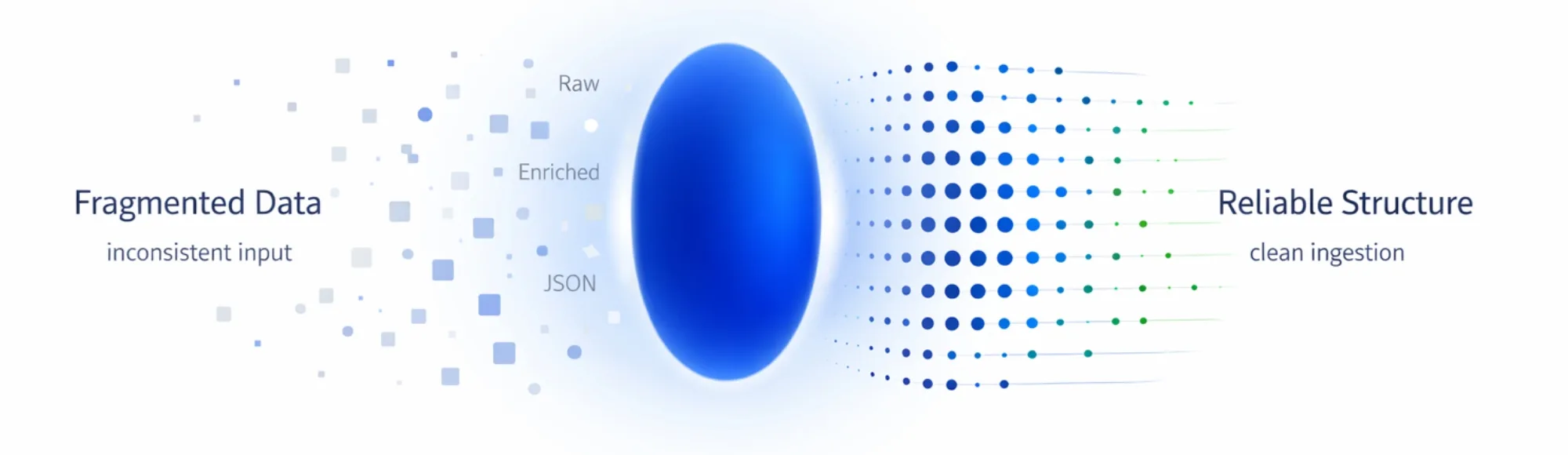
Financial Data Ingestion Process: Why Bank Data Pipelines Break
Financial data ingestion process failures in accounting, ERP, and Lawtech platforms trace back to the same root cause – the bank data source. Fragmented access, inconsistent formats, and delayed delivery break the ingestion pipeline before the platform’s processing logic runs. This blog covers why financial data ingestion breaks and what reliable bank data access requires.

Real-Time Accounting: Why It’s Not Truly Real-Time
Real-time accounting promises live dashboards, instant cash flow visibility, and up-to-date financial reports. But the accounting software is only as real-time as the data feeding it. When a bank feeds batch-update overnight and transactions arrive hours late, real-time accounting data is neither real nor timely. This blog covers why that happens – and what fixes…
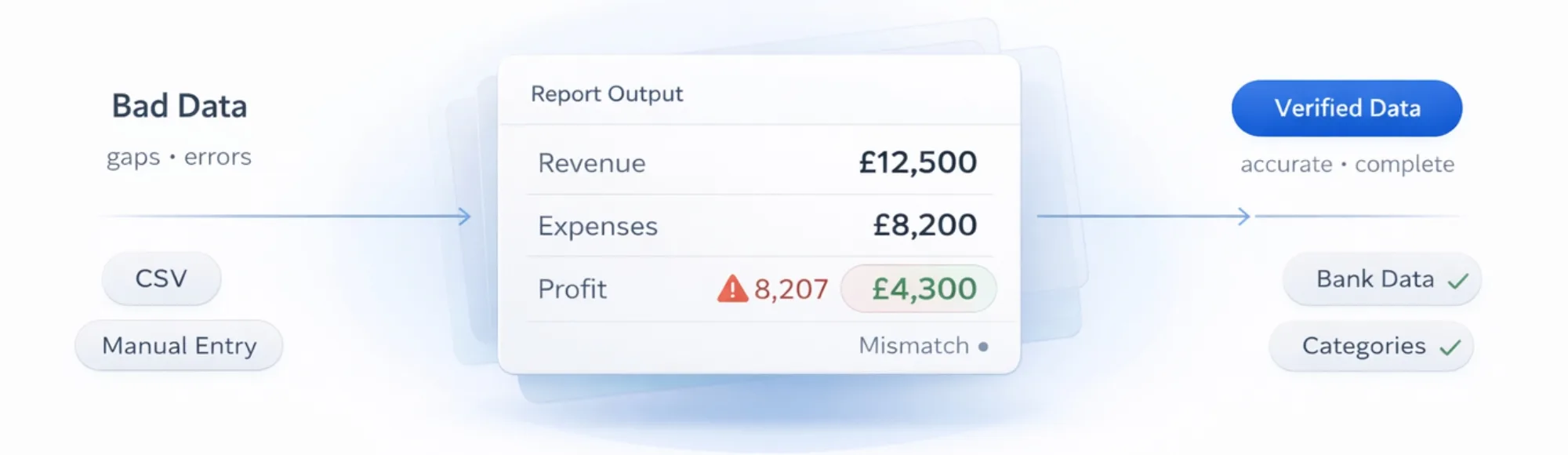
Business Financial Reporting: Why Reports Go Wrong
Business financial reporting produces wrong outputs when transaction data is wrong. The P&L shows inaccurate margins. The cash flow statement misses transactions. The balance sheet does not reconcile. The reporting tool is correct. The data feeding it is not. This blog covers why reporting finance breaks at the input layer and how to fix it.
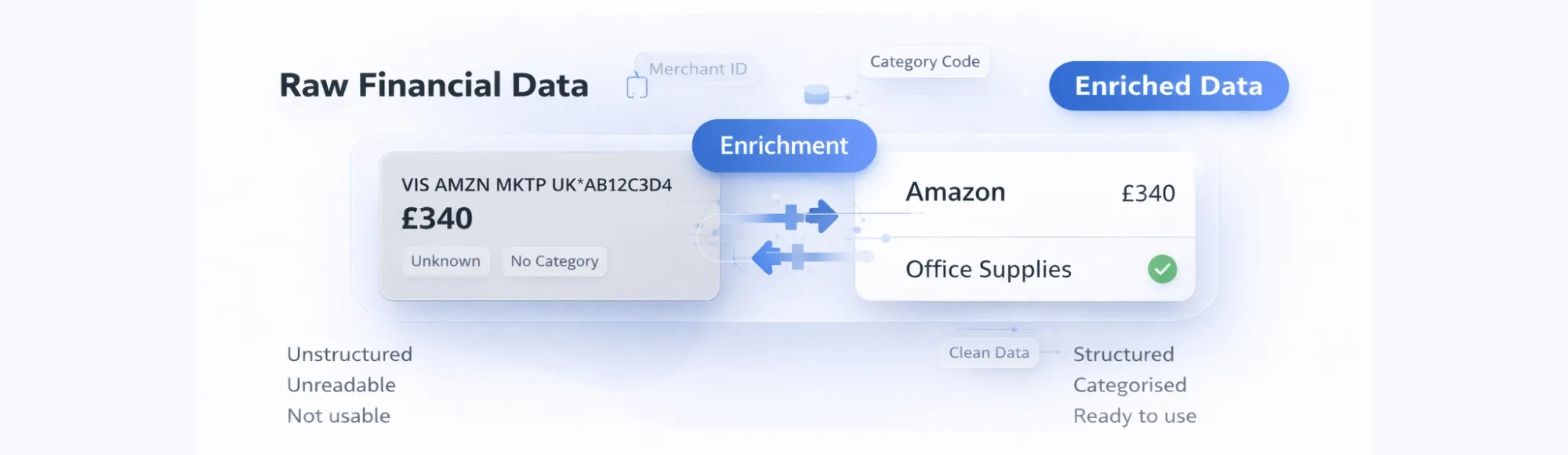
B2B Data Enrichment Services: Why Raw Financial Data Fails
B2B data enrichment services solve a problem that most accounting and ERP platforms discover too late. Raw bank transaction data is not usable in financial workflows. Unclear merchant descriptions, inconsistent formats, and missing categories break reconciliation, reporting, and automation before they ever run. This blog covers why data enriching is the fix, not a feature.