
Free MTD software for landlords sounds appealing until penalties arrive for missing submissions or incorrect data. HMRC’s Making Tax Digital requirements for landlords with property income over £50,000 became mandatory from April 2026, and gaps in “free” solutions are costing property businesses real money.
The question isn’t whether free MTD bridging software for landlords exists. It’s whether free versions actually cover what HMRC requires without creating compliance risks. Most free offerings handle basic record-keeping but fail at critical points – quarterly submission deadlines, rental income categorisation, or allowable expense tracking.
When MTD software for landlords doesn’t properly format submissions or misses HMRC’s digital link requirements, penalties start at £200 per missed return. For landlords managing multiple properties, these costs accumulate. The operational problem extends beyond fines – incorrect submissions trigger investigations, require manual corrections, and consume time better spent managing tenancies.
What Actually Comes Free in MTD Software for Landlords?
Free versions typically cover income logging and basic expense tracking. This works for straightforward scenarios – single property, simple rental income, standard mortgage interest deductions.
Limitations appear when rental businesses grow. Multi-property portfolios need consolidated reporting. Properties with mixed use require expense allocation. Furnished holidays follow different tax rules. Free MTD software for landlords often lacks these features, forcing manual calculations outside the system.
The digital links HMRC requires become problematic. Free tools might generate quarterly summaries, but connecting bank transactions directly to tax records – the core Making Tax Digital requirement – usually sits behind paywalls. Without proper digital links, submissions get rejected or flagged for review.
Where Do Penalties Actually Come From?

Late submissions trigger automatic penalties under MTD for landlords. According to HMRC’s penalty system, the first missed quarterly update costs £200 once you reach the penalty threshold of four points. Subsequent failures add £200 each, with daily penalties of £10 after multiple missed deadlines.
Incorrect data creates different problems. HMRC’s systems flag inconsistencies between bank records and submitted figures. When free MTD bridging software for landlords doesn’t reconcile properly, these flags become formal enquiries. Resolving enquiries requires accountant time, documentation gathering, and potential back-tax calculations.
The penalty structure penalises software gaps harder than occasional mistakes. Missing entire quarterly submissions because free software doesn’t support automated filing costs more than correcting individual transaction errors.
How Does Making Tax Digital for Landlords Actually Work?
HMRC requires quarterly digital submissions for rental income and expenses. These submissions must come from MTD-compatible software with proper digital record links. End-of-year summaries still happen, but quarterly data forms the foundation.
Landlords categorise rental income by property, track allowable expenses against HMRC’s specific categories, and apply relevant deductions. The software must maintain digital records accessible for inspection, generate quarterly update summaries in HMRC’s required format, and submit directly through the MTD API.
Free software versions often handle the first two requirements adequately. The third requirement – direct HMRC submission through proper API integration – frequently requires paid versions. This creates a gap where landlords think they’re compliant until submission deadlines arrive.
Learn more about MTD requirements for landlords.
What Are the Hidden Costs of “Free” Solutions?

Free MTD software for landlords converts to paid versions when businesses need actual compliance features. The conversion usually happens right before quarterly deadlines, when switching systems creates additional risk.
Typical upgrade triggers include support for more than one or two properties, automated bank feed connections for digital links, direct HMRC submission capabilities, and expense categorisation matching HMRC requirements.
These features move free software into monthly subscription territory. The difference is timing – free tools charge when you’re already committed, while transparent pricing allows proper budgeting.
How Should Landlords Evaluate MTD Software?
Start with HMRC’s recognised software list. Not every tool claiming MTD compatibility actually meets requirements. Recognised software undergoes testing and maintains proper API connections.
Coverage matters more than features. Can the system handle all your properties? Does it support your specific rental arrangements – standard ASTs, holiday lets, commercial property? Will it accommodate growth if you acquire additional properties?
Explore MTD-compliant software options.
The digital links requirement needs verification. How does the software connect to your bank accounts? Are transactions automatically categorised or manually entered? Does the connection maintain HMRC’s required audit trail?
Where Does Payment Processing Fit MTD Compliance?
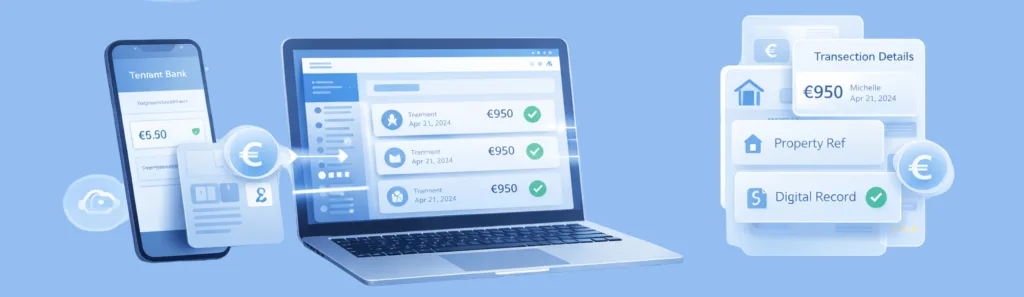
Rental income collection creates the records MTD software needs. When tenants pay through traditional methods – cheques, standing orders, manual transfers – landlords manually enter each transaction. This manual entry breaks the digital link requirement unless each transaction gets properly documented and preserved.
Bank-to-bank payment systems maintain automatic digital records. Each rental payment includes complete transaction data – date, amount, payer details, property reference. This data flows directly into accounting systems without manual intervention, creating the digital links HMRC requires.
UK landlords handling significant rental volumes benefit from payment infrastructure that automatically generates compliant records. Transaction costs matter when processing monthly rent from multiple properties. Card payment fees typically range from percentage-based charges per transaction, which add up across property portfolios.
Account-to-account payments remove card network fees. The cost reduction extends beyond percentages – fewer failed payments mean less time chasing late rent, cleaner records reduce reconciliation work, and automatic transaction data simplifies MTD submissions.
Finexer provides UK businesses with payment infrastructure that supports MTD compliance requirements. The platform covers UK banks, ensuring tenants can pay from their existing accounts. Usage-based pricing means costs scale with actual transaction volumes rather than fixed monthly fees that don’t match rental payment patterns.
Implementation timelines are shorter than many market alternatives, with dedicated onboarding support. For landlords needing MTD-compliant payment records, this matters – getting systems operational before quarterly deadlines prevents rushed implementations and potential compliance gaps.
Cost reduction compared to card payments helps offset MTD software expenses while maintaining proper digital records.
What Should Landlords Do Before Quarterly Deadlines?
Verify current software meets HMRC’s recognised MTD software requirements. Check that digital links exist between bank accounts and tax records. Confirm quarterly submission capabilities work through proper API connections.
Test the submission process before actual deadlines. Many landlords discover software limitations when attempting their first real quarterly submission. Testing with trial data identifies problems while time exists for solutions.
Consider payment collection methods. If tenants currently pay through methods requiring manual record entry, moving to automated bank-to-bank payments creates better digital links. The operational improvement extends beyond MTD compliance – less manual work, faster reconciliation, clearer financial reporting.
Review the total cost of compliance. Free MTD software for landlords that requires paid upgrades for essential features might cost more than starting with proper solutions. Factor in penalty risks from incomplete submissions, time spent on manual workarounds, and potential accountant fees for fixing problems.
What happens if I miss an MTD quarterly submission deadline?
Penalties start at £200 once you reach four penalty points, with additional failures adding £200 each, plus potential daily charges.
Can I use spreadsheets for Making Tax Digital for landlords?
Spreadsheets alone don’t meet digital link requirements unless connected through MTD-compatible bridging software to HMRC systems.
Does free MTD bridging software for landlords cover multiple properties?
Most free versions support limited properties only, requiring paid upgrades for larger portfolios with consolidated reporting needs.
How do I know if my software has proper digital links?
Check if bank transactions automatically flow into the system without manual entry and whether data can be directly submitted to HMRC.
What’s the biggest risk with free MTD software for landlords?
Discovering missing features during submission deadlines, forcing rushed upgrades or manual workarounds that create compliance gaps.
Get Started
A regulated, faster way to handle rental payments and maintain MTD-compliant records in the UK
Get StartedAbout the Author

Ravi Ranjan
Ravi Ranjan is Co founder & CEO of Finexer