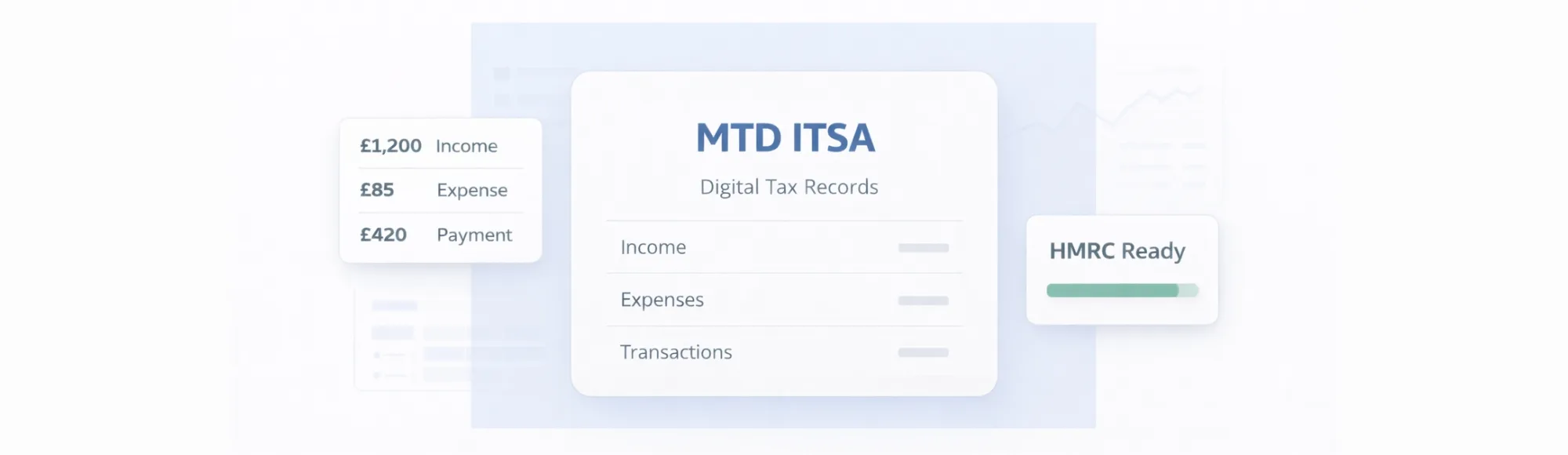
Access verified bank data feeds for automated quarterly submissions.
UK accounting platforms cannot build MTD ITSA workflows when transaction visibility depends on manual bank statement uploads. Making Tax Digital for Income Tax software requires continuous bank data feeds enabling automated income tracking, expense categorisation, and quarterly reporting from April 2026.
Software for making tax digital for income tax must provide digital record keeping supporting HMRC submissions. Manual processes prevent accounting platforms from maintaining complete transaction records required for MTD compliance.
This explains how accounting platforms build MTD ITSA workflows using verified bank data, what infrastructure requirements enable quarterly submissions, and why Open Banking connectivity supports reliable compliance software.
TL;DR
Making tax digital for income tax software requires verified bank transaction feeds for MTD ITSA compliance. Accounting platforms use Open Banking AIS connectivity providing structured financial data enabling automated quarterly submissions starting April 2026 for incomes over £50,000.
Key Takeaways
What is Making Tax Digital for Income Tax software?
Software for making tax digital for income tax enables HMRC-compliant digital record keeping. Platforms must maintain transaction-level records supporting quarterly updates replacing annual self-assessment from April 2026 for qualifying incomes.
Why do platforms need continuous bank data feeds?
MTD ITSA compliance requires complete income and expense records. Manual uploads create gaps. Platforms need verified bank connectivity providing continuous transaction visibility supporting automated categorisation and quarterly reporting workflows.
What breaks MTD workflows without proper infrastructure?
Manual bank statement uploads delay record keeping. Missing transactions create compliance gaps. Inconsistent categorisation prevents accurate submissions. Reconciliation errors require manual correction consuming operational capacity.
How does Open Banking enable MTD compliance?
AIS infrastructure provides verified bank transaction access through FCA-authorised APIs. Structured data feeds enable automated income tracking, expense categorisation, and HMRC-ready digital records supporting quarterly submission workflows.
Where does Finexer support MTD software infrastructure?
Finexer operates Open Banking connectivity using FCA-authorised infrastructure. Accounting platforms access verified bank data feeds enabling making tax digital for income tax software features supporting reliable MTD ITSA compliance.
Why MTD ITSA changes accounting software requirements
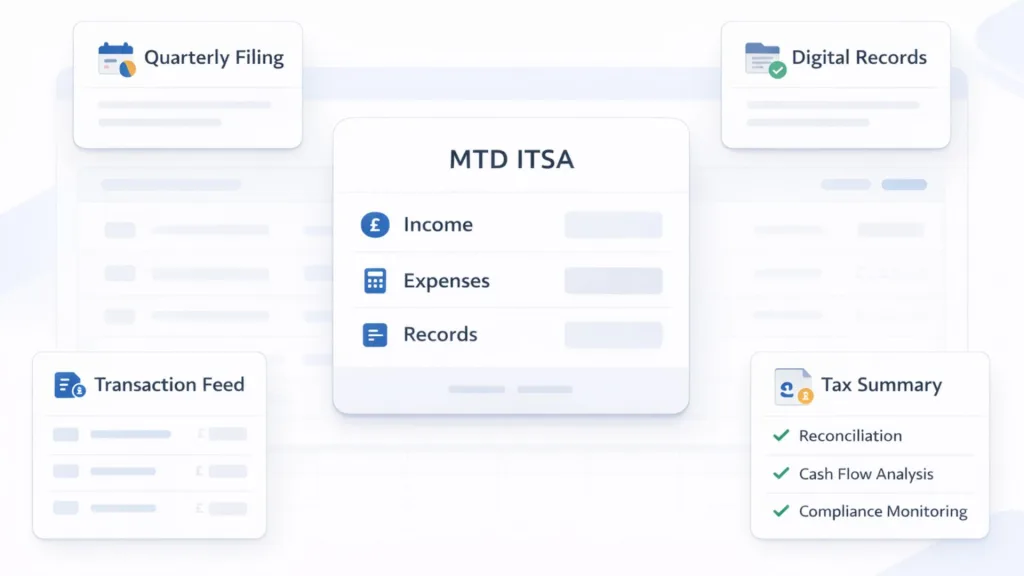
HMRC Making Tax Digital for Income Tax mandates digital record keeping from April 2026. Self-employed individuals and landlords with qualifying incomes over £50,000 must use HMRC-compatible software maintaining transaction-level records supporting quarterly updates.
MTD ITSA requirements affecting software:
- Digital record keeping replacing manual bookkeeping
- Quarterly submission deadlines replacing annual returns
- Transaction-level income and expense tracking
- HMRC-compatible software mandatory for submissions
- Threshold lowering to £30,000 from April 2027
Traditional accounting approaches using manual bank statement uploads cannot support MTD compliance workflows at scale.
Platforms building software for making tax digital for income tax discover infrastructure gaps when transaction visibility depends on periodic manual uploads. Complete income records require continuous bank data access. Expense tracking needs automated categorisation. Quarterly submissions demand verified financial data.
“MTD ITSA compliance fundamentally changes how accounting software accesses financial data.”
What breaks manual MTD workflows
- Manual bank statement uploads create record gaps: Users download statements monthly or quarterly. Transactions between uploads remain unrecorded. Income visibility delays prevent accurate submissions. Manual processes cannot provide continuous record keeping MTD ITSA requires.
- Inconsistent transaction categorisation: Manual expense coding varies across periods. Income classification lacks standardisation. Category errors require correction before HMRC submissions. Automated workflows break when categorisation needs manual intervention.
- Reconciliation delays affect compliance: Manual matching between bank records and invoices consumes time. Quarterly submission deadlines create pressure. Reconciliation errors discovered late require retrospective corrections. Compliance risk increases.
- Missing transaction verification: Manual uploads provide unverified documents. HMRC audits require authenticated records. Platforms cannot demonstrate data provenance when records lack institutional verification.
- Spreadsheet limitations: Excel-based record keeping requires bridging software for HMRC submissions. Manual data entry introduces errors. Version control creates confusion. Collaboration between accountants and clients is difficult when records exist in disconnected spreadsheets.
For platforms evaluating MTD-compliant software infrastructure, automated bank data access becomes an operational necessity rather than an optional feature.
How Open Banking enables MTD compliance infrastructure
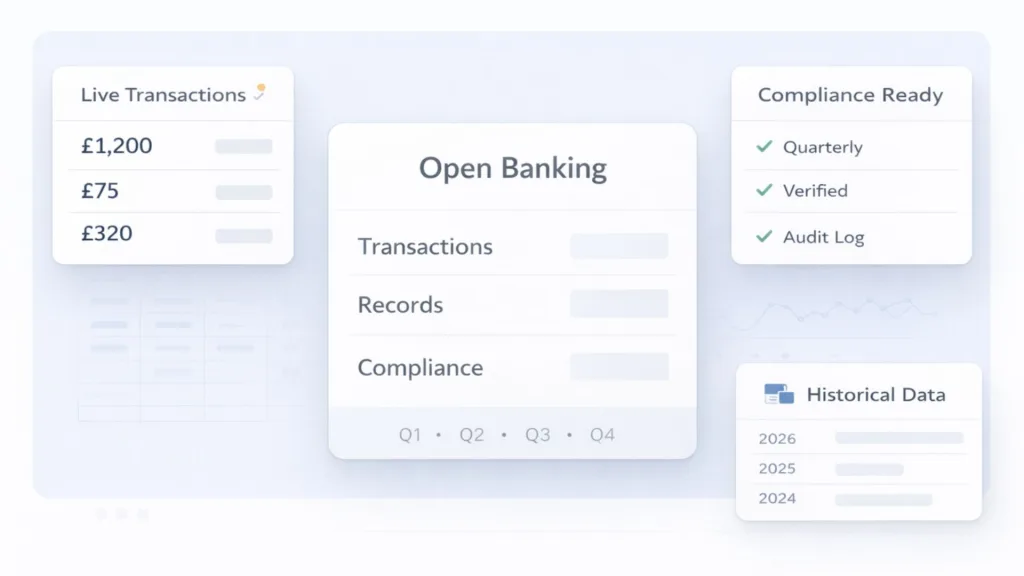
Open Banking AIS provides regulated bank data access transforming how making tax digital for income tax software maintains compliance records.
- Continuous transaction feeds: Real-time bank connectivity via webhooks. Transactions recorded automatically when they occur. No manual upload delays. Complete income visibility supporting quarterly submissions.
- Verified financial records: Direct-from-bank data with institutional authentication. Transaction provenance documented automatically. HMRC audits supported with verified records. Compliance confidence increases.
- Structured transaction data: Consistent JSON format across UK banks. Merchant details enabling automated categorisation. Counterparty information supporting income source tracking. Transaction metadata facilitating expense coding.
- Automated categorisation workflows: Merchant enrichment providing clean transaction descriptions. Spending categories assigned automatically using intelligence. Rules engines refining classifications over time. Manual intervention reduced significantly.
- Historical data access: Transaction retrieval up to 7 years (bank dependent). Complete financial history for new platform connections. Compliance reporting supported without manual backfill.
“Open Banking infrastructure eliminates the operational gap between transaction occurrence and compliance record keeping.”
Platforms building Making Tax Digital for ITSA workflows prioritise AIS connectivity over manual upload features for compliance reliability.
MTD software infrastructure evaluation
| Criteria | Why It Matters | What to Look For |
|---|---|---|
| Bank data continuity | Gaps prevent complete MTD records | Real-time feeds via Open Banking webhooks |
| Transaction verification | HMRC audits require authenticated records | Direct-from-bank data with provenance |
| Categorisation accuracy | Incorrect coding breaks HMRC submissions | 95%+ automated categorisation with enrichment |
| Historical completeness | MTD requires multi-year digital records | 7-year transaction retrieval capability |
| HMRC compatibility | Software must submit directly to HMRC | Verified functional compatibility status |
How Finexer enables MTD software infrastructure
Finexer operates Open Banking connectivity using FCA-authorised infrastructure enabling accounting platforms to build making tax digital for income tax software features.
Key capabilities:
- 99% UK bank coverage
- FCA-authorised infrastructure
- Real-time webhooks
- Up to 7 years historical data
- Merchant enrichment (100M+ database)
- Transaction categorisation (95%+ accuracy)
- Usage-based pricing
- White-label ready
- 2-3x faster integration
- 3-5 weeks onboarding support
- Saves up to 90% on transaction costs
Platforms integrate verified bank data access through REST endpoints. Users authenticate via secure Open Banking flows. Transaction feeds flow continuously supporting MTD ITSA digital record requirements.
Real-time webhooks notify platforms when income or expense transactions occur. Automated categorisation assigns spending categories using merchant intelligence. Digital records maintain completeness supporting quarterly HMRC submissions.
Structured transaction outputs include merchant details, payment amounts, timestamps, and counterparty information enabling automated income tracking and expense coding workflows.
Critical positioning:
Finexer does not provide tax software, HMRC submission features, or accounting logic. Platforms control compliance workflows, submission formats, and client reporting.
Finexer provides verified bank transaction infrastructure through Open Banking APIs enabling accounting platforms to build reliable software for making tax digital for income tax supporting MTD ITSA compliance.
For platforms requiring HMRC MTD ITSA software infrastructure, verified bank data access removes operational bottlenecks preventing compliance automation.
What we see in practice
Most accounting platforms building MTD features underestimate bank data infrastructure complexity required for compliance workflows.
Real scaling challenge: Platform launches MTD-ready features using manual uploads. 50 users manage compliance initially. Manual reconciliation workload remains manageable. Growth to 500 users reveals operational problems.
Manual upload reminders sent weekly. Transaction gaps discovered during quarterly reviews. Reconciliation errors multiply across the user base. The support team handles missing transaction inquiries constantly.
“Manual bank data collection appeared sufficient until MTD deadlines created operational pressure.” – Common platform experience
Accounting platforms switching to Open Banking bank feeds report dramatic workflow improvements. Transaction completeness increases. Reconciliation errors decrease. Quarterly submission preparation time reduces from days to hours.
Compliance risk reduction: Verified transaction provenance supports HMRC audits. Complete digital records demonstrate proper record keeping. Automated categorisation consistency improves submission accuracy.
“Platforms building for April 2026 MTD rollout prioritises bank data infrastructure over feature breadth.” – Market observation
Tax automation platforms discover continuous bank feeds transform compliance reliability. Income tracking becomes automatic. Expense categorisation happens real-time. Quarterly submissions trigger from complete verified records.
For platforms evaluating MTD self-assessment tools infrastructure, verified bank connectivity determines compliance automation success versus manual operational overhead.
Common use cases
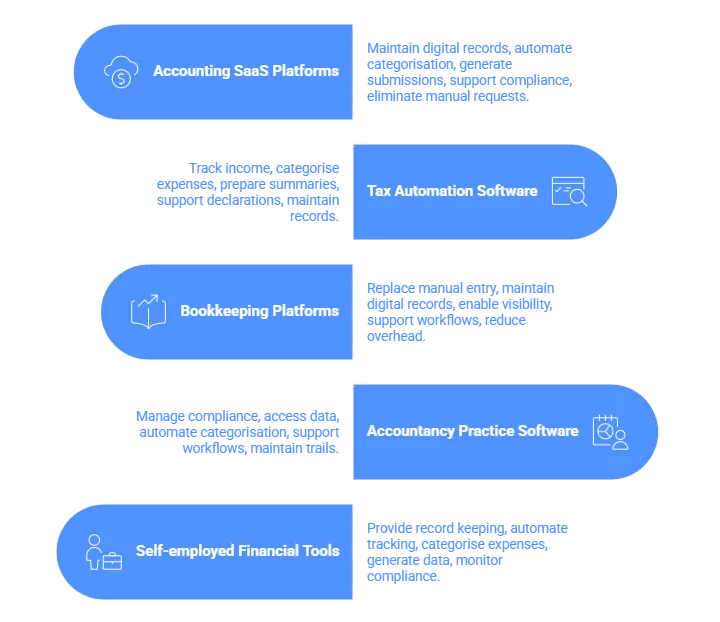
Accounting SaaS platforms:
- Maintain continuous digital records for MTD ITSA
- Automate income and expense categorisation
- Generate HMRC-ready quarterly submissions
- Support client compliance from April 2026
- Eliminate manual bank statement requests
Tax automation software:
- Track self-employed income automatically
- Categorise business expenses using verified data
- Prepare quarterly update summaries
- Support January 31st final declarations
- Maintain audit-ready transaction records
Bookkeeping platforms:
- Replace manual transaction entry with automated feeds
- Maintain MTD-compliant digital records
- Enable real-time income visibility
- Support quarterly submission workflows
- Reduce reconciliation operational overhead
Accountancy practice software:
- Manage multiple client MTD compliance
- Access verified transaction data per client
- Automate categorisation across portfolios
- Support quarterly review workflows
- Maintain complete audit trails
Self-employed financial tools:
- Provide HMRC-compatible record keeping
- Automate income tracking from bank feeds
- Categorise expenses for tax purposes
- Generate quarterly submission data
- Support threshold compliance monitoring
What is Making Tax Digital for Income Tax in the UK?
Making Tax Digital for Income Tax requires self-employed individuals and landlords with qualifying incomes over £50,000 to use HMRC-compatible software maintaining digital records and submitting quarterly updates from April 2026. Threshold lowers to £30,000 from April 2027.
Can I still use Excel for MTD?
Excel spreadsheets require bridging software for HMRC submissions under MTD rules. Platforms building making tax digital for income tax software integrate Open Banking bank feeds providing automated record keeping eliminating manual spreadsheet maintenance while maintaining HMRC compatibility.
Do I need a computer for Making Tax Digital?
MTD-compatible software operates on computers, tablets, or mobile devices. Platforms providing software for making tax digital for income tax enable cloud-based access supporting record keeping and submissions from multiple devices with verified bank data connectivity.
Enable MTD ITSA compliance with verified bank transaction infrastructure and automated digital record keeping.
About the Author

Ravi Ranjan
Ravi Ranjan is Co founder & CEO of Finexer