99% UK bank coverage. Enriched data. One integration.
FCA-authorised open banking data access for UK fintech platforms.
Open banking data networks allow fintech platforms to securely access and share financial data across multiple banks through a single API integration.
In the UK, this infrastructure runs on FCA-regulated Open Banking standards. Over 13 million UK users now access financial services through Open Banking, with 14 billion API calls processed annually (Open Banking Limited, 2025).
The provider you choose determines data quality, enrichment depth, UK bank coverage, and whether open banking data sharing and payment initiation come in one integration or require separate providers.
At Finexer, I work with UK fintech founders and product teams making this decision. The right provider for a UK platform needs both – broad UK bank coverage and high data quality after connection.
TL;DR
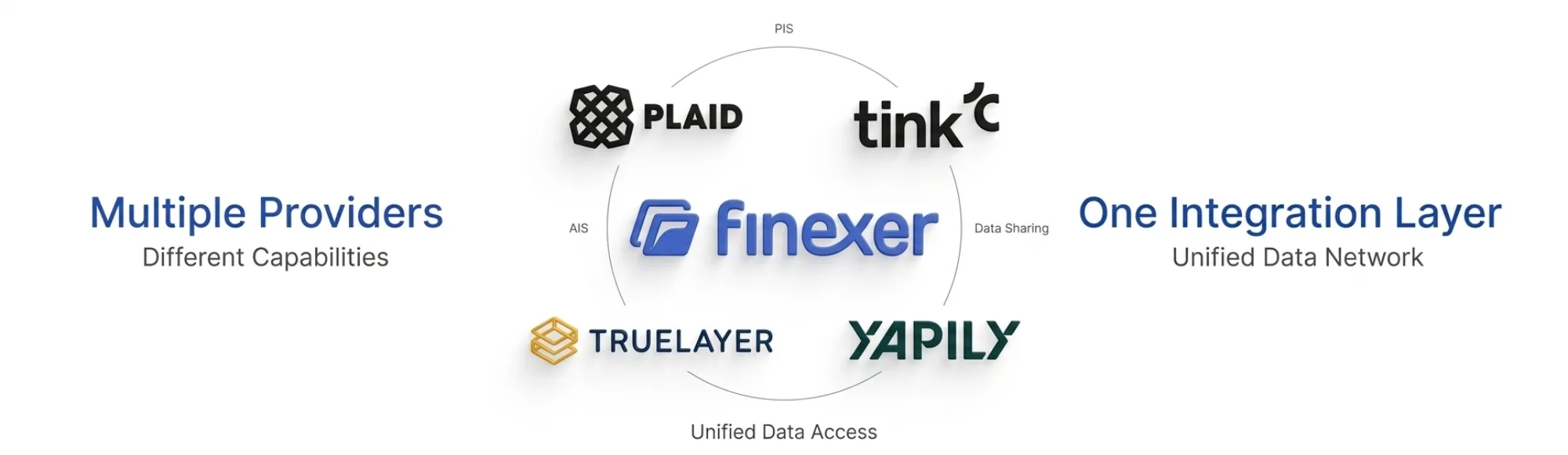
Five providers dominate the open banking data network landscape for UK fintech: Plaid, Finexer, Tink, TrueLayer, and Yapily.
Each has a distinct primary strength. Plaid leads on data analytics and global institutional coverage. Finexer is built for UK platforms needing enriched bank data and payment initiation together.
Tink is strong for European data and payments. TrueLayer leads on UK payment initiation. Yapily offers customisable infrastructure across Europe.
The right choice depends on whether you are building UK-first, EU-first, or globally.
Key Takeaways
What is an open banking data network?
An open banking data network aggregates bank API connections under a single integration point.
It gives fintech platforms consented access to transaction history, account balances, and account details from multiple institutions without building direct bank connections.
In the UK, all providers must be FCA-authorised to operate.
What separates open banking data providers on data quality?
The gap is in what arrives after the bank connection is made.
Providers that apply merchant IDs and category codes before delivery give platforms structured, workflow-ready open banking data. Providers that pass raw bank output require platforms to build normalisation layers themselves.
What should UK fintech platforms prioritise when evaluating providers?
UK bank coverage depth across high street, challenger, and business accounts.
Data quality at delivery – enrichment at source, not post-processing.
Whether open banking data sharing and payment initiation come from a single provider. And whether the provider is FCA-authorised under UK Open Banking standards.
What to Look For Before Choosing an Open Banking Data Network
How Do You Evaluate Open Banking Data Networks for UK Fintech?
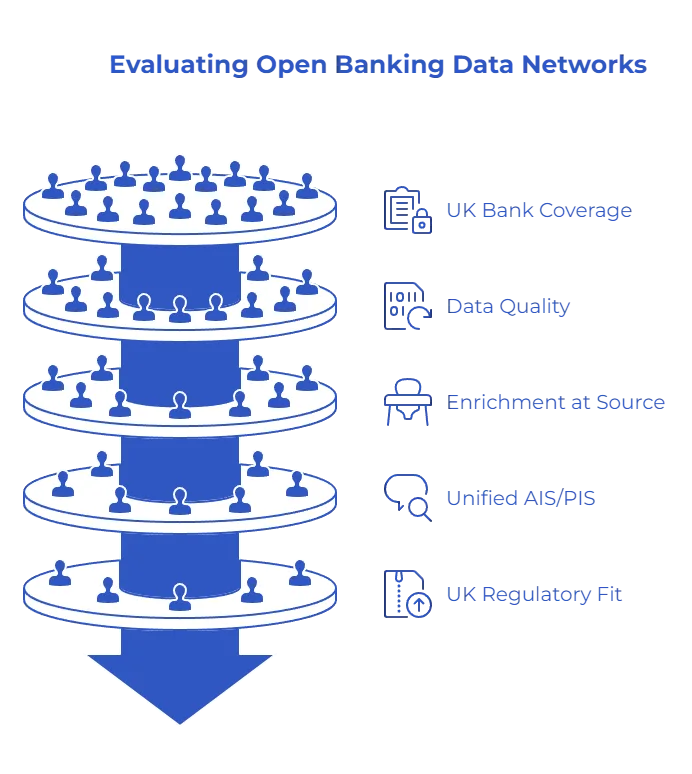
Before comparing providers, establish what your platform actually needs:
- UK bank coverage – does the provider cover high street, challenger, and business accounts with consistent data quality across all of them?
- Data quality at delivery – are merchant IDs normalised across BACS, Faster Payments, and card channels before the data reaches your platform?
- Enrichment at source – are category codes applied by the provider, or does your team need to build that layer?
- Unified AIS and PIS – does one integration cover both open banking data sharing and payment initiation, or will you need a second provider?
- UK regulatory fit – is the provider FCA-authorised under UK Open Banking standards?
- Time to production – what is the realistic deployment timeline with active onboarding support?
Banking API integration guide for UK fintech platforms covers how open banking API architecture decisions at the integration layer determine data quality in production.
The 5 Best Open Banking Data Networks for UK Fintech
1. Plaid
Plaid is one of the most widely used open banking data networks globally, with connections to over 12,000 financial institutions.
It is the dominant choice for data-led fintech in North America, with coverage expanding across the UK and EU.
Primary strength: Financial data analytics, account verification, cash-flow underwriting, lending applications.
UK fit: Available in the UK, but optimised for North American markets.
UK fintech teams building globally or needing broad institutional data coverage across multiple geographies will find Plaid well-suited. For UK-only builds, the depth of UK-specific coverage and enrichment may require evaluation against UK-first alternatives.
Best for: Fintech platforms building for US/Canada markets or needing broad global institutional data coverage alongside the UK.
2. Finexer
Finexer is an FCA-authorised open banking data network built specifically for the UK market.
It provides AIS and PIS in a single integration – giving platforms access to enriched bank transaction data and payment initiation without needing separate providers.
Primary strength: UK-first bank data infrastructure combining enriched open banking data, real-time webhooks, and full payment initiation in one API layer.
UK fit: Purpose-built for UK platforms. Covers virtually every major UK bank across high street, challenger, and business accounts.
Finexer’s AIS provides:
- Real-time webhooks per transaction – no polling gaps
- Merchant IDs and category codes applied at source
- Structured JSON with consistent schema across almost all major UK banks
- Up to 7 years of transaction history per account
- Consent logs and access timestamps per retrieval
- Multi-account access in a single consent flow
- Deploys 2-3x faster than market alternatives
PIS alongside AIS: Pay by Bank, Payment Links, VRP, and Bulk Payout in the same integration.
Usage-based pricing, 3-5 weeks to production with active and faster onboarding support.
Best for: UK fintech startups and scale-ups needing enriched open banking data and payment initiation from a single FCA-authorised provider.
Open banking data access and integration for UK accounting platforms covers how Finexer’s AIS delivers structured bank data for accounting and financial operations workflows.
“For UK fintech platforms, the open banking data network decision comes down to one question: do you need enriched, structured bank data from day one – or can you invest time in building normalisation yourself? If day one matters, the provider choice is the most important infrastructure decision you will make.” – Ravi, Finexer
3. Tink
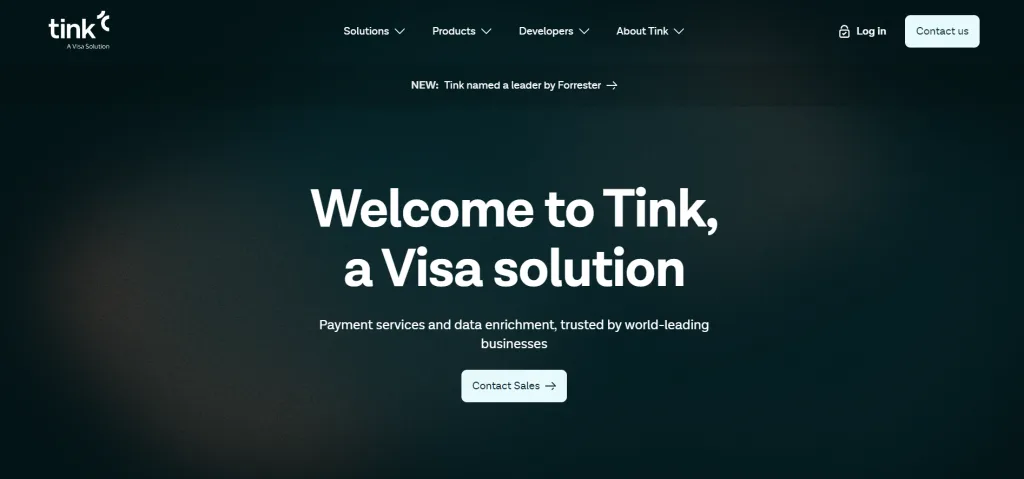
Tink, acquired by Visa in 2022, is one of Europe’s most established open banking data networks. It connects to 3,400+ banks across European markets, offering data access, enrichment, and payment initiation through a single API.
Primary strength: European bank connectivity, data enrichment, and pay-by-bank payments across multiple EU markets.
UK fit: Available in the UK as part of its European coverage.
Well-suited for platforms building across multiple European markets that need consistent open banking data sharing across EU and UK together.
Best for: EU-first or pan-European fintech platforms needing broad European bank coverage with data and payment capabilities in one provider.
4. TrueLayer
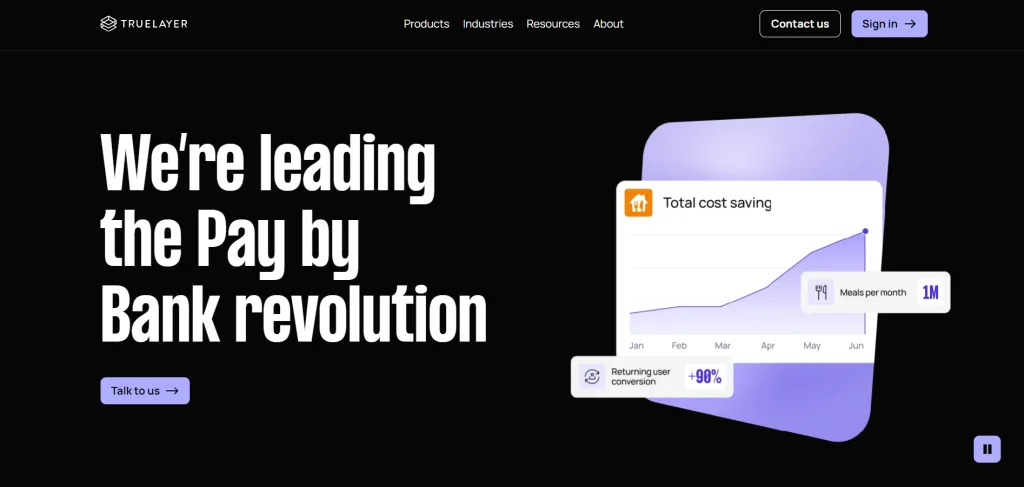
TrueLayer is a UK-headquartered open banking platform with strong payment initiation capabilities across the UK and EU.
It handles a significant share of UK Pay by Bank payment volume and is widely used by e-commerce and payments platforms.
Primary strength: Payment initiation in the UK and EU – single payments, payouts, and Variable Recurring Payments.
UK fit: Strong UK payments fit.
TrueLayer’s primary strength is payment initiation. Data services are available, though payments remain the core use case for most UK deployments.
Best for: UK and EU payments-first platforms prioritising checkout speed, Pay by Bank conversion, and A2A payment reliability.
5. Yapily
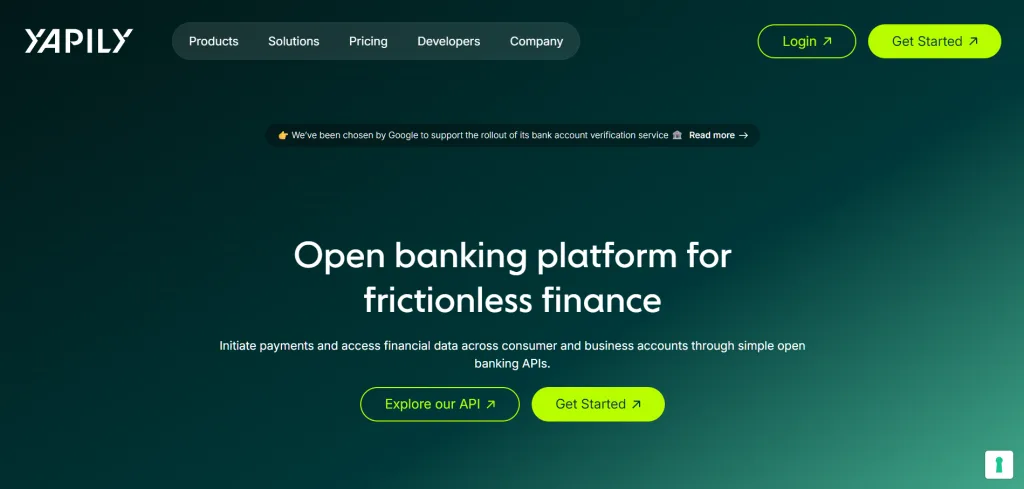
Yapily is a London-based open banking infrastructure provider operating across 19 European countries with connections to 2,000+ banks.
It operates as a pure infrastructure layer – offering white-label flows and full control over the end-user experience.
Primary strength: Customisable open banking infrastructure APIs with white-label capability across Europe.
UK fit: Available in the UK as part of its European infrastructure.
Well-suited for enterprise builds that require full customisation of the user experience and broad European coverage alongside the UK.
Best for: Enterprise platforms and large fintechs needing customisable open banking infrastructure across multiple European markets.
| Provider | Primary Strength | UK Fit | Best For |
|---|---|---|---|
| Plaid | Data analytics, account verification | Available in UK – optimised for North America | Global or US-first platforms needing broad institutional data |
| Finexer | UK AIS + PIS, enriched data, payments | Purpose-built for UK (near-universal bank coverage) | UK-first platforms needing enriched data and payments in one API |
| Tink (Visa) | European connectivity, enrichment, payments | Available in UK – optimised for Europe | EU-first or pan-European platforms |
| TrueLayer | UK and EU payment initiation | Strong UK payments fit | Payments-first UK and EU platforms |
| Yapily | White-label infrastructure, European coverage | Available in UK – European infrastructure | Enterprise builds needing customisable European infrastructure |
Open Banking infrastructure platforms – what matters in production covers how open banking infrastructure decisions affect data reliability and payment performance in production.
What I Feel
UK fintech platforms need both – broad bank coverage and high data quality after connection.
Coverage determines which users you can serve. Data quality determines what you can do with them. Evaluating one without the other is where most platforms go wrong.
Among the providers in this comparison, Finexer is the only one built specifically for the UK market – combining AIS and PIS in a single integration with enrichment at source, real-time webhooks, and near-universal UK bank coverage.
For UK fintech startups and scale-ups needing enriched bank data and payment capability from day one, Finexer is the most direct fit.
“The right open banking data network for a UK fintech delivers broad UK bank coverage and structured, enriched data from the moment it arrives. Coverage and quality are not trade-offs – they are both requirements.” – Ravi, Finexer
Common Use Cases
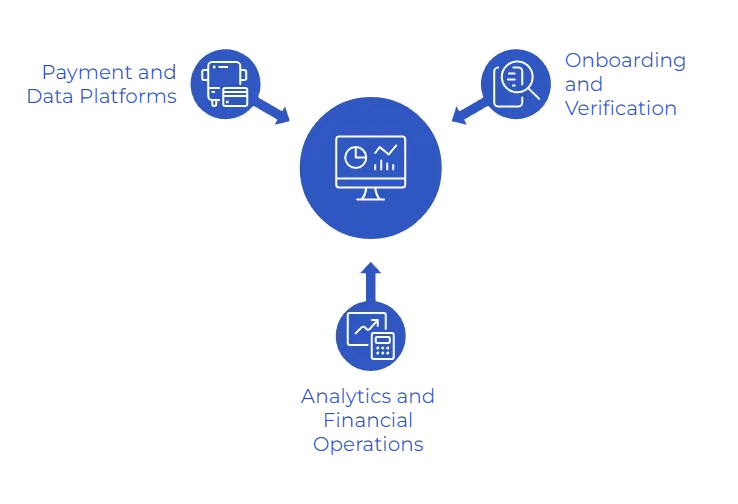
Onboarding and Verification Platforms
Clean, structured open banking data across all major UK banks is critical for account verification and financial history checks. Finexer’s AIS delivers:
- Up to 7 years of transaction history per account
- Consent logs and access timestamps per retrieval
- Account holder details confirmed at bank level
Analytics and Financial Operations Platforms
Cash flow analytics, budgeting, and financial reporting need enriched transaction data from the moment it occurs. Finexer’s real-time webhooks and category codes at source eliminate the manual categorisation step before analysis.
Payment and Data Platforms
Platforms needing both open banking data sharing and payment initiation in a single integration avoid the complexity of managing multiple providers. Finexer provides AIS and PIS together.
ERP automation with bank data via Open Banking APIs covers how platforms combine open banking data and payments in unified workflows.
What does open banking data include?
Open banking data includes account balances, transaction history, account holder details, and payment references – accessed with user consent via FCA-authorised APIs. Providers that apply merchant IDs and category codes before delivery give platforms structured, enriched bank data. Providers that pass raw bank output require platforms to build normalisation themselves.
Which open banking data network is best for UK fintech startups?
For UK-first fintech startups, the most relevant criteria are UK bank coverage depth, enrichment at source, and whether data and payment initiation come from a single provider. Platforms building for US or global markets may prioritise providers with broader international institutional coverage.
How does open banking data sharing work in the UK?
Open banking data sharing in the UK requires explicit user consent. The user authorises an FCA-authorised provider to access their bank data – specifying what is shared and for how long. The bank delivers the data via standardised API. Consent can be withdrawn at any time. The data is used only for the purpose the user authorised.
Build on open banking data infrastructure built for the UK market.
About the Author

Ravi Ranjan
Ravi Ranjan is Co founder & CEO of Finexer