Tag: pis

Payment Failure: Why It Keeps Happening and What Actually Fixes It
Every payment failure has a specific cause, and most payment failures follow familiar patterns across cards, Direct Debit and bank payments. This guide explains why they happen, how they affect revenue, and what to look for in a payment system for small businesses before failed collections become a recurring operational problem.

Open Banking Payment Initiation: How PIS Actually Works
Open banking payment initiation lets businesses collect bank payments directly through a regulated payment initiation service, without card networks or intermediaries. Learn how PIS works, how Strong Customer Authentication protects every payment, and what to evaluate before choosing a provider for Pay by Bank integration.

Open Banking Payments: A Guide for UK Businesses
Open banking payments move money directly between bank accounts, authorised by the customer and settled via Faster Payments. This guide explains how they work, compares them with cards and Direct Debit, covers variable recurring payments for subscriptions, and outlines what to evaluate before choosing an Open Banking payments provider.
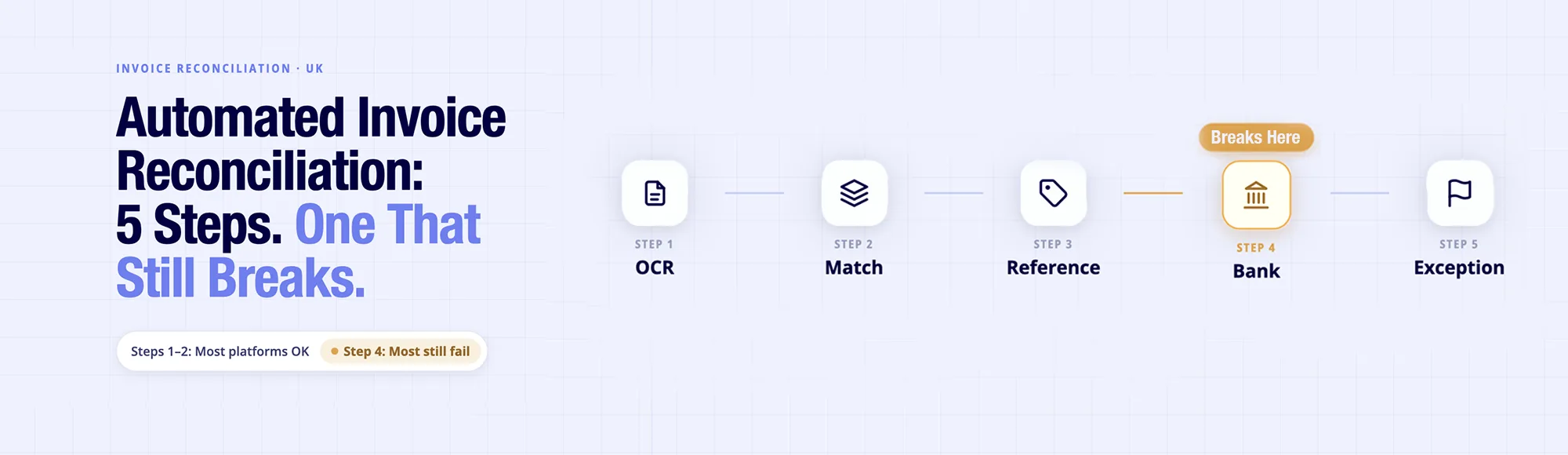
Automated Invoice Reconciliation: The 5-Step UK Process Flow
Automated invoice reconciliation only works when the invoice reconciliation process flow is built correctly from the start. This guide breaks the process into five numbered steps: OCR extraction, three-way matching, payment initiation, bank confirmation, and exception routing, so UK finance teams can see exactly where automation succeeds and where most platforms still fail.
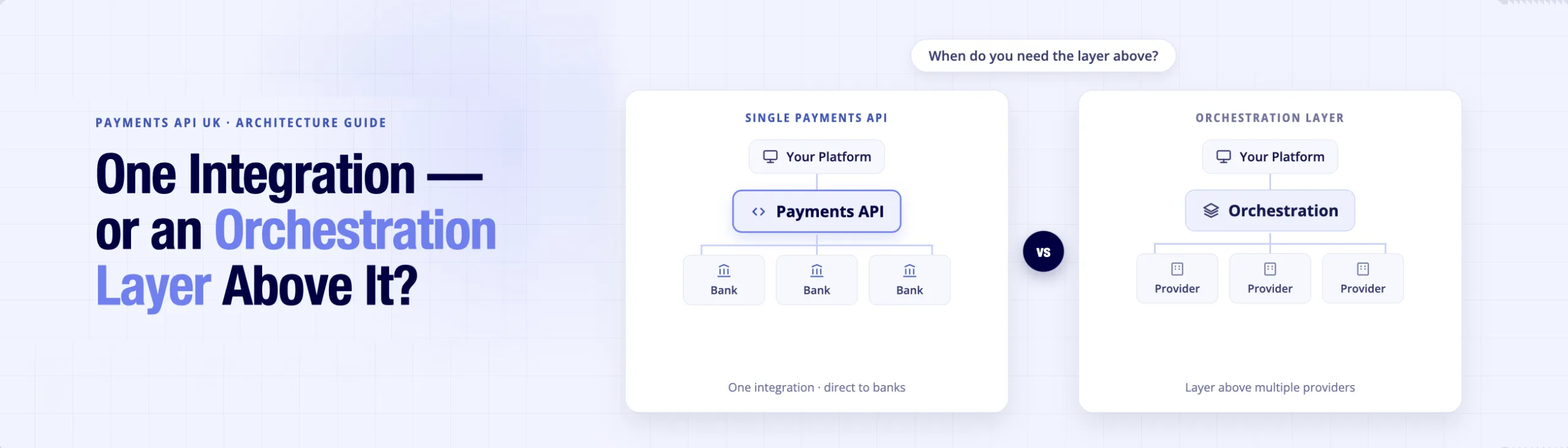
Payments API UK: What It Is and How Orchestration Extends It
Not every platform needs payment orchestration from day one. Learn the difference between a payments API and an orchestration layer, how each fits into your payment architecture, and when UK businesses should move beyond a single provider for greater resilience and scalability.
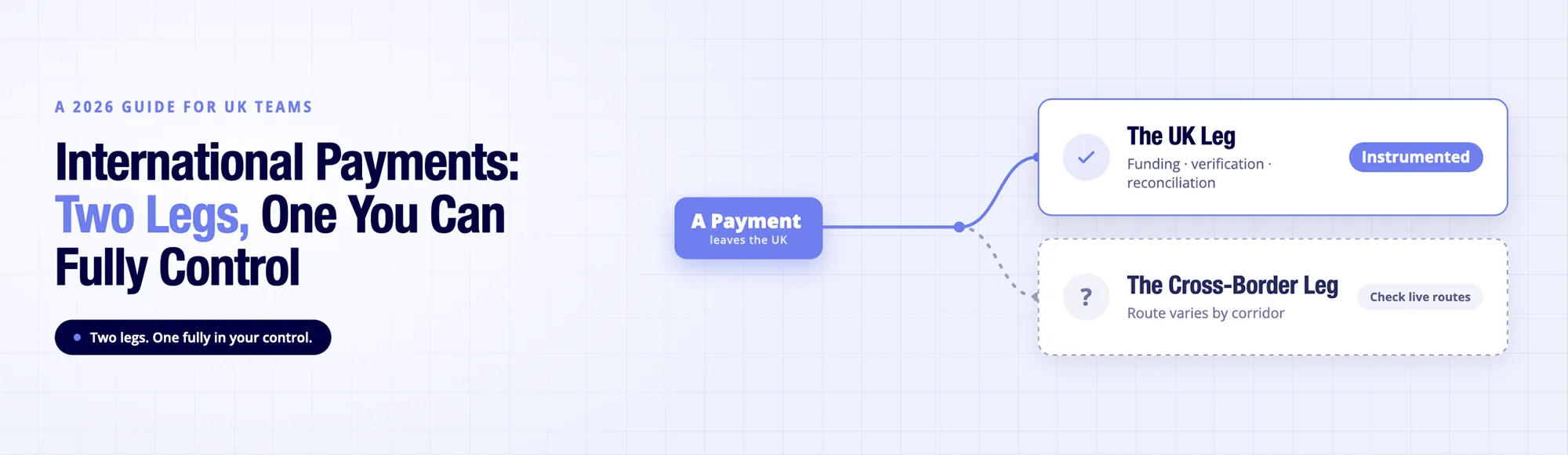
International Payments Still Break at Scale. Here Is Why.
International payments from the UK are two journeys joined together: a fast domestic leg and a slower cross-border leg where fees and visibility hide. This guide explains how each leg works, the four real costs, what Open Banking can and cannot change, and how to compare international payout services properly.
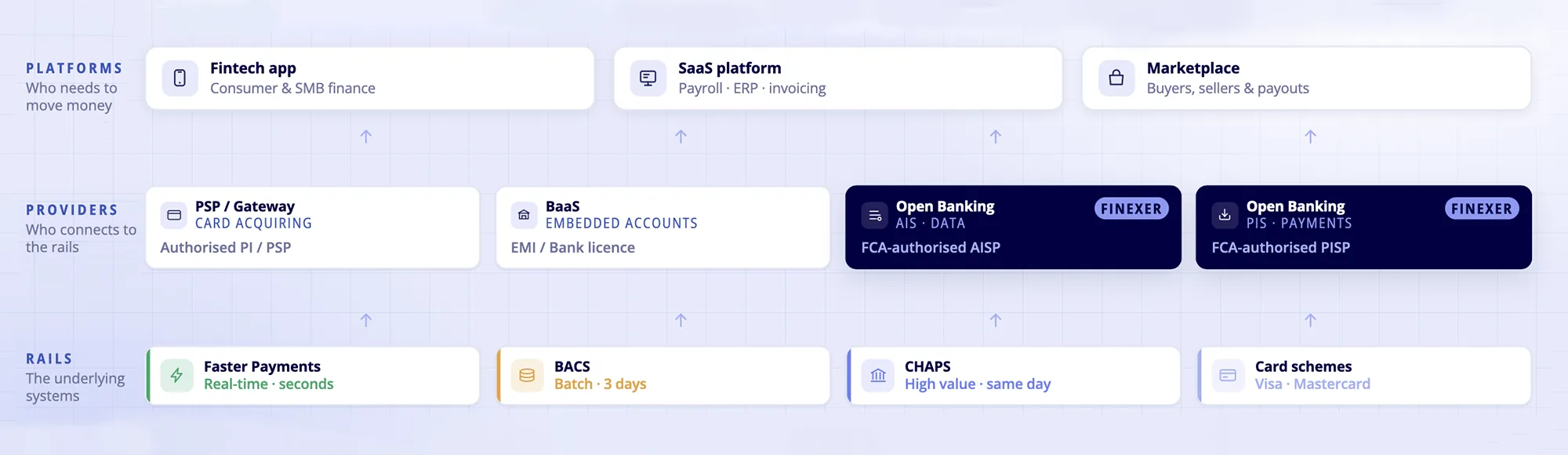
Payment Infrastructure UK: The Full Stack from Rails to Regulation
Every payment a platform processes touches infrastructure it did not build and regulation it did not choose. Understanding the UK payment infrastructure stack – the rails, the provider categories, and who regulates what – is the decision that shapes everything downstream: cost, speed, coverage, compliance, and how easily the stack can change when requirements do.
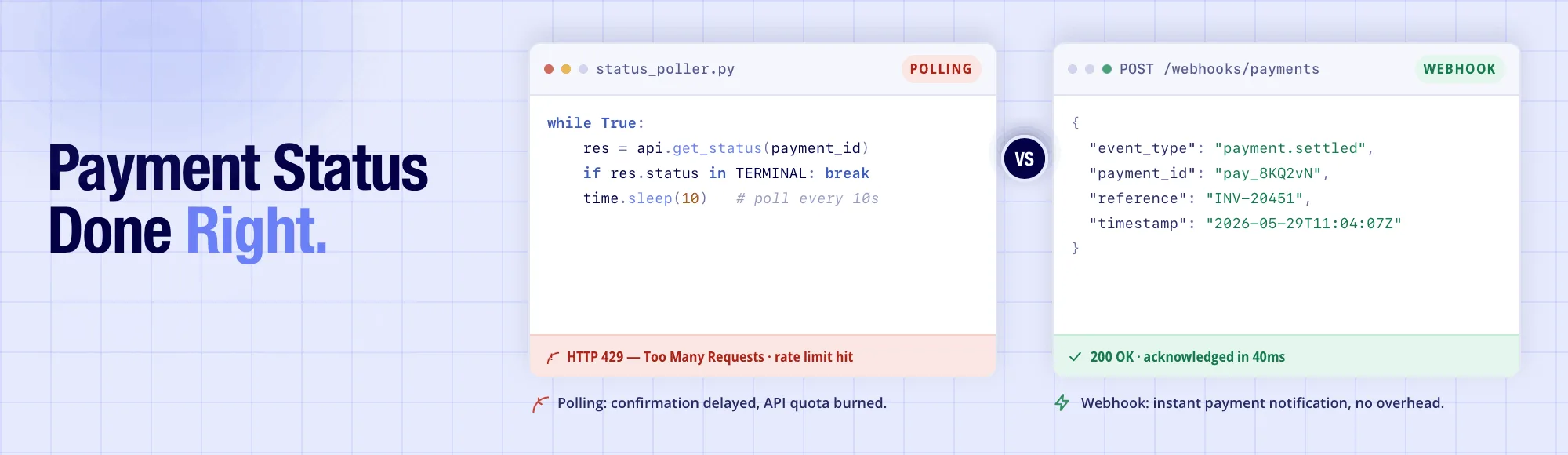
Payment Status Tracking: Webhooks vs Polling and the Open Banking Approach
Payment status is one of those things that looks simple until you are running payment workflows at volume on a UK platform. Polling creates rate limit pressure, confirmation delays, and reconciliation gaps that compound with scale. This is how webhooks, idempotency, and bank-confirmed instant payment notification change the operational picture for engineering and product teams.

Why Payment Tracking Still Breaks in Modern Financial Workflows
Payment tracking sounds like a solved problem. Most platforms have a status page. Most finance teams have a spreadsheet. Neither tells you what happened at the bank. This blog covers why payment tracking breaks operationally, what online payment tracking requires beyond status updates, and how connecting payment initiation to bank transaction data changes the workflow.
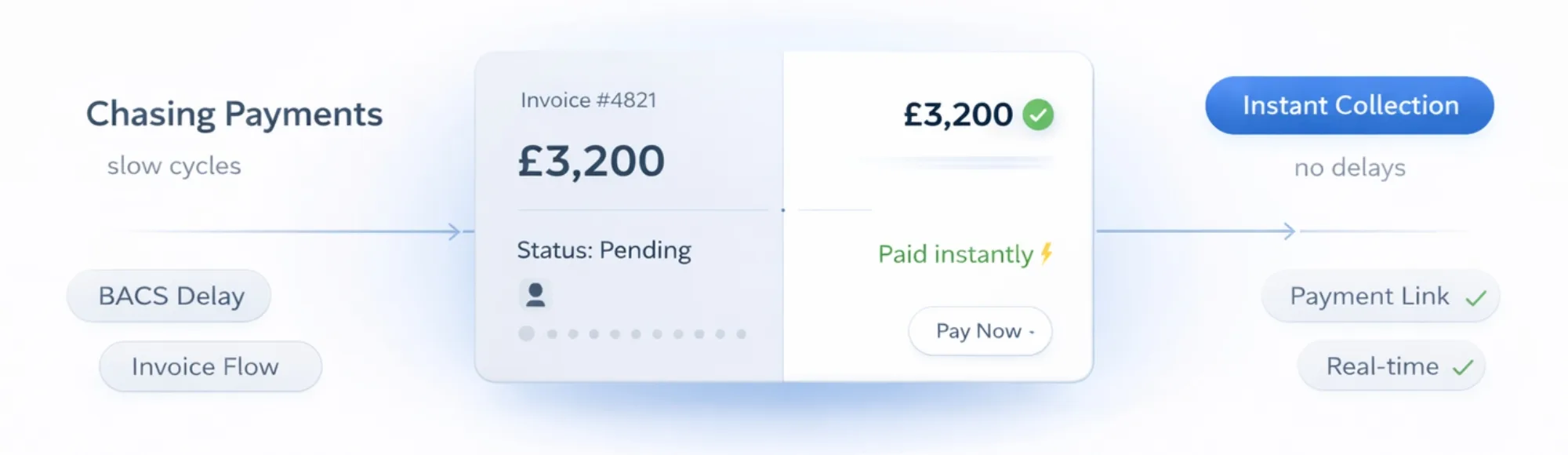
Late Payment Fees UK: Why Businesses Still Get Paid Late
Late payment fees UK give businesses the legal right to charge interest and compensation on overdue invoices. But most businesses never enforce them – and still get paid late. The fees exist. The delays continue. This blog covers why late payment of commercial debts persists despite the penalties, and what actually fixes the collection problem.
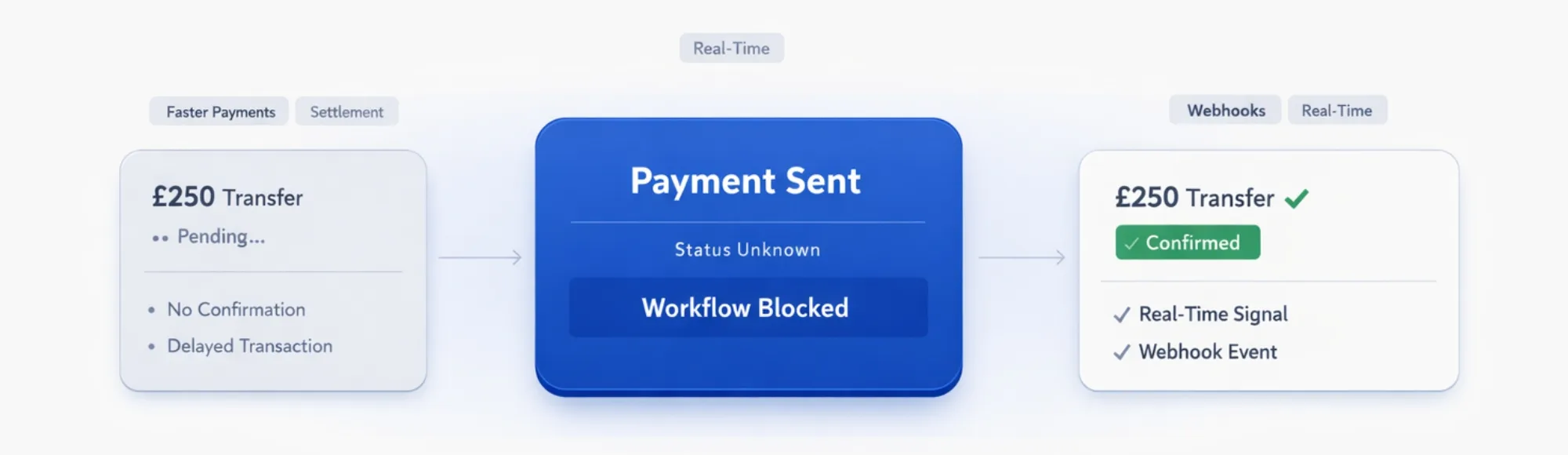
Delayed Bank Transfer: Why Your Platform Never Knows If Payments Cleared
Delayed bank transfer is not just a speed problem for platforms. It is a visibility problem. When a payment is initiated but unconfirmed, EPOS platforms cannot fulfil, payroll platforms cannot close disbursements, and billing platforms cannot reconcile. This blog covers why delayed transactions leave platforms without payment status – and how real-time confirmation fixes it.
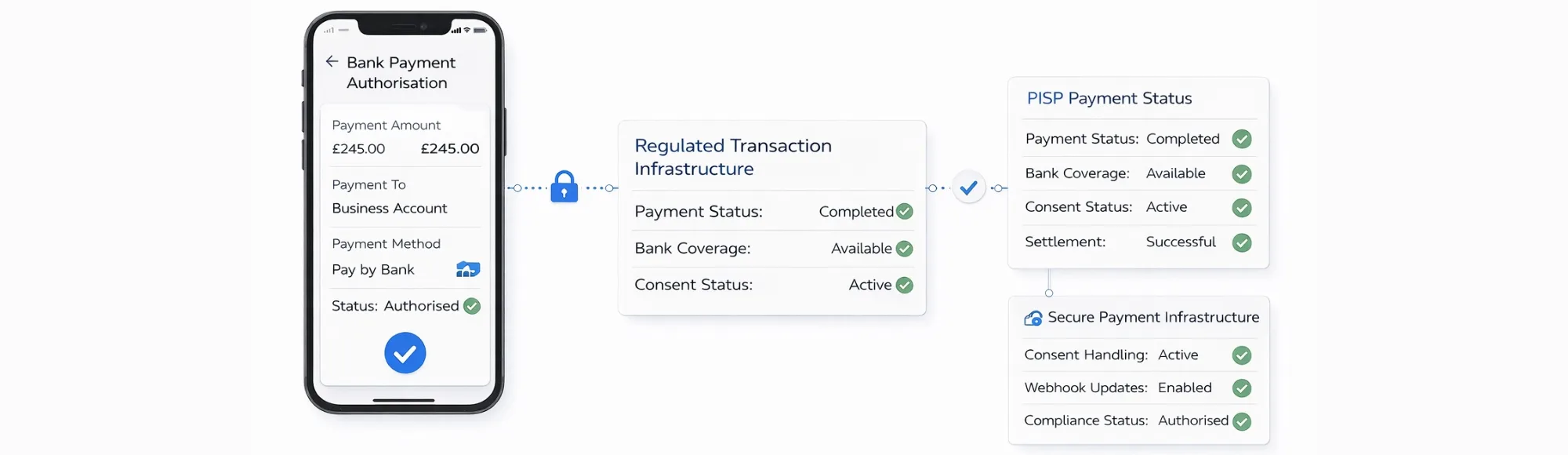
PISP Payment in the UK: Infrastructure Checklist for Platforms
PISP payment infrastructure for UK platforms. Evaluate providers with 99% bank coverage and consent handling. Compare Open Banking payment initiation now