Table of Contents
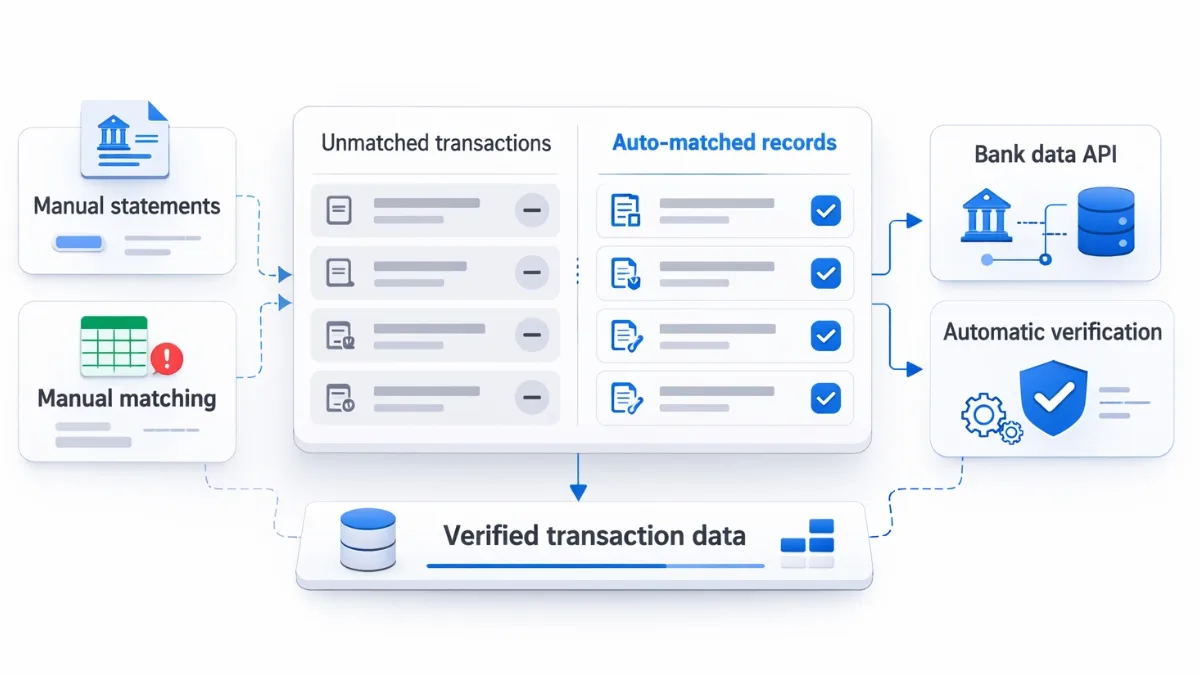
UK platforms managing client accounts cannot reconcile transactions reliably when financial data access depends on manual bank statement uploads. LawTech platforms, a ccounting software, and fintech products need automated client account reconciliation using verified transaction data without operational overhead.
Manual workflows create bottlenecks. Teams match transactions manually against records. Trust account verification happens through document inspection. Reconciliation delays extend when transaction visibility requires user intervention.
This blog explains how platforms automate client account reconciliation using secure bank transaction APIs, what infrastructure eliminates manual matching, and how reliable connectivity enables financial workflows that manual processes cannot support at scale.
Key Takeaways
What problem does this solve?
Platforms cannot automate reconciliation when transaction data requires manual bank statement uploads and matching.
Why does infrastructure matter?
Manual processes prevent scaling. Automated transaction access enables continuous matching without operational overhead.
What breaks with manual processes?
Delays extend. Transaction matching requires manual effort. Financial records contain errors. Compliance risks increase.
What should platforms evaluate before integration?
UK bank coverage, transaction data completeness, real-time feeds, historical access, consent management, API reliability.
Where does Finexer fit operationally?
Finexer provides bank transaction infrastructure. Platforms access client accounts data through APIs. Platforms build reconciliation automation and compliance features on top.
Why do platforms need reconciliation infrastructure?
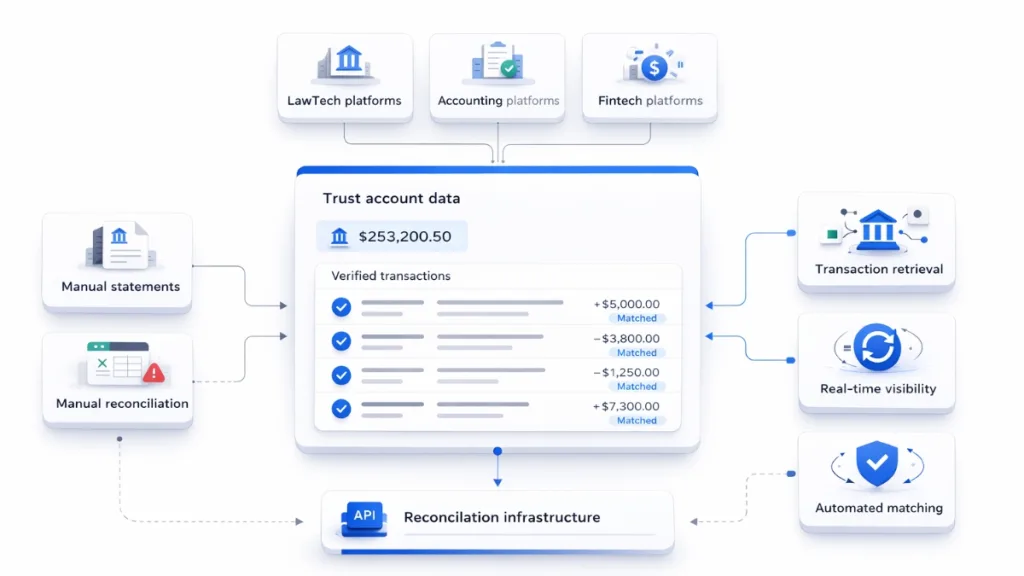
LawTech platforms cannot reconcile trust accounts manually when managing multiple client funds. Solicitors require accurate financial records showing money movement. Manual statement matching creates operational delays that damage compliance workflows.
LawTech platforms require:
- Automated transaction retrieval from trust accounts
- Real-time visibility into account activity
- Complete transaction history for audit compliance
- Verified financial records for client money handling
Accounting platforms need:
- Automated reconciliation workflows
- Transaction matching against ledger records
- Continuous financial data for accurate reporting
- Structured transaction information reducing manual work
Fintech platforms managing funds depend on:
- Real-time transaction monitoring
- Automated processes replacing manual work
- Complete financial visibility for compliance
- Reliable transaction access supporting scaling
Manual bank statement uploads prevent automation. Teams download statements from different accounts separately. Transaction matching happens manually against internal records. Reconciliation becomes impossible to scale when volumes grow.
Who needs reconciliation automation?
Legal practice management software handles multiple trust accounts requiring reconciliation. Law firms cannot track client money manually when managing hundreds of matters simultaneously. Automated transaction access enables reliable matching.
Conveyancing platforms manage property transaction funds held in client accounts. Financial records must show complete money movement for each case. Real-time transaction data provides verification that manual processes cannot maintain consistently.
Law firm accounting platforms track money across multiple trust accounts. Reconciliation must confirm every transaction matches intended clients. Automated data access removes manual matching workload.
Cloud accounting software managing funds requires automated workflows. SME clients expect real-time financial visibility. Manual statement processing creates delays that automated transaction retrieval eliminates.
Investment platforms holding funds need continuous account monitoring. Portfolio reconciliation depends on accurate transaction tracking. Automated processes ensure financial records remain current.
What happens when reconciliation fails?
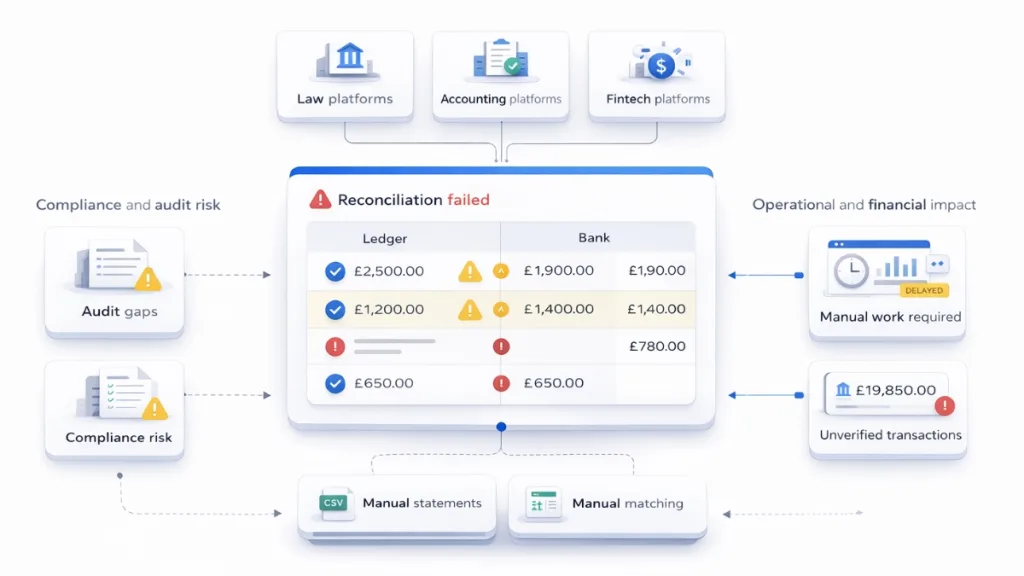
Compliance violations emerge when accounts show discrepancies between records and bank activity. Law firms face regulatory scrutiny when trust account reconciliation reveals unexplained differences. Manual processes miss transactions that automated matching detects.
Audit preparation becomes difficult when records lack completeness. Teams spend days reconstructing transaction history manually. Regulatory reviews reveal gaps that proper infrastructure prevents.
Operational costs increase when staff reconcile manually. Finance teams match transactions individually against records. Scaling becomes impossible when every account requires manual attention.
Client trust suffers when platforms cannot provide real-time financial visibility. Users question accuracy when reconciliation shows delays. Competitive platforms offering automated workflows win business.
Professional liability increases when client money handling lacks proper verification. Missing transactions create financial exposure. Automated monitoring reduces risks that manual processes cannot address consistently.
What infrastructure enables reconciliation automation?
Platforms need secure bank transaction access providing verified financial data. Each platform user authenticates accounts once through banking apps. Platforms retrieve transaction information automatically without managing complexity internally.
Reconciliation requirements:
- Complete transaction history for accurate matching
- Real-time feeds updating financial records continuously
- Structured data enabling automated logic
- Historical access supporting audit trail maintenance
Automation capabilities needed:
- Instant transaction notifications for immediate visibility
- Consistent data format across different accounts
- Reliable connectivity preventing gaps
- Audit-ready records demonstrating proper oversight
Integration supporting workflows:
- REST APIs providing transaction data
- Webhook notifications for real-time matching
- Batch retrieval for historical reconciliation
- Standardised response format simplifying automation
Consent management must be automated. Platforms cannot ask users to re-authenticate repeatedly without destroying experience. Permission tracking needs visibility into expiry dates with proactive renewal.
How does Finexer enable reconciliation automation?
Finexer provides FCA-authorised infrastructure enabling platforms to retrieve client accounts transaction data through open banking APIs.
Key capabilities:
- 99% UK bank coverage
- FCA-authorised infrastructure
- Real-time webhooks
- Up to 7 years historical data
- Usage-based pricing
- White-label ready
- 2-3x faster integration
- 3-5 weeks onboarding support
- Saves up to 90% on transaction costs
Platforms integrate APIs through REST endpoints. Users authenticate accounts via secure open banking flows. Platforms receive structured transaction information in consistent JSON format.
Real-time webhooks notify platforms when transactions occur. Financial records update immediately. Reconciliation happens automatically without manual statement processing.
Consent lifecycle management is automated with clear permission tracking. Users receive notifications before access expires. Re-authentication happens smoothly without disrupting workflows.
Historical transaction access extends up to seven years depending on bank support. Platforms retrieve complete history enabling comprehensive client account reconciliation without manual data collection.
Transaction data includes structured fields enabling automated matching. Payment amounts, references, and timestamps arrive consistently formatted supporting accurate reconciliation.
For platforms requiring automated payment reconciliation, reliable infrastructure removes operational bottlenecks.
Infrastructure evaluation checklist
| Evaluation Criteria | Why It Matters | What to Look For |
|---|---|---|
| Real-time transaction access | Delayed data creates reconciliation gaps | Webhook notifications for immediate visibility |
| UK bank coverage | Users cannot reconcile accounts from unsupported banks | 99% coverage including challengers and building societies |
| Transaction completeness | Missing data prevents accurate matching | Structured fields with amounts, references, and timestamps |
| Historical depth | Audit trails require complete transaction history | Multi-year retrieval supporting regulatory compliance |
| Consent management | Expired permissions disrupt workflows | Automated tracking with proactive renewal notifications |
| API reliability | Connection failures create errors | Proven uptime metrics with real-time monitoring |
Platforms offering accounting and ERP features should confirm infrastructure supports client account reconciliation requirements.
What we see in practice
Most platforms underestimate the operational cost of manual reconciliation. Initial manual processes appear manageable but scaling becomes impossible when client numbers and transaction volumes grow.
Trust account reconciliation failures create serious compliance exposure for law firms. Automated transaction access prevents discrepancies that manual processes miss. Real-time visibility enables immediate correction before issues compound.
Transaction matching accuracy determines quality. Platforms receiving structured data reconcile reliably. Manual processes introduce errors when transaction descriptions lack clarity.
Audit preparation transforms when accounts maintain continuous digital records. Automated client account reconciliation provides complete history instantly. Manual reconstruction requires days of staff time.
For platforms building open banking solutions for accountants, reliable connectivity determines accuracy.
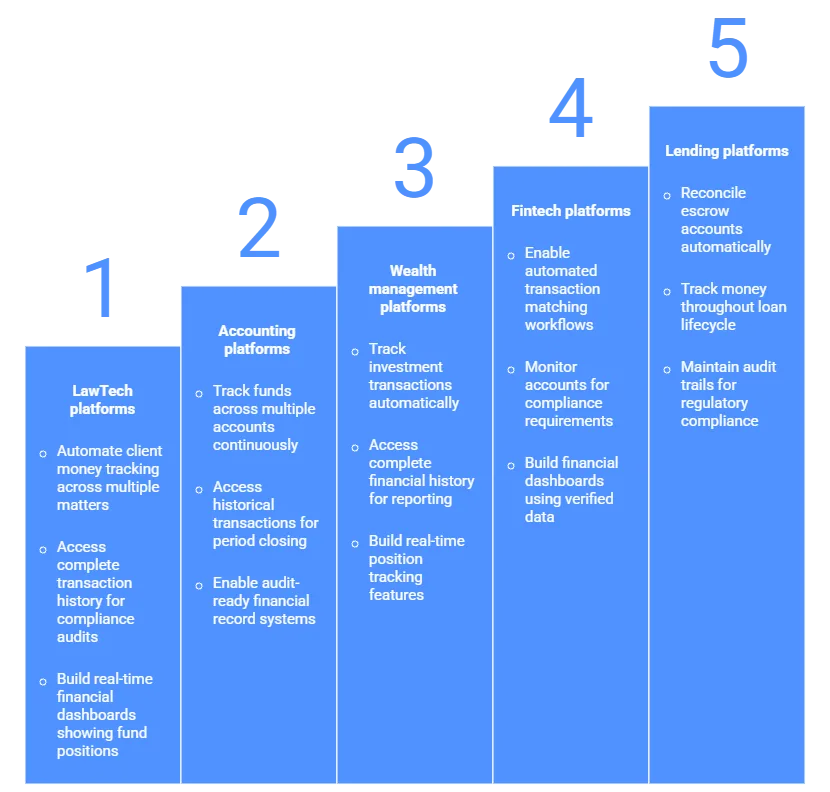
Common use cases
How to reconcile accounts in the UK?
Account reconciliation matches bank transactions against internal records. UK platforms automate client account reconciliation using bank transaction APIs retrieving verified data through open banking rather than manual statement matching.
What is a client account in the UK?
Client accounts hold money belonging to clients rather than the business. Law firms, accountants, and financial platforms manage these accounts requiring proper reconciliation ensuring funds are handled correctly.
How do you reconcile a client’s bank account?
Reconciliation matches bank transactions against ledger records. Platforms automate client account reconciliation using bank transaction APIs providing verified data eliminating manual statement processing.
What is client reconciliation?
Client reconciliation verifies transactions match internal financial records. Automated client account reconciliation uses bank transaction data accessed through APIs ensuring accuracy without manual processes.
Why do platforms need reconciliation automation?
Manual reconciliation prevents scaling and creates compliance risks. Platforms need automated transaction access enabling continuous matching without operational overhead.
Automate client account reconciliation with verified bank transaction data and real-time matching workflows.
About the Author

Ravi Ranjan
Ravi Ranjan is Co founder & CEO of Finexer