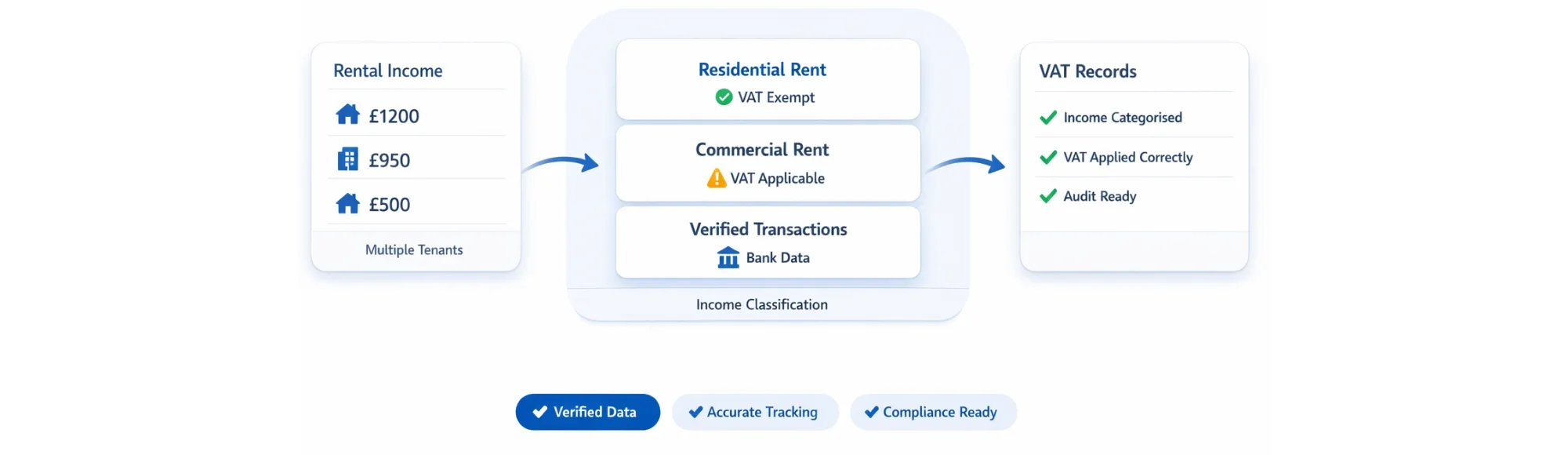
Rental income records are only as reliable as the transactions behind them.
Track rental payments accurately with FCA-authorised Open Banking infrastructure.
VAT on rental income is a question that surfaces regularly for accounting platforms and property SaaS tools managing client financial data in the UK. The VAT rule itself is straightforward. The compliance challenge for platforms is not the rule – it is whether the rental income data they hold is complete, verified, and structured enough to apply it correctly.
Under UK regulation, I work with accounting platforms and property accounting SaaS tools that handle client rental income as part of their core product. The gap I see most consistently is not platforms misunderstanding vat on rental income rules. It is a platform for building compliance workflows on incomplete or unverified income data – spreadsheet entries, uploaded PDFs, or manually entered figures that do not reflect actual payment behaviour.
This blog explains what vat on rental income means for UK platforms operationally, what vat on rent requires platforms to track, and how bank transaction data supports accurate rental income records and compliance workflows.
TL;DR
VAT on rental income in the UK does not apply to residential rent, which is generally exempt. Commercial rent may carry VAT where the landlord has opted to tax the property. For platforms, the compliance challenge is whether rental income data is accurate enough to apply the correct treatment. Finexer provides FCA-authorised AIS access to verified bank transaction data that platforms use to track rental income flows and maintain structured financial records.
Key Takeaways
Is vat on rental income applicable in the UK?
Residential rental income is generally exempt from VAT in the UK. Commercial rent may be subject to VAT if the landlord has opted to tax the property. The correct treatment depends on accurate income classification and verified payment records.
What does a platform need to track for vat on rental income compliance?
Platforms need verified rental payment transactions, structured income records per tenancy, payment dates and references, and continuous transaction feeds that reflect actual rental activity rather than manually compiled data.
Is there vat on rent for residential properties?
No. Residential rent in the UK is exempt from VAT under HMRC’s land and property VAT rules. The exemption applies regardless of how rent is paid. Commercial rent may carry VAT where the landlord has made a VAT election.
Why does rental income data create compliance risk for platforms?
Rental payments arrive across multiple bank accounts and tenants. Without verified transaction data, platforms rely on incomplete records that cannot support accurate income reporting or VAT classification.
How does Open Banking infrastructure support rental income tracking?
FCA-authorised AIS access provides verified bank transaction data directly from client accounts – giving platforms real payment records per tenancy that support income reporting, reconciliation, and compliance workflows.
Is There VAT on Rent – And What Does That Mean for Platforms?
The Rule
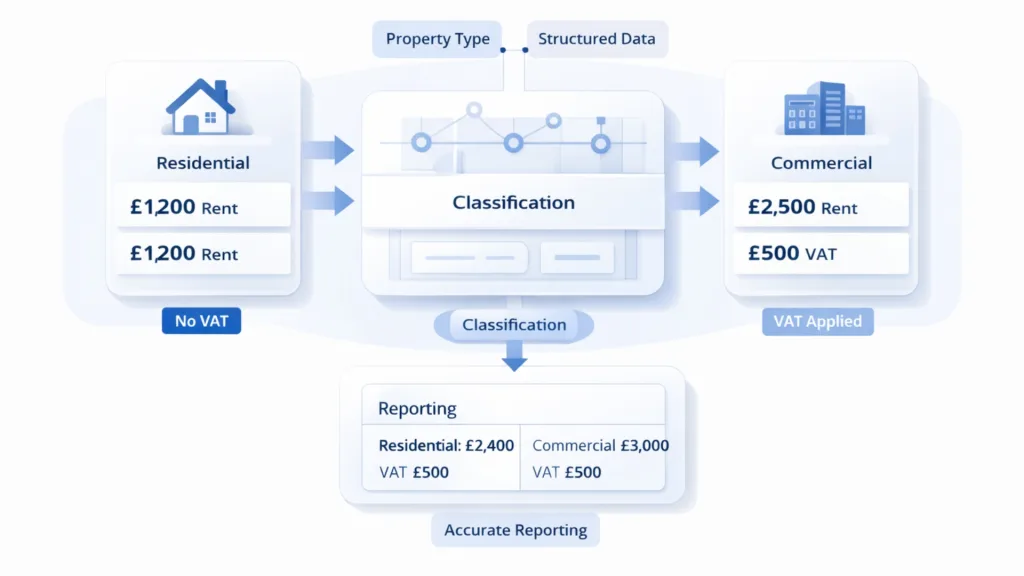
VAT on rental income in the UK follows a clear split. Residential rent – houses, flats, and other residential lettings – is generally exempt from VAT under HMRC’s VAT Notice 742. Is there vat on rent for residential properties? No. The exemption applies regardless of how rent is paid.
Commercial rent is different. Where a landlord has opted to tax the building, VAT applies to the rent charged. For platforms managing mixed property portfolios, income records must clearly distinguish residential from commercial income.
“The vat on rental income position is well established in UK tax law. What creates compliance risk for platforms is not misreading the rule. It is not having the transaction data to apply it accurately across a client portfolio.” – Clare, Finexer
What This Requires at the Data Layer
For platforms, Is there vat on rent question is only answerable accurately when the underlying income data is correct. Platforms need clear classification of income per property type, verified payment records per tenancy, and structured transaction data that supports income reporting workflows. Without this, the compliance framework has nothing reliable to operate on.
Why Is Rental Income Tracking Difficult for Platforms?

The Data Problem
Vat on rental income compliance depends on income records that accurately reflect what was paid, when, and from which tenancy. Rental income does not arrive in a structured feed. It arrives across multiple landlord bank accounts, multiple tenants, and multiple payment schedules.
Platforms managing rental income data typically encounter:
- Rent payments across personal and business bank accounts with no consistent reference
- Tenants paying at irregular intervals or partial amounts
- Manual bank statement uploads that are incomplete or out of date
- No structured link between a payment transaction and the property or tenancy it relates to
The result is income records that cannot be reconciled reliably and cannot support accurate vat on rental income classification.
“When a platform’s rental income records are built from uploaded PDFs and spreadsheet entries, there is no way to verify that every payment has been captured. That is where compliance exposure sits – not in the VAT rule itself.” – Clare, Finexer
Where Platforms Are Most Exposed
Platforms managing landlord clients at scale face this problem in proportion to their client volume. A single landlord with multiple properties paying across several bank accounts creates a reconciliation gap that manual data collection cannot close.
Making Tax Digital for Income Tax introduces reporting obligations that make complete rental income records a regulatory requirement. Platforms without verified transaction data at source cannot meet those obligations on behalf of their clients.
How Should Platforms Evaluate Rental Income Data Infrastructure?
| Platform Need | Why It Matters | What to Look For |
|---|---|---|
| Verified rental payment data | Manual records create gaps that break vat on rental income reporting | FCA-authorised AIS access to bank transaction data directly from client accounts |
| Continuous transaction feeds | Periodic uploads miss payments and produce incomplete income records | Real-time and scheduled transaction feeds with consent-based access |
| Structured financial data | Unstructured data cannot support is there vat on rent classification workflows | Categorised transaction data with timestamps and payment references |
| Consent-based access | Platforms must access client financial data with documented consent and lawful basis | Granular consent flows, time-limited permissions, instant revocation capability |
| Audit-ready income records | Compliance workflows require verifiable evidence of rental income activity | Full consent logs and access timestamps per data retrieval |
Making Tax Digital compliance workflows depend on digital records that reflect real financial activity. For rental income tracking, that means platforms need access to verified bank transaction data – not reconstructed records from documents.
How Does Finexer Support Vat on Rental Income Tracking?

Finexer is an FCA-authorised Open Banking infrastructure provider. For platforms tracking vat on rental income across client portfolios, Finexer provides AIS-based access to verified bank transaction data through consent-based Open Banking flows.
What Finexer’s Infrastructure Provides
- FCA-authorised AIS access – verifiable on the FCA register
- Explicit, granular consent flows with time-limited permissions
- Instant consent revocation capability for end users
- Full consent logs and access timestamps per data retrieval
- Bank-authenticated transaction data – not client-submitted documents
- Structured transaction data with categorisation, timestamps, and payment references
- Usage-based pricing with 3-5 weeks onboarding support
“The platforms managing rental income compliance well are not the ones with the most sophisticated reporting tools. They are the ones whose underlying transaction data is complete and verifiable. That is the layer Finexer provides.” – Clare, Finexer
What I Feel
Vat on rental income is a rule that most platforms understand. The problem is rarely the rule – it is the data behind it.
Platforms that rely on uploaded statements or manually entered income figures are building compliance workflows on an unreliable foundation. When HMRC or a regulator asks for evidence, incomplete records create exposure that no reporting layer can fix retrospectively.
The platforms getting this right treat transaction data quality as a compliance requirement – not an operational convenience.
Common Use Cases
Accounting and Bookkeeping Platforms
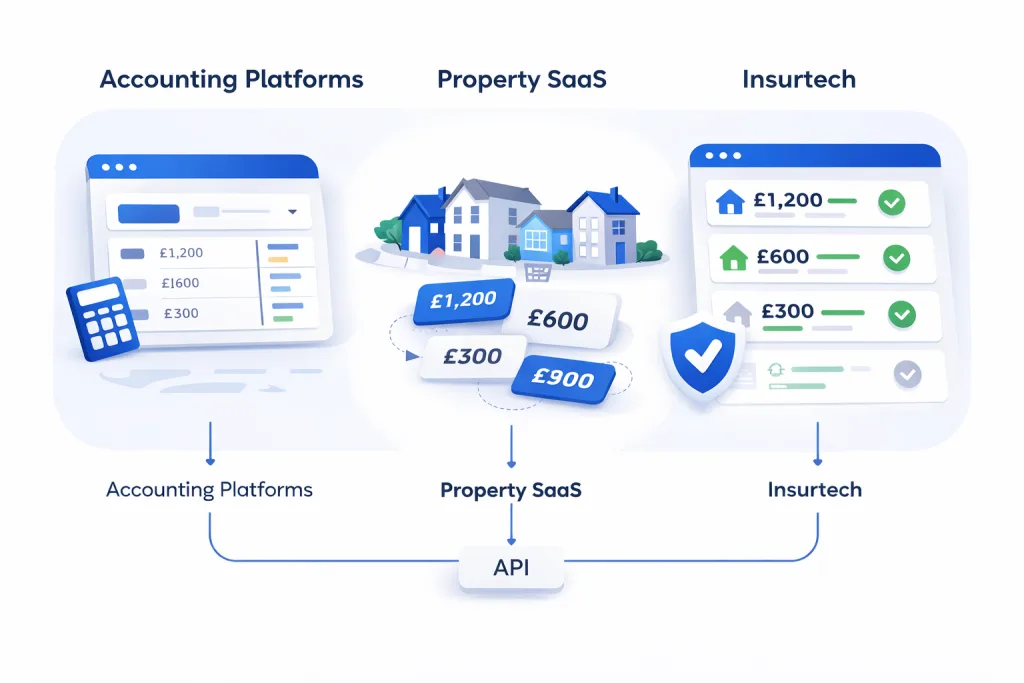
Accounting platforms managing landlord clients need complete rental income records to support vat on rental income classification, income tax reporting, and MTD compliance. Finexer’s FCA-authorised AIS provides verified bank transaction data that gives accounting tools a reliable foundation for rental income tracking without depending on client-submitted documents.
Property Accounting SaaS
Property SaaS platforms tracking rent collection across multi-property portfolios face reconciliation challenges that manual data cannot solve at scale. Finexer’s AIS enables consent-based access to landlord bank transaction data, giving property platforms structured payment records per tenancy that support income reporting and compliance workflows.
Insurtech Platforms
Insurtech platforms assessing rental income for underwriting or claims use cases require verified income data that reflects actual payment behaviour. Finexer’s AIS provides bank-authenticated transaction records that support accurate rental income assessment without relying on landlord-provided statements.
Is VAT applicable on rental income in the UK?
VAT on rental income in the UK does not apply to residential rent, which is generally exempt. Commercial rent may be subject to VAT where the landlord has opted to tax the property. The correct treatment depends on accurate property classification and verified income records.
Do they charge VAT on rent for residential properties?
No. Is there vat on rent for residential lettings? Residential rent in the UK is exempt from VAT. Commercial property rent may carry VAT where the landlord has made a VAT election under HMRC’s land and property rules.
How do platforms track vat on rental income accurately?
Platforms track vat on rental income accurately by accessing verified bank transaction data through FCA-authorised Open Banking infrastructure. This provides real payment records per tenancy – structured for income reporting, reconciliation, and compliance workflows – without relying on manually compiled or client-submitted documents.
Build accurate rental income tracking on verified bank transaction data.
About the Author

Clare Pearson
Clare Pearson is a senior payments professional with extensive experience across the global financial services and payments industry. She specialises in Open Banking, payment infrastructure, and financial technology transformation, with expertise spanning product delivery, operational strategy, regulatory compliance, and large-scale payments programmes. Clare currently serves as a Non-Executive Director at Finexer and a panel member for the Payment Systems Regulator (PSR), advising on the development of payment systems policy and innovation