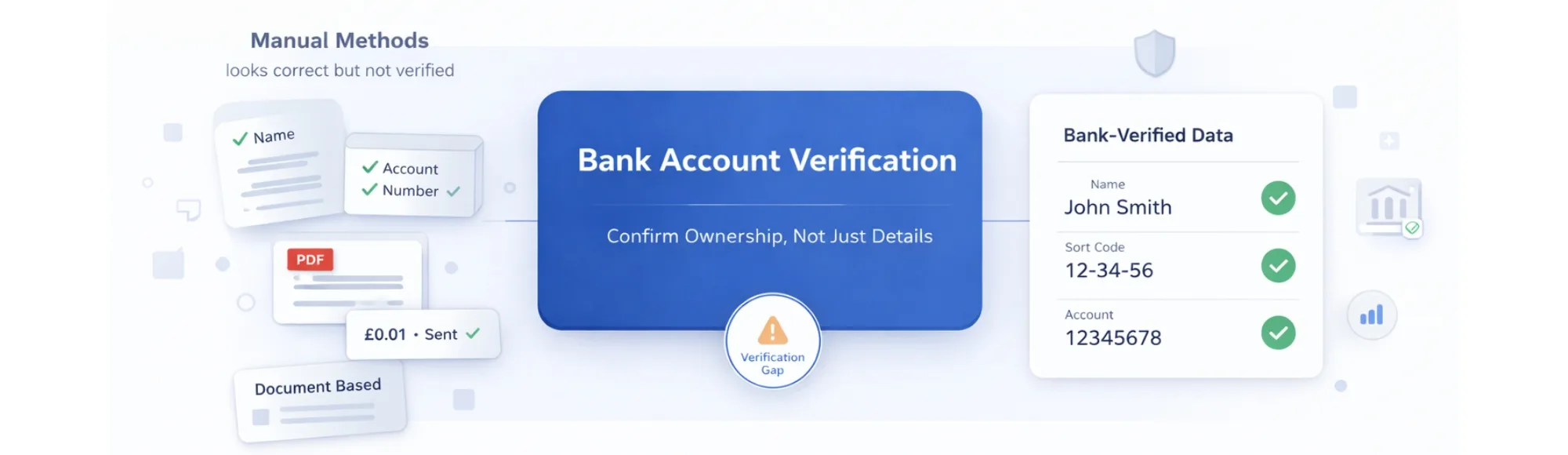
Your verification method has a gap.
Bank-verified account data closes it.
How to verify bank account details is a question most platforms answer with the wrong method.
A sort code and account number are entered. A name is checked against a document. A small test payment is sent. The box is ticked.
None of this confirms that the account belongs to the person who provided the details. It confirms the details were provided. That is a different thing.
At Finexer, I work with Lawtech platforms, payroll providers, and accounting SaaS that discover this gap after onboarding the wrong account or missing a fraudulent payment. Understanding how to verify bank details correctly – at the method level, not just the process level – is what separates verification that works from verification that looks completed.
Finexer’s bank account verification product provides FCA-authorised account ownership confirmation directly from the bank for onboarding and payment workflows.
TL;DR
How to verify bank account details reliably means confirming ownership at source – not just checking that details are correctly formatted. Manual name checks and document uploads cannot confirm account ownership independently. Penny drop tests confirm account access but not identity. FCA-authorised AIS retrieves bank-verified data directly from the institution – confirming name, account number, and sort code against the actual bank record with consent. For Lawtech, payroll, and accounting platforms, this is the only bank account verification method that holds at scale.
Key Takeaways
What does it actually mean to verify bank account details?
Verifying bank account details means confirming that the account exists, is active, and belongs to the person or entity providing the details. Format validation and document checks confirm what was submitted – not what the bank holds. Reliable verification requires a direct data source.
Why do manual methods fail to verify bank details reliably?
Manual methods rely on data the subject provides. There is no independent confirmation against the bank’s own records. A fraudulent account can pass manual verification if the details are correctly formatted and supported by convincing documents.
What is the most reliable way to verify bank account details?
The most reliable way to verify bank account details is FCA-authorised AIS – which retrieves account data directly from the financial institution with the account holder’s consent. The name, sort code, and account number are confirmed against the actual bank record – not a document the subject submitted.
How to verify bank details at scale without manual review?
The practical answer to how to verify bank details at scale is API-based verification via FCA-authorised AIS. Account data is retrieved programmatically per consent – name matching, account confirmation, and ownership verification happen automatically without manual document review or individual penny drop tests per account.
Why Do Standard Bank Account Verification Methods Fall Short?
What Goes Wrong With Manual and Document-Based Checks?
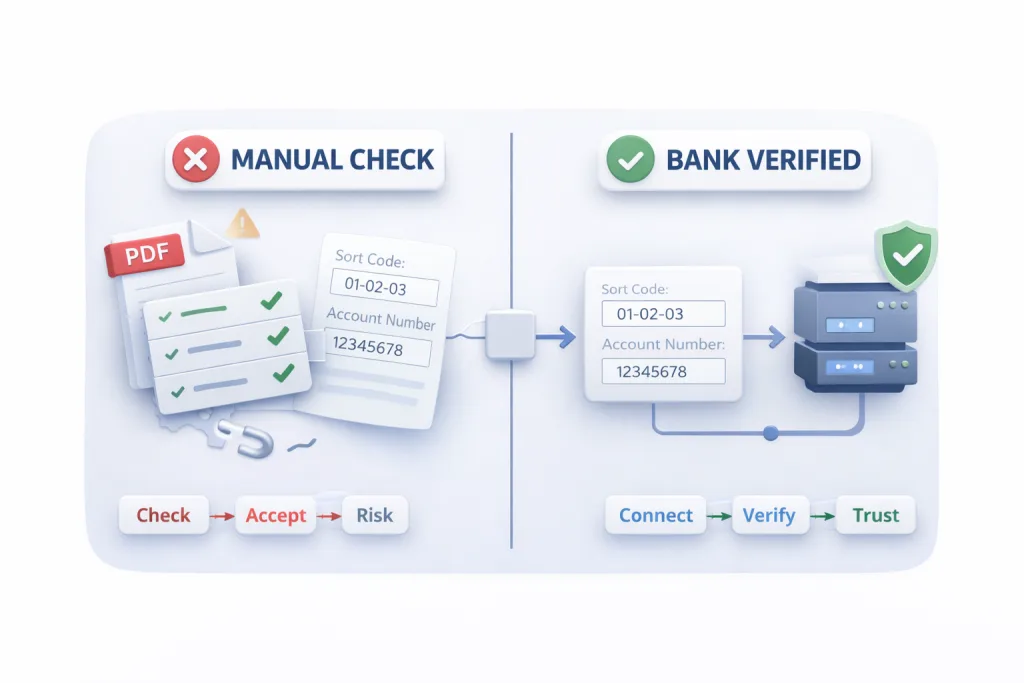
Manual verification is the most common method platforms use when they need to verify bank account details. It is also the most unreliable at scale.
A team member checks a sort code and account number for the correct format. They compare the name against a submitted document. They may send a test email to confirm. None of this reaches the bank. The check is performed entirely on data the subject provided.
Document-based verification has the same structural problem. A bank statement uploaded by the account holder reflects what they chose to share – from accounts they selected, in a format they controlled. It cannot be independently confirmed against the bank’s own record.
Bank account verification for instant onboarding on UK platforms covers why document-based verification creates onboarding gaps and how bank-sourced data closes them.
According to UK Finance, UK businesses lost over £708 million to remote banking fraud in 2023. The majority of these losses involved accounts that passed basic verification checks before fraud was identified.
“At Finexer, I speak with payroll and Lawtech platforms that have onboarded fraudulent accounts that passed every manual check. The check was completed correctly – the method just could not confirm what it needed to confirm.” – Ravi, Finexer
What Is the Business Impact of Unreliable Bank Account Verification?
How Does Verification Failure Affect Real Platform Workflows?

Unreliable verification creates three compounding operational problems:
Failed disbursements – payroll and payout platforms that process unverified accounts face failed transactions and manual recovery overhead. Each failure requires investigation, reversal, and reprocessing.
Fraud exposure – Lawtech platforms handling client money and property transactions face direct financial liability when funds reach fraudulent accounts that passed verification.
Compliance gaps – accounting and compliance SaaS platforms must demonstrate that bank account verification meets MLR 2017 standards. Manual checks do not produce an audit-ready verification trail. When regulators ask how to verify bank account details were confirmed, a manual name check does not answer that question.
Open Banking verification explained for UK platforms covers how bank-verified data changes the compliance posture of verification workflows.
| Verification Method | What It Confirms | Reliability Gap | Best For |
|---|---|---|---|
| Manual name check | Details are correctly formatted | Cannot confirm account ownership – no bank data | Low-volume, low-risk only |
| Document upload | A bank statement was submitted | Client-prepared, unverifiable at origin | Where no API access available |
| Penny drop / micro-deposit | Account is active and accessible | Confirms access, not identity or ownership | Low-risk payment confirmation |
| FCA-authorised AIS | Account name, number, sort code – from the bank | None – data sourced directly from institution | Onboarding, compliance, payroll at scale |
What Does Reliable Bank Account Verification Actually Require?
Why Penny Drop Tests Confirm Access but Not Ownership?
Micro-deposit verification – sending a small amount to confirm account access – is more reliable than document checks. But it still has a structural gap.
It confirms the account is active and that someone can access it. It does not confirm the account belongs to the person being verified. An account used for fraud can receive a penny drop test and pass.
For platforms handling client money, beneficiary payments, or MLR 2017-compliant onboarding, confirming access is not sufficient. To verify bank account details with compliance-grade confidence, ownership must be confirmed at the bank record level. Knowing how to verify bank details correctly means reaching the bank record – not stopping at account access.
Faster onboarding using bank account validation for UK platforms covers how AIS-based validation compares to penny drop in real onboarding workflows.
How Does Finexer Enable Reliable Bank Account Verification?
What Does Finexer’s AIS Provide for Account Verification?
The problem: manual checks, document uploads, and penny drops cannot confirm account ownership against the bank’s own record. Finexer’s FCA-authorised AIS solves this by retrieving account details directly from the bank with the account holder’s consent.
- Account name, sort code, and account number confirmed from the bank record – not a document
- Consent-based access – account holder authorises via their bank app
- Consent logs and access timestamps per verification – full audit trail
- Covers almost all major UK banks – high street, challenger, and business banking
- Structured JSON output per verification – consistent schema for automated workflows
- White-label consent flows under the platform’s own brand
Proof of funds and fast verification using Open Banking covers how AIS-based verification supports source of funds checks alongside account ownership confirmation.
“How to verify bank details reliably is a solved problem when you can access the bank record directly. The account holder consents, Finexer retrieves the data from their bank, and the platform receives confirmed ownership details – not what the subject submitted.” – Ravi, Finexer
What I Feel
Most platforms verify bank account details with methods designed for a world where bank data was not accessible directly.
Manual checks and document uploads made sense before Open Banking. They do not make sense now.
The bank already holds the confirmed details. The question for any platform that needs to verify bank details is whether it retrieves them from the bank or relies on the subject to provide them. One of those is verification. The other is trust.
Common Use Cases
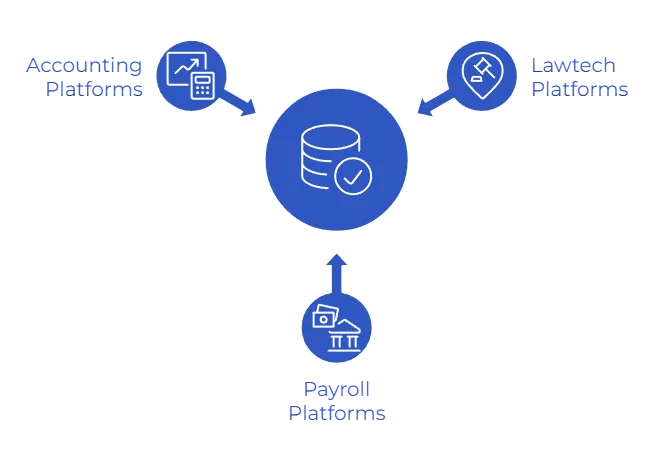
Lawtech Platforms
Client account verification for property transactions and legal matters requires ownership confirmation that holds under MLR 2017 scrutiny. Finexer’s AIS retrieves bank-confirmed account details with consent logs and timestamps – providing an audit trail that document-based checks cannot produce.
Payroll & Invoicing Platforms
Payroll platforms verifying employee and supplier bank accounts before disbursement need ownership confirmation at scale. Finexer’s AIS delivers bank-verified account details per consent, without manual document review or individual penny drop tests per account.
Accounting SaaS Platforms
Accounting platforms onboarding clients need verified bank account details for reconciliation and payment workflows. Finexer’s AIS provides structured account data directly from the bank – replacing client-submitted documents with bank-sourced verification that holds under audit.
What is the most reliable way to verify bank account details in the UK?
FCA-authorised AIS retrieves account name, sort code, and account number directly from the bank with the account holder’s consent. This confirms ownership at source – not from a document the subject submitted. It is the most reliable method for compliance-sensitive onboarding and payment workflows.
How to verify bank details without sending a test payment?
FCA-authorised AIS confirms account ownership without a penny drop. The account holder consents via their bank app, and the platform receives bank-verified account details instantly – name, sort code, and account number confirmed from the bank record, with no test transaction required.
Does manual bank account verification meet UK compliance requirements?
Manual verification does not produce an audit-ready ownership confirmation trail. For platforms with MLR 2017 obligations, bank-verified account details via FCA-authorised AIS provide consent logs, access timestamps, and bank-sourced ownership data that holds under regulatory review – unlike document-based checks.
To see how Finexer provides bank-verified account details for reliable verification workflows.
About the Author

Ravi Ranjan
Ravi Ranjan is Co founder & CEO of Finexer