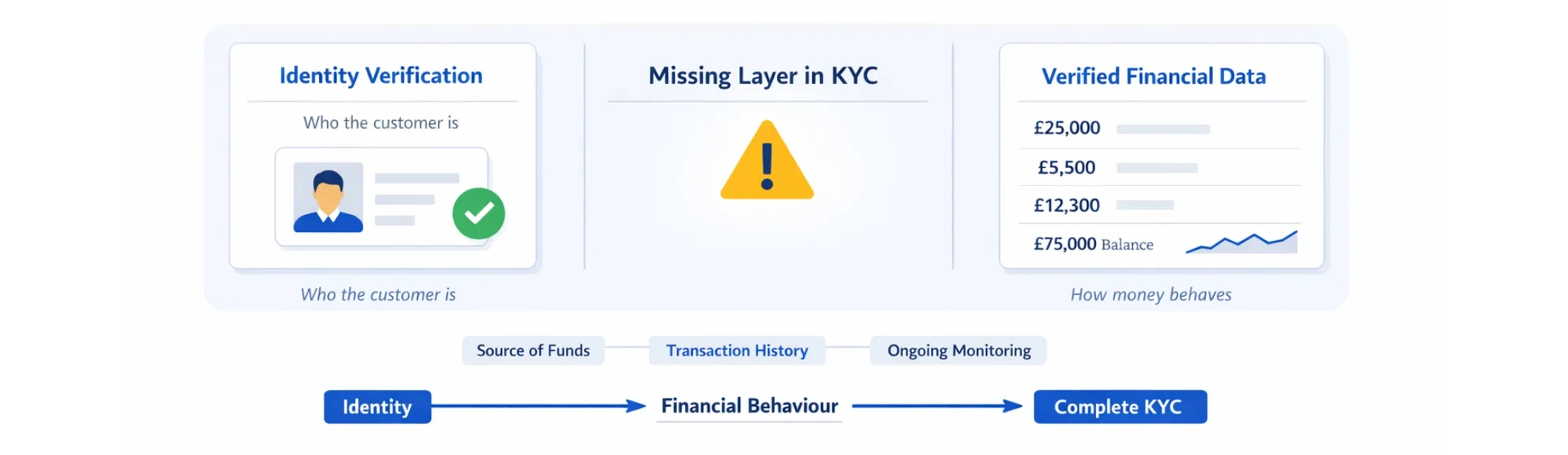
Building KYC workflows that go beyond identity?
Finexer gives UK platforms FCA-authorised AIS access – verified bank transaction data, consent-based, audit-ready.
KYC financial services platforms are still built around identity tools – and that is the core problem.
Passport checks and document verification confirm who a person is. They do not confirm where money comes from, how it moves, or whether financial behaviour carries risk. That gap is where most KYC for financial services implementations fail.
In my experience working with compliance teams across LawTech platforms, regulated fintechs, and compliance SaaS providers, the identity layer is rarely the weakness. The weakness is the financial verification layer sitting behind it – or the layer that is missing entirely.
This blog explains what KYC financial services workflows actually require beyond identity, where traditional approaches fall short, and how verified bank transaction data closes the compliance gap.
TL;DR
KYC financial services workflows require both identity verification and financial behaviour analysis. Identity documents confirm who a customer is – they cannot confirm the legitimacy of their financial activity. Verified bank transaction data enables source-of-funds checks, income verification, and behavioural analysis. Finexer provides FCA-authorised AIS access, giving platforms the verified financial data layer that KYC for financial services workflows depend on.
Key Takeaways
What is KYC financial services compliance?
KYC financial services compliance is the process of verifying a customer’s identity and assessing their financial risk profile – covering identity confirmation, source-of-funds verification, and ongoing monitoring under UK AML obligations.
Why is identity verification alone insufficient for KYC financial services?
Identity documents confirm that a person exists. They do not confirm income sources, transaction history, or financial behaviour patterns – the elements that determine whether a customer presents genuine money laundering risk.
What financial data does KYC for financial services require?
KYC for financial services workflows require verified source-of-funds data, transaction history for behavioural baseline, income and balance verification, and ongoing financial activity monitoring – none of which can be reliably obtained from manually submitted documents.
Which platforms need a financial data layer in their KYC financial services workflows?
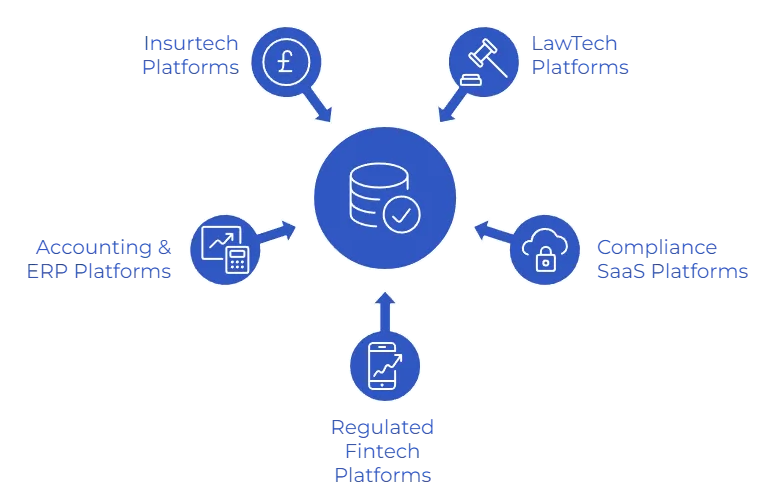
LawTech platforms, compliance SaaS providers, regulated fintech platforms with AML obligations, and any platform conducting source-of-funds checks or ongoing financial monitoring.
Where does Finexer fit in KYC financial services infrastructure?
Finexer provides FCA-authorised AIS access to verified bank transaction data. Platforms use this data to conduct source-of-funds checks, verify income, and analyse financial behaviour – strengthening KYC for financial services workflows without relying on documents clients control.
What Does KYC Financial Services Compliance Actually Require?
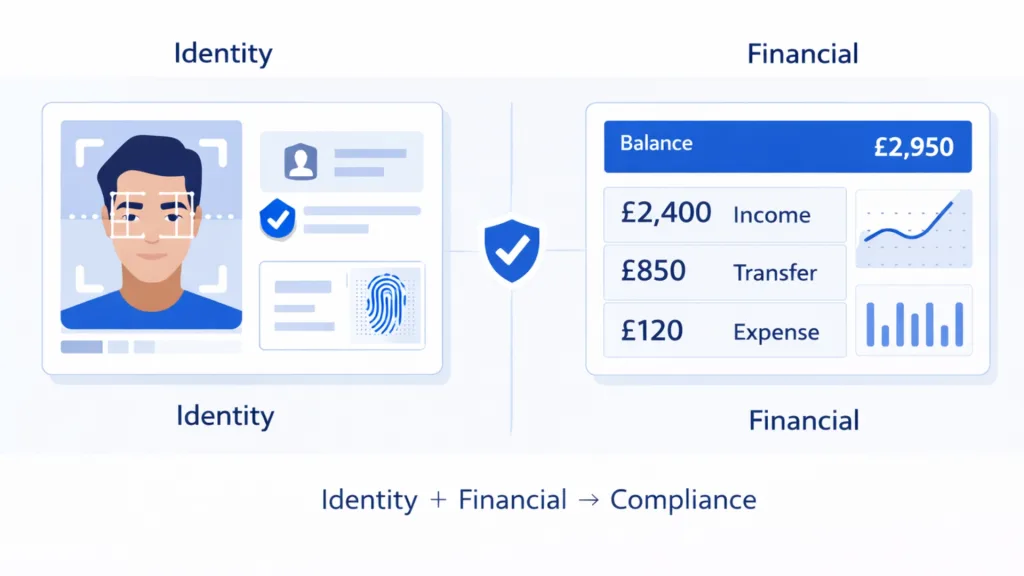
KYC financial services compliance has two distinct components that most platform implementations do not treat equally.
Identity Verification
Confirming that a customer is who they claim to be. This covers document checks, biometric verification, and database matching. Most platforms have invested significantly here.
Financial Verification
Confirming that a customer’s financial activity is consistent with their stated profile and does not present money laundering risk. This requires transaction history, source-of-funds data, and behavioural analysis.
“The identity layer tells you who you are dealing with. The financial layer tells you whether you should be dealing with them at all.” – Paul, Finexer
Guide to KYC Verification covers the foundational framework and what regulated platforms need to implement.
Where Does Traditional KYC for Financial Services Fall Short?
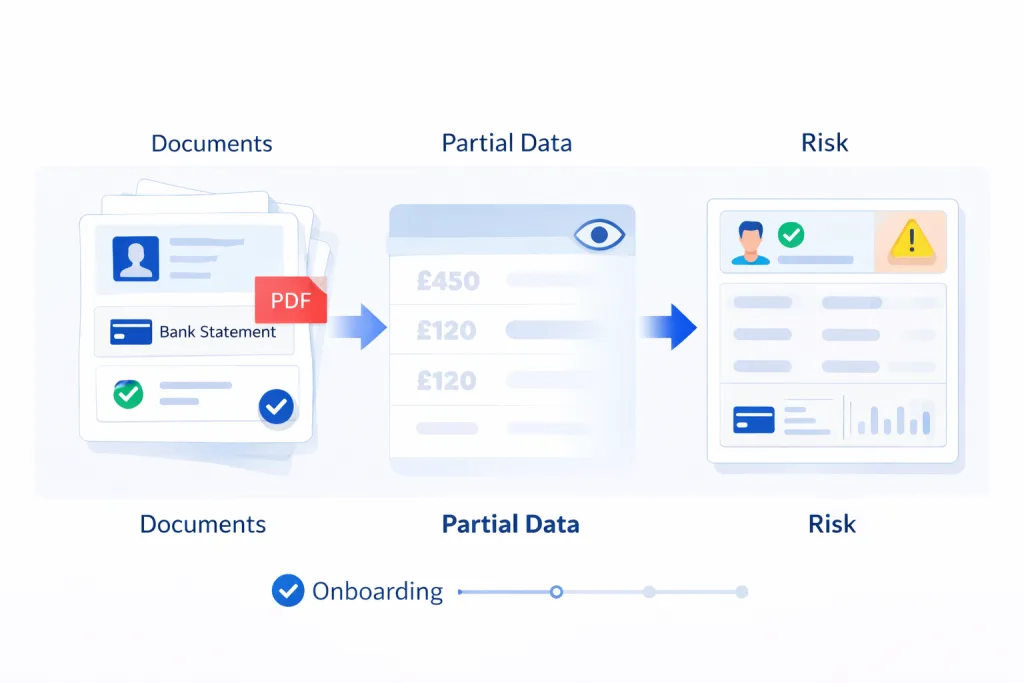
Document-based KYC has consistent failure points across every compliance team I work with.
Documents Confirm Identity – Not Financial Legitimacy
A valid passport confirms a person exists. It does not confirm their stated income is real, their source of funds is legitimate, or their financial behaviour matches their claimed profile. A customer can pass a document-based KYC financial services check and still present significant financial crime risk.
Manual Statements Are Controllable by the Customer
When a platform requests three months of bank statements, the customer selects which accounts to share. Accounts with problematic activity can be excluded entirely. The compliance team receives a partial picture with no mechanism to verify completeness.
Documents Create a Point-in-Time View
KYC for financial services is not a one-time check. Ongoing monitoring requires detecting changes in financial behaviour throughout the client relationship – not just at onboarding.
Customer KYC Process covers how the standard onboarding process is structured and where document-based approaches create operational gaps.
Why Does Financial Data Matter in KYC Financial Services Workflows?
Verified bank transaction data provides three capabilities that document-based KYC for financial services cannot reliably deliver.
Source-of-Funds Verification
Bank transaction history shows where money actually comes from – salary credits, business income, or unexplained large deposits. A customer’s stated income source can be confirmed or contradicted by their actual transaction history.
Financial Behaviour Analysis
Transaction history establishes a normal activity baseline per customer. Deviations – sudden large inflows, rapid outflows, unusual counterparties – become visible when transaction data is available continuously rather than submitted periodically.
Ongoing Monitoring Capability
Continuous bank data access means KYC financial services monitoring does not depend on document collection cycles. Financial behaviour changes are detected as they occur – not weeks later when a statement refresh happens to coincide with a review.
Open Banking KYC covers how Open Banking data access enables verification workflows across regulated industries.
How Should Platforms Evaluate Financial Data Infrastructure for KYC?
| KYC Data Requirement | Why It Matters | What to Look For |
|---|---|---|
| Source-of-Funds Data | Confirms income origin and financial legitimacy beyond identity documents | Bank-verified transaction data; credit and debit history; income pattern visibility |
| Transaction History Depth | Behavioural baseline and pattern analysis require extended lookback | Up to 7 years transaction history; multi-period access |
| Real-Time Data Access | Ongoing monitoring requires current data – not periodic imports | Real-time webhooks; continuous transaction feeds; event-driven delivery |
| Multi-Account Coverage | Financial behaviour across multiple accounts provides a complete risk picture | Multi-account AIS access; 99% UK bank coverage |
| Verified Data Source | KYC outputs are only defensible when data is bank-authenticated | FCA-authorised AIS; consent-based access; bank-authenticated records |
| Consent and Audit Trail | Regulatory review requires documented data access with timestamps | Consent logs; access timestamps; revocation capability; data provenance |
How Does Finexer Strengthen KYC Financial Services Workflows?
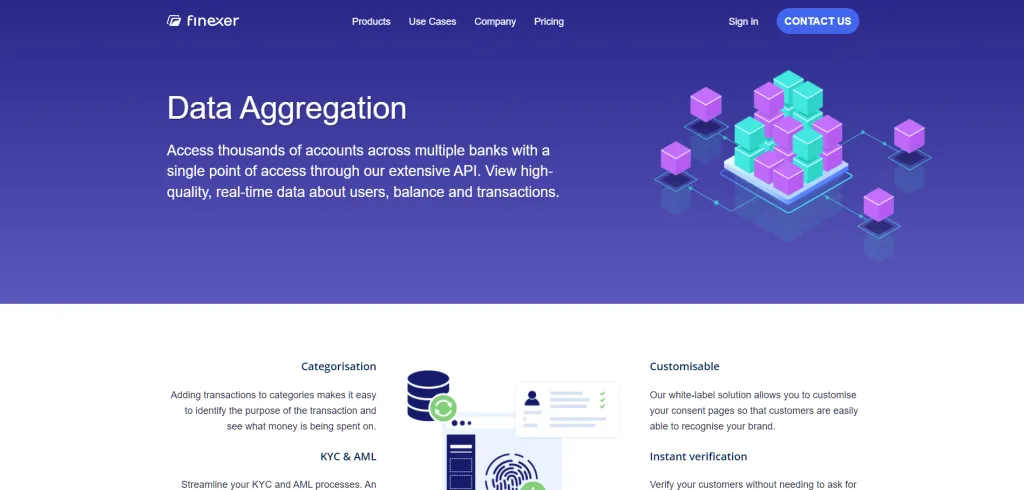
Finexer provides FCA-authorised AIS infrastructure delivering verified bank transaction data to platforms that need a reliable financial verification layer. Finexer provides the bank-authenticated transaction data that platforms use to conduct source-of-funds checks, income verification, and financial behaviour analysis.
What Finexer’s AIS Provides for KYC Financial Services
- Structured bank transaction data from 99% of UK bank accounts
- Transaction history up to 7 years for source-of-funds and behavioural analysis
- Real-time webhooks delivering transaction events as they occur
- Multi-account data access from a single consent-based API connection
- Balance and income data for financial profile verification
- FCA-compliant consent flows with granular permissions and instant revocation
- Usage-based pricing with 3-5 weeks onboarding support
KYC for Wealth Management covers how verified financial data applies in wealth-specific compliance workflows.
What I Feel
The compliance teams with the most defensible KYC financial services processes share one characteristic – they treat financial data as a first-class input, not an afterthought.
Most implementations are built identity-first. The assumption is that knowing who someone is means the job is done. But financial crime risk is almost never in the identity. It is in the financial behaviour.
Platforms that close this gap connect bank transaction data directly into their KYC for financial services workflow – not as a supplementary check, but as a core verification layer. Source-of-funds checks built on bank-verified data carry regulatory weight that manually submitted statements simply cannot match.
Common Use Cases
LawTech Platforms
LawTech platforms – including conveyancing practices, solicitors, and insolvency firms – use Finexer’s AIS to access verified client bank transaction history for source-of-funds checks. KYC financial services requirements in legal contexts demand bank-authenticated evidence of fund origin, not PDF statements that clients select and submit. Finexer provides verified transaction data that supports CDD and ongoing monitoring obligations with a clear audit trail.
Finexer Data covers the full AIS data capability available to LawTech and compliance platforms.
Compliance SaaS Platforms
Compliance SaaS providers embed Finexer’s AIS as the verified financial data layer beneath their KYC for financial services workflow engines. Structured transaction data with counterparty details, income patterns, and multi-account coverage gives KYC logic the data quality needed to produce reliable risk assessments – reducing false positives from incomplete data sources.
Regulated Fintech Platforms
Regulated fintech platforms with AML obligations use Finexer’s AIS to maintain continuous financial visibility throughout the client relationship. Real-time webhooks ensure ongoing KYC financial services monitoring operates on current transaction data – not delayed imports that create detection gaps between collection cycles.
Accounting & ERP Platforms
Accounting platforms with AML obligations use verified bank transaction data to conduct source-of-funds and financial behaviour checks on client accounts. Finexer’s AIS provides the transaction history depth needed to establish normal activity patterns – flagging deviations without generating false positives from generic threshold rules applied without client-specific context.
Insurtech Platforms
Insurtech platforms use verified bank transaction data in KYC for financial services workflows during client onboarding and claims processing. Finexer’s AIS provides structured financial history enabling income verification, source-of-funds assessment, and behavioural pattern analysis – replacing manually submitted documents with bank-authenticated data.
What is KYC in financial services?
KYC in financial services is the process of verifying a customer’s identity and assessing their financial risk profile. Under UK AML rKYC financial services compliance is the process of verifying a customer’s identity and assessing their financial risk profile. Under UK AML obligations, KYC extends beyond identity checks to include source-of-funds verification and financial due diligence throughout the client relationship.
Why is financial data important in KYC for financial services?
Financial data enables platforms to verify income sources, transaction behaviour, and financial activity that identity documents cannot confirm. Source-of-funds checks and ongoing monitoring require verified bank transaction data – not periodic document submissions that customers control.
Can Finexer be used to strengthen KYC financial services workflows?
Yes. Finexer is FCA-authorised and provides AIS infrastructure covering 99% of UK banks – delivering structured bank transaction data with counterparty details, income patterns, and up to 7 years of transaction history. Platforms apply their own KYC logic against Finexer’s verified, continuous bank data feeds.
Strengthen your KYC workflows with verified bank transaction data that compliance teams can defend.
About the Author

Paul Lucraft
Paul Lucraft is a payments industry strategist and advisor with more than two decades of experience across banking, card networks, and financial services infrastructure. His expertise covers fraud prevention, payment risk management, financial strategy, and the operational development of card payment systems. He previously held senior roles at Mastercard Europe where he served as General Manager for the UK and Ireland, overseeing fraud risk, operational governance, and payment network strategy across the region. Earlier in his career, Paul worked at Lloyds TSB and TSB Bank leading fraud strategy, credit collections, and card business finance operations.