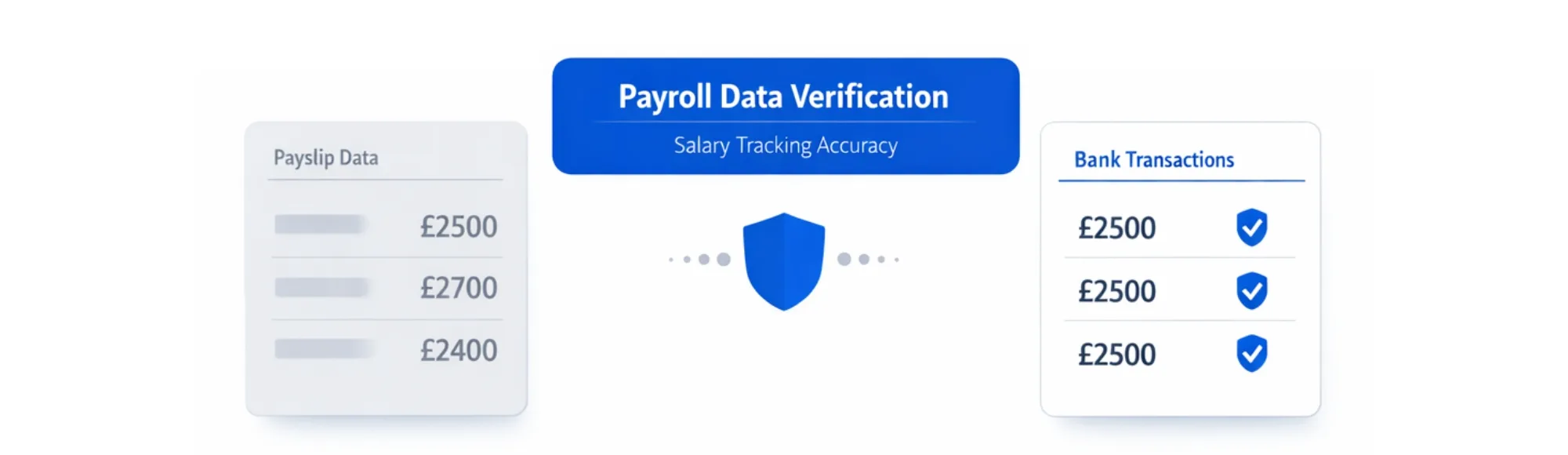
Payroll platforms that rely on uploaded payslips are building on unverifiable data.
Access verified salary transaction data through FCA-authorised Open Banking infrastructure.
Payroll platforms that rely on uploaded payslips are building on unverifiable data. Access verified salary transaction data through FCA-authorised Open Banking infrastructure. Book a Demo
Payroll data is the financial and employment-related information that captures how employees are compensated – salary amounts, tax deductions, national insurance contributions, bonuses, and payment frequency. For HR teams and payroll bureaus, this information lives in payroll software and payslip documents.
For platforms building income verification, reconciliation, and financial reporting workflows, the challenge is different. What is payroll data worth operationally if it cannot be verified against a real financial source? Uploaded PDFs and static payslips can be outdated, incomplete, or manipulated – creating gaps that undermine the workflows built on top of them.
This blog explains what is payroll data at a structural level, why traditional salary records create verification problems for platforms, and how bank transaction data provides the verified financial layer that payroll SaaS and accounting platforms need.
TL;DR
Payroll data refers to employee compensation information including salary, tax deductions, national insurance, and bonuses. For platforms, the problem is not understanding what is payroll data – it is verifying it accurately. Static payslips and manual uploads are unreliable for income verification workflows. Bank transaction data accessed through FCA-authorised Open Banking infrastructure gives platforms a verified, real-time record of salary payments directly from the source.
Key Takeaways
What is payroll data?
Payroll data refers to financial and employment-related information about employee compensation – including gross and net salary, PAYE tax deductions, national insurance contributions, bonuses, and payment frequency. It is used to manage, track, and verify employee income and financial records.
What does payroll data include for platform verification workflows?
For platform verification workflows, salary records need to include verified payment transactions, consistent income patterns, payment dates and amounts, and structured financial data that reflects actual payroll activity – not just document-based payslip information.
Why is static payroll data unreliable for platforms?
Static salary records – payslips, PDFs, and manual uploads – can be outdated, incomplete, or unverifiable against actual bank activity. Platforms relying on document-based records cannot confirm that salary payments were actually made or received.
How do platforms verify salary records accurately?
Platforms verify salary records accurately by accessing bank transaction data through Open Banking infrastructure. Payments are identified from transaction history based on patterns, amounts, and frequency – providing a verified record of actual payroll activity.
What is the role of Open Banking in salary verification?
FCA-authorised Open Banking AIS infrastructure gives platforms consent-based access to bank transaction data – enabling salary payment identification, income pattern analysis, and reconciliation without relying on client-submitted documents.
What Is Payroll Data?
The Standard Definition
Payroll data refers to the complete set of financial and employment records related to employee compensation. Under UK payroll regulations, employers are required to maintain accurate payroll records covering the information used to calculate and process employee pay.
What is payroll data in practice? It typically includes:
- Gross salary and net pay after deductions
- PAYE income tax deductions
- National insurance contributions
- Bonuses, overtime, and benefits in kind
- Payment frequency – weekly, fortnightly, or monthly
- Employer details and payroll reference numbers
For HR teams and payroll bureaus, this data is managed through payroll software and recorded in payslip documents issued to employees each pay period.
What This Means for Platforms
For payroll SaaS and accounting tools, the definition shifts. These platforms do not just record salary information – they need to verify it, reconcile it, and build financial workflows on top of it.
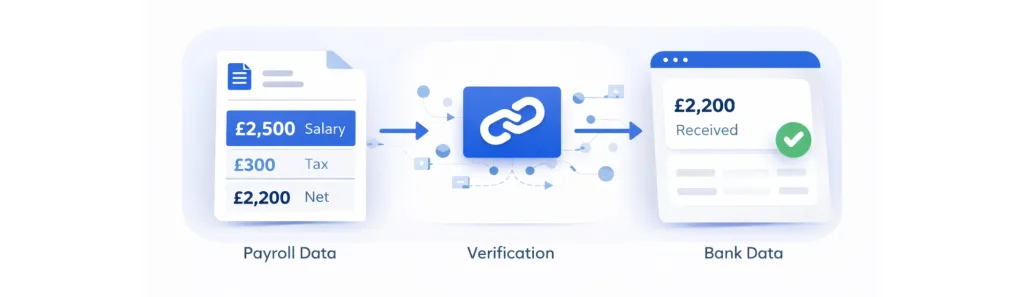
The gap is significant. A payslip tells a platform what an employer claims was paid. Bank transaction data tells a platform what was actually received. For income verification and financial reporting, that difference matters operationally.
“The platforms I work with are not asking what is payroll data in theory. They are asking how to confirm that the salary records they hold reflect what actually happened in the client’s bank account. That is a verification problem, not a data definition problem.” – Ravi, Finexer
Why Does Traditional Payroll Data Create Problems for Platforms?

The Document Verification Gap
Traditional payroll data workflows depend on payslips, PDF exports, and manually uploaded documents. For platforms building income verification or payroll reconciliation features, this creates structural problems that document-based data cannot solve.
- Payslips can be outdated – issued monthly but not reflecting mid-period changes
- PDFs can be edited or manipulated before upload
- Manual uploads are inconsistent – missing periods, wrong formats, incomplete records
- Document-based payroll data cannot be cross-referenced against actual bank activity
The result is that platforms building on static payroll data are working with records they cannot independently verify.
Automated payroll processing workflows that depend on document uploads face the same problem at scale – inconsistent input data produces inconsistent output, regardless of how well the processing layer is built.
“What I see consistently is platforms that have built sophisticated payroll workflows on top of data they cannot verify. The workflow works in testing with clean data. The problems appear when real users upload incomplete payslips or PDFs that do not match their actual bank activity.” – Ravi, Finexer
Where Platforms Are Most Exposed
Platforms managing payroll data at scale face this verification gap across every client. A payroll SaaS handling salary disbursements for multiple employers, or an accounting platform reconciling payroll transactions for client businesses, cannot rely on document-based payroll data to confirm payments were made and received accurately.
Payroll reconciliation automation requires a data source that reflects actual salary transactions – not payslip records that may not match what landed in employee bank accounts.
How Do Platforms Verify Payroll Data Using Bank Transaction Data?
The Verification Framework
Choosing the right approach to payroll data verification is not a technical decision alone. It is a data quality decision that determines whether the platform’s income verification and reconciliation workflows are reliable at scale.
| Verification Need | Why It Matters | What to Look For |
|---|---|---|
| Verified salary transactions | Payslips confirm what was claimed – bank data confirms what was actually paid | AIS access to bank transaction history directly from client accounts |
| Income pattern analysis | Single payslip does not confirm consistent salary activity over time | Transaction history covering multiple pay periods with payment frequency analysis |
| Structured payroll data output | Unstructured transaction data cannot support reconciliation or reporting workflows | Categorised transaction data with payment references, amounts, and timestamps |
| Consent-based data access | Platforms must access client financial data with documented consent and lawful basis | Granular consent flows, time-limited permissions, instant revocation capability |
| Audit-ready records | Income verification and payroll reconciliation workflows require verifiable evidence | Full consent logs and access timestamps per data retrieval |
| FCA-authorised infrastructure | Platforms remain responsible for the regulatory status of their data access layer | FCA-authorised AISP status, verifiable on FCA register |
Why Bank Transaction Data Is the Reliable Source
Bank transaction data is the only source that captures salary payments as they actually occurred – with timestamps, amounts, payment references, and employer details intact. For platforms that need to verify what is payroll data in practice, this is the foundation that document-based data cannot provide.
How Does Finexer Support Payroll Data Verification?
Finexer is an FCA-authorised Open Banking infrastructure provider. For platforms that need to verify payroll data using bank transaction records, Finexer provides AIS-based access to verified bank transaction data through consent-based Open Banking flows.
What Finexer’s Infrastructure Provides
- FCA-authorised AIS access – verifiable on the FCA register
- Consent-based access to bank transaction history
- Salary payment identification from transaction records
- Income pattern analysis across multiple pay periods
- Structured transaction data with categorisation and payment references
- Full consent logs and access timestamps per data retrieval
- Usage-based pricing with 3-5 weeks onboarding support
“The platforms getting payroll data verification right are not the ones with the most sophisticated document parsing. They are the ones that stopped relying on documents and started accessing verified transaction data at source.” – Ravi, Finexer
What I Feel
Payroll data is one of those topics where the standard definition and the operational reality are completely different things.
What is payroll data according to most content online? Payslips, PAYE records, HR system exports. That answer works for an employee or an HR manager.
For a payroll SaaS or accounting platform, that answer is not enough. The question is not what payroll data contains – it is whether the payroll data the platform holds is verified, current, and traceable back to an actual bank transaction.
Platforms that treat payroll data as a document management problem will keep running into the same verification gaps. The ones that treat it as a financial data verification problem build workflows that actually hold up.
Common Use Cases

Payroll SaaS Platforms
Payroll SaaS platforms managing salary disbursements need to confirm that payroll payments were correctly made and received. Finexer’s FCA-authorised AIS provides verified bank transaction data that gives payroll platforms a real-time record of salary transactions – supporting payroll reconciliation and income verification without document dependency.
Accounting and Bookkeeping Platforms
Accounting platforms handling payroll data for client businesses need structured, verified transaction records for income categorisation and financial reporting. Finexer’s AIS provides categorised bank transaction data with payment references and timestamps – supporting accurate payroll data workflows without relying on client-uploaded payslips.
Proptech Platforms
Proptech platforms verifying tenant income for rental applications need verified salary payment records rather than uploaded payslips. Finexer’s AIS provides bank-authenticated transaction data that confirms salary payment patterns and income consistency – supporting reliable tenant income verification workflows.
What is meant by payroll data?
Payroll data refers to financial and employment-related records covering employee compensation – including salary payments, PAYE tax deductions, national insurance contributions, bonuses, and payment frequency. For platforms, what is payroll data in practice means verified transaction records that confirm actual salary activity, not just document-based payslip records.
How is payroll data verified for platform workflows?
Payroll data is verified for platform workflows by accessing bank transaction data through Open Banking infrastructure. Salary payments are identified from transaction history based on payment patterns, amounts, and frequency – providing a verified record of actual payroll activity without relying on uploaded documents.
How does Open Banking support payroll data verification?
FCA-authorised Open Banking AIS infrastructure gives platforms consent-based access to bank transaction history. Platforms use this to identify salary payments, confirm income patterns, and build verified payroll data records – replacing static payslips with real-time transaction data directly from the bank.
Build accurate payroll data verification on verified bank transaction records.
About the Author

Ravi Ranjan
Ravi Ranjan is a fintech entrepreneur and growth leader with experience in building and scaling Open Banking ventures in the UK. As Co-founder and CEO of Finexer, he focuses on expanding adoption of Pay-by-Bank payments and real-time financial data infrastructure through secure API solutions. With a background in computer science engineering and an MBA from Aston Business School, Ravi combines technical insight with commercial strategy to help businesses modernise financial operations and accelerate digital payment innovation