Category: Finexer-Open Banking
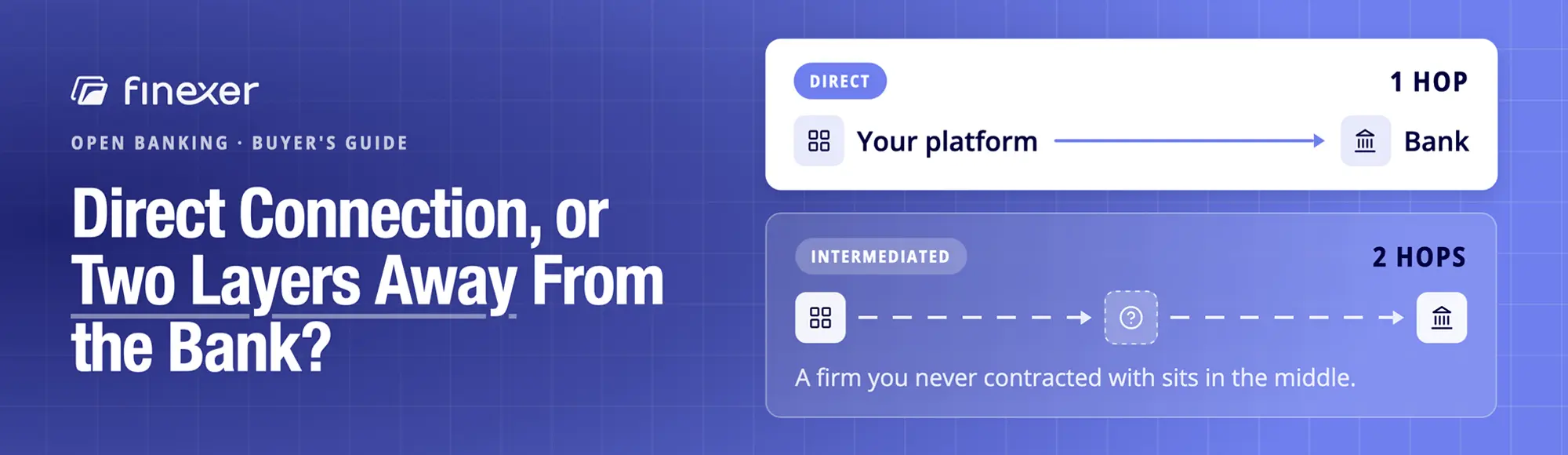
Do Open Banking providers connect directly to banks or piggyback on other providers?
Some UK Open Banking providers hold a direct bank connection for AIS and PIS. Others resell a third party’s access, leaving you unable to diagnose faults or escalate outages. Learn the difference, how to verify it via the FCA Register, and why it matters for platforms relying on banking data.
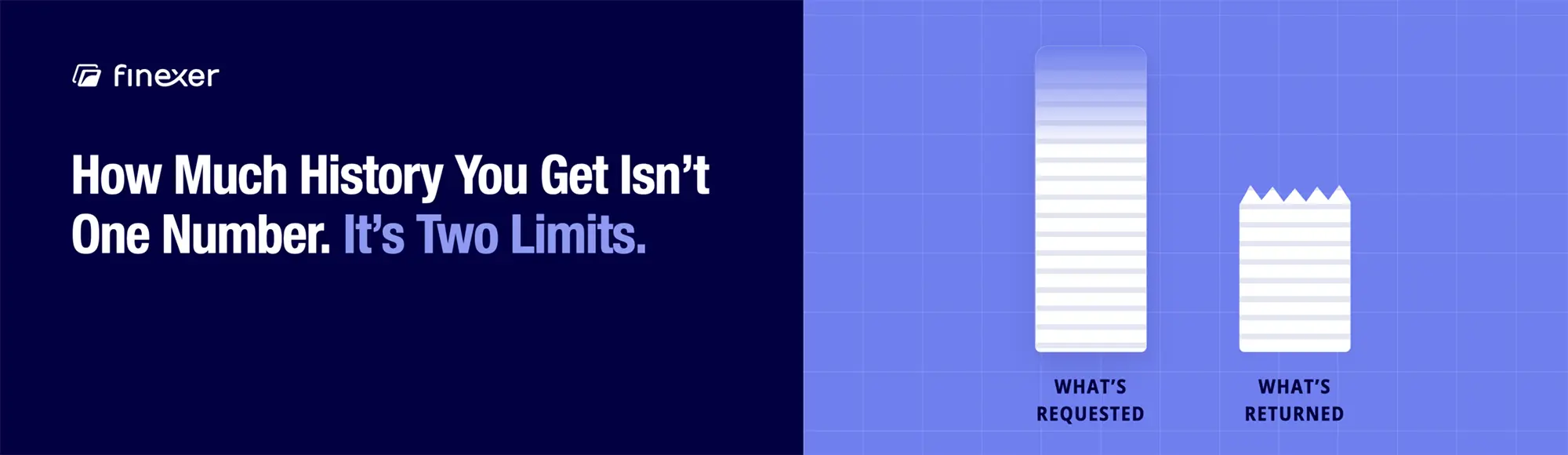
How much transaction history can Open Banking return in the UK?
Open Banking transaction history varies by bank. Learn how provider requests, bank support and consent timing affect historical data.
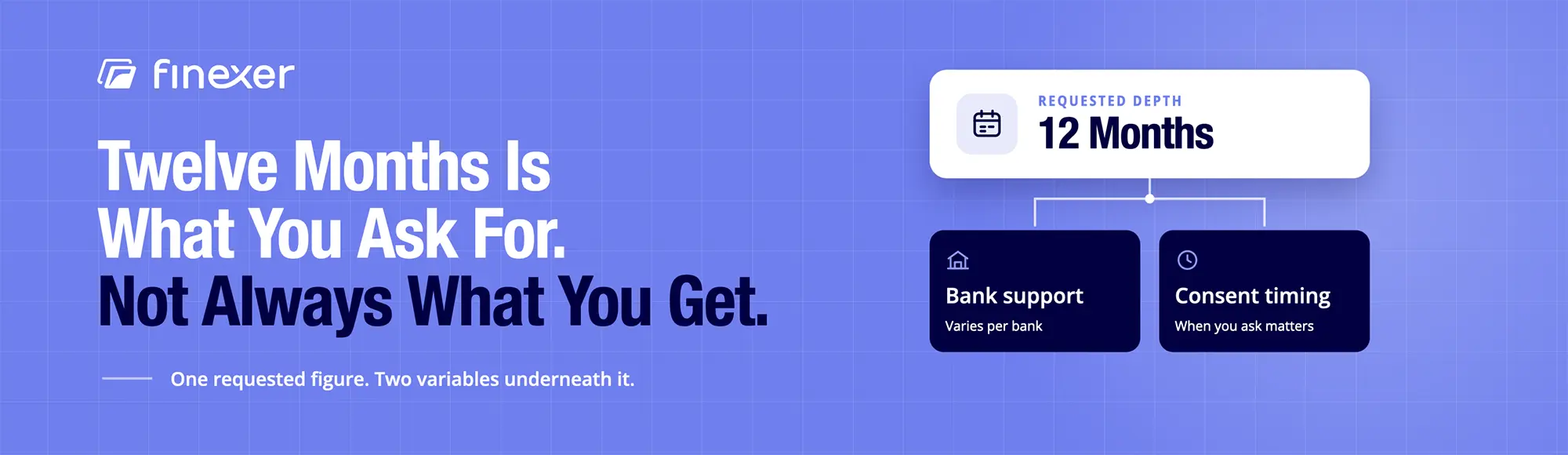
Which API Gives 12 Months of UK Banking Transaction History?
Most UK Open Banking APIs can request twelve months, but whether you receive it depends on the connected bank and on when you ask relative to consent.

EPOS Systems UK: 7 Things to Check Before You Buy
Comparing EPOS systems means looking beyond tills and software. This UK guide compares EPOS systems UK buyers consider, from retail to hospitality, then examines EPOS system benefits, payment costs, settlement and reconciliation. It also shows where UK Open Banking and Pay by Bank fit, without confusing payment infrastructure with the EPOS itself when choosing today.

Open Banking Payment Initiation: How PIS Actually Works
Open banking payment initiation lets businesses collect bank payments directly through a regulated payment initiation service, without card networks or intermediaries. Learn how PIS works, how Strong Customer Authentication protects every payment, and what to evaluate before choosing a provider for Pay by Bank integration.

Open Banking API Solutions: Solve Real Business Problems
Open banking API solutions are not one feature. This guide maps specific business problems, manual reconciliation, high card fees, payment fraud, to the exact capability that solves each one, and explains why most real fixes need two or more capabilities working together, not a single API call.

Top 5 Tink Alternatives for UK Businesses in 2026
Searching for Tink alternatives usually starts with a mismatch: you need UK coverage and a fast integration, and an enterprise pan-European platform is more than the job requires. This guide compares five credible options on coverage, deployment speed and bundled capabilities, so that you can shortlist the provider that actually fits your product and timeline.

VRP Payments: The Direct Debit Alternative (UK Guide)
VRP payments let customers pre-authorise flexible, bank-enforced recurring payments that settle instantly instead of waiting on Direct Debit’s three-day cycle. This guide explains sweeping versus commercial VRP, which UK banks support, what the FCA and UK Payments Initiative launched in 2026, and what the rollout means for subscription businesses planning their next billing stack.

Online Invoice and Payment Processing UK: Beyond Card Fees
Discover how online invoice and payment processing using Open Banking replaces costly card-based Pay Now buttons with Pay by Bank. Learn how automated invoice processing, instant payment confirmation via Faster Payments and bank-data reconciliation reduce manual finance work, lower transaction costs and improve payment visibility for UK SaaS platforms while accelerating cash flow.

Plaid Pricing for UK Startups 2026
Plaid pricing looks straightforward until UK buyers request a quote. Unlike US customers, plaid api pricing and plaid pricing UK typically require custom contracts instead of self-serve plans. Learn what drives costs, how enterprise pricing works and what startups should evaluate before beginning an Open Banking procurement process with confidence today.

Bank Transaction Data Enrichment Tools: UK Comparison
Bank transaction data enrichment tools do a different job from the ZoomInfo-style results that dominate this search. This UK comparison covers the six tools that turn raw bank descriptors into verified merchants and categories: Finexer, Bud, Plaid Enrich, Tink, Yapily Data Plus and Salt Edge, and how to choose.
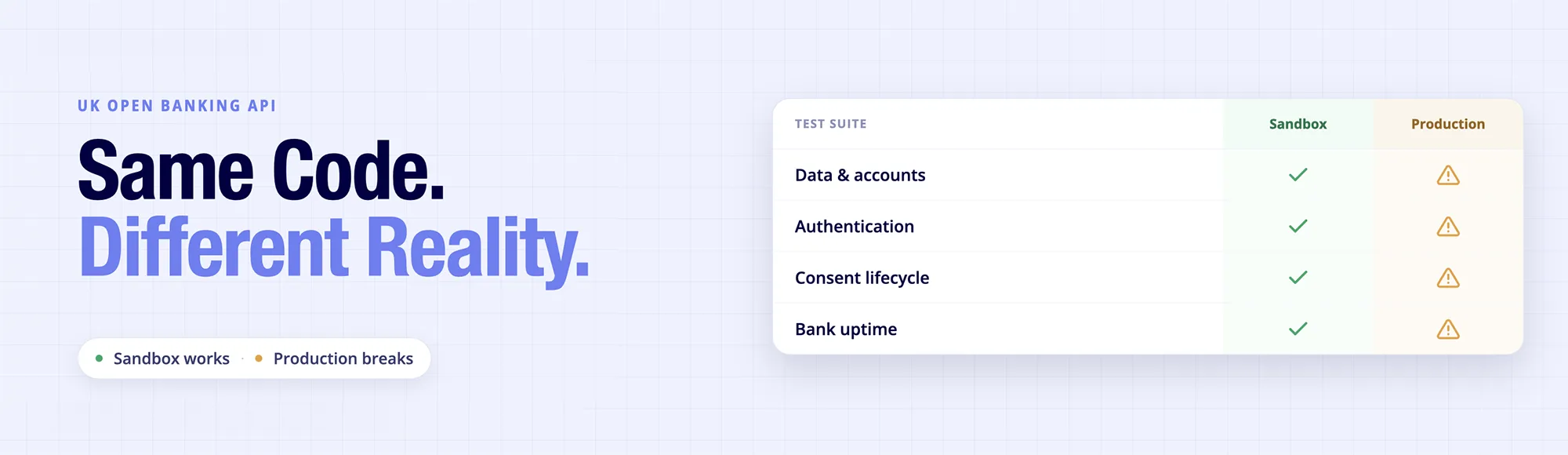
UK Open Banking API: Why Sandbox Works, Production Breaks
UK open banking API integrations pass every sandbox test and still break in production. The reason: sandbox tests your code, production tests the banks, and banks vary. This guide covers the CMA9 gap, the six differences that cause real failures, and the reliability checklist that closes them.
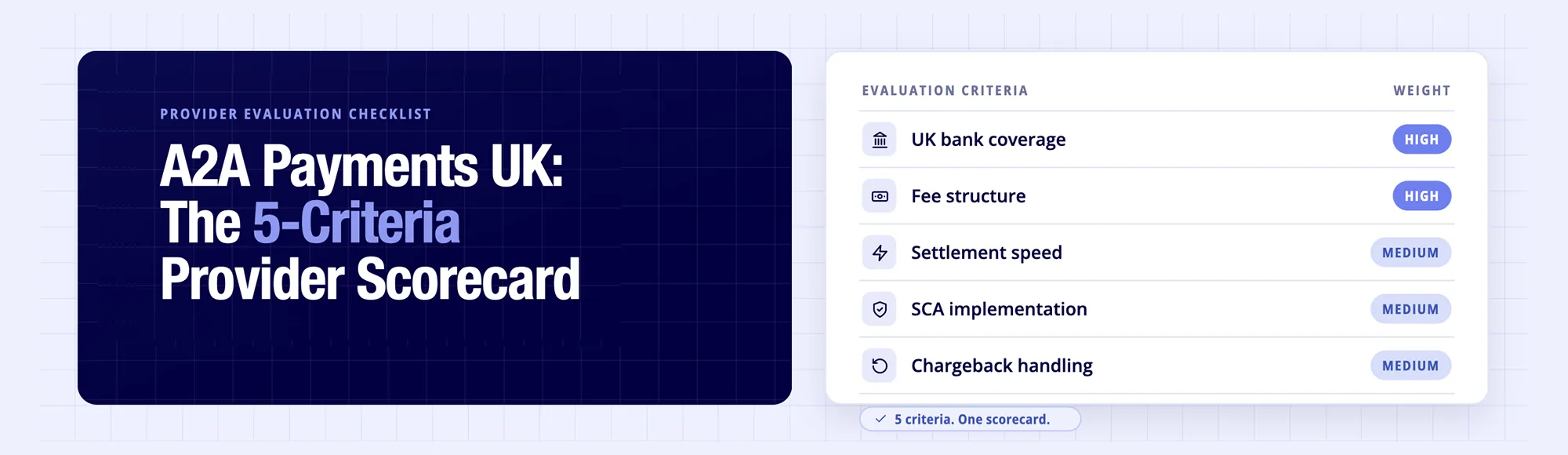
A2A Payments UK: Provider Evaluation Checklist
UK A2A adoption trails the EU significantly, and the gap usually comes down to picking the wrong provider. This checklist scores account-to-account payments providers on fee structure, settlement speed, chargeback handling and SCA implementation, so platforms can compare account-to-account (A2A) payments options on evidence, not marketing copy.

Open Banking Providers UK: The Evaluation Framework Buyers Actually Need
Compare open banking providers using a practical evaluation framework instead of another vendor list. Learn how open banking solution providers differ across bank coverage, AIS and PIS capabilities, onboarding, pricing, and white-label deployment so your team can shortlist providers with confidence and choose infrastructure that matches long-term product goals.
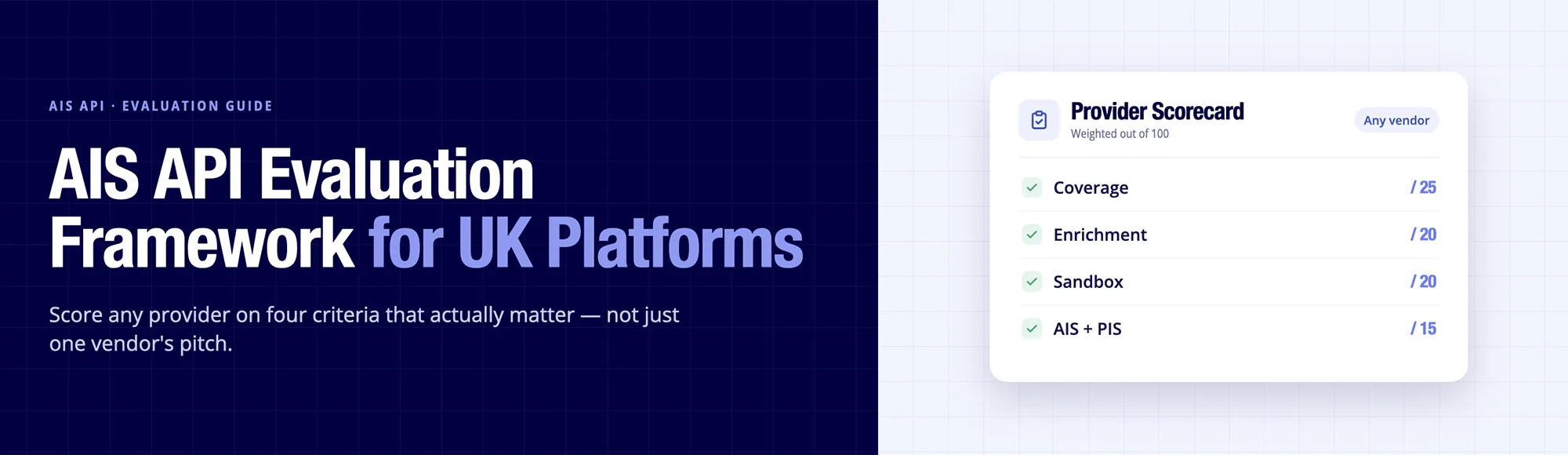
AIS API Evaluation Framework for UK Platforms
Choosing an AIS API in 2026? This neutral evaluation guide helps UK platform teams compare providers using the four criteria that actually matter: coverage depth, data enrichment, developer experience, and AIS+PIS bundling. Complete with a practical scoring table and FAQ, it helps you shortlist vendors with greater confidence before implementation.

Expense Management Automation: Bank-Verified vs OCR Capture
Expense management automation promised to end month-end receipt chasing, yet OCR capture alone cannot confirm a payment actually happened. This guide compares receipt-only tools with bank-verified matching for UK finance teams, covering real-time policy flagging, GL-code auto-categorisation and continuous corporate card reconciliation, plus a practical shortlist of questions to ask before choosing your next platform
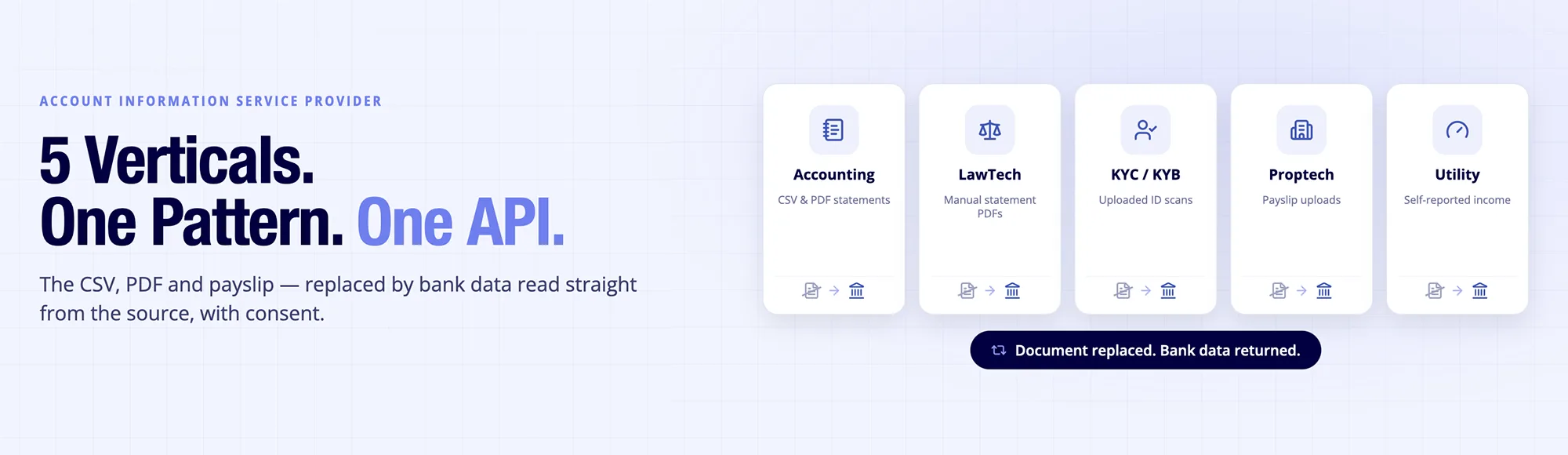
Account Information Service Provider: 5 Real Examples
Every account information service provider example you’ve read stops at the regulatory definition. This guide skips that and shows five real ones: an accounting SaaS reconciling client transactions, a LawTech platform verifying source of funds, and three more. See exactly what an account information services provider returns, and where it fits your stack.
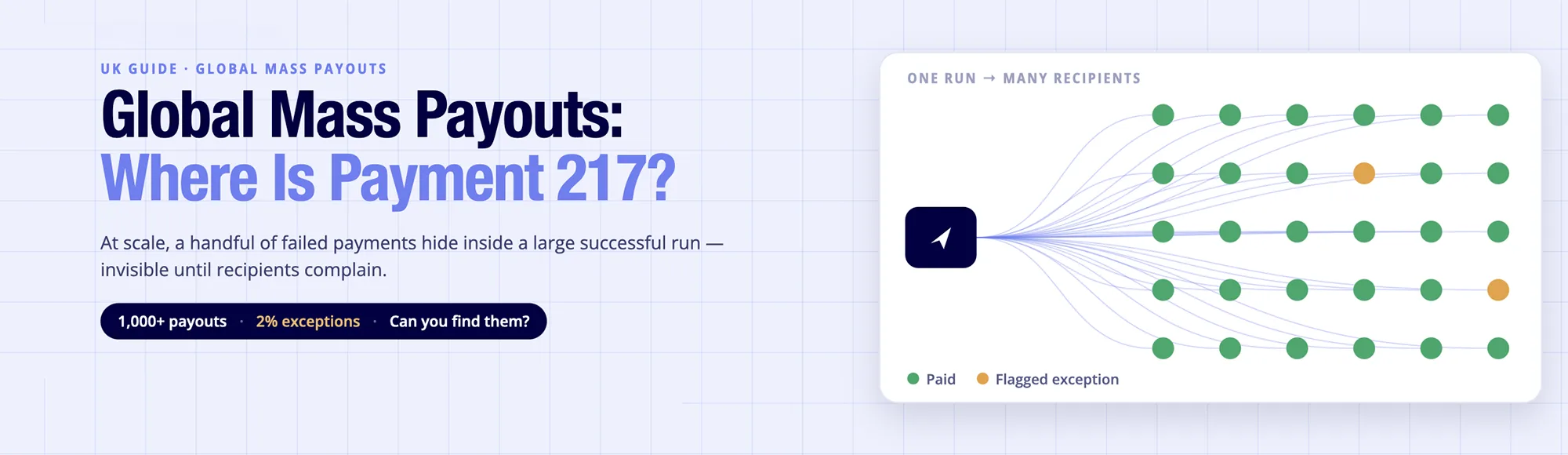
Global Mass Payouts: Why They Break at Scale? (UK Guide)
Global mass payouts break at scale for predictable reasons: batch blindness, partial failures, and reconciliation lag. This UK guide explains the three failure modes, the two-layer architecture that fixes them, and how one ERP platform cut its payout time by 15 days after moving to per-payout webhooks.
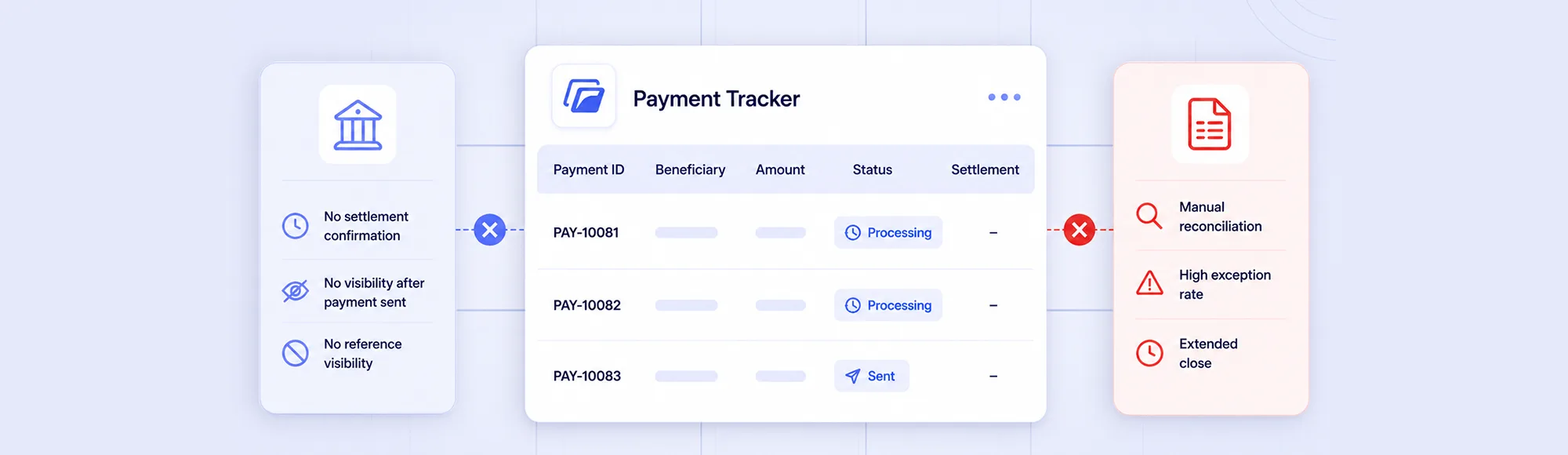
Why Your Payment Tracker Is Not Telling You Enough
Most payment tracker tools answer one question: did the payment go out? UK finance teams need three more answers. Did it arrive? Did the reference survive? Did it close the reconciliation? Industry research from March 2026 found 85% of UK firms still use manual reconciliation. This blog covers why payment tracking breaks and what fixes…
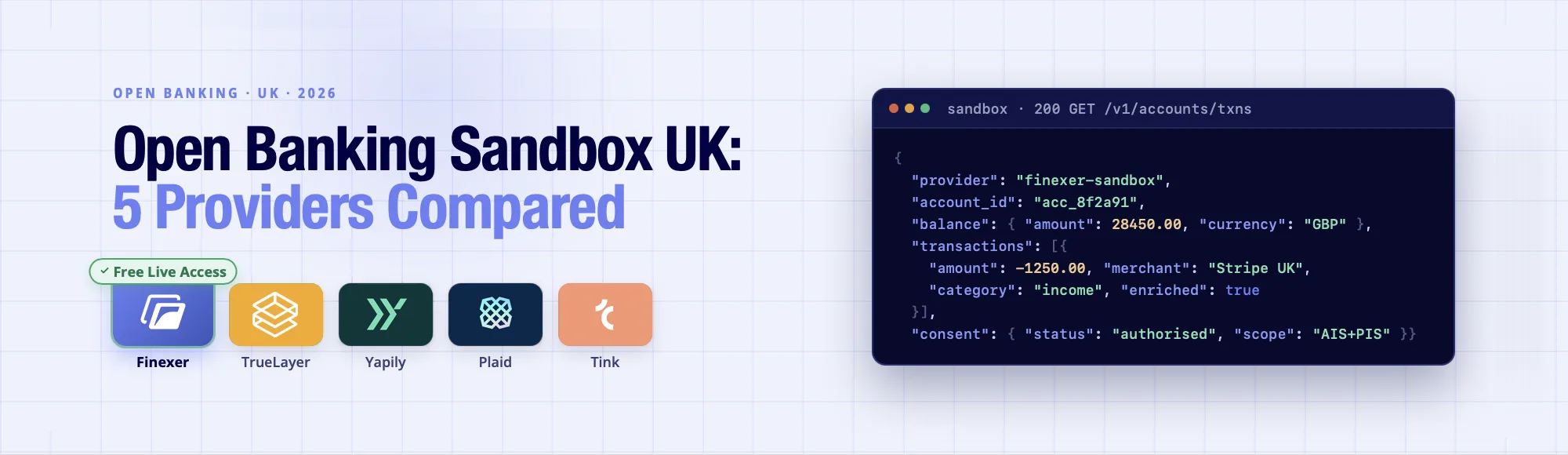
Open Banking Sandbox UK: Finexer vs TrueLayer vs Yapily vs Plaid vs Tink Compared
Most open banking sandboxes look identical until you try to go live. Some providers offer free signup and instant access. Others route every enquiry through a sales call before testing a single endpoint. This comparison covers five UK open banking sandbox environments on free access, AIS and PIS coverage, bank simulations, and time to live.
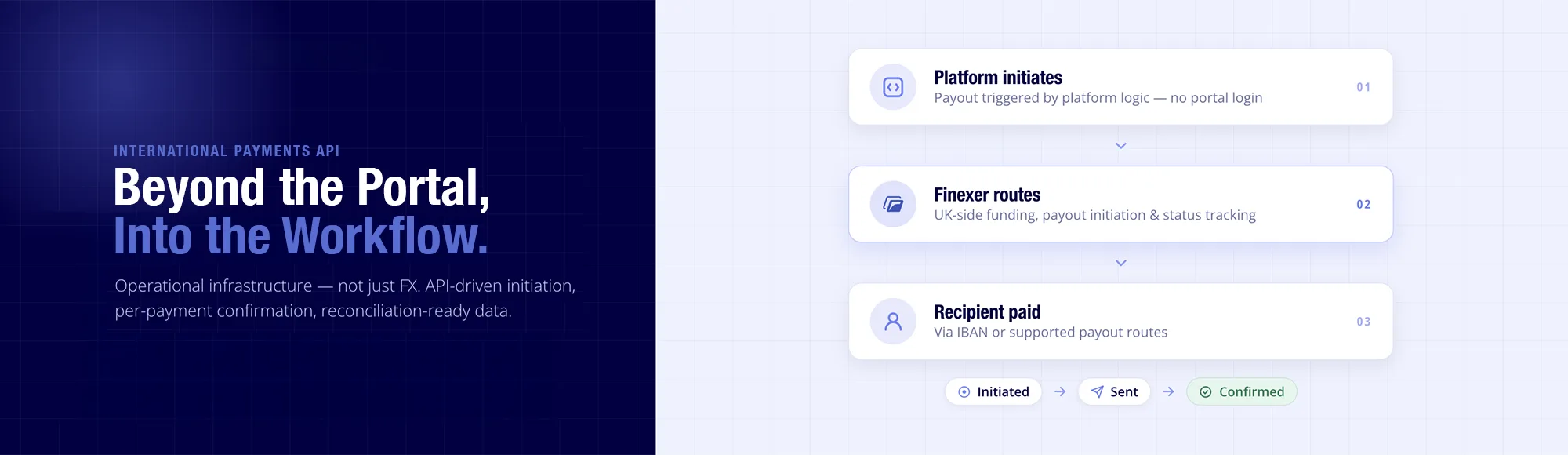
International Payments APIs Are Not Just for FX. They Are Becoming Operational Infrastructure.
Most businesses still treat international payments as a manual problem – bank portals, SWIFT references, chasing confirmations. An international payments API changes that. This blog covers why cross-border payment workflows break at the operational layer, what a cross border payments API actually needs to deliver, and how infrastructure-first businesses are replacing the manual steps entirely.
Bud Financial Alternatives: Top 6 UK Open Banking Providers
Looking for Bud Financial alternatives for your UK Open Banking platform? This comparison covers six providers, Finexer, TrueLayer, Tink, Plaid, Yapily and Moneyhub, on UK bank coverage, AIS, transaction data enrichment and white-label capability. Lending platforms are directed to lending-focused alternatives. Non-lending platforms find the UK data and payments stack that fits their use case.
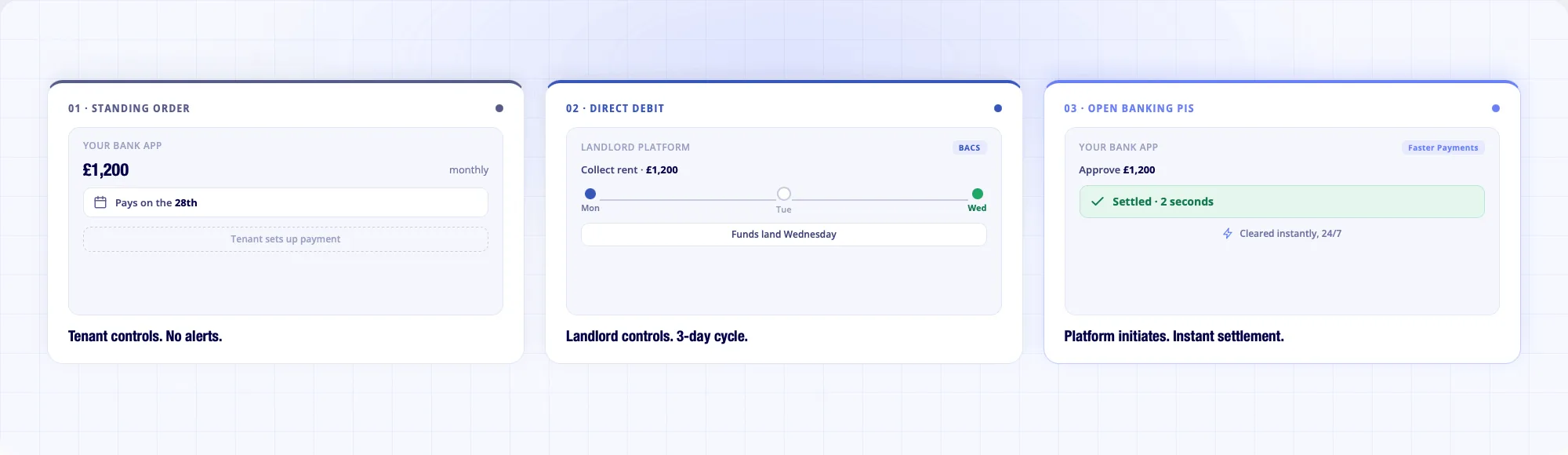
Landlord Rent Collection in the UK: Standing Order vs Direct Debit vs Open Banking Compared
Most UK landlords default to Standing Orders because that is how rent has always been collected. The method is free but gives the landlord no control. Direct Debit adds control, but it also adds fees. Open Banking is the newer option. This blog compares all three landlord rent collection methods on cost, speed, and reconciliation.
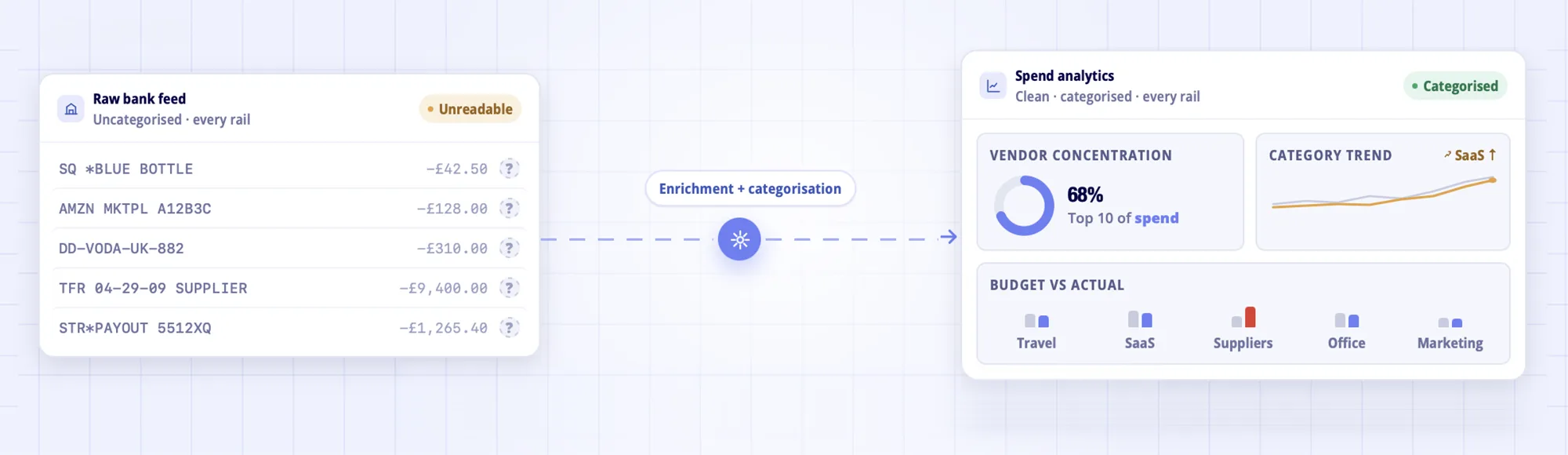
Spend Analytics UK: How Clean Bank Data Powers Finance Visibility
Spend analytics is the layer that turns raw transaction data into vendor, category, and budget insight. Most finance teams already capture their spend. What they lack is clean, categorised data across every payment rail. This blog explains what spend analytics is, why card-only tools fall short, and what a clean bank-data feed actually makes possible.
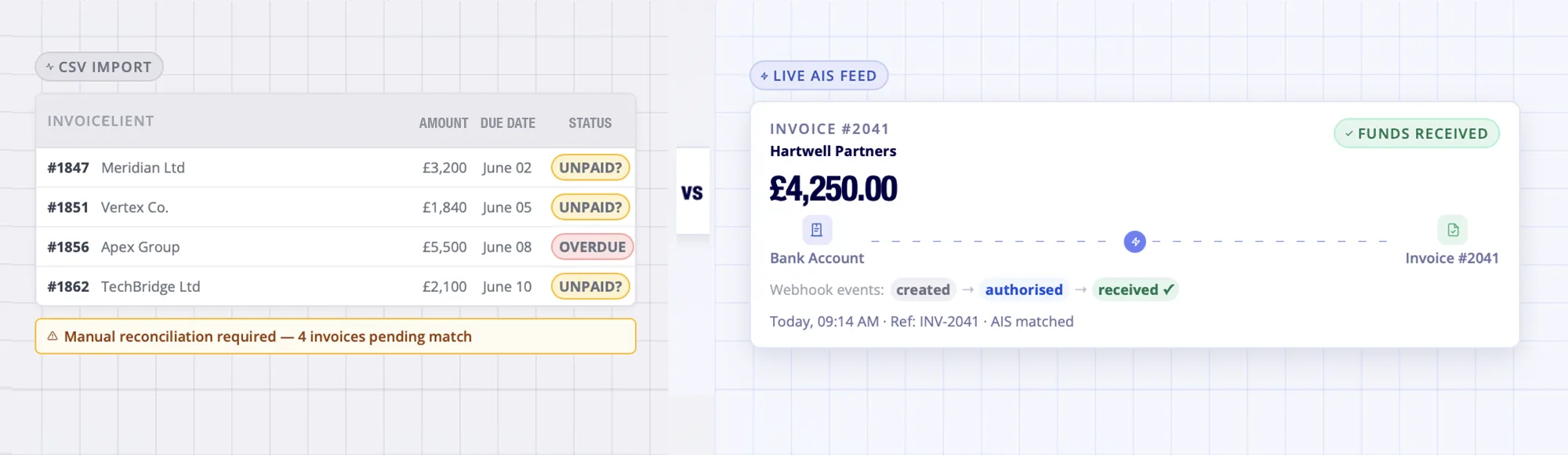
Invoice Tracker UK: Open Banking Invoice Reconciliation
Finexer’s invoice tracker UK connects invoice records with live Open Banking bank data, Pay by Bank initiation and per-event webhooks from request to bank-matched confirmation. Platforms building invoice tracking as a product feature use the Finexer Invoice Reconciliation Tracker as the regulated bank data and payment layer. The platform owns the workflow. Finexer provides connectivity.
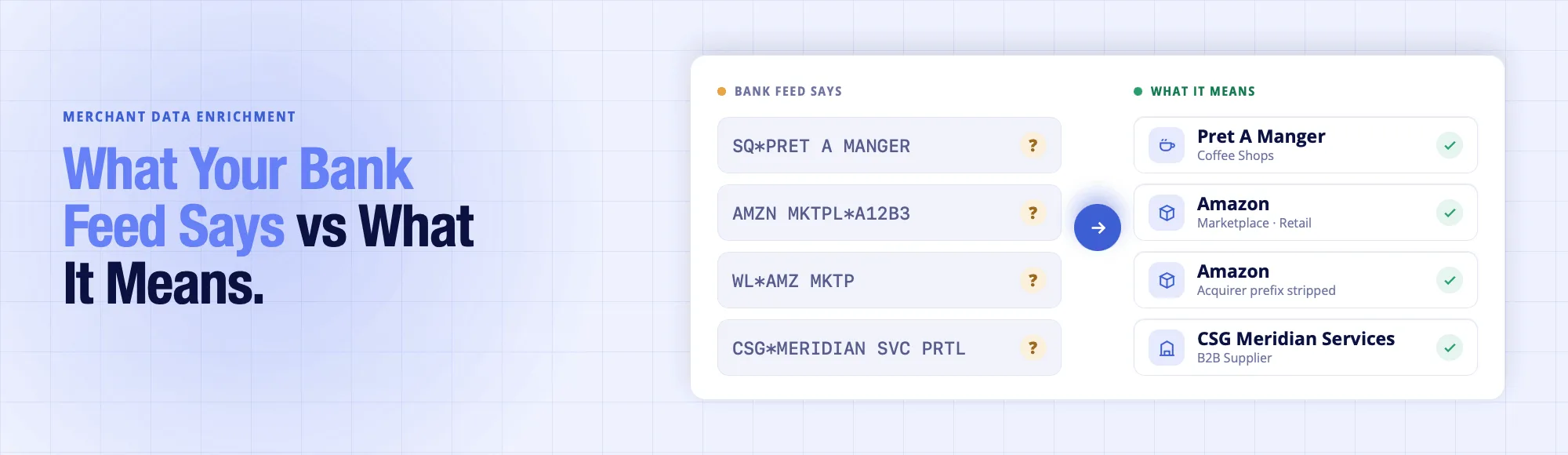
Merchant Data Enrichment APIs Compared: From Cryptic Strings to Clean Merchant Names
Merchant data enrichment resolves raw bank transaction strings – SQPRET A MANGER, AMZN MKTPLA12B3 – into clean merchant names, categories, logos and locations. This comparison covers how five merchant data enrichment APIs process those strings, what each provider returns, which fits your UK platform use case and coverage requirements, and what to test before choosing.
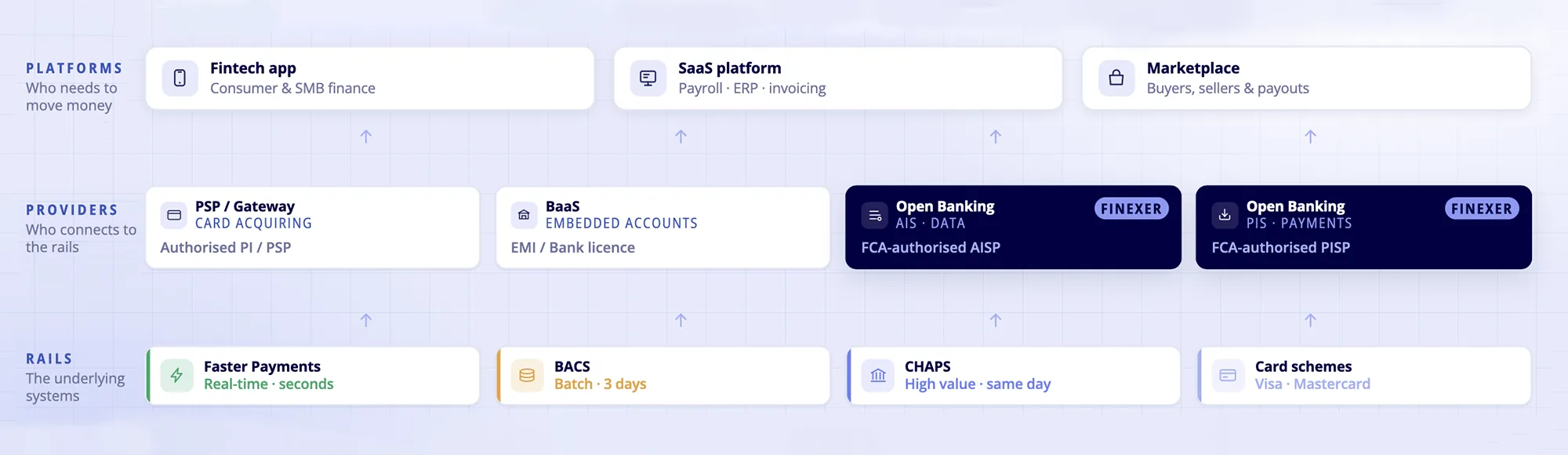
Payment Infrastructure UK: The Full Stack from Rails to Regulation
Every payment a platform processes touches infrastructure it did not build and regulation it did not choose. Understanding the UK payment infrastructure stack – the rails, the provider categories, and who regulates what – is the decision that shapes everything downstream: cost, speed, coverage, compliance, and how easily the stack can change when requirements do.
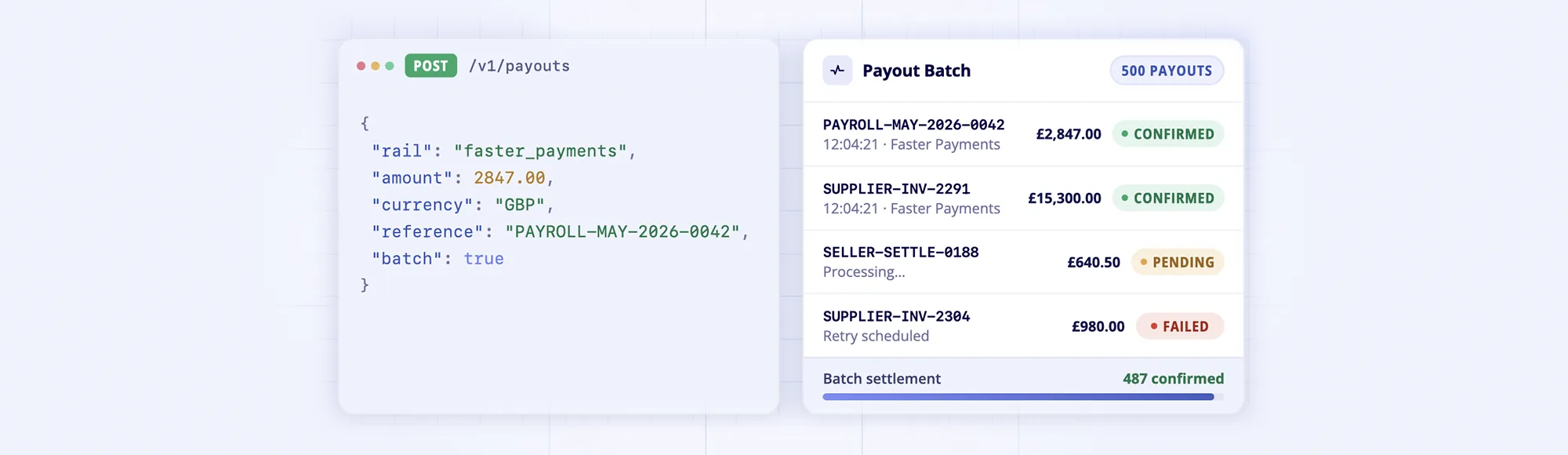
Global Payments API for UK Payout Infrastructure
A global payments API for UK platforms connects domestic GBP payout rails, international recipient disbursements and per-payout reconciliation into one infrastructure layer. This guide covers what rail-aware routing delivers, where Open Banking fits the UK payout stack, how Finexer International Payouts handles UK-origin outbound disbursements to recipients, and what to evaluate beyond the feature page.
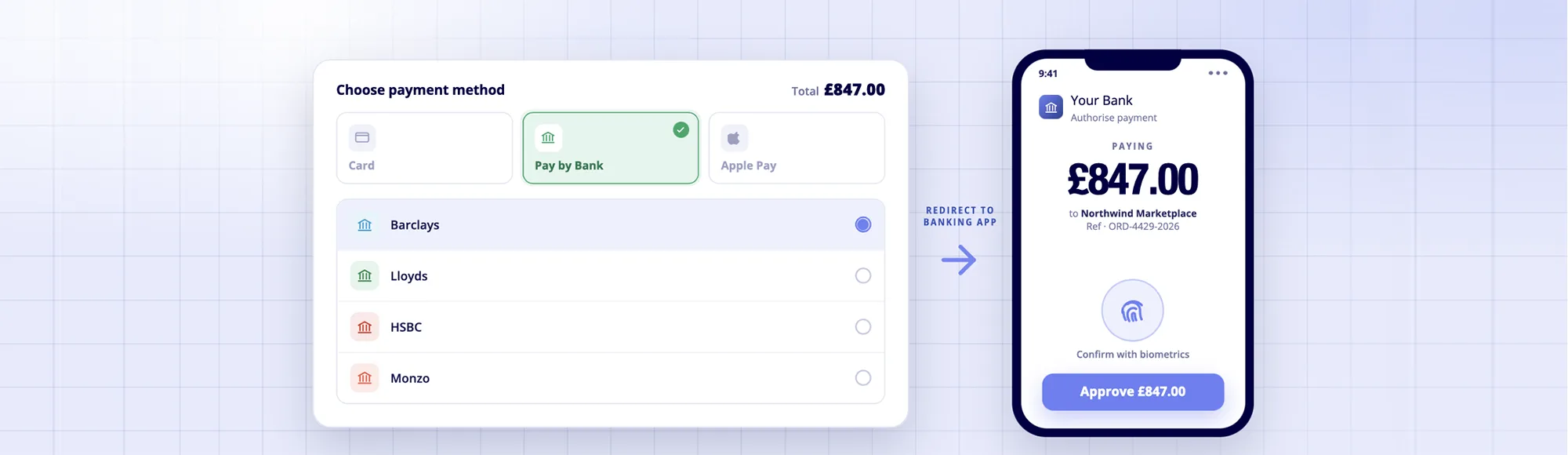
How to Add Pay by Bank Transfer to Your Platform Checkout
Card fees stack up. Checkout friction adds up. A growing share of UK buyers are now comfortable paying directly from their bank. Implementation playbook for platform teams adding pay by bank transfer as a checkout option – covering engineering scope, webhook handling, edge cases, and what this checkout option genuinely does and does not replace.
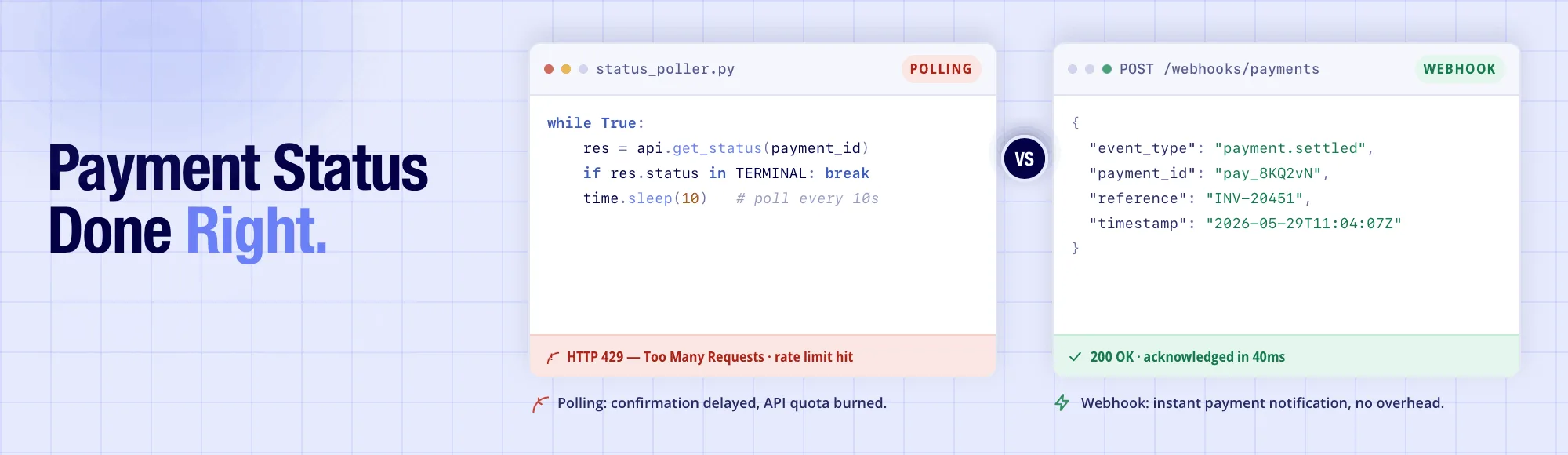
Payment Status Tracking: Webhooks vs Polling and the Open Banking Approach
Payment status is one of those things that looks simple until you are running payment workflows at volume on a UK platform. Polling creates rate limit pressure, confirmation delays, and reconciliation gaps that compound with scale. This is how webhooks, idempotency, and bank-confirmed instant payment notification change the operational picture for engineering and product teams.