Tag: Open Banking
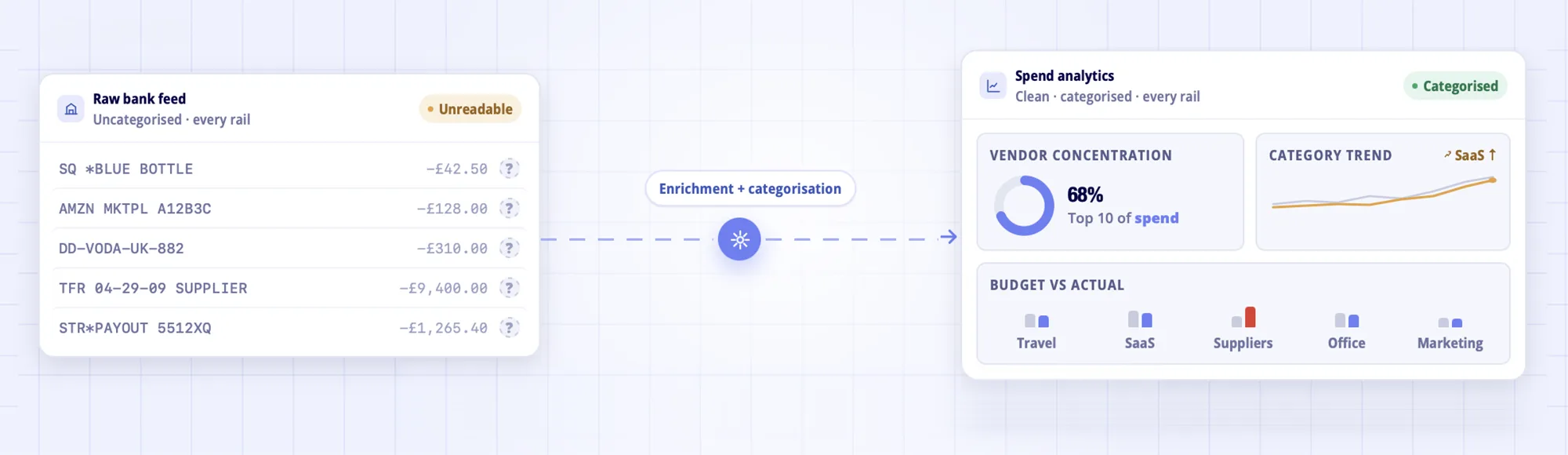
Spend Analytics UK: How Clean Bank Data Powers Finance Visibility
Spend analytics is the layer that turns raw transaction data into vendor, category, and budget insight. Most finance teams already capture their spend. What they lack is clean, categorised data across every payment rail. This blog explains what spend analytics is, why card-only tools fall short, and what a clean bank-data feed actually makes possible.
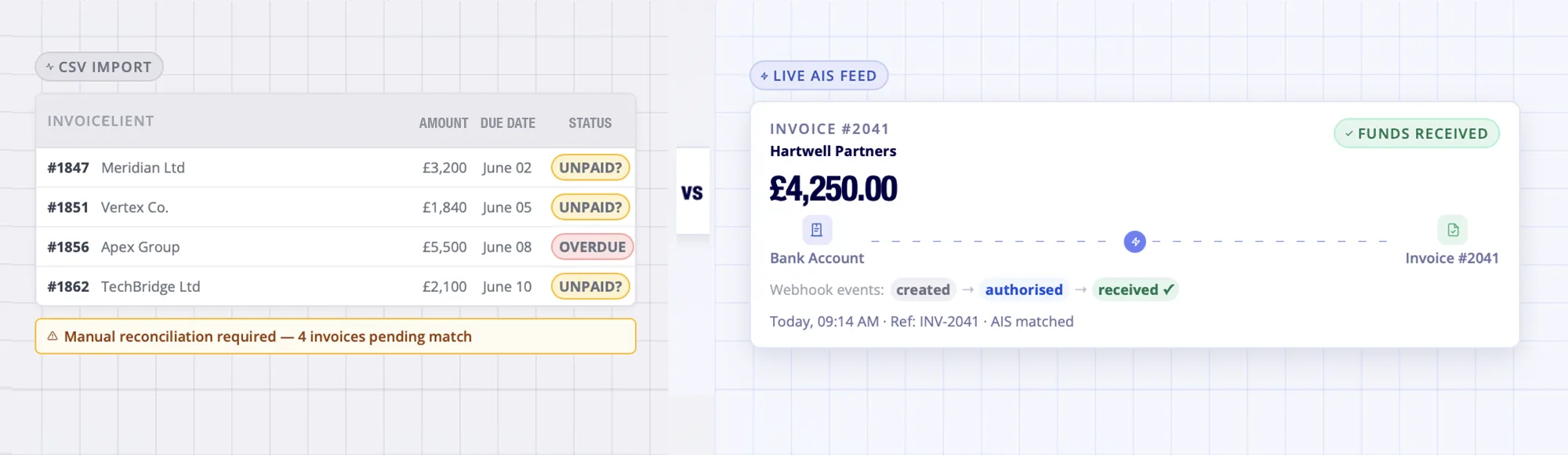
Invoice Tracker UK: Automated Open Banking Tracking
An invoice tracker is the tool that finance teams and B2B platforms use to monitor sent, paid, partially paid and overdue invoices. This guide covers the four types of invoice tracker available, why most of them break at scale, and how an Open Banking invoice tracker built on AIS infrastructure delivers real-time tracking through webhooks.
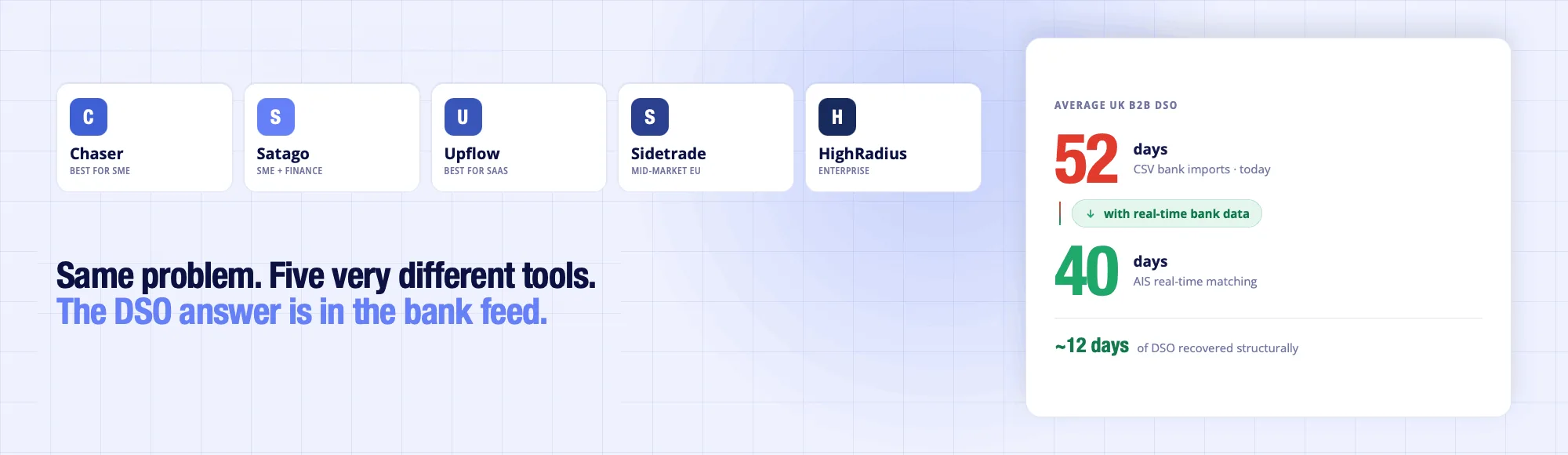
Collections Software UK: Top 5 Tools Compared (Chaser, Satago, Sidetrade, Upflow, HighRadius)
Western European B2B Days Sales Outstanding now averages 52 days, up from 41 in 2023, with UK businesses tracking close to that average. UK finance teams are shortlisting collections software to claw the number back. This blog compares Chaser, Satago, Sidetrade, Upflow and HighRadius on dunning workflow, bank data integration, accounting platforms, and pricing model.
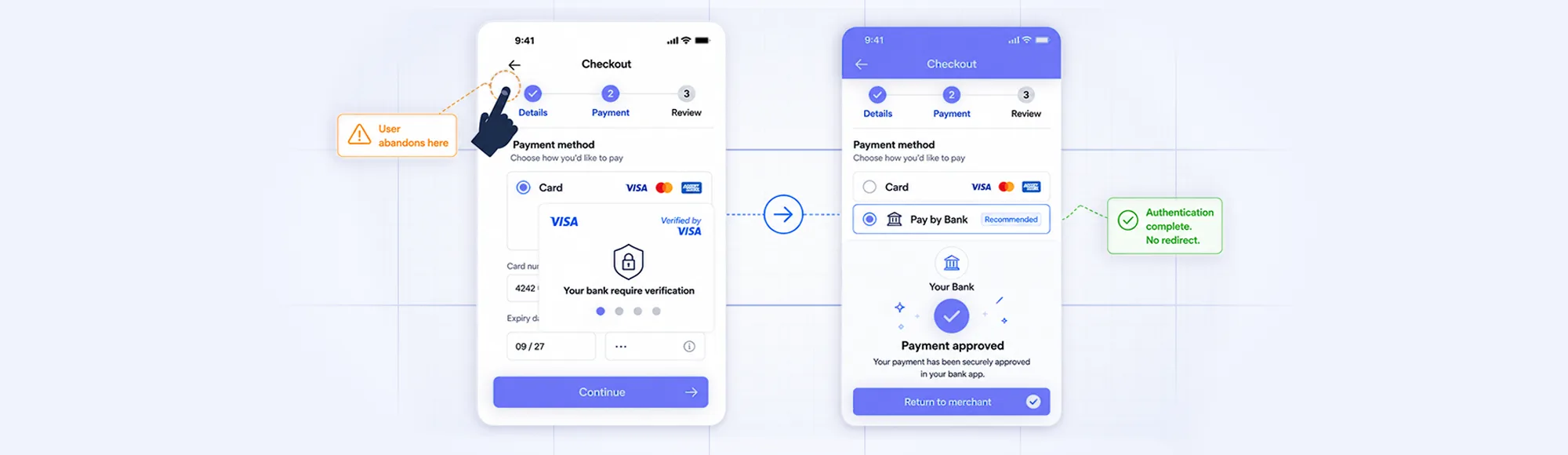
Checkout Abandonment Rate: Which Causes Pay by Bank Actually Fixes (And Which It Doesn’t)
Most UK platforms adding Pay by Bank expect their checkout abandonment rate to improve. Often it does not, because the cause sits entirely outside the payment step. This blog maps each Baymard-verified checkout abandonment reason to an honest answer: what Pay by Bank fixes at the payment step, and what requires a separate product decision.
5 Best Tenant Background Verification Tools in the UK (2026)
Get verified with Finexer Connect with 99% of UK Banks and Scale Your Business without Limits Try Now Letting property in the UK comes with rising risks: from missed payments to Right to Rent fines. That’s why more landlords are turning to tenant background verification tools, digital platforms that check a renter’s credit, employment, and…
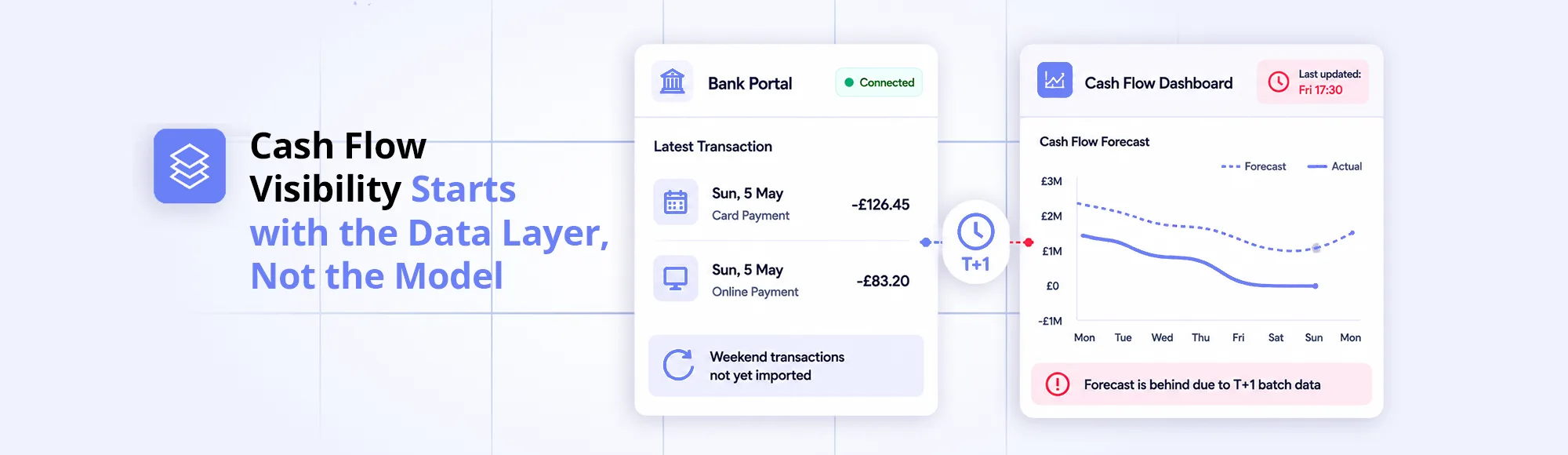
Why Most Businesses Still Struggle to Improve Cash Flow Visibility
Cash flow visibility fails when the data feeding it is delayed. A forecast built on yesterday’s bank statement is a reconstruction, not a real forecast. This blog covers why finance teams struggle to improve cash flow visibility, why forecast accuracy depends on connected financial data, and what changes when bank transaction data arrives near settlement.

Why Multi-Bank Connectivity Still Breaks in Modern Finance Stacks
Multi-bank connectivity sounds like a solved problem. Connect the right APIs and unified bank access should follow. In practice, each bank behaves differently. APIs time out at different rates. Data formats vary. Consent cycles expire at different intervals. This blog covers why fragmented bank integrations create operational problems and what reliable multi-bank infrastructure actually requires.
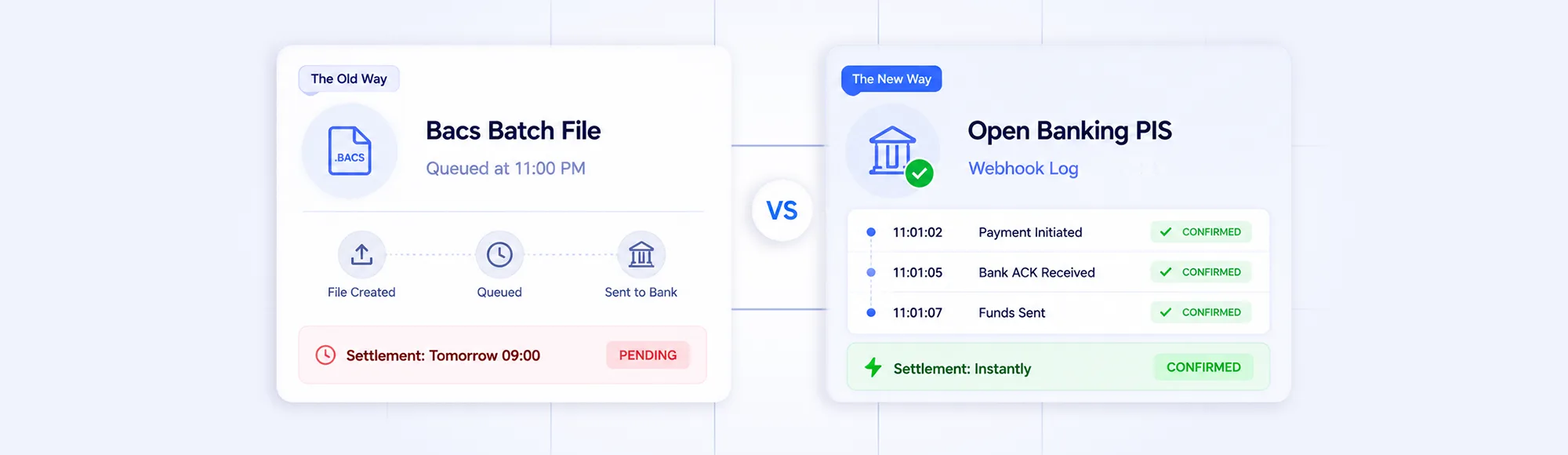
Best Payroll System UK 2026: 6 Options for Accounting Firms
Payroll system UK comparisons usually stop at RTI compliance and feature lists. The differences that matter for accounting firms in 2026 are multi-client bureau scale, cloud migration readiness, accounting integrations, and whether payroll services disburse salaries on the same day or wait three business days for BACS. This review covers all six on those criteria.

Payment Gateway vs PSP vs Payment Processor: What UK Businesses Actually Need to Know
Most businesses asking about payment gateways are really asking one question: which do I actually need? This guide explains what a payment gateway does, how it differs from a PSP and payment processor, and when the payment gateway vs PSP debate matters less than you think because Open Banking changes the decision for UK platforms.

International Payments APIs Are Not Just for FX. They Are Becoming Operational Infrastructure.
Most businesses still treat international payments as a manual problem – bank portals, SWIFT references, chasing confirmations. An international payments API changes that. This blog covers why cross-border payment workflows break at the operational layer, what a cross border payments API actually needs to deliver, and how infrastructure-first businesses are replacing the manual steps entirely.
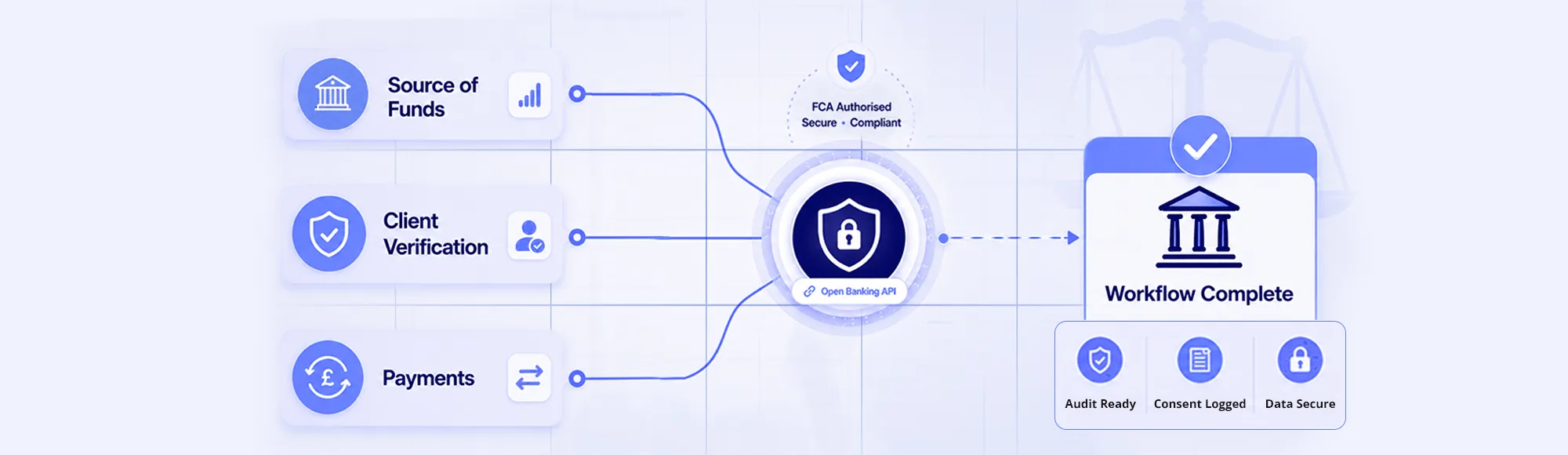
5 Best Budget Open Banking Tools for Solicitors: Choosing by Workflow
Open banking tools for solicitors are not all built for the same workflow. Source of funds checks need bank data access. Conveyancing payments need payment initiation. Client verification needs identity checks. This blog compares the best budget open banking tools for solicitors by workflow – helping law firms and Lawtech platforms choose the right tool.
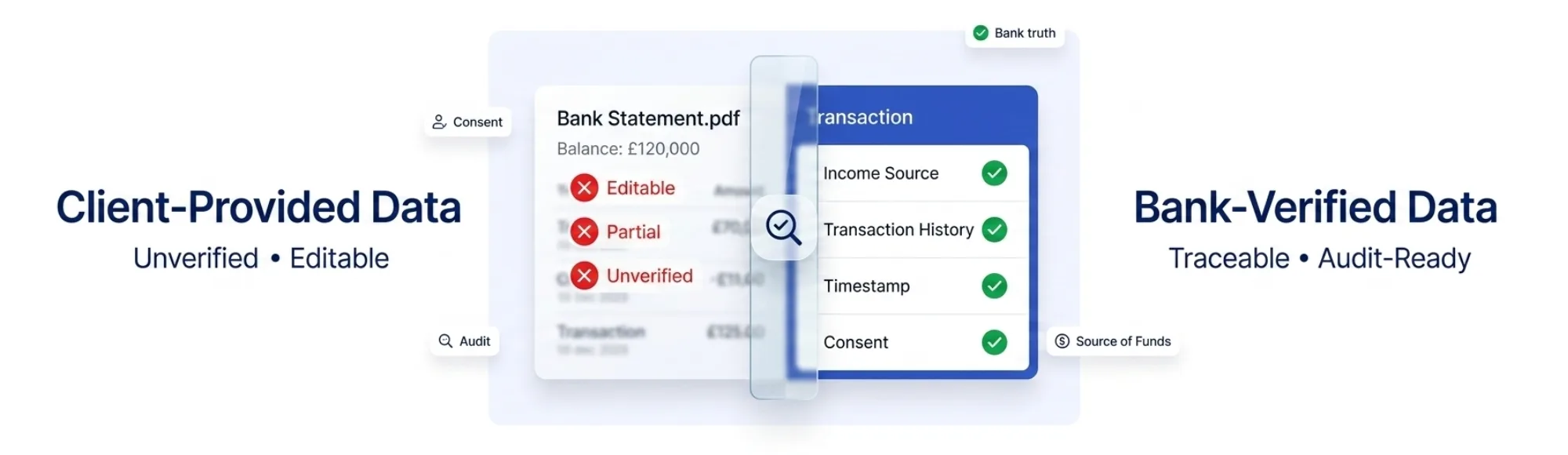
Enhanced Client Due Diligence: Making Compliance Work in Practice
Enhanced client due diligence is a mandatory requirement under MLR 2017 Regulation 33 for high-risk clients, PEPs, and complex transactions. Most EDD workflows still rely on manually collected documents that cannot be independently verified. This blog covers what EDD requires, when it applies, and how a structured client due diligence checklist works reliably in practice.
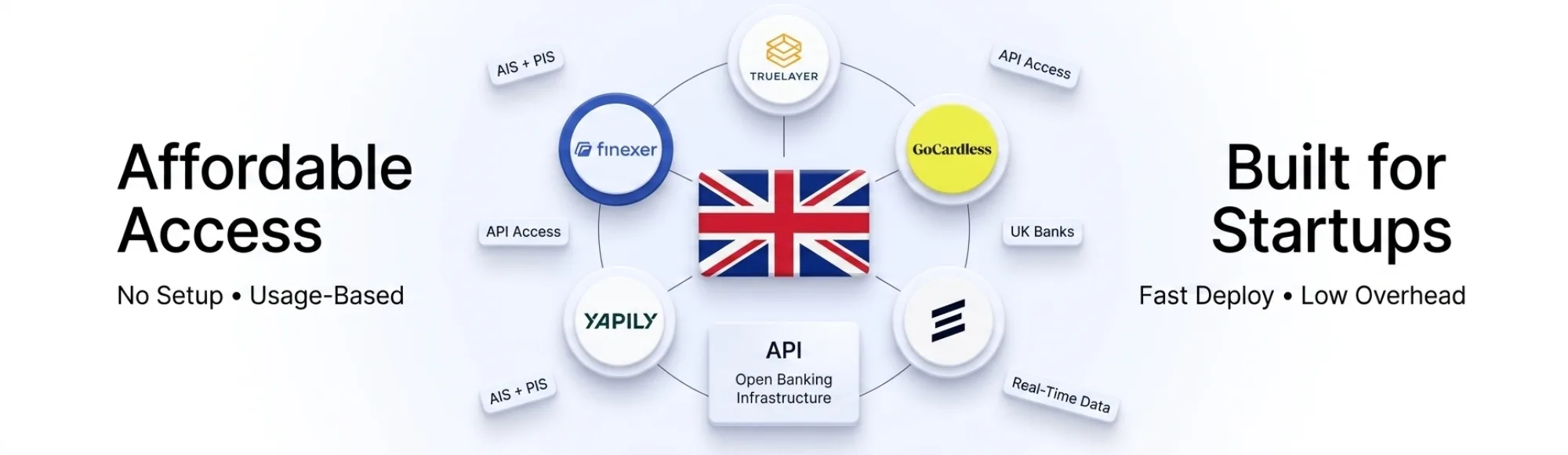
5 Best Affordable Open Banking Providers for UK Startups and SMEs
Affordable Open Banking for startups and SMEs means more than the lowest headline price. It means lower integration complexity, faster deployment, and less operational overhead overall. This blog compares the top five UK Open Banking providers on affordability, covering pricing models, deployment speed, and what actually determines open banking affordability for early-stage and SaaS platforms.
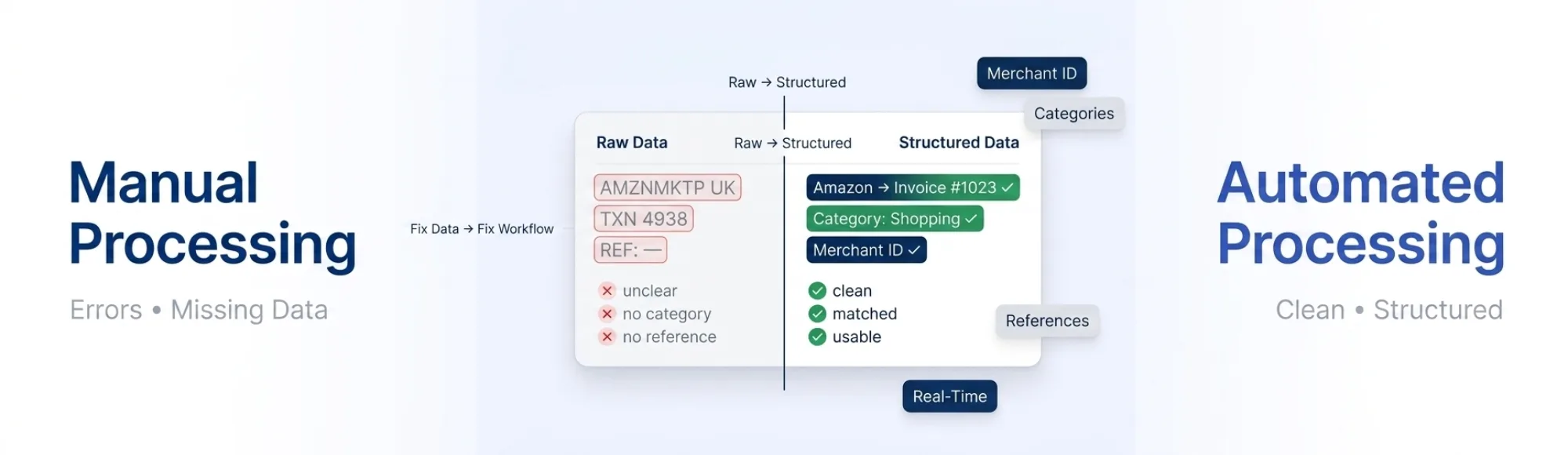
Manual Transaction Processing: Why Reliable Solutions Still Fall Short
Manual transaction processing persists across accounting SaaS, ERP, billing, and Lawtech platforms even when automation tools are already running. The root cause is fragmented bank data – not the software itself. This blog covers why transaction processing solutions fall short without direct bank data access and what platforms need to reduce manual handling at source.
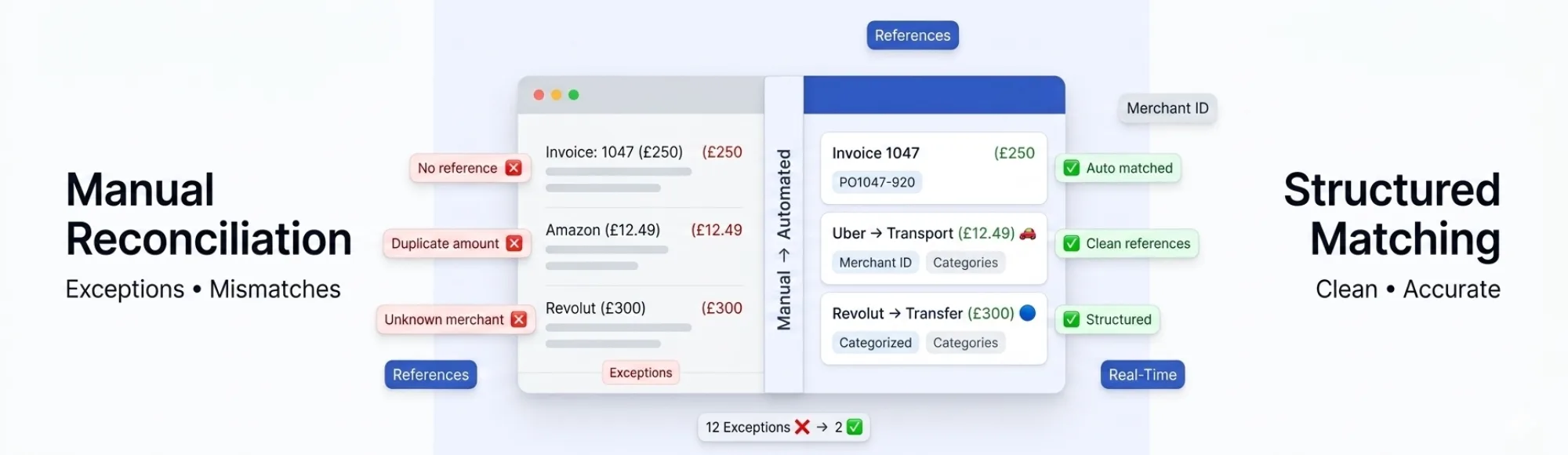
Manual Reconciliation Payments: Why Automation Still Fails
Manual reconciliation payments slow financial workflows. See why manual bank reconciliation persists and how structured bank data reduces the effort.
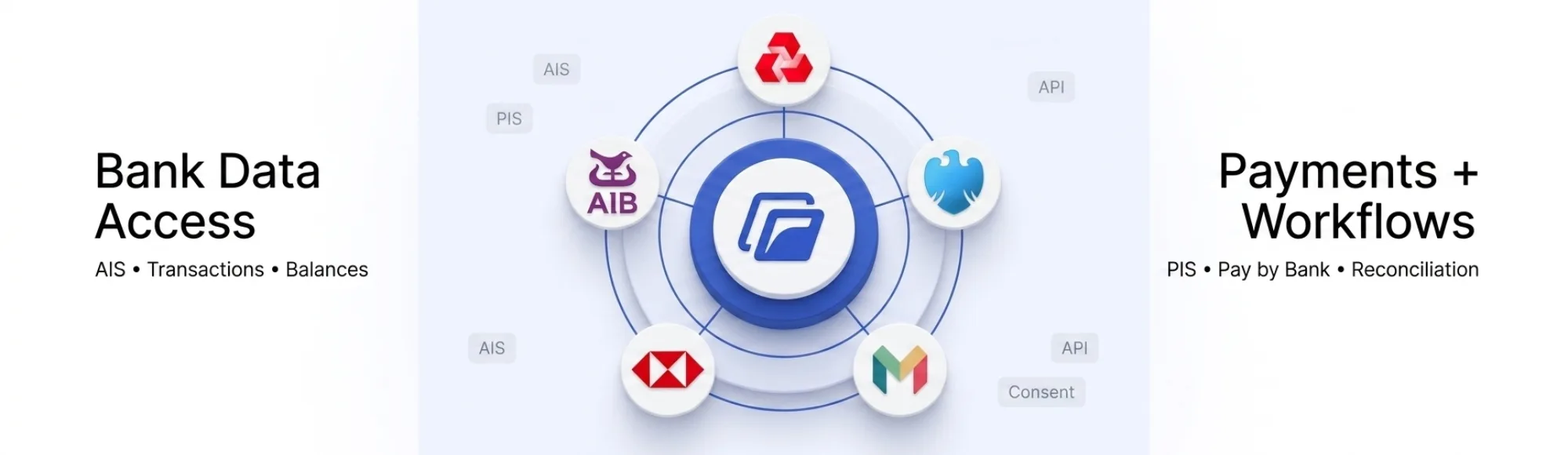
Finexer Open Banking: Infrastructure for Reliable Financial Workflows
UK-only. FCA-authorised. Bank data and payments in one integration. Open Banking infrastructure for accounting, Lawtech, EPOS, and billing platforms. Contact Now Finexer Open Banking provides API-based access to bank transaction data and payment initiation through Open Banking infrastructure. It enables platforms to retrieve structured financial data, initiate account-to-account payments, and build reliable financial workflows using…
![Zimpler Pricing [2026]: Costs, Features & UK Alternative](/wp-content/uploads/2025/04/Zimpler-2026-png.webp "Zimpler Pricing [2026]: Costs, Features & UK Alternative 16")
Zimpler Pricing [2026]: Costs, Features & UK Alternative
Get Paid with Finexer Connect with 99% of UK Banks and Scale Your Business without Limits Try Now The information in this blog was verified using publicly available sources as of Jan 2026. Choosing a payment provider isn’t just about features—it’s about what it will cost you over time. While open banking solutions like Zimpler…
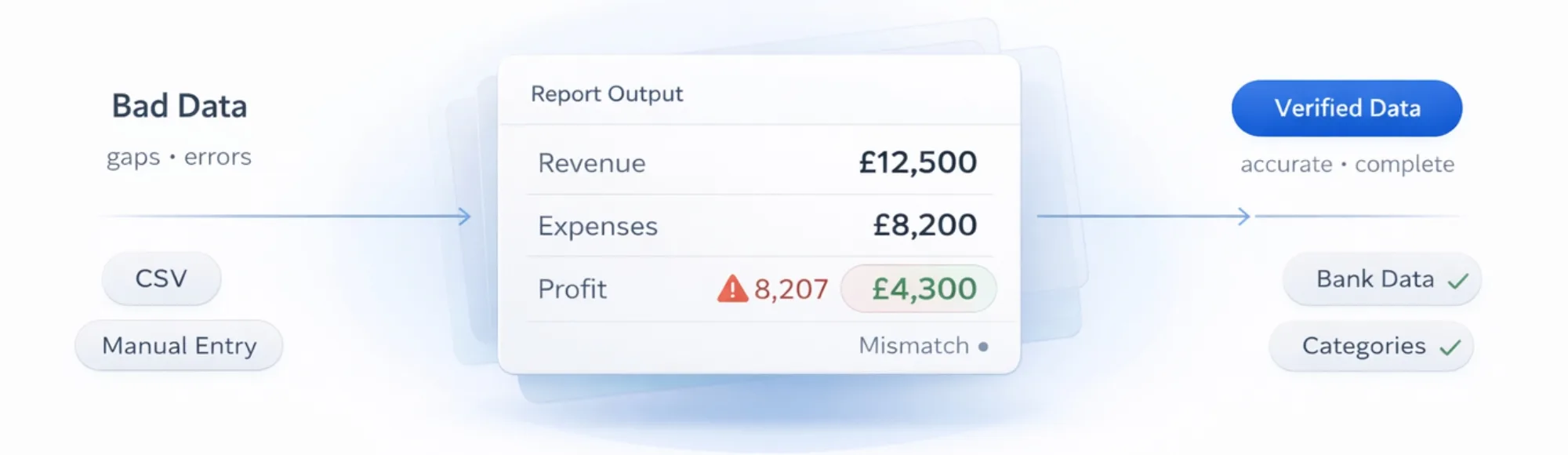
Business Financial Reporting: Why Reports Go Wrong
Business financial reporting produces wrong outputs when transaction data is wrong. The P&L shows inaccurate margins. The cash flow statement misses transactions. The balance sheet does not reconcile. The reporting tool is correct. The data feeding it is not. This blog covers why reporting finance breaks at the input layer and how to fix it.
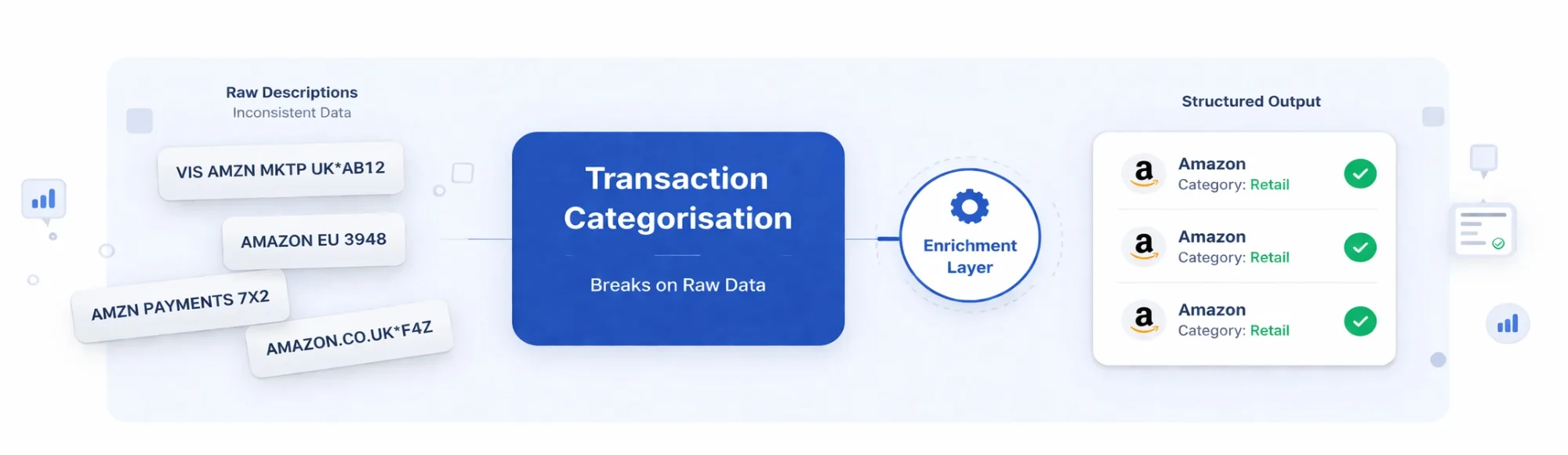
Inaccurate Financial Statements: How Proven Data Errors Compound at Scale
Inaccurate financial statements are rarely caused by a single bookkeeping error. They are caused by data inconsistencies that compound across automated workflows built on top of them. This blog covers why financial statement inaccuracy is a data input problem, how bookkeeping errors scale in accounting platforms, and how bank-verified transaction data fixes it at source.
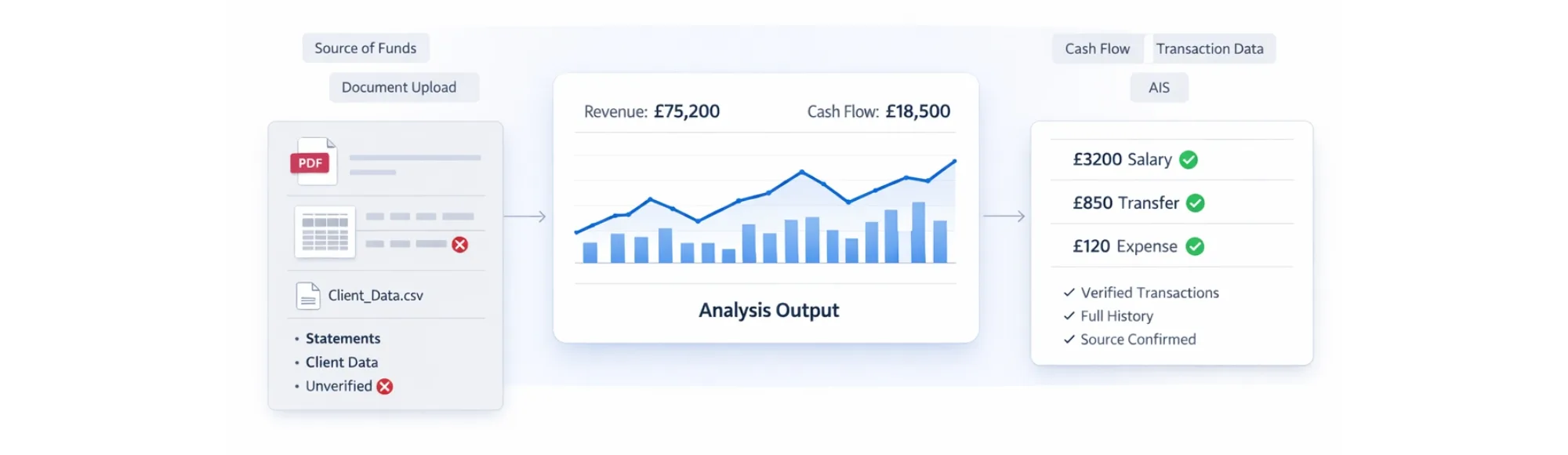
Financial Due Diligence: Why Transaction Services Fail Without Verified Financial Data
Financial due diligence breaks when the underlying transaction data cannot be independently verified. For Lawtech platforms, accounting firms, and compliance SaaS, document-based inputs create gaps that undermine every analysis built on top. This blog covers what financial due diligence requires, where transaction services fail to deliver it, and how bank-verified data fixes the input layer.

Ivy Pricing in 2026: Fees, Hidden Costs, and Smarter Alternatives
Get Paid Faster with Finexer Connect with 99% of the UK Banks and Scale Your Business without Limits Try Now If you’re here trying to make sense of Ivy pricing, you’re not alone. Many finance teams hit the same wall: no public rates, no pricing calculator, and no clear idea of what it’ll actually cost…
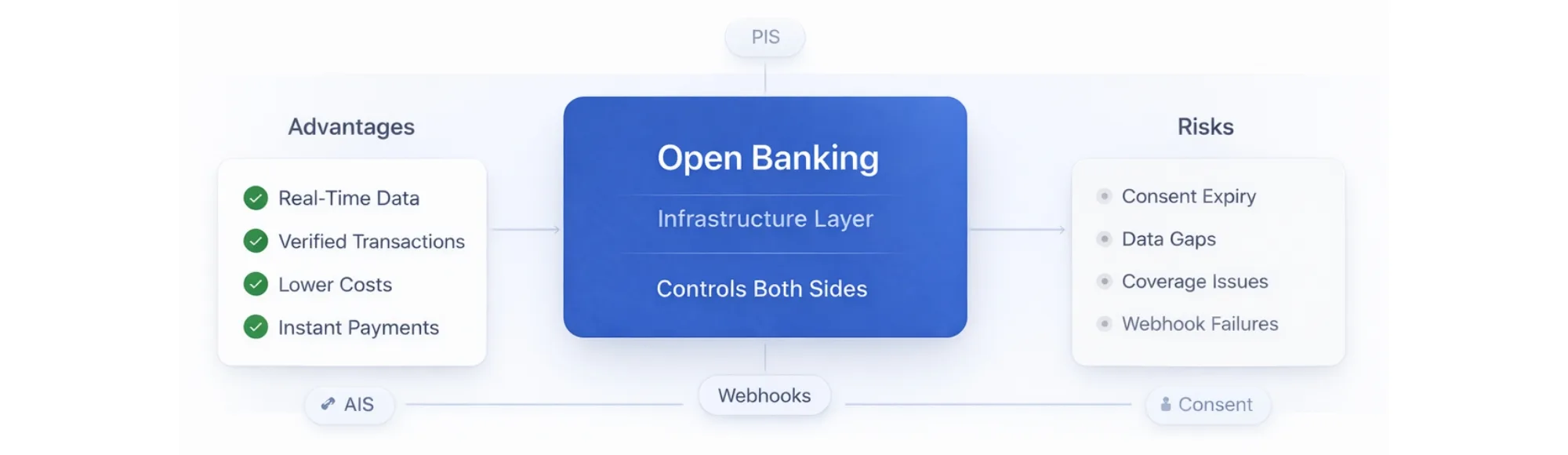
Open Banking Advantages: What Platforms Gain (and the Risks They Must Solve)
Open banking advantages are real – lower payment costs, bank-verified data, and faster financial workflows. But the risks of open banking are equally real for platforms building on it. Consent expiry, coverage gaps, and data inconsistency are operational problems, not theoretical ones. This blog covers both sides from a platform perspective, not a consumer one.
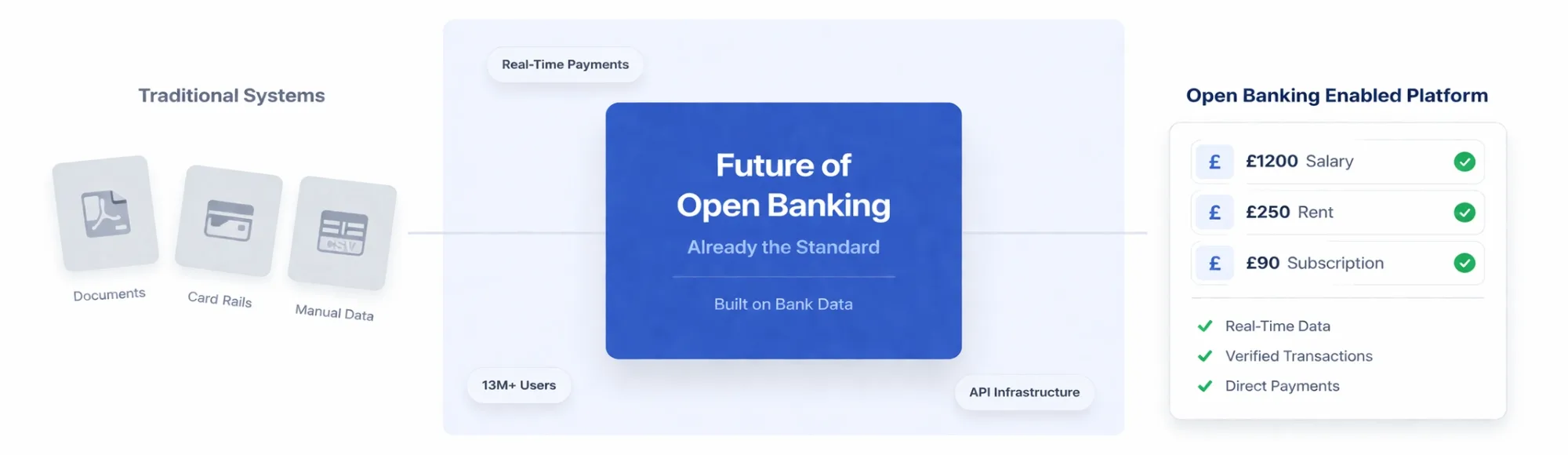
Future of Open Banking: Why It’s No Longer Optional for Financial Platforms
The future of open banking is not a distant roadmap item. It is live, already delivering measurable economic value, and actively separating platforms that have built on it from those that have not. This blog covers whether open banking is mandatory, what the economic data shows, and why the infrastructure shift decision cannot be deferred.
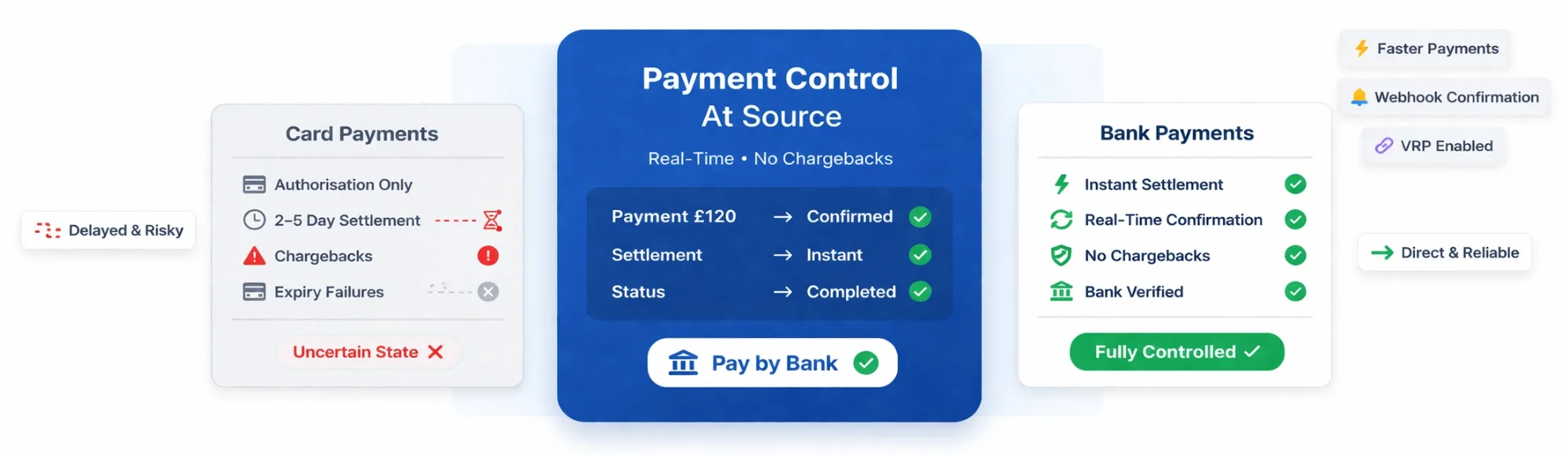
Pay by Bank Open Banking: How Platforms Gain Control Over Payments Beyond Card Rails
Card rails are costing you margin and control on every transaction. Finexer provides FCA-authorised Pay by Bank and VRP infrastructure for UK platforms. Contact Now Pay by bank open banking is not a cost optimisation play. It is a control play. At Finexer, I work with EPOS platforms and payment SaaS providers that move to…

Rental Income Verification: How Platforms Validate and Value Rental Income Using Bank Data
Rental income verification is one of the harder financial checks for UK platforms to get right. Unlike salary income, rental receipts are irregular, multi-source, and easy to misrepresent on paper. This blog covers how PropTech and accounting platforms use bank-verified transaction data for accurate rental income verification and rental income valuation without manual document handling.
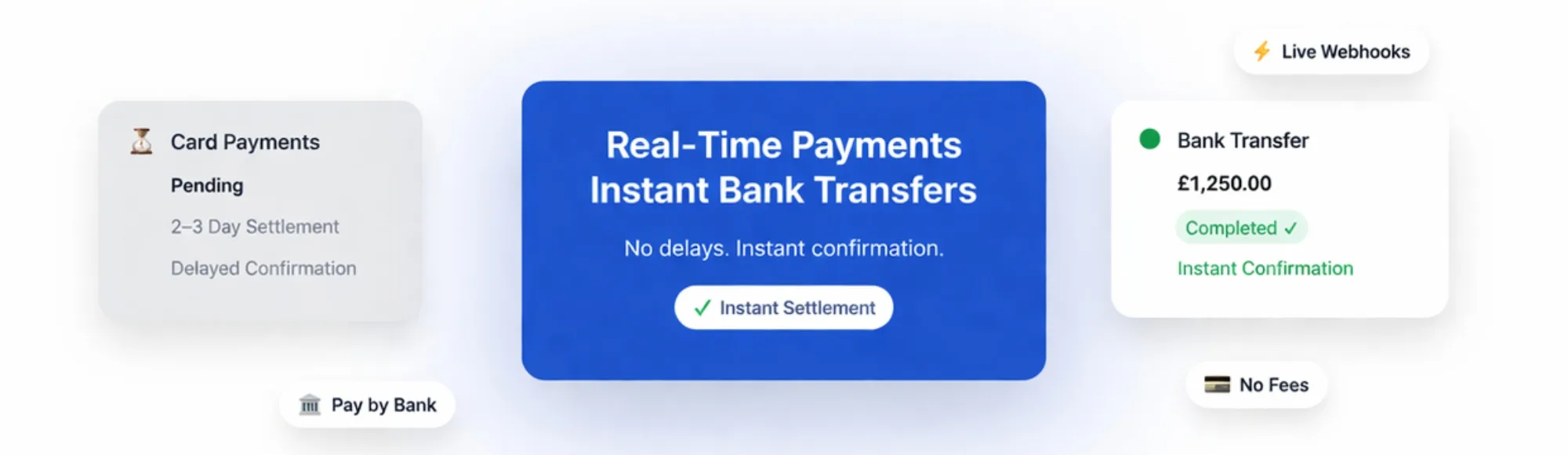
Real Time Payments UK: Why Platforms Are Moving from Card Settlement to Instant Bank Transfers
Real time payments UK are shifting platform settlement from card-based delays to instant account-to-account bank transfers. This blog explains what is real time payments, why card settlement creates operational gaps for EPOS, payroll, and fintech platforms, and how Open Banking payment infrastructure enables instant confirmation, Pay by Bank, and real-time payout workflows.
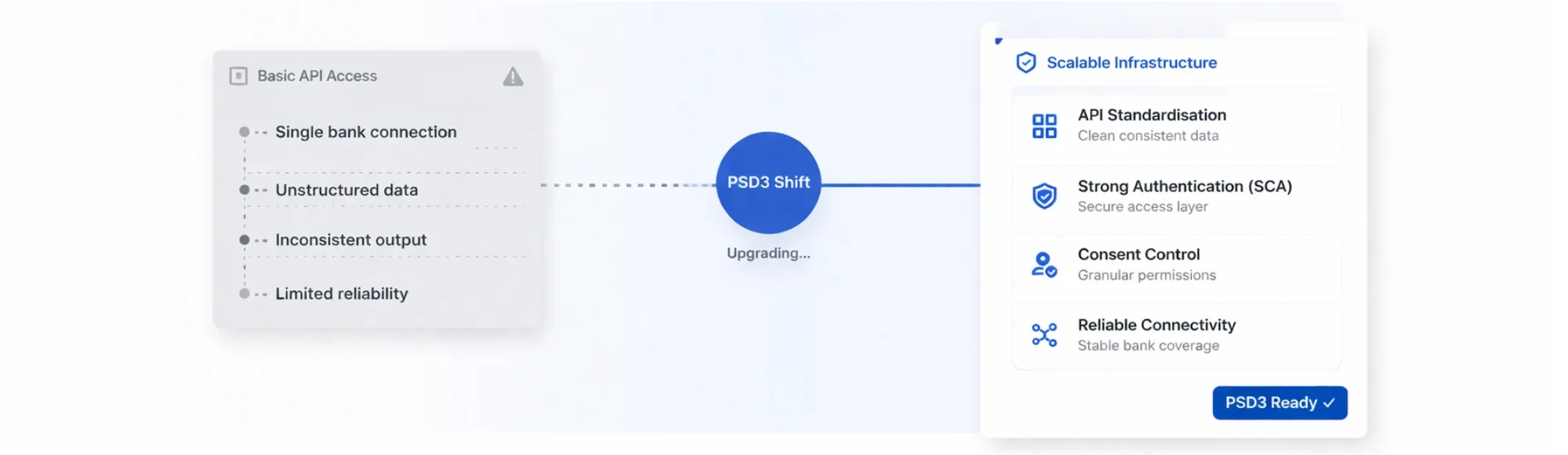
PSD3 Open Banking: Why Platforms Must Move Beyond Basic APIs to Scalable Financial Infrastructure
PSD3 open banking marks a structural shift in how financial data and payments must be handled across Europe and the UK. This blog explains what is PSD3, how it raises the compliance and infrastructure bar for platforms, and why the transition from basic API access to scalable, production-grade financial infrastructure is no longer optional for…
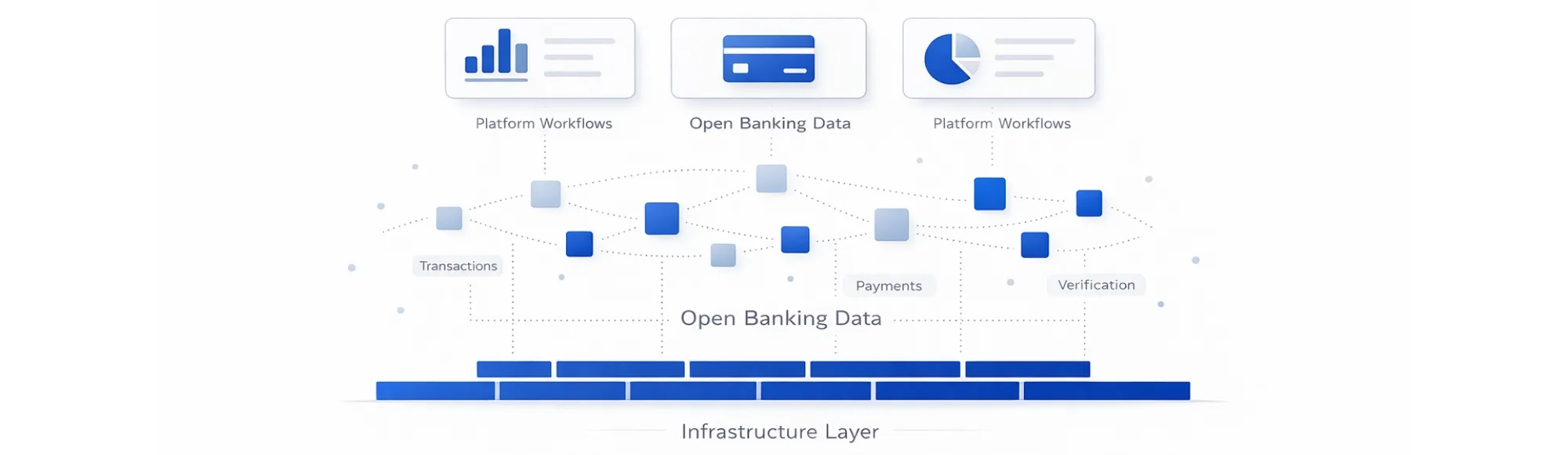
Open Banking Infrastructure: How Platforms Build Scalable Financial Workflows on Bank Data
Open banking infrastructure is the foundation layer that allows platforms to access bank transaction data and initiate payments through regulated APIs. This blog explains how open banking data flows into financial products, what platforms build on this infrastructure, and how Finexer provides the structured bank data layer for reconciliation, verification, and payment workflows.
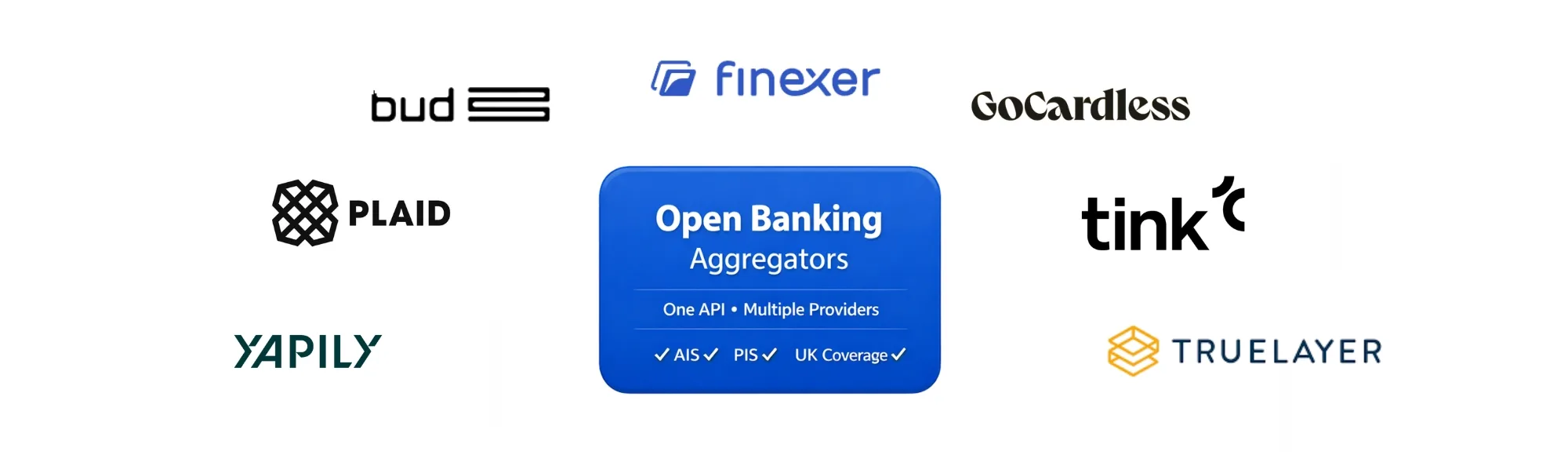
7 Best Open Banking Aggregators in the UK: A Reliable 2026 Guide to APIs, Coverage and Reliability
Open banking aggregators in the UK give platforms access to bank data and payment initiation through a single API aggregator connection. This guide covers the 7 best providers in 2026, how to evaluate coverage, data quality, and workflow fit, and where Finexer sits for platforms building accounting, LawTech, EPOS, and billing products.
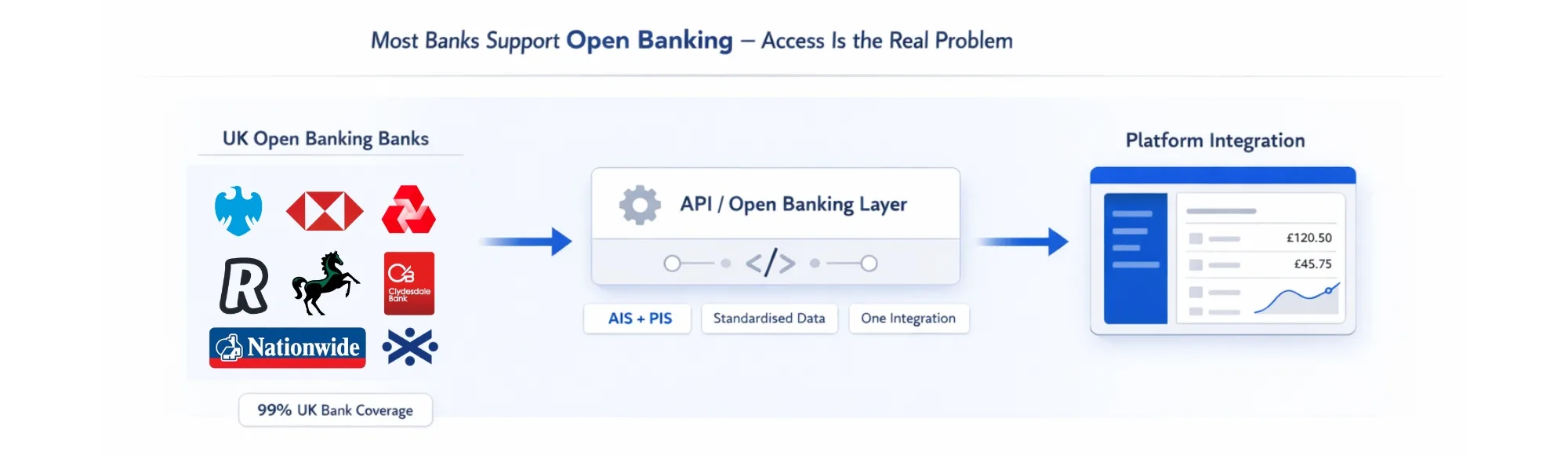
Which Banks Use Open Banking: A Reliable Coverage Guide for UK Platforms
Which banks use open banking in the UK – and does coverage actually matter for platforms building financial features? This blog explains which UK banks support open banking APIs, where is open banking available for platforms, and why reliable multi-bank connectivity through a single infrastructure layer is the real coverage question platforms need answered.