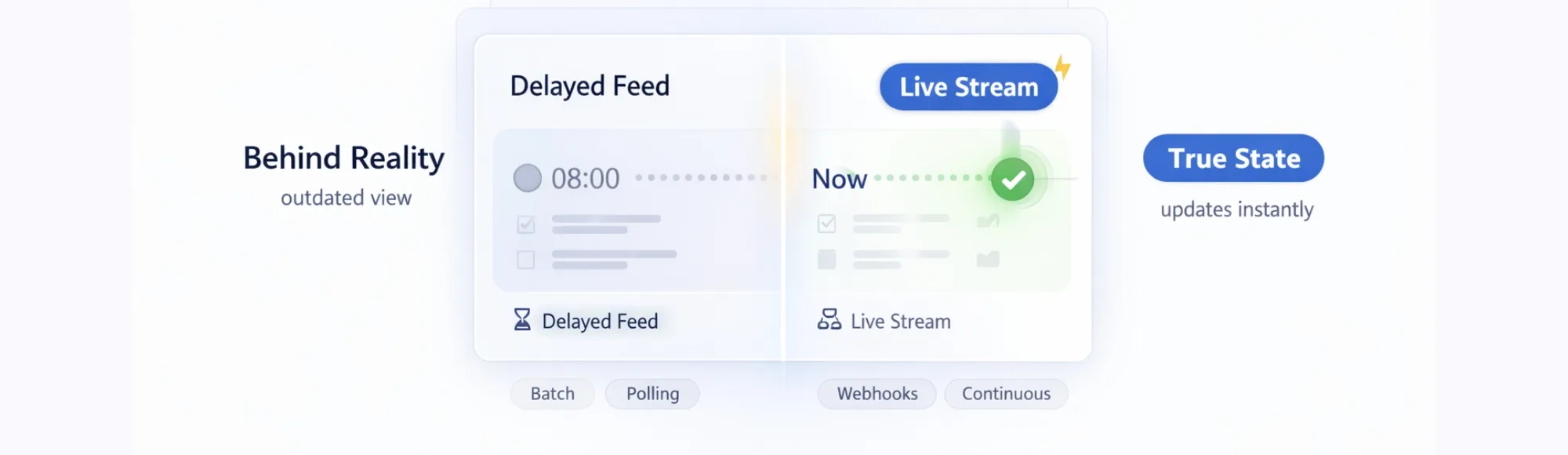
Your bank data is not real-time.
Continuous bank transaction data for real-time accounting workflows.
Real-time accounting is a feature that most accounting platforms claim.
It is a capability that very few actually deliver – because the software is not the bottleneck. The data feeding it is.
A platform can process transactions instantly. It can update dashboards in milliseconds. It can generate reports the moment data arrives. None of that matters if the transaction data from the bank arrives in a batch at 2am, or requires a manual refresh, or lags 6 hours behind actual account activity.
In my work building financial data infrastructure at Finexer, this is the gap that accounting SaaS and ERP platforms consistently hit. The platform is built for real-time. The bank data input is not.
TL;DR
Real-time accounting requires continuous access to bank transaction data – not just real-time processing of whatever data arrives. Most accounting platforms receive bank data through scheduled imports, CSV exports, or legacy bank feed connections that update periodically rather than continuously. Finexer’s FCA-authorised AIS delivers each transaction via webhook as it occurs at the bank – providing the continuous, structured data input that makes real-time accounting genuinely real-time.
Key Takeaways
What does real-time accounting actually mean?
Real-time accounting means financial records reflect actual business activity as it occurs – not at the end of the day, week, or import cycle. It requires continuous transaction data from the bank, not just fast processing of periodic data. The distinction is between a system that updates when data arrives and one that receives data continuously.
Why are most accounting systems not truly real-time?
Most accounting systems receive bank data through connections that update on a schedule – typically daily or when manually triggered. The software processes data in real time. The data itself is hours or days old by the time it arrives. That gap makes the accounting system periodic, not real-time.
What makes bank feed data delayed rather than real-time?
Standard bank feeds use screen scraping or scheduled API polling – they request data at intervals rather than receiving it as transactions occur. A transaction that clears at 9am may not appear in the accounting system until the scheduled feed update runs – which could be midnight, or later.
What does continuous bank data access actually require?
Continuous bank data access requires webhook-based delivery from a direct bank API connection. Each transaction triggers a webhook event at the moment it occurs at the bank – delivering the transaction to the accounting platform without waiting for a scheduled poll or import cycle.
What Does Real-Time Accounting Actually Require?
What Is the Difference Between Real-Time Processing and Real-Time Data?
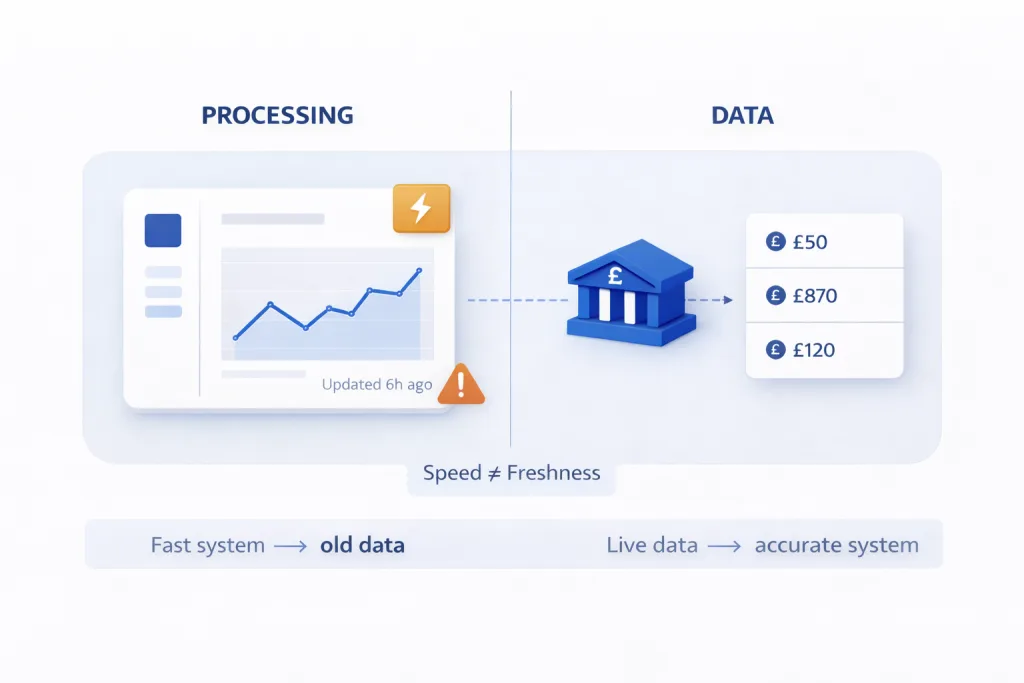
Real-time accounting requires two things to both be true: real-time data delivery, and real-time processing of that data.
Most accounting platforms have solved the second problem. Processing is instant. Dashboards update immediately. Reports generate on demand.
The first problem – continuous data delivery from the bank – is where most platforms hit a wall they do not immediately recognise.
A transaction that occurred 6 hours ago is not real-time accounting data. It is historical data that has not been collected yet. The accounting system cannot be more current than the data it receives.
Real-time bank feeds for accounting platforms – fixing the data bottleneck covers how bank feed architecture determines whether accounting data is genuinely real-time or periodically updated.
“The accounting platforms I work with invest heavily in real-time dashboards and live reporting features. The most common thing that undermines them is a bank feed connection that was last updated eight hours ago. Real-time accounting data starts at the bank, not at the software layer.” – Yuri, Finexer
Why Does Real-Time Accounting Data Fail in Practice?
What Causes the Gap Between Bank Activity and Accounting Records?

Three structural problems create the gap between real actual bank activity and what accounting systems show:
Scheduled feed updates – most bank feed connections poll for new data on a schedule. Hourly, daily, or triggered by manual refresh. Any transaction that occurs between polls is invisible to the accounting system until the next update cycle runs.
Batch data delivery – many bank connections deliver transactions in batches at set times. A full day’s transactions arrive at once – typically overnight. The accounting system receives accurate data, but it is 8-24 hours old by the time it arrives.
Import-dependent workflows – platforms that rely on CSV exports or PDF bank statement uploads have no real-time connection at all. Data is as current as the last manual import. Gaps between imports create a blind spot in the accounting record.
According to Finexer’s AIS API for real-time bank data in the UK, the difference between webhook-based transaction delivery and scheduled polling is the difference between accounting data that is minutes old and accounting data that is hours old.
| Data Delivery Method | How It Works | Data Age When Received | Real-Time Accounting Impact |
|---|---|---|---|
| CSV / manual import | File exported and uploaded by user | Hours to days old | No real-time connection – entirely periodic |
| Scheduled bank feed polling | System requests data at fixed intervals | Minutes to hours old depending on poll frequency | Near-real-time at best – gaps between poll cycles |
| Overnight batch delivery | Full day’s transactions delivered once daily | Up to 24 hours old | Daily accounting – not real-time by any measure |
| Webhook-based AIS delivery | Each transaction triggers event at occurrence | Seconds old | Genuinely real-time – accounting reflects actual bank activity |
What Is the Business Impact of Non-Real-Time Accounting Data?
How Does Delayed Data Break Real-Time Accounting Workflows?
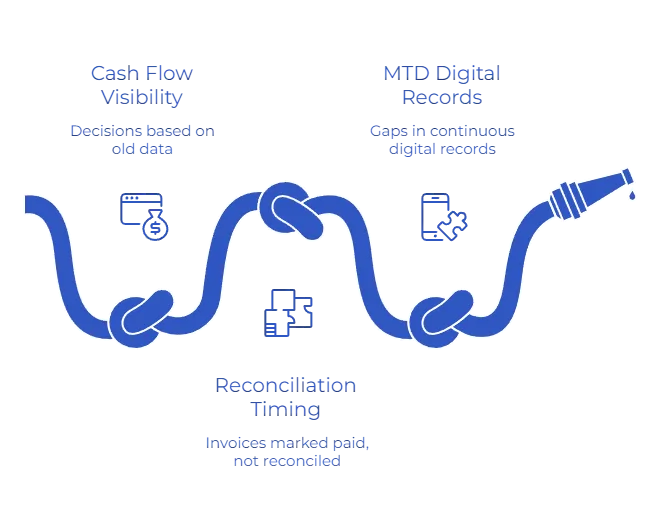
When accounting data is hours old, it breaks three workflows that depend on current information:
According to Open Banking Limited’s 2025 Impact Report, over 13 million UK users now rely on Open Banking infrastructure for financial services. For accounting platforms serving this population, the gap between bank activity and accounting records is a live operational problem – not a future concern.
Cash flow visibility – a business that spent £12,000 this morning will not see that reflected in its cash flow report until the next feed update. Decisions made on the current cash position are made on yesterday’s position.
Real-time payments and settlement visibility for accounting platforms covers how instant payment settlement changes cash flow visibility for accounting and financial operations platforms.
Reconciliation timing – invoices marked as paid cannot be reconciled against bank transactions that have not yet arrived in the system. Month-end reconciliation becomes a catch-up exercise rather than a continuous process.
MTD digital records – HMRC’s Making Tax Digital for Income Tax requires continuous digital records from April 2026. A system that updates daily rather than continuously creates gaps in the digital record that do not meet the standard.
Real-time transaction monitoring for fintech and accounting platforms covers how continuous transaction data changes the accuracy of monitoring and reporting workflows for accounting and ERP platforms.
How Does Finexer Enable Genuine Real-Time Accounting?
What Does Finexer’s AIS Provide for Continuous Data Delivery?
The problem: real-time accounting fails because bank data arrives in batches or on a schedule rather than continuously. Finexer’s FCA-authorised AIS solves this by delivering each transaction via webhook at the moment it occurs at the bank – providing the continuous data input that makes real-time accounting genuinely real-time.
- Real-time webhooks – each transaction delivered as it occurs, not on a schedule
- Merchant IDs and category codes per transaction – pre-categorised data arrives ready for the accounting system
- Structured JSON output – consistent schema across almost all major UK banks
- Up to 7 years of transaction history – continuous historical context alongside real-time delivery
- Multi-account access in one consent flow – complete financial picture across all client accounts
- Consent logs and access timestamps per retrieval – audit trail supporting MTD and HMRC compliance
- White-label consent flows, usage-based pricing, 3-5 weeks onboarding support
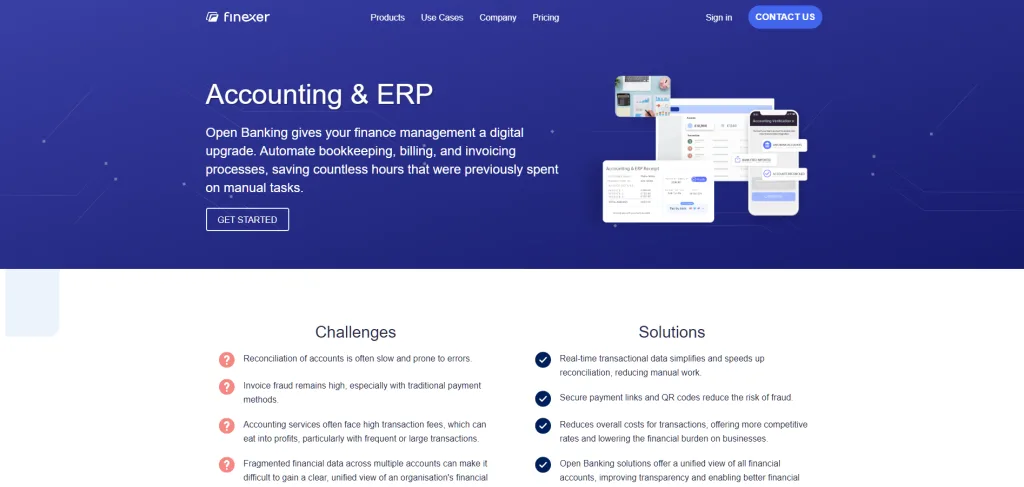
Accounting and ERP use cases with Finexer’s bank data infrastructure covers how accounting SaaS and ERP platforms integrate AIS data feeds into real-time financial workflows.
“Real-time accounting data is not a software feature. It is a data delivery architecture decision. Webhook-based bank data means the accounting system knows about a transaction within seconds of it occurring. Polling-based feeds mean it knows hours later. That difference defines whether the accounting is actually real-time.” – Yuri, Finexer
What I Feel
“Real-time” has become a marketing term in accounting software. Every platform claims it. Almost none defines what makes it true.
The honest answer is simple: real-time accounting is only possible when the bank data arrives in real time. Everything else – the dashboards, the reports, the automations – runs on top of that foundation.
A platform built on webhook-delivered bank transactions is genuinely real-time. A platform built on overnight batches is a daily accounting system with a real-time interface on top of it.
The infrastructure determines the reality. The interface just shows it.
Common Use Cases

Accounting SaaS Platforms
Client bank feeds that update daily leave gaps in financial records that accumulate across every account. Finexer’s webhook-based AIS delivers each transaction as it occurs – giving accounting platforms continuously updated client records without manual refresh or import scheduling.
ERP Platforms
ERP financial modules that depend on batch bank data updates cannot provide live cash flow or accurate period-to-date reporting. Finexer’s real-time transaction delivery with merchant IDs and category codes gives ERP platforms accounting-ready data that reflects actual financial activity throughout the day.
Financial Operations Platforms
Financial operations tools that automate cash flow monitoring, budget tracking, and period reporting need data that reflects the current financial position. Finexer’s continuous AIS feeds ensure that real-time accounting data in financial operations platforms reflects actual bank activity – not yesterday’s batch.
What is real-time accounting?
Real-time accounting is a system where financial records update continuously as transactions occur – rather than at scheduled intervals or month-end. It requires continuous bank data delivery alongside real-time processing. A platform that processes data instantly but receives it in daily batches is not a real-time accounting system.
What is real-time accounting data and why does it matter?
Real-time accounting data is bank transaction information delivered to the accounting system within seconds of each transaction occurring. It matters because cash flow decisions, reconciliation workflows, and MTD digital records all depend on current financial information. Data that is hours old produces inaccurate reports and delayed decisions.
How does AIS bank data enable real-time accounting for platforms?
FCA-authorised AIS delivers each bank transaction via webhook at the moment it occurs – providing accounting platforms with continuous, structured transaction data rather than scheduled batches. Each transaction arrives pre-categorised with merchant IDs and category codes, ready for the accounting system to process without manual intervention.
Build genuinely real-time accounting workflows on continuous bank transaction data.
About the Author

Yuri
Yuriy Yakushko is a fintech founder and software engineer with over 20 years of experience building financial technology. He’s passionate about creating scalable, secure infrastructure that helps businesses modernise how they access financial data and manage payments.