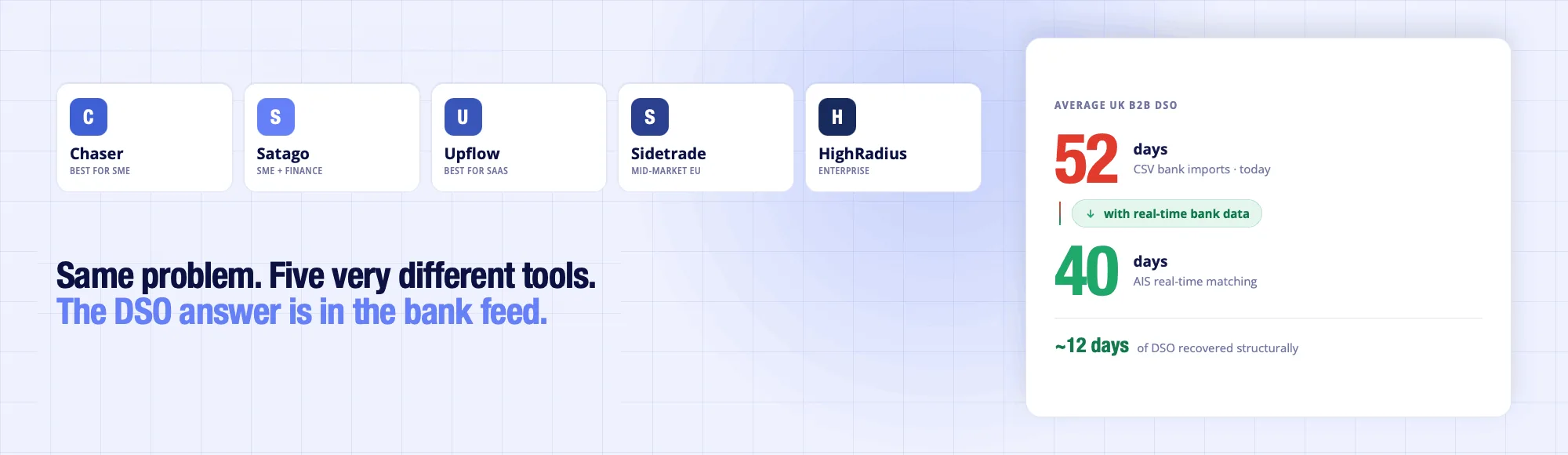
Cut DSO. Pick the Right Tool.
The five collections platforms UK finance teams are actually shortlisting in 2026, compared on what matters – bank data, accounting integrations, dunning logic, and pricing.
A finance director I spoke with last quarter put it bluntly. Their AR team was spending 15 hours a week chasing late invoices.
DSO sitting at 58 days. Accounting tool sending automated reminders – which everyone ignored. They wanted to know which collections software actually moves the number.
The answer is less obvious than the vendor pitches suggest.
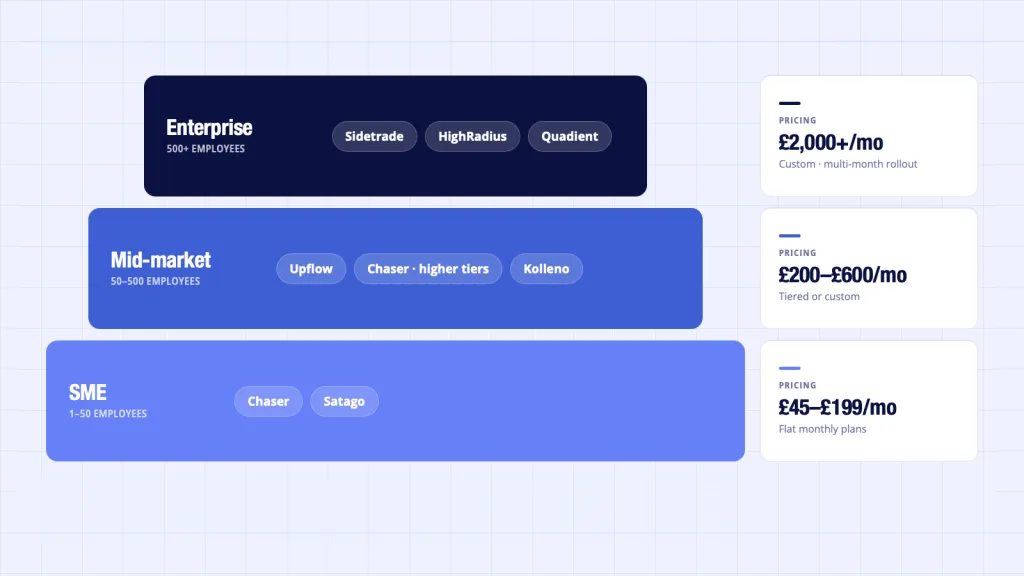
Collections software is not one category. There are at least three.
Email-chasing tools for SMEs. Mid-market collections platforms with credit risk built in. Enterprise AI suites for businesses managing thousands of invoices across multiple ERPs.
Picking the wrong tier costs you twice. Buy enterprise software for a 200-invoice business and you pay for capability you never use. Buy SME software for an 8,000-invoice business and you outgrow it in 18 months.
“The DSO problem is rarely a chasing problem. It is usually a reconciliation problem – the cash arrived, nobody matched it to the invoice, the customer got chased anyway, the relationship cracked. The platforms that actually move DSO solve cash application as well as dunning.” – Ravi, Finexer
TL;DR
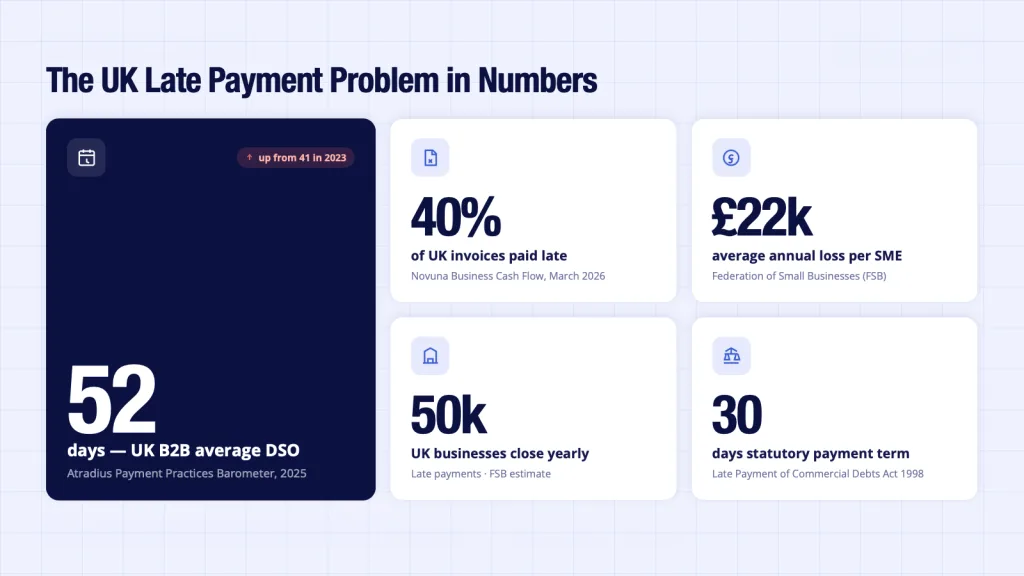
Western European B2B DSO averages 52 days (Atradius 2025, up from 41 in 2023), with the UK closely tracking that average. 40% of UK invoices are paid late (Novuna). Collections software helps – if matched to portfolio size. SME: Chaser (£199/month+), Satago (£45/month+). Mid-market: Upflow (custom). Enterprise: Sidetrade, HighRadius (£2,000/month+). Bank data via AIS is the 2026 differentiator over CSV.
What Is Collections Software (and How Is It Different from AR Automation)?
Collections software is the chase, dunning, and payment-recovery layer of accounts receivable.
Accounts receivable automation is broader. It usually covers credit checks, invoice generation, dunning, cash application, and reporting. Collections software focuses on the chasing and recovery stage specifically – the part that runs after the invoice is sent and before the cash is reconciled.
Collections is one layer inside accounts receivable automation, which spans credit checks, invoicing, dunning, and cash application across the full lifecycle.
Most modern platforms blur the line. Upflow markets itself as a financial relationship management platform.
Chaser leads with credit control. HighRadius calls itself autonomous AR. The labels matter less than what the software actually does in your workflow.
For shortlisting purposes, treat collections software as the layer that:
- Sends automated reminders across email, SMS, and sometimes WhatsApp
- Tracks invoice status against payment received
- Surfaces overdue accounts by priority or DSO risk
- Provides analytics on payment behaviour and team performance
- Integrates with accounting and ERP systems to read invoice and payment data
A finance team running accounts receivable automation across the full lifecycle still needs collections software inside it. The two are not alternatives – they are layers.
How Should UK Finance Teams Evaluate Collections Software?
Six criteria separate platforms that move DSO from platforms that just send emails.
Dunning workflow flexibility. Multi-channel (email, SMS, WhatsApp), multi-stage (gentle reminder, firm reminder, escalation, debt collection handoff), and segmented by customer type. A platform that only sends three identical email reminders does not move the number for a portfolio with 200+ active customers.
Bank data integration for real-time reconciliation. This is the 2026 differentiator. Legacy tools rely on CSV bank statement imports – someone downloads the statement, uploads it, the system matches what it can, the rest goes to manual review. Modern tools pull transaction data via AIS in real time. Payments matched within minutes, not days. Less manual reconciliation. Faster DSO improvement.
Accounting platform native integrations. Native Xero, QuickBooks Online, Sage, NetSuite, and FreeAgent matter more than feature breadth. A platform that needs middleware to talk to your accounting tool will leak data and miss invoices.
DSO reporting and analytics. Useful platforms show DSO by customer, by industry, by month, with trend lines. Less useful platforms show aggregate DSO once a month.
Pricing model. Per-user, per-volume, percentage of collected revenue, or flat. Each works for different portfolio shapes. SaaS businesses with high invoice counts often pay less on percentage models. Service businesses with fewer larger invoices often pay less on flat fee.
UK regulatory support. The Late Payment of Commercial Debts (Interest) Act 1998 sets a 30-day statutory payment term by default and entitles UK creditors to statutory interest plus fixed debt recovery costs (£40 for invoices under £1,000, £70 for £1,000-£9,999, £100 for £10,000+). Useful collections software calculates and applies this automatically.
Which Collections Software Platforms Should UK Finance Teams Shortlist?
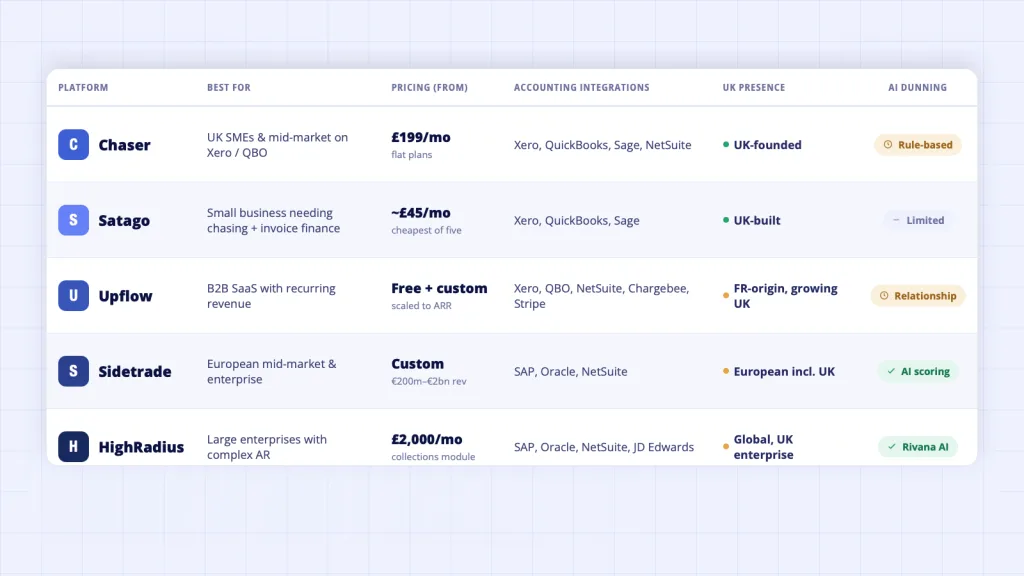
| Platform | Best for | Pricing (2026) | Accounting integrations | UK focus |
|---|---|---|---|---|
| Chaser | UK SMEs and mid-market on Xero/QBO | From £199/month | Xero, QuickBooks, Sage, NetSuite | UK-founded, strong UK presence |
| Satago | Small businesses needing chasing + invoice finance | From ~£45/month | Xero, QuickBooks, Sage | UK-built |
| Upflow | B2B SaaS with recurring revenue | Free Discover tier; paid custom | Xero, QBO, NetSuite, Chargebee, Stripe | French-origin, growing UK base |
| Sidetrade | European mid-market and enterprise | Custom enterprise pricing | SAP, Oracle, NetSuite | European focus including UK |
| HighRadius | Large enterprises with complex AR | Custom, typically £2,000+/month | SAP, Oracle, NetSuite, JD Edwards | Global, UK-supported |
Chaser: How Does It Fit the UK Mid-Market?
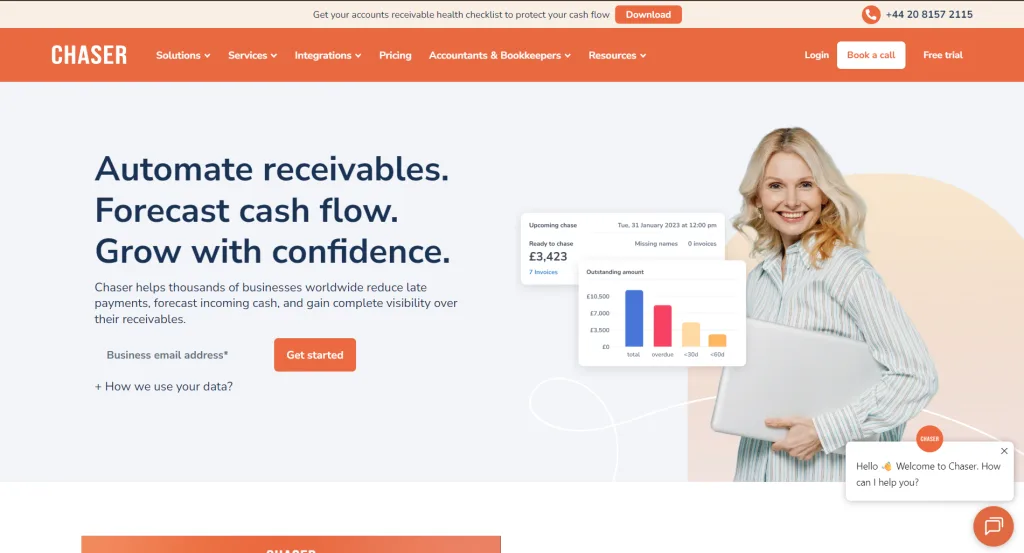
Chaser is UK-founded and remains the most-shortlisted name in UK mid-market collections.
The platform leads with email chasing, with SMS and Auto-call available on higher plans. Native integrations cover Xero, QuickBooks Online, Sage Business Cloud, Sage 50, Sage Intacct, NetSuite, and Dynamics 365.
Pricing in 2026: £199/month entry plan for businesses with under £4m turnover. Above that, £599/month. Higher tiers exist for businesses over a higher revenue threshold, with debt collection escalation and credit checks bundled in.
Good for: UK SMEs on Xero or QuickBooks who want predictable monthly pricing and an integrated route to debt collection if email chasing fails.
Less good for: businesses on FreeAgent (no native integration), or those needing WhatsApp outreach as a standard channel.
Satago: Where Does It Win on Pricing?
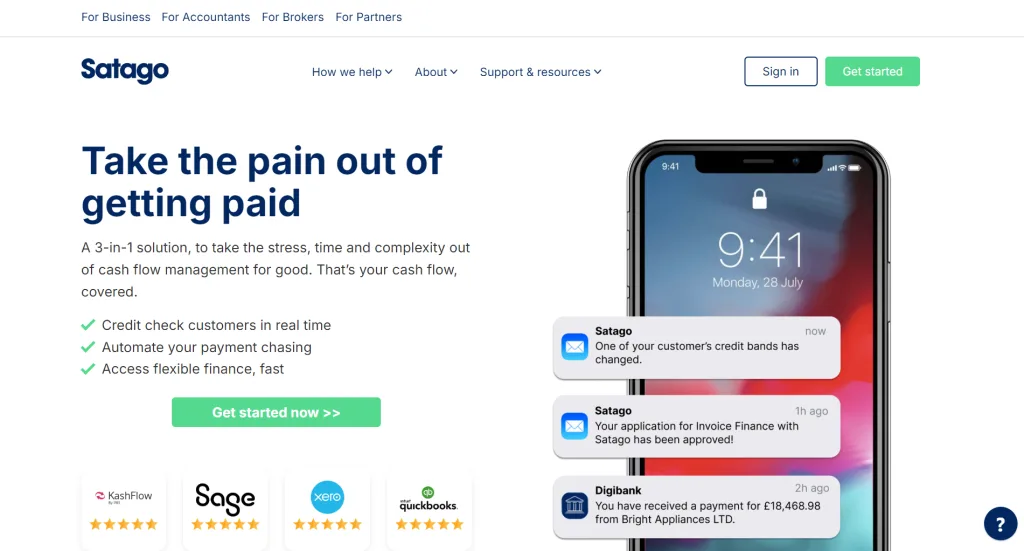
Satago combines AR chasing with invoice finance, which is a less common pairing.
Pricing starts from around £45/month, making it the cheapest of the five. The platform integrates with Xero, QuickBooks, and Sage. Credit risk reports and invoice financing are bundled as upsells.
Good for: small UK businesses where cash flow timing matters as much as chasing, and where access to invoice finance is a working capital need.
Less good for: businesses that need deep workflow automation. Satago is primarily a financing product with AR layered on – the depth of chasing logic is less than dedicated collections platforms.
Upflow: How Does It Suit SaaS Finance Teams?
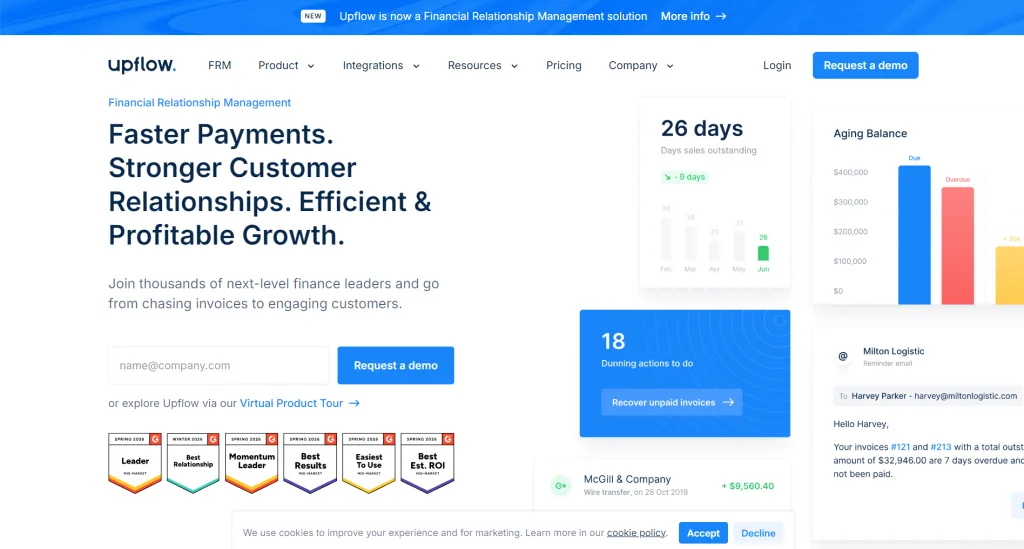
Upflow positions itself as financial relationship management rather than debt collection. The distinction matters in practice – the platform emphasises customer relationship preservation through the chasing cycle.
Native integrations include Xero, QuickBooks Online, NetSuite, Chargebee, and Stripe Billing. The Stripe and Chargebee integrations are why SaaS finance teams shortlist Upflow specifically.
Pricing has a free Discover tier covering AR analytics and peer benchmarking. Paid plans use tiered pricing based on annual recurring revenue. Pricing is custom and scaled to ARR tier, so expect a sales conversation rather than published rates.
Good for: B2B SaaS companies on Chargebee or Stripe Billing wanting modern dashboards and relationship-friendly automation.
Less good for: traditional UK service businesses where the SaaS framing does not fit.
Sidetrade: Where Does AI-Led Collections Pay Off?
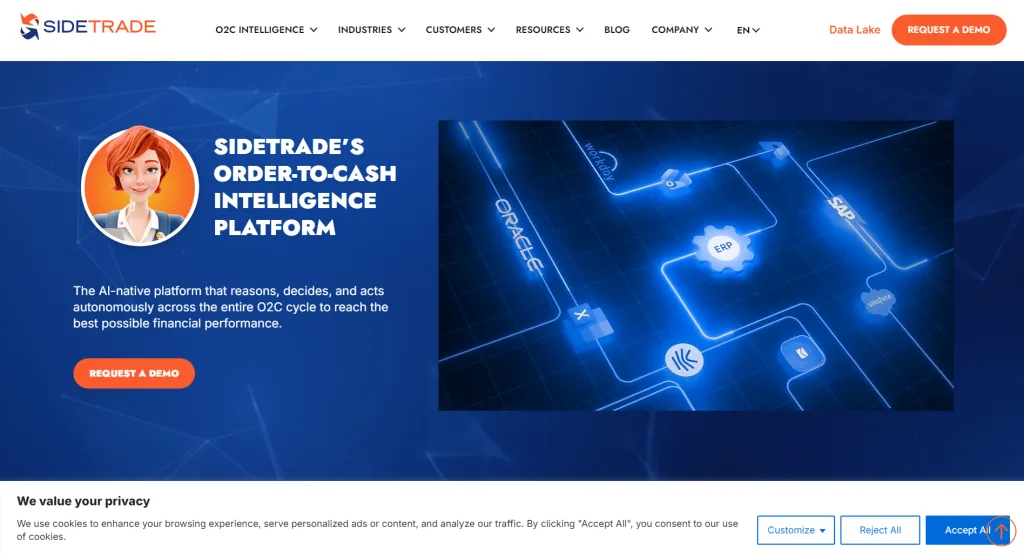
Sidetrade is a French-origin enterprise collections platform with strong European mid-market presence.
The platform’s scoring model uses payment behaviour data to predict when customers will pay. Dunning is automated with escalation logic, and the suite covers collections, dispute tracking, and cash forecasting.
Integrations target enterprise ERPs – SAP, Oracle, NetSuite. The platform is custom-priced and pitched at businesses with €200m-€2bn revenue.
Good for: European mid-market and enterprise finance teams wanting AI-assisted collections with strong European data depth.
Less good for: UK SMEs or mid-market businesses below £50m revenue, where the cost is hard to justify against simpler tools.
HighRadius: What Does Enterprise AR Look Like?
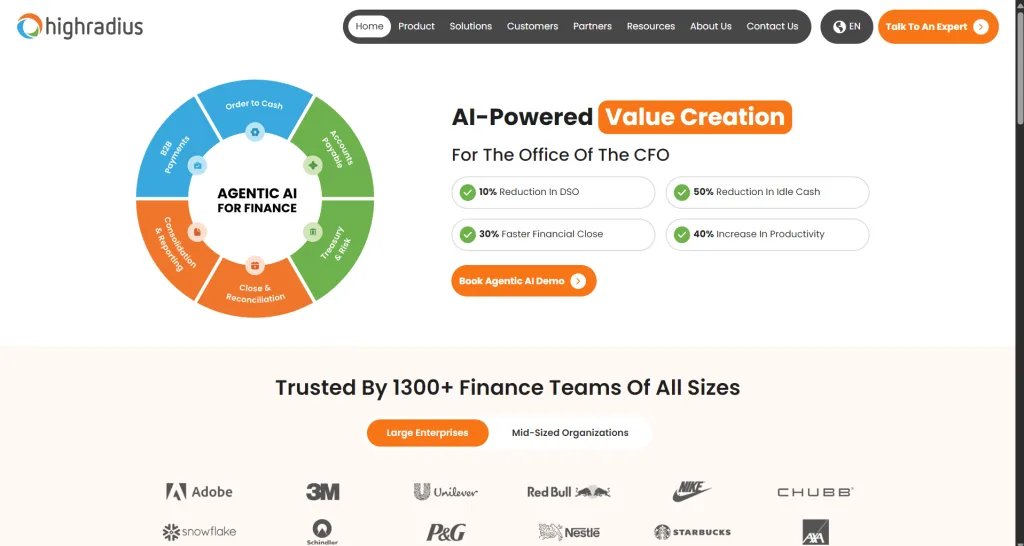
HighRadius is the enterprise standard for autonomous AR. The platform covers deductions, collections, cash application, and credit across one suite.
Their AI engine (Rivana) handles invoice prediction, payment behaviour scoring, and dunning automation. Integrations target SAP, Oracle, NetSuite, and JD Edwards.
Pricing is custom and typically starts at £2,000/month for the collections module alone. Implementation timelines run to several months.
Good for: large UK enterprises with complex multi-entity AR, especially in CPG, retail, and manufacturing where deductions are heavy.
Less good for: mid-market or SME finance teams. The implementation cost and learning curve are not proportionate.
What I Feel
Every finance director I speak to about collections software starts with the wrong question. They ask which platform sends the smartest reminders. The real question is which platform reconciles the cash fastest.
A reminder that goes out three days after the customer has actually paid is the fastest way to lose a relationship. The platforms that moved DSO most in 2026 were not the ones with the cleverest AI – they were the ones with the cleanest bank data feed.
How Does Bank Data Change Collections in 2026?
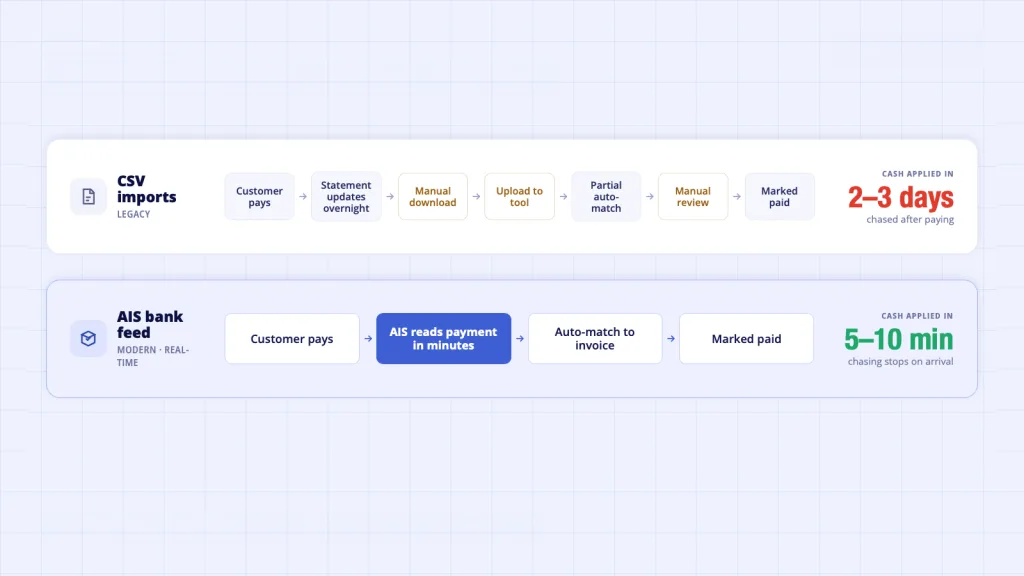
The historical pattern: a customer pays, the bank statement updates overnight, someone downloads the statement, uploads it to the collections tool, the tool matches what it can, the rest goes to manual review. Best case, two to three days behind. Worst case, the customer gets chased for an invoice they paid 48 hours earlier.
Modern collections platforms integrate Open Banking AIS to pull live transaction data. Payments match within minutes of arriving in the business bank account. Cash application happens in near real time. Chasing stops the moment a payment lands.
The downstream effect on DSO is material. Atradius data shows Western European DSO at 52 days in 2025, up from 41 in 2023. A platform that cuts two to three days off cash application time recovers most of that gap structurally.
This matters even more for SaaS and high-volume B2B businesses. A subscription business with 2,000 active customers cannot manually reconcile each daily incoming payment. The platform either reads the bank feed live, or the team accepts that some customers will be chased after paying.
Most modern platforms now run automated payment reconciliation off live bank feeds rather than overnight CSV files.
The harder problem is payment reconciliation for multiple invoices, where one incoming payment settles several outstanding invoices at once.
How Does Finexer Fit Into the Collections Software Stack?
Finexer is not a collections software platform. Finexer is the bank data and payments infrastructure that powers collections platforms.
This distinction matters for two audiences. If you are a finance team shortlisting collections tools, Finexer is not on your shortlist – you are buying Chaser, Satago, Upflow, Sidetrade, or HighRadius. If you are a platform building or improving collections features, Finexer is the bank data layer underneath.
What Finexer provides for collections platforms:
- AIS for real-time inbound payment matching – read transaction data from the customer’s business bank account, match invoices automatically as payments arrive
- Pay by Bank collection links – embed a Pay by Bank payment link in the invoice or reminder email, customer pays directly from their bank, funds arrive instantly via Faster Payments
- Coverage across virtually every UK bank – high street, challenger, and business accounts – through one API
- White-label integration – the collections platform’s brand stays on the customer-facing flow
The mechanism: a finance team using a collections platform powered by Finexer’s AIS sees payments matched against invoices in real time rather than next-day CSV. The same platform offering Pay by Bank as the default payment option on reminder emails shortens settlement from days to seconds.
This inbound matching runs on real-time bank data pulled directly from the customer’s account through the AIS layer.
Those collection links run on Pay by Bank, where the customer approves payment directly in their banking app and funds settle instantly.
Finexer is FCA-authorised AISP and PISP (FRN 925695). PSD2-compliant. Usage-based pricing, commercial terms agreed based on use case. 3 to 5 weeks of hands-on onboarding support for platforms embedding the rail.
“The collections platforms that won customers in 2026 were not the ones with the prettiest dashboards. They were the ones whose bank data feed worked. AI-driven running sequences are a commodity now. Real-time cash application is the actual differentiator.” – Ravi, Finexer
What is the best collections software for UK businesses?
There is no single best. Chaser suits UK SMEs on Xero or QuickBooks. Satago suits businesses needing invoice finance alongside chasing. Upflow suits SaaS. Sidetrade and HighRadius suit enterprise. The right fit depends on portfolio size and accounting stack.
What is the difference between collections software and accounts receivable automation?
Collections software is the chase and recovery layer. Accounts receivable automation is broader, covering credit checks, invoicing, dunning, cash application, and reporting. Most modern platforms cover both but lead with one.
How much does collections software cost in the UK?
SME tools start around £45/month (Satago) to £199/month (Chaser). Mid-market platforms like Upflow use custom pricing. Enterprise platforms like Sidetrade and HighRadius are custom and typically £2,000/month or more for the collections module.
How does bank data improve collections software?
Bank data via AIS lets the platform read live incoming payments and match them to invoices in real time. This shortens cash application from days (CSV imports) to minutes. The DSO impact is meaningful for high-volume portfolios.
Does collections software work with FreeAgent or Sage?
Chaser supports Sage. Satago supports Sage and Xero. Upflow supports Xero and QuickBooks but not Sage or FreeAgent natively. FreeAgent integration is limited across the category – check vendor documentation before shortlisting.
If your collections platform is reading CSV bank statements instead of live AIS feeds, Finexer’s bank data infrastructure can shorten your cash application cycle from days to minutes.
About the Author

Ravi Ranjan
Ravi Ranjan is Co founder & CEO of Finexer