Category: Buyer’s Guide
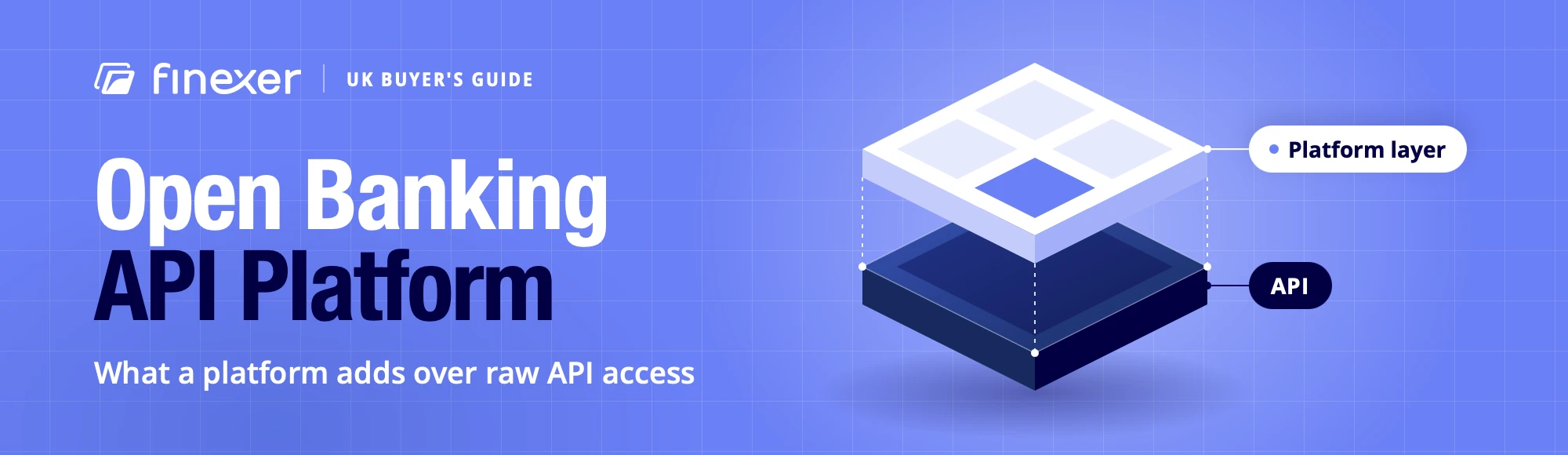
Open Banking API Platform: Complete UK Buyer’s Guide
An open banking API platform bundles the API with consent management, connection monitoring, dashboard visibility and support, the operational layer raw API access doesn’t include. This guide covers what a platform actually adds, who needs one versus who’s fine with an API alone, and how to verify a provider’s FCA authorisation before choosing.
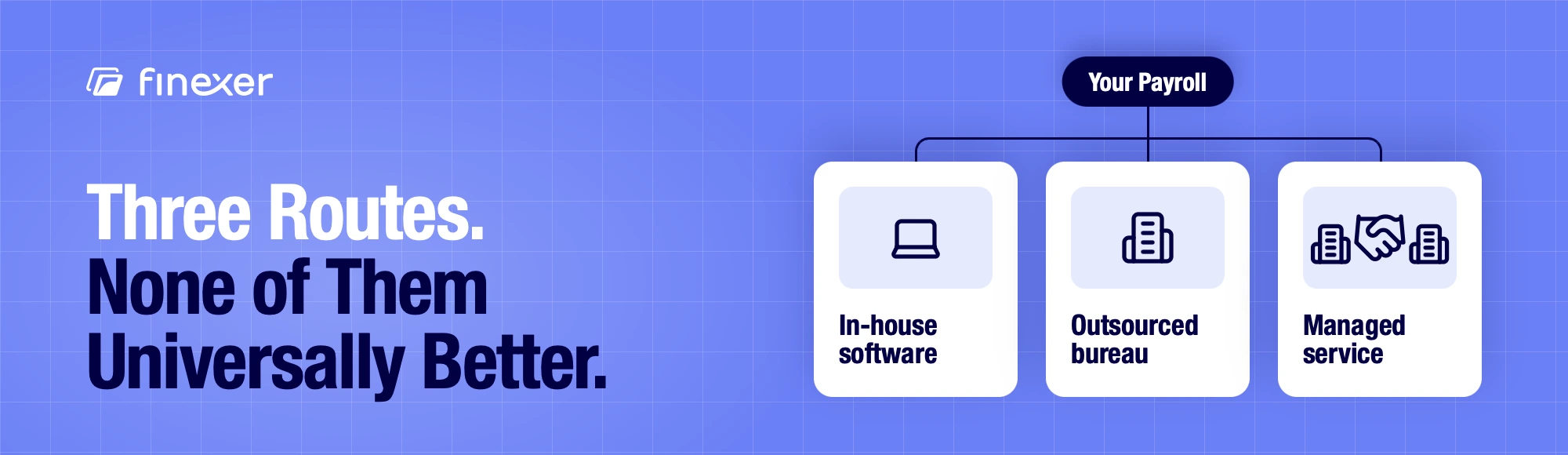
Payroll Processing Services UK: Complete Buyer Guide
Choosing between in-house payroll software, an outsourced bureau, or a managed payroll processing service comes down to headcount, complexity and internal capacity. This guide walks through what payroll processing services UK actually cover, how UK payroll processing responsibility works with HMRC and the questions worth asking before you commit to a route.
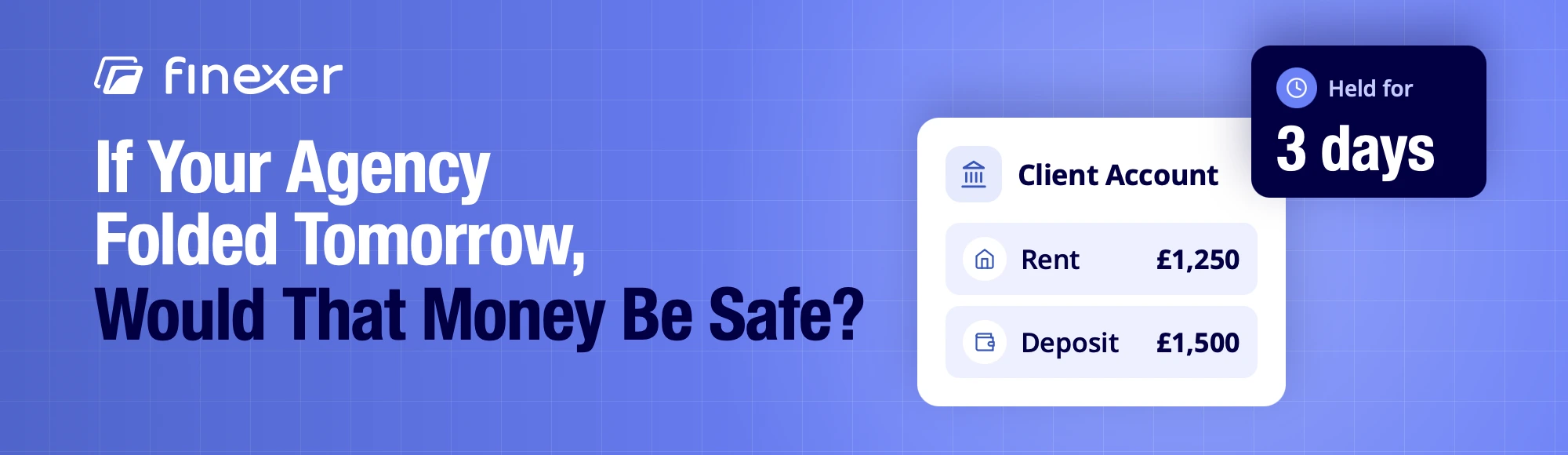
Client Money Protection Providers: Essential UK Guide
Letting agents in England who hold client money must belong to an approved, government-recognised client money protection scheme. This guide covers what “client money protect” actually means, the current approved client money protection providers, what day-to-day compliance genuinely requires and where clean, current client account data makes proving compliance considerably easier, not just theoretically sound.
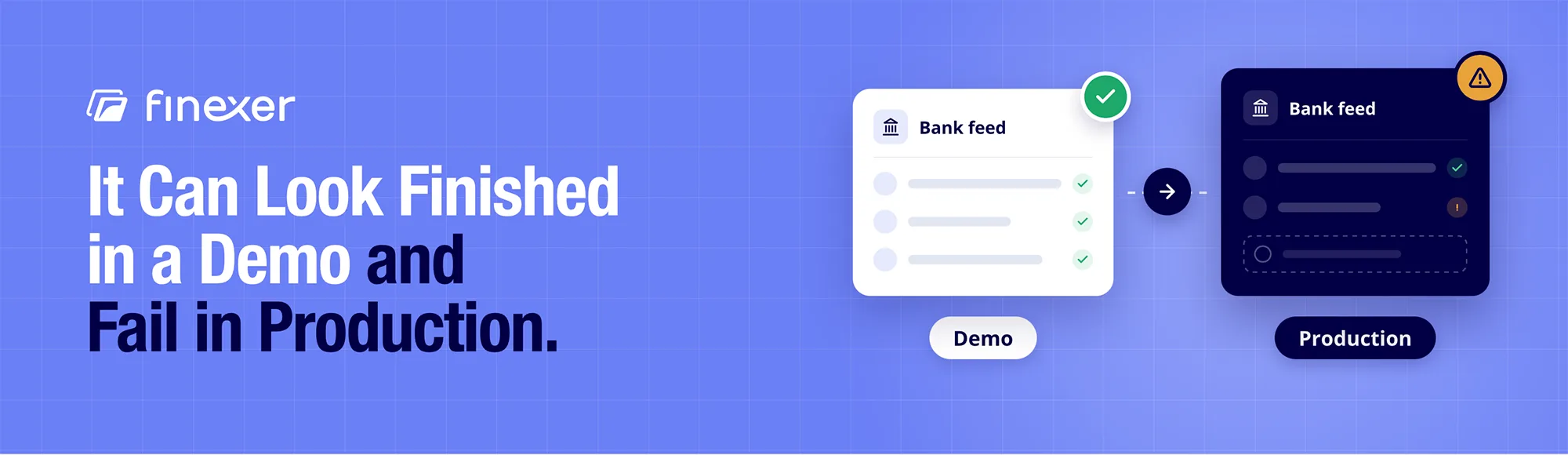
Account Information Services Provider: How to Choose
Choosing an account information services provider requires more than checking bank coverage. Compare account information service providers on FCA authorisation, AIS API quality, consent handling, webhooks, onboarding, data depth and pricing. This article shows what an AISP should deliver and the questions worth asking before committing to a contract for your platform today with confidence.
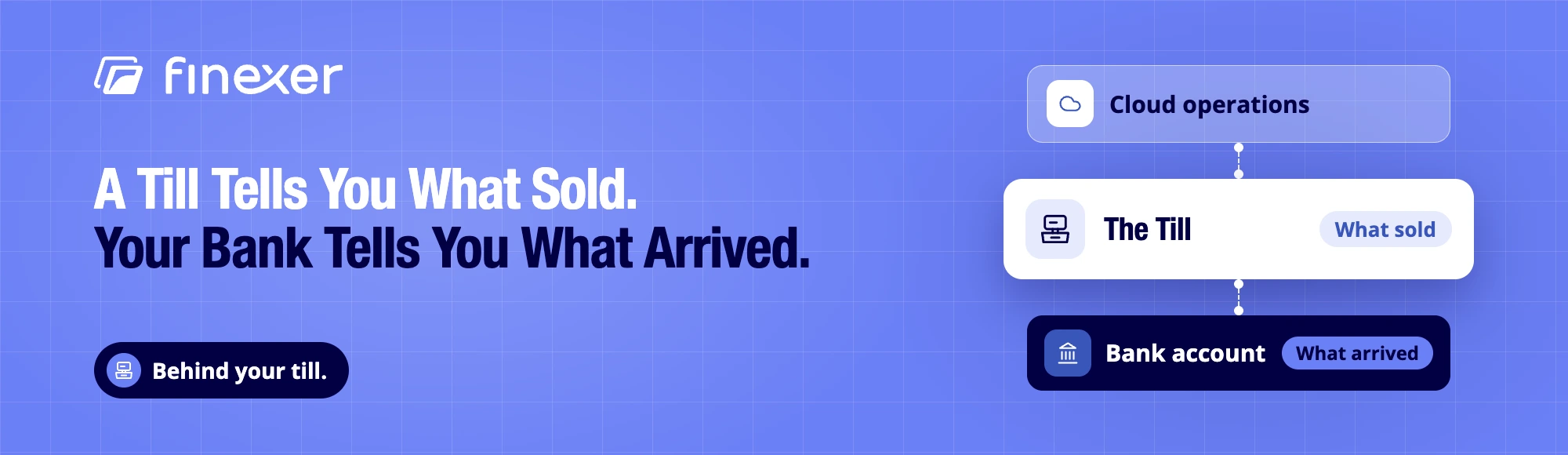
Cloud-Based Point of Sale: A UK Buyer’s Guide for Retail and Hospitality
A cloud-based point of sale helps UK retailers and hospitality operators manage sales, inventory and reporting from connected devices. This guide compares cloud-based point of sale software and a cloud-based point of sale system with traditional EPOS, then examines payments, bank data, integrations and reconciliation before choosing a provider for a commercially sensible buying decision.
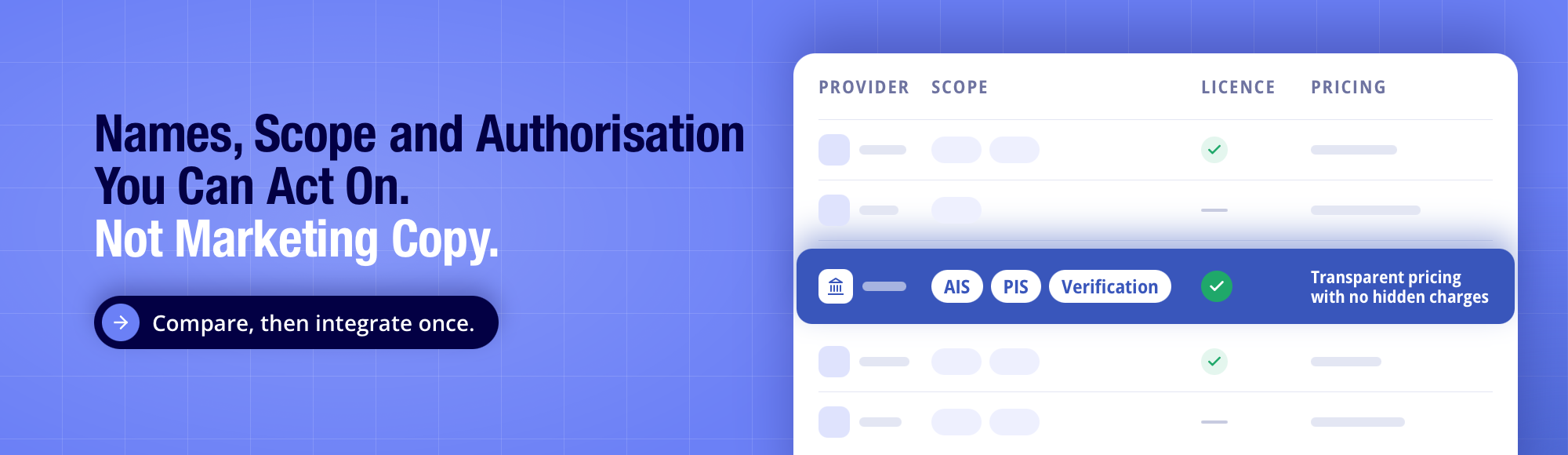
Open Banking API List: Top UK Providers Compared
This open banking API list compares UK and UK-operating providers on what actually matters: API scope, FCA authorisation, bank coverage and pricing model, not brand recognition. TrueLayer, Yapily, Tink, Plaid and Finexer are compared directly in one table, with guidance on how to read it before you shortlist a provider.
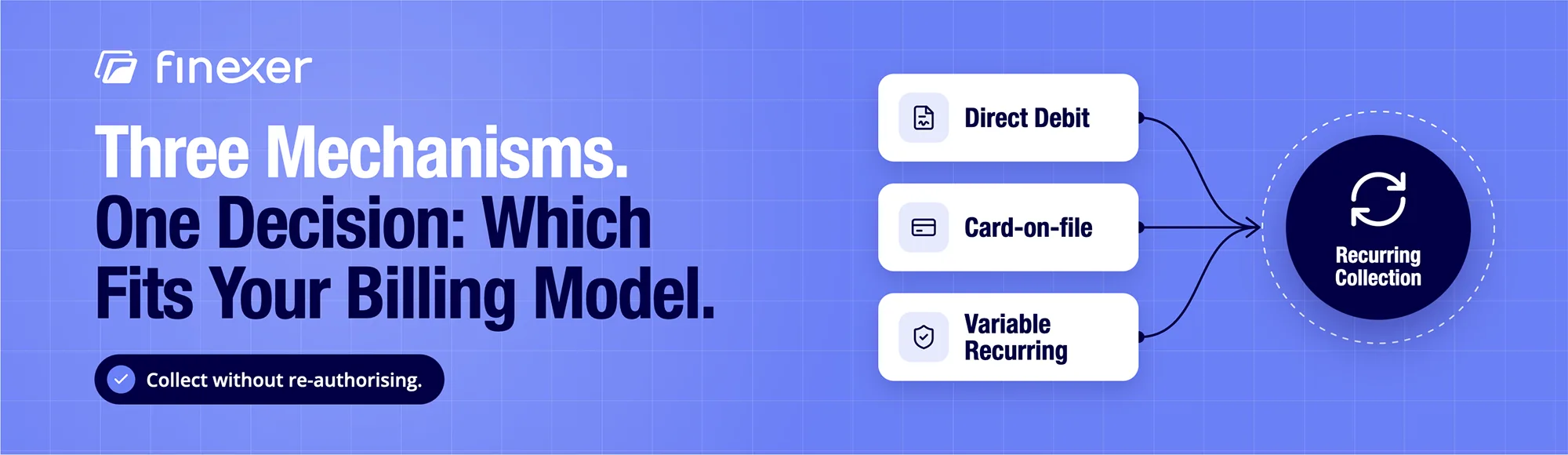
Recurring Payment Solutions: 3 UK Options Compared
Compare recurring payment solutions for UK subscriptions, billing platforms, proptechs and financial organisations. This guide compares Direct Debit, card-on-file and variable recurring payments across setup, amount flexibility, customer control, payment failures, settlement and reconciliation. Find the right collection method for fixed, variable, usage-based, high-value and irregular billing models.
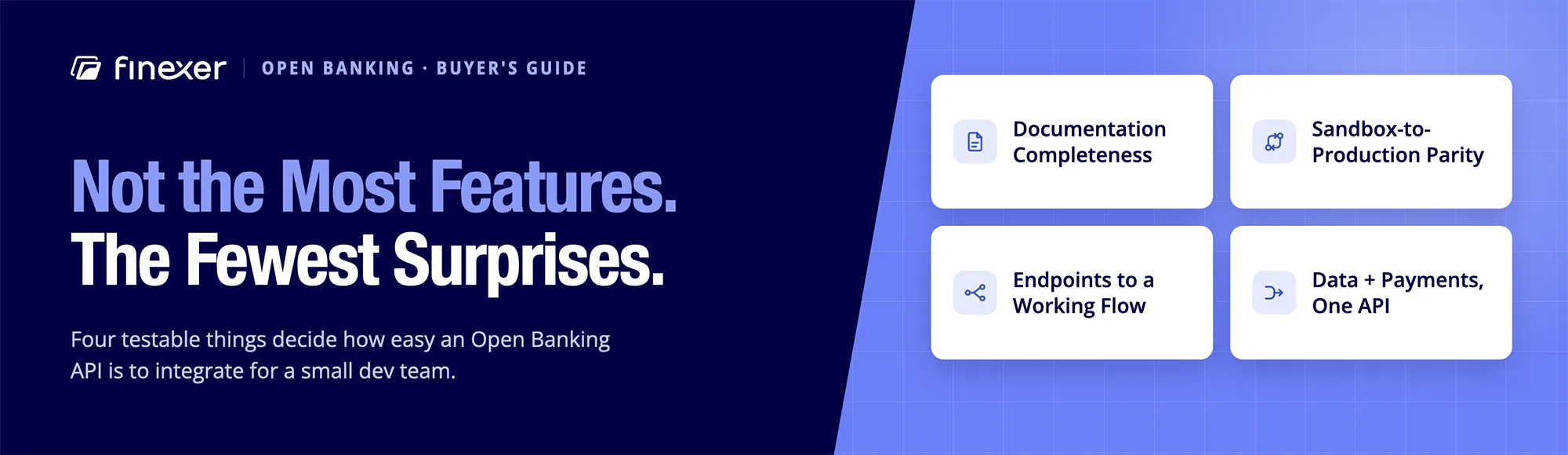
Which Open Banking APIs are easiest to integrate for a small dev team?
Ease of integration comes down to four testable things: documentation, sandbox parity, endpoint count, and whether data and payments sit in one API. Here’s a practical framework for evaluating the easiest open banking api for a small dev team, before committing build time.
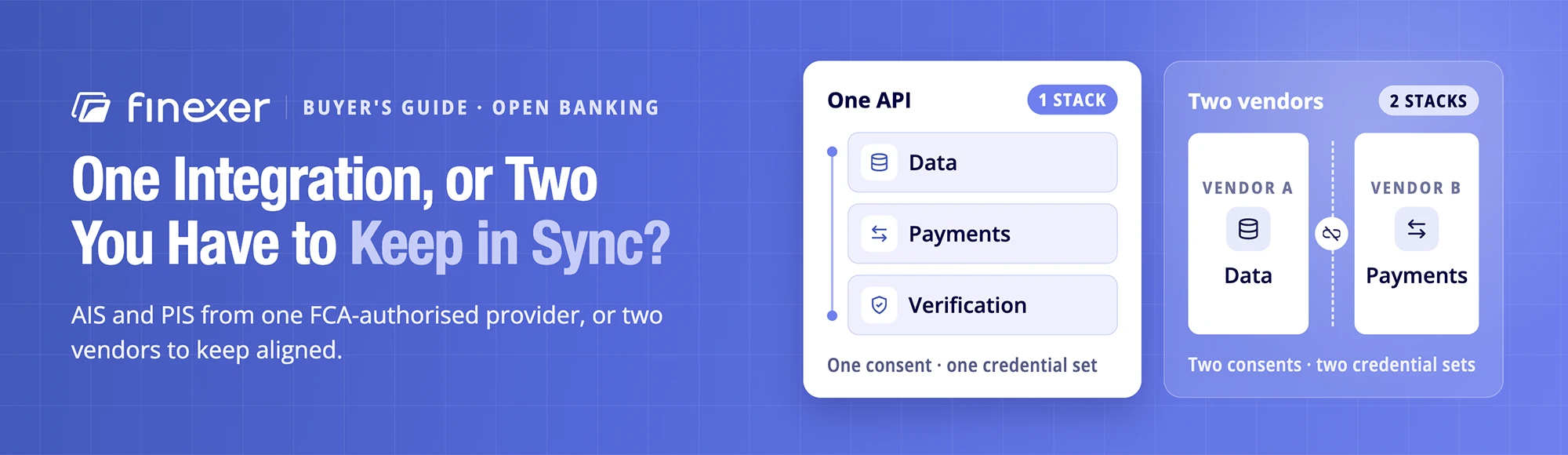
Which UK Open Banking providers offer both data and payments in one API?
Some UK Open Banking providers combine data access and payment initiation in one API; others require separate contracts. Here’s what a split stack actually costs in engineering time, when it’s genuinely fine, and how a single integration changes consent, credentials and support.
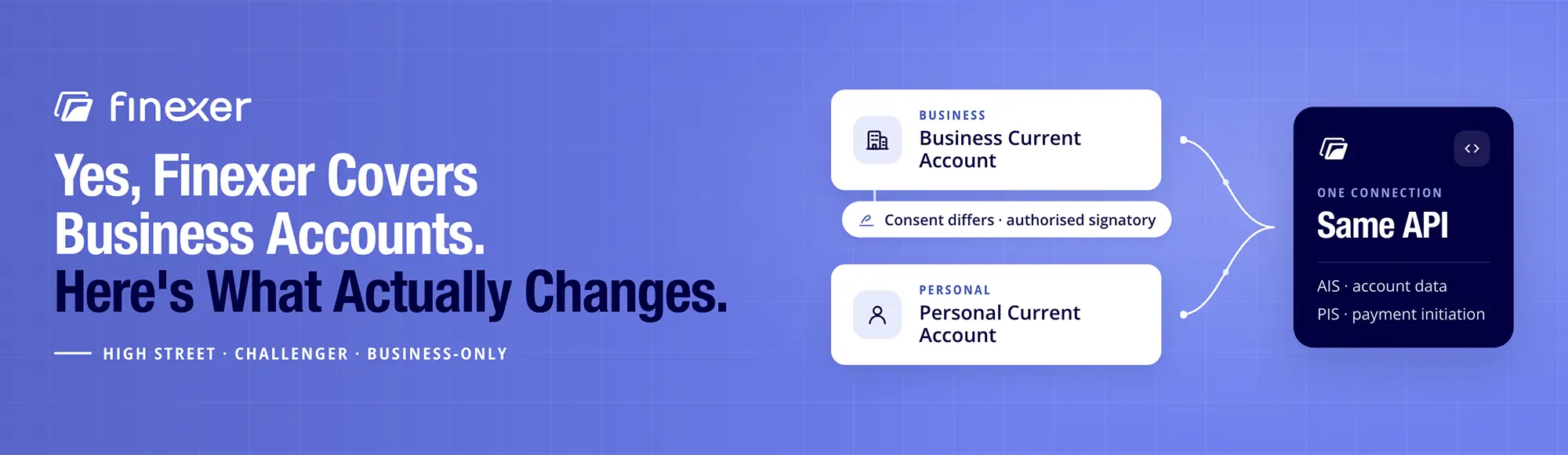
Does Finexer cover UK business and challenger accounts?
Yes, business bank account open banking through Finexer covers business current accounts across high street, challenger, and business-only providers. Here’s what differs from personal accounts: signatory consent, multi-user structures, and mandate rules, plus the exact account types covered and 2026 usage data.
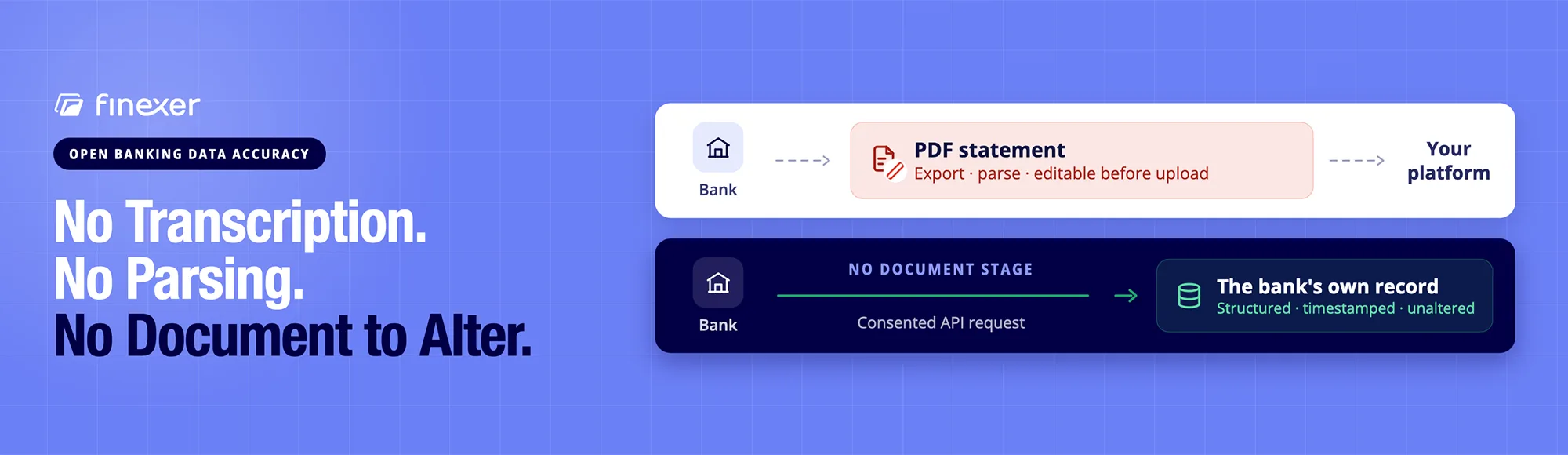
How Accurate Is Open Banking Data Compared to Uploaded Bank Statements?
Open banking data accuracy comes from the bank’s own record, with no transcription step, no parsing tool, and no document that can be altered before it reaches you. An uploaded PDF statement has already passed through both. This article compares the two on accuracy, completeness and audit trail, then covers what API data still needs.
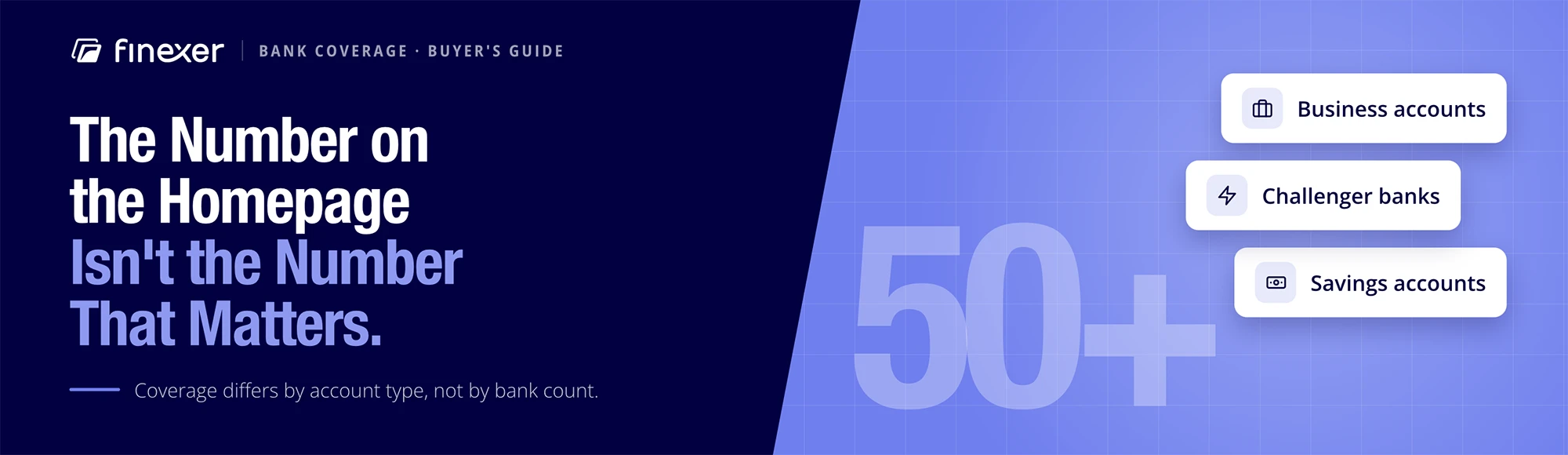
Which Open Banking provider has the best UK bank coverage?
Headline bank counts look impressive but tell you little about real open banking bank coverage. The differences that matter sit in business accounts, challenger banks, and connection reliability. Here’s what to ask a provider before choosing, and where common coverage gaps actually appear.
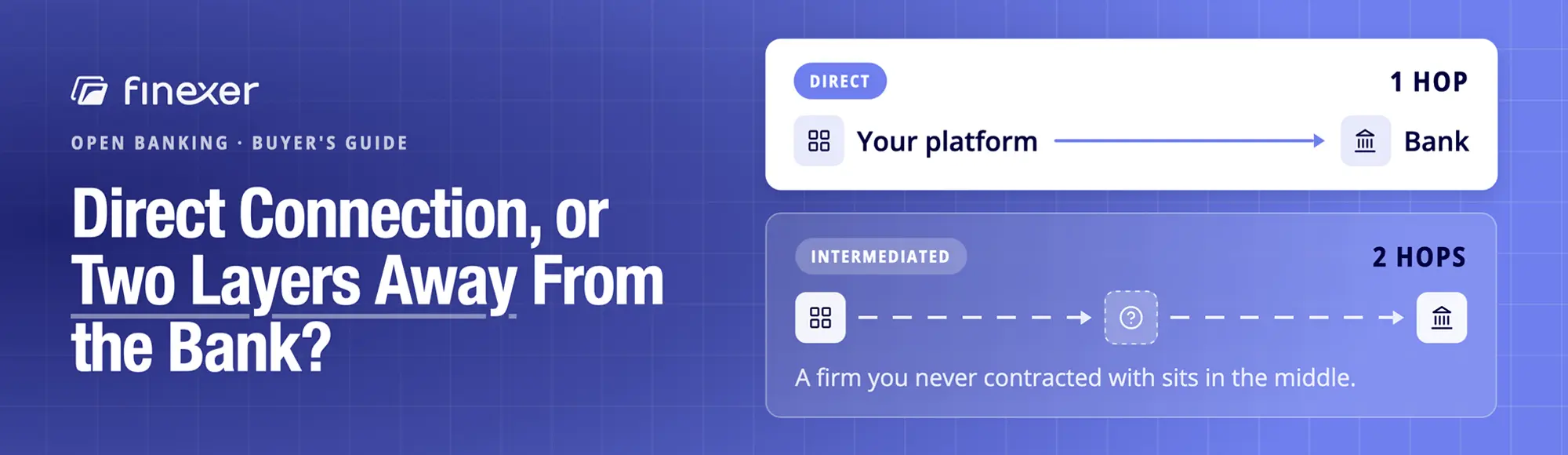
Do Open Banking providers connect directly to banks or piggyback on other providers?
Some UK Open Banking providers hold a direct bank connection for AIS and PIS. Others resell a third party’s access, leaving you unable to diagnose faults or escalate outages. Learn the difference, how to verify it via the FCA Register, and why it matters for platforms relying on banking data.
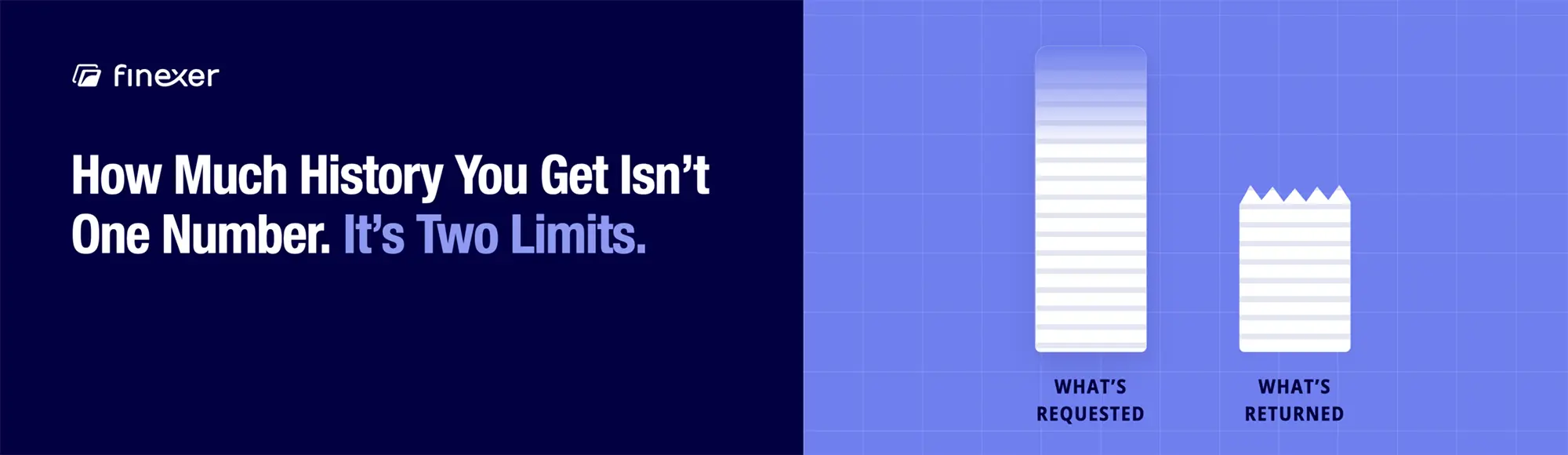
How much transaction history can Open Banking return in the UK?
Open Banking transaction history varies by bank. Learn how provider requests, bank support and consent timing affect historical data.
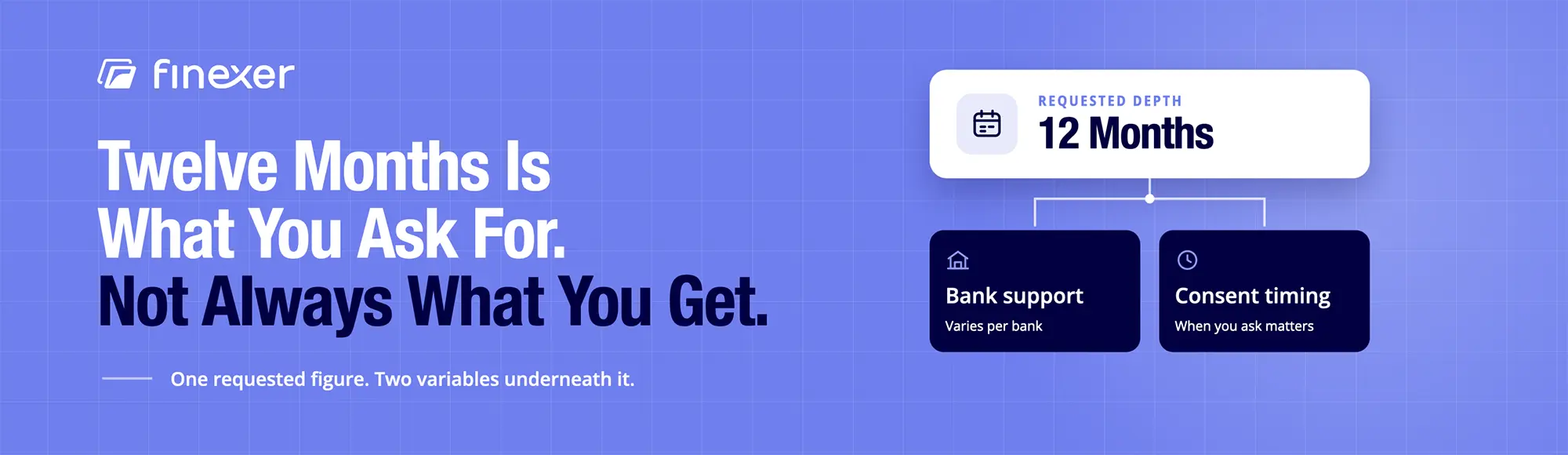
Which API Gives 12 Months of UK Banking Transaction History?
Most UK Open Banking APIs can request twelve months, but whether you receive it depends on the connected bank and on when you ask relative to consent.
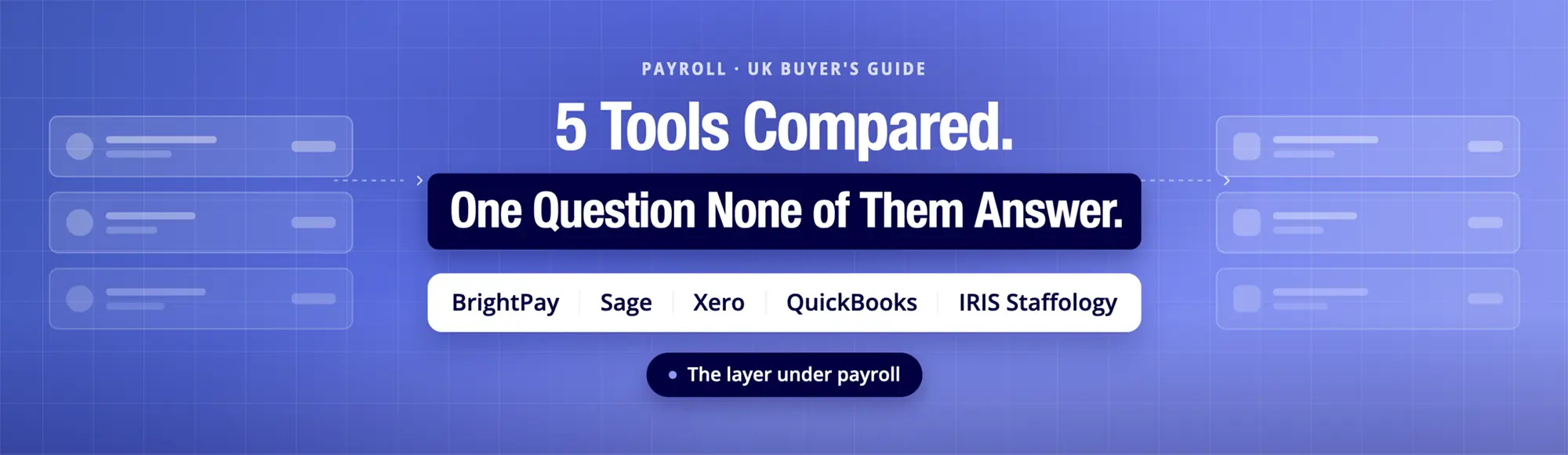
Payroll Processing Software: 5 UK Tools Compared
Compare payroll processing software for UK practices and employers, including payroll processing software for accountants and payroll processing software for small business. This guide assesses HMRC recognition, bureau features, integrations, pricing models and the payment step after payroll. It also explains where payment execution, failed salary payments and reconciliation fit into the wider payroll workflow.

Affordability Check Rent: The Full Process, From First Enquiry to First Payment
Running an affordability check rent process well involves comparing evidence properly, not just collecting a payslip and moving on. This guide covers how UK letting agents assess affordability, why submitted documents fall short, how rent collection is done after move-in, through standing orders, Direct Debits or bank authorisation, and what rent collection services typically cover.

Payment Failure: Why It Keeps Happening and What Actually Fixes It
Every payment failure has a specific cause, and most payment failures follow familiar patterns across cards, Direct Debit and bank payments. This guide explains why they happen, how they affect revenue, and what to look for in a payment system for small businesses before failed collections become a recurring operational problem.

Build, Refer, or White Label: The Decision Most Platforms Get to Only Once
Choosing between building bank connectivity in-house, referring customers elsewhere or adopting white label finance solutions comes down to how much regulatory burden a platform wants to keep. This guide explains white label financial services against the other two routes, what regulatory reliance actually means and the criteria separating a strong provider from a weak one.

What a Bank Account Verification API Actually Returns
A bank account verification api checks that an account exists and that the name on it matches the expected payee before money moves. This guide covers UK bank account verification match outcomes, full match, close match, no match, where the check belongs in a payment flow, and what to evaluate before choosing an API provider.

Reconciliation of Payments: The Complete UK Guide for Finance Teams and Platforms
Reconciliation of payments confirms that money recorded in your books has actually moved through the bank, but payment reconciliation still breaks more often than most UK finance teams openly admit. This guide explains what a bank reconciliation statement shows, why matching fails, what makes it solvable, and how platforms build dependable reconciliation of payments today.

6 Open Banking API Use Cases: What Developers Actually Build
Most guides show business outcomes. This one shows what developers actually integrate. Concrete AIS endpoint structures, PIS payment flows, real data schemas, and worked examples of account aggregation, affordability checks, and Pay by Bank checkouts – the technical depth developers need before writing their first API call.

UK Open Banking Security: 5 Myths About Consent
Open banking security is often misunderstood because many businesses still believe outdated myths about consent and data sharing. This guide explains how open banking API security protects financial information, who controls access, and why regulated APIs provide stronger safeguards than older methods used before Open Banking became widely available in the UK.

Open Banking for Businesses: Why UK Companies Are Adopting It Faster Than Ever
Open banking for businesses gives organisations secure access to current banking data, account-to-account payments and faster financial decisions. This guide explains why open banking for small businesses’ adoption continues to grow, what commercial value it delivers and how to evaluate an FCA-authorised provider before selecting Open Banking infrastructure for long-term growth.

6 Best Open Banking Solution Providers UK 2026
Expense management automation goes beyond OCR receipt capture. This guide compares receipt-only workflows with bank-verified matching, showing how UK finance teams can use real bank transaction data to improve reconciliation, policy checks, GL-code automation, and audit readiness. Learn what to evaluate before choosing an expense management automation solution

Open Banking Ecosystem: Who the Players Actually Are (and How They Work Together)
Understanding the open banking ecosystem begins with knowing who participates, why they exist and how data moves securely between them. This guide explains banks, AISPs, PISPs, regulators and open banking infrastructure using practical examples, helping buyers understand the UK’s Open Banking landscape without needing multiple resources or technical documentation.

Online Invoice and Payment Processing UK: Beyond Card Fees
Discover how online invoice and payment processing using Open Banking replaces costly card-based Pay Now buttons with Pay by Bank. Learn how automated invoice processing, instant payment confirmation via Faster Payments and bank-data reconciliation reduce manual finance work, lower transaction costs and improve payment visibility for UK SaaS platforms while accelerating cash flow.
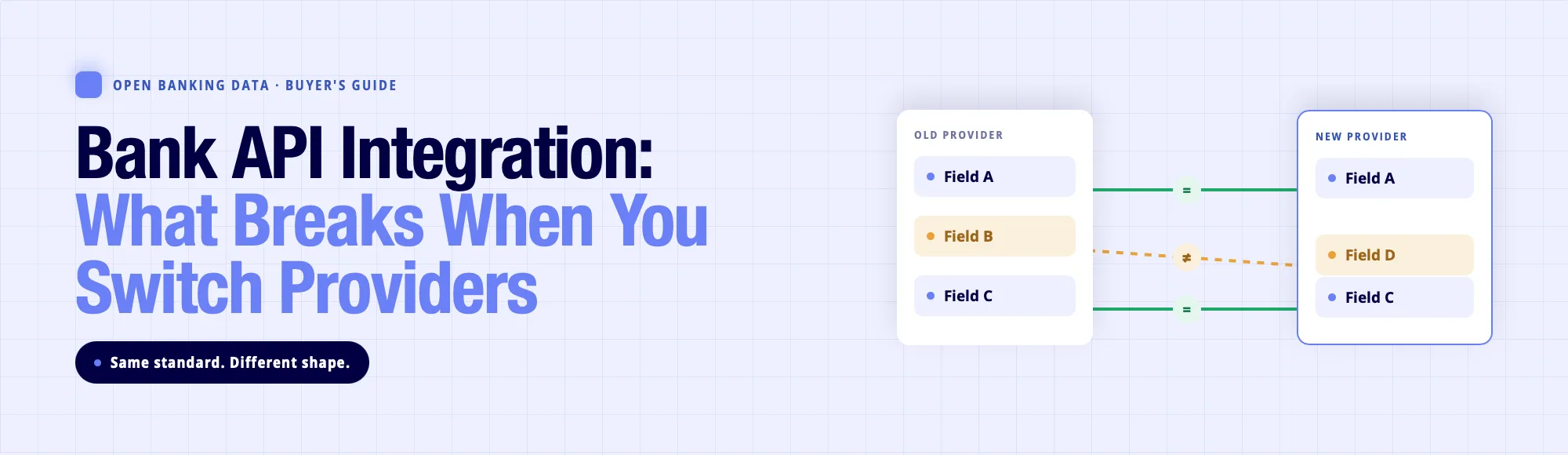
Bank API Integration: What Breaks When You Switch Providers
Switching bank API integration providers is riskier than a first-time build, because ten banks return ten variations of the same data standard, and migrations inherit whatever format quirks the old provider was quietly absorbing. This guide covers what breaks during a bank integration API migration, why format mismatches cause roughly a third of failures and…

How to Compare Pay by Bank Providers in the UK
Not all Pay by Bank providers deliver the same experience. Learn how to compare settlement speed, authentication, API quality, merchant fees, and operational reliability before choosing a provider for your business.

Bank Account Verification in the UK: How to Confirm Customer Details Instantly (Without Manual Checks)
A misdirected payment doesn’t announce itself, it just leaves quietly into an account that looks legitimate until it’s gone. This guide compares bank account verification methods pitted head to head: micro-deposits, Confirmation of Payee and instant bank account verification via Open Banking, so businesses choosing a bank account verification service know which one actually catches…