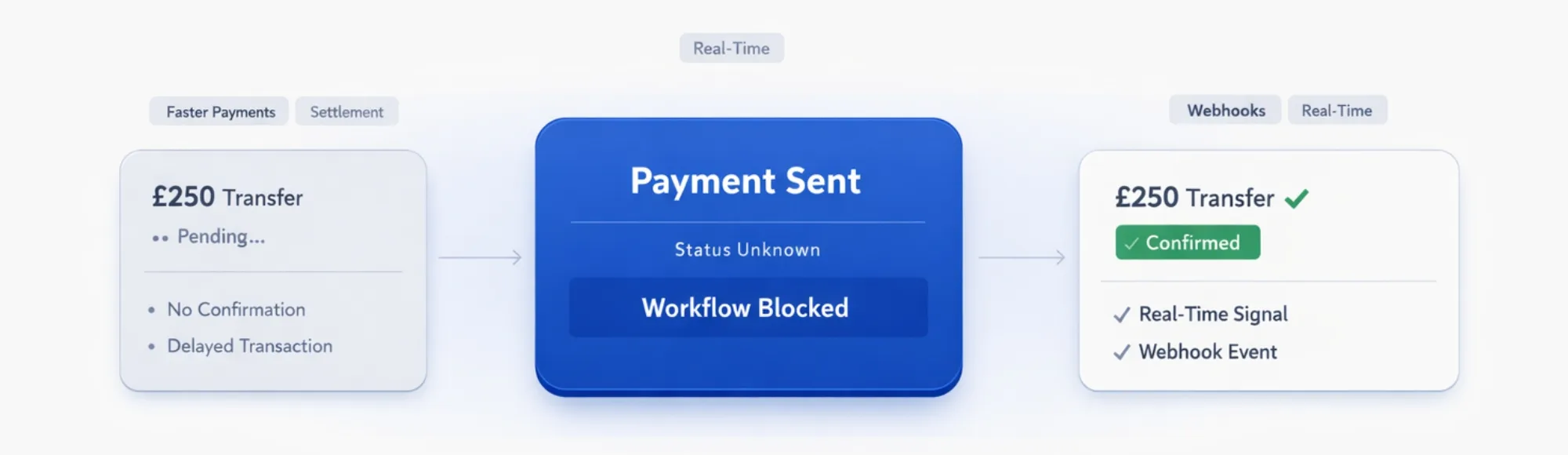
Payment initiated. Status unknown. Workflows blocked
Finexer provides real-time payment initiation and confirmation infrastructure for UK platforms.
Delayed bank transfer is a platform operations problem before it is a payments problem.
A payment leaves the system. The bank accepts the instruction. And then – nothing. No confirmation. No status update. No way for the platform to know whether the funds have settled, are pending, or have been held for review.
At Finexer, I work with EPOS, payroll, and billing platforms that build workflows on payment confirmation signals. A delayed transaction does not just slow the payment down. It breaks every downstream step that was waiting for confirmation.
TL;DR
Delayed bank transfer in the UK most often occurs due to fraud review holds (banks can delay transfers up to 4 days since late 2024 under PSR rules), batch processing windows, or API-level failures between platforms and banking infrastructure. The real problem for platforms is not the delay itself – it is the absence of real-time confirmation. Finexer’s FCA-authorised PIS provides instant payment initiation via Faster Payments with webhook confirmation per transaction, alongside AIS for real-time transaction visibility.
Key Takeaways
Why does a delayed bank transfer break platform workflows?
Delayed transactions leave platforms without a confirmation signal. Without confirmation, fulfilment cannot trigger, disbursements cannot close, and reconciliation cannot run. The delay cascades through every step that depended on payment status.
What causes delayed transactions in UK bank transfers?
Three main causes: fraud investigation holds (up to 4 business days since late 2024), end-of-day batch processing on legacy payment rails, and technical failures between the initiating platform and the bank’s API. According to the Payment Systems Regulator, fraud hold delays were formalised in late 2024 to address authorised push payment fraud.
How is a delayed bank transfer different from a failed payment?
A failed payment returns a clear status. A delayed transaction produces no status at all – the payment is neither confirmed nor rejected. This ambiguity is what breaks platform operations, as workflows cannot branch without a definitive signal.
What does real-time confirmation fix for platforms?
Real-time webhook confirmation eliminates the ambiguity. The platform knows the payment status at the point of settlement – not hours later via a batch report or manual bank login.
Why Does a Delayed Bank Transfer Create a Visibility Problem?
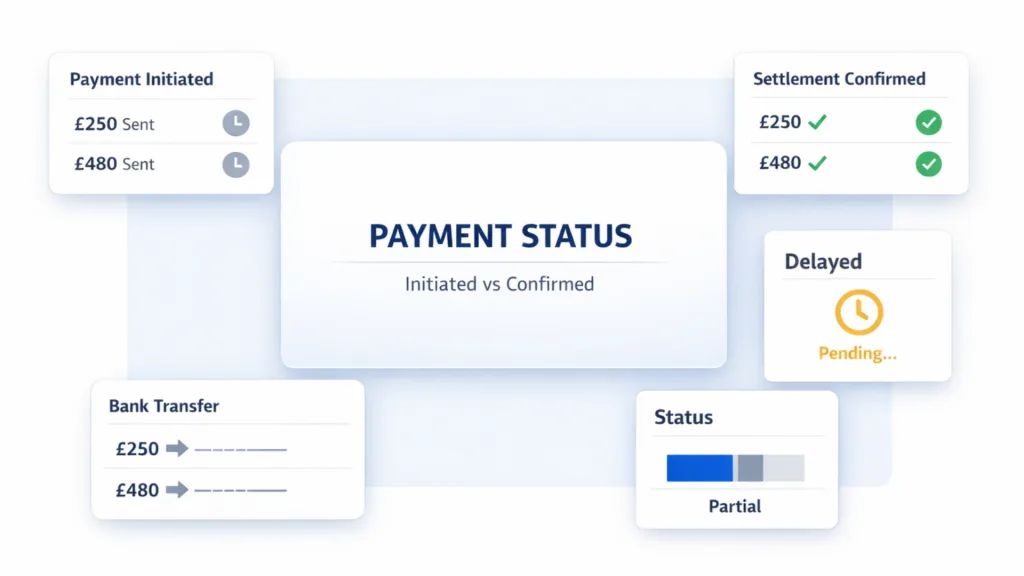
Faster Payments in the UK settles most transfers in seconds. But “most” is doing a lot of work in that sentence.
Since late 2024, UK banks can legally hold transfers for up to 4 business days if fraud is suspected – a policy introduced under Payment Systems Regulator rules to address authorised push payment fraud. This means a payment that looks initiated is not necessarily confirmed.
For platforms built on the assumption that bank transfers settle instantly, this is a structural gap.
Why real-time payments matter for UK platforms covers how payment rail selection determines confirmation reliability across different platform use cases.
The visibility problem compounds with legacy payment methods. Cheque-based and BACS batch payments operate on settlement cycles measured in days, not seconds. A platform that initiated a payment on Monday has no reliable confirmation until Wednesday at the earliest – and no automated notification when it finally arrives.
“At Finexer, I work with payroll and billing platforms that treat payment initiation as confirmation. They find out about delayed transactions at month-end review, not at the point the delay occurred. By then, reconciliation has already run on incorrect data.” – Ravi, Finexer
What Is the Business Impact of Unconfirmed Payments?

Unconfirmed delayed transactions create three operational problems:
Fulfilment cannot trigger. EPOS platforms that release goods on payment confirmation are left waiting. Either hold fulfilment – poor user experience – or release without confirmation, accepting non-payment risk.
Disbursements stay open. Payroll platforms cannot mark salary runs complete. Invoicing platforms cannot close payment cycles. Each unconfirmed delayed bank transfer sits as an open item requiring manual resolution.
Reconciliation runs on incomplete data. Batch reconciliation against unconfirmed transactions produces mismatches that finance teams spend hours investigating – gaps that are simply payments still in transit.
How bank payment delays affect UK platform operations covers the operational cost of unconfirmed payments for EPOS and billing platforms specifically.
According to Open Banking research on late payments and SME cash flow, delayed payment visibility directly impacts SME cash flow – a problem Open Banking infrastructure is designed to address.
| Payment Method | Settlement Speed | Confirmation Signal | Delay Risk |
|---|---|---|---|
| BACS / Direct Debit | 3 business days | None in real time – batch report only | High – no visibility until settlement |
| CHAPS | Same day (business hours) | Delayed – no webhook | Medium – outside hours = next day |
| Faster Payments (standard) | Seconds to 2 hours | None unless platform builds tracking | Medium – fraud hold up to 4 days |
| Open Banking PIS (Finexer) | Near-instant via Faster Payments | Real-time webhook per transaction | Low – confirmation at point of settlement |
How Does Finexer Solve the Delayed Transaction Visibility Problem?
For EPOS, payroll, and billing platforms that cannot operate on unconfirmed payment status – Finexer’s FCA-authorised PIS and AIS close the visibility gap.
How Finexer enables instant fund transfers for UK platforms covers the payment initiation architecture delivering real-time confirmation per transaction.
PIS – Payment initiation with webhook confirmation:
- Near-instant settlement via Faster Payments
- Real-time webhook at point of settlement – no batch reporting
- Zero chargeback exposure
- Covers virtually every major UK bank
AIS – Transaction visibility for incoming payments:
- Real-time transaction feeds via webhook as payments land
- Bank-verified confirmation per transaction
- Up to 7 years of history for reconciliation workflows
- Consent-based with full audit trail
“The delayed bank transfer problem is about confirmation signals, not rail speed. Finexer’s webhook infrastructure delivers that signal the moment settlement happens – not in a batch file the next morning.” – Ravi, Finexer
How to handle bank transfer blocks and holds for UK platforms covers what platforms should do when a delayed transaction enters a fraud hold window.
What I Feel
Most conversations about delayed bank transfers focus on speed. Get it faster. Use Faster Payments. Move to real-time rails.
That misses the actual platform problem. Speed is useful. Confirmation is essential.
A payment that settles in 2 hours with no confirmation signal creates the same operational problem as a payment that takes 2 days. The platform cannot act on a status it cannot see.
Real-time webhook confirmation is what changes platform operations – not just faster settlement.
Common Use Cases
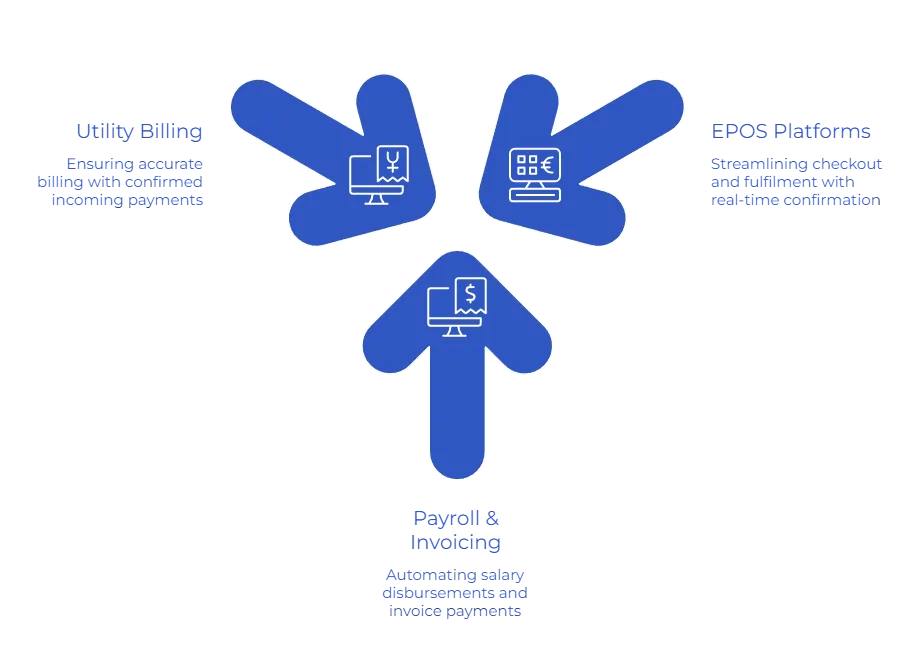
EPOS Platforms
Payment initiated at checkout, fulfilment blocked pending confirmation. Finexer’s PIS delivers webhook confirmation at settlement – enabling fulfilment to trigger automatically without manual status checks.
Payroll & Invoicing Platforms
Salary disbursements and invoice payments stay open as unconfirmed delayed transactions. Finexer’s PIS confirms each outbound payment at settlement and AIS confirms incoming receipts – closing both sides of the payment cycle automatically.
Utility Billing Platforms
Billing cycles cannot close on unconfirmed incoming payments. Finexer’s AIS delivers real-time transaction events per payment received – enabling billing reconciliation to run on confirmed data, not estimated settlement.
Why are bank transfers delayed in the UK?
UK Faster Payments settles most transfers in seconds, but banks can hold transfers for up to 4 business days if fraud is suspected – a rule formalised under Payment Systems Regulator policy in late 2024. Legacy payment rails like BACS settle in 3 business days with no real-time status.
What is the difference between a delayed transaction and a failed payment?
A failed payment returns a clear rejection status. A delayed transaction produces no status – the payment is neither confirmed nor declined. This ambiguity is what breaks platform workflows that depend on confirmation signals to proceed.
How does Open Banking reduce delayed bank transfer problems for platforms?
FCA-authorised PIS initiates payments directly via Faster Payments and delivers a real-time webhook at settlement. Platforms receive confirmation at the point funds are clear – not via batch report or manual bank login.
Build payment workflows on confirmed, real-time settlement signals.
About the Author

Ravi Ranjan
Ravi Ranjan is Co founder & CEO of Finexer