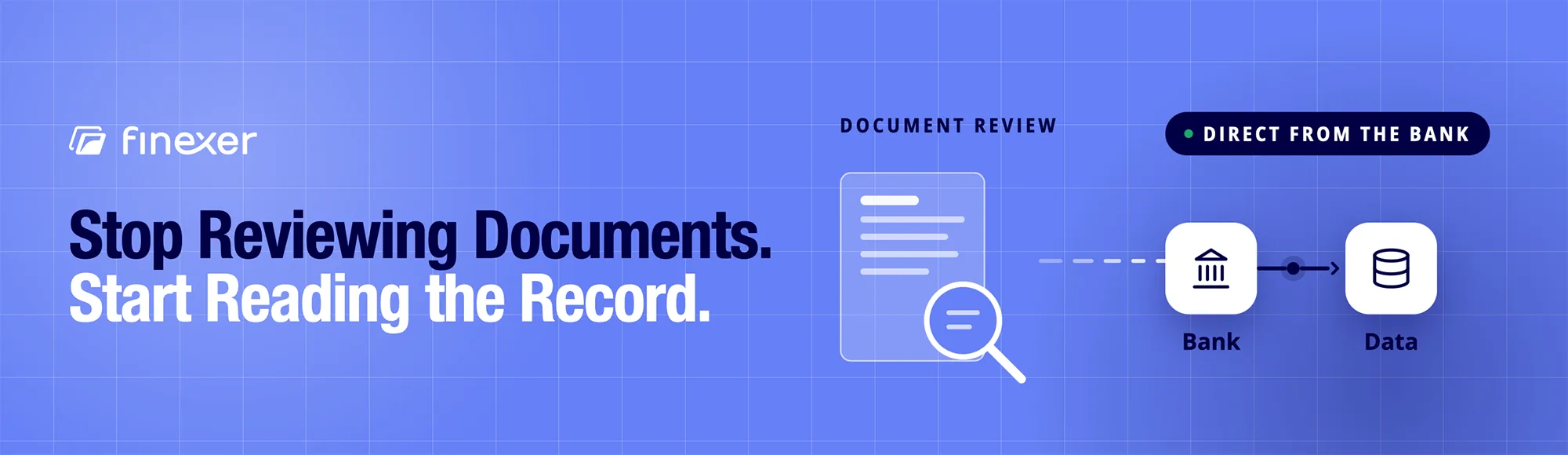
Edited statements are difficult to spot reliably by eye, and common manual checks catch only obvious cases. The dependable answer is to stop relying on the document and take the data from the bank directly.
That is a shift in approach to fake bank statement detection and not a better checklist. Here is what manual review actually catches, why the document itself is the weak point and what changes once a document is no longer part of the process.
What Does Manual Review Actually Catch?
Manual review catches obvious cases: mismatched fonts, inconsistent alignment or numbers that visibly do not add up.
| Manual Check | What It Catches | What It Misses |
|---|---|---|
| Visual inspection | Font mismatches, poor edits, misaligned columns | Competent edits made with the right software |
| Running totals | Balances that do not add up | Transactions removed with totals recalculated correctly |
| Header and logo check | Copied or missing bank branding | A logo copied cleanly from a genuine statement |
| Cross-referencing dates | Obvious date inconsistencies | Consistent, carefully edited date sequences |
A competent forgery passes most of these checks. Once someone knows what a reviewer looks for, avoiding those specific signals is not difficult, which is exactly why manual checks alone are a weak foundation for anything that matters financially.
Why Is Checking a Document Structurally Weak?
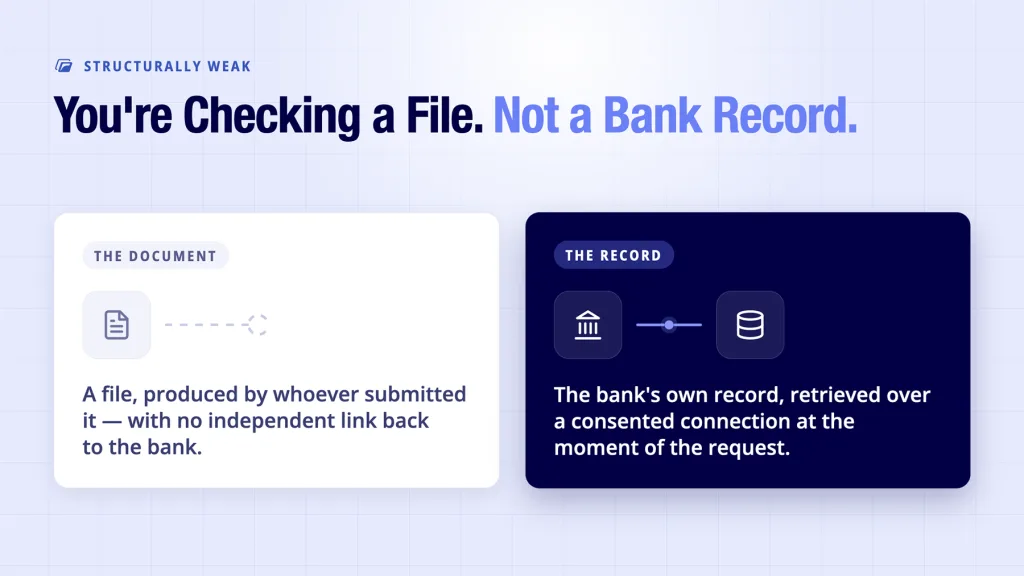
Checking a document is fundamentally and structurally weak because you are verifying a file and not a bank record.
A PDF statement is a rendering, a set of pixels and text arranged to look like an official document. Nothing about a PDF format itself proves where the numbers inside it came from, and no amount of scrutiny changes that underlying fact.
Reviewing it more carefully still means reviewing the same file, produced by whoever submitted it, with no independent source to check it against.
What Changes With a Consented Connection?
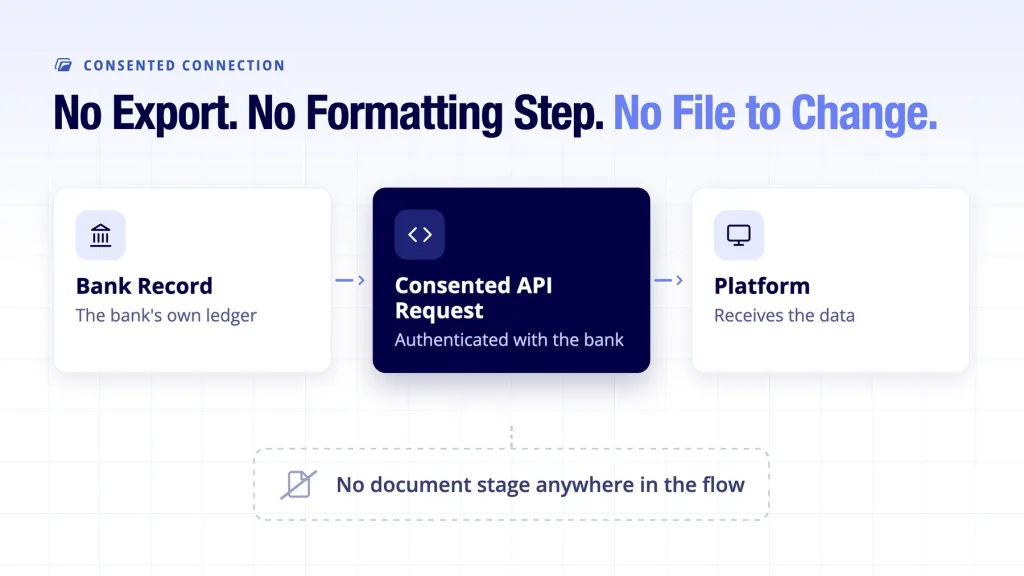
With a consented connection, there is no document to alter because the numbers come directly from the bank rather than through a file someone produced.
Banking transaction data retrieved this way reflects the bank’s own record at the moment of the request. There is no export, no formatting step and no intermediate file where a number could be changed before a platform sees it.
Finexer’s banking data API delivers exactly this, account, balance and transaction data pulled straight from the bank, with no document stage in between.
This is why income checks increasingly move towards an income verification api rather than a document upload as the verification question shifts from “Does this file look genuine?” to “Did this data come from the bank?”.
Where Are Documents Still Unavoidable?
Documents remain unavoidable for historical periods before a bank connection existed and for accounts that cannot connect through Open Banking at all.
Some platforms pair banking data with a separate identity layer for document checks generally, and comparing tools like Onfido pricing against other identity providers is a common next step once document verification specifically, rather than financial data, is the question. That is a different problem from statement authenticity and worth treating as one.
How Do UK Providers Approach This Differently?
Not every UK Open Banking provider positions itself the same way on this question.
| Provider Type | Examples | Approach |
|---|---|---|
| Data-only (AISP) | Moneyhub Enterprise | Direct banking data access, no document review involved |
| Combined AIS and PIS | TrueLayer, Yapily, Salt Edge, Finexer | Data access plus payment initiation from one API |
| Identity-focused | Onfido | Document and biometric verification, not banking data |
The practical distinction is whether a platform is verifying a document or retrieving data that was never a document in the first place, and that distinction matters more than which specific provider a platform ends up choosing.
Can Open Banking data itself be faked?
No. It comes from a consented, authenticated connection directly with the bank, so there is no file stage where it could be edited before a platform receives it.
Does this replace identity verification entirely?
No. Banking data addresses financial data authenticity specifically. Identity checks, document verification and other compliance steps remain separate processes.
Is a bank statement PDF ever reliable?
It can be for low-risk, informal checks, but it always carries the risk that a document was edited before submission, however well it was reviewed.
Does Finexer screen for fraud or run compliance checks?
No. Finexer supplies banking data directly from the bank. Fraud screening, sanctions checks and AML processes remain separate functions handled elsewhere.
Stop Reviewing Documents, Start Reading the Record
A manual statement review cannot reliably catch a competent edit because it is still reviewing a file rather than a bank record.
Finexer’s banking data API gives platforms account, balance and transaction data straight from the bank, removing the document from the process entirely.
Explore with AI
About the Author

Paul Lucraft
Paul Lucraft is a payments industry strategist and advisor with more than two decades of experience across banking, card networks, and financial services infrastructure. His expertise covers fraud prevention, payment risk management, financial strategy, and the operational development of card payment systems. He previously held senior roles at Mastercard Europe where he served as General Manager for the UK and Ireland, overseeing fraud risk, operational governance, and payment network strategy across the region. Earlier in his career, Paul worked at Lloyds TSB and TSB Bank leading fraud strategy, credit collections, and card business finance operations.