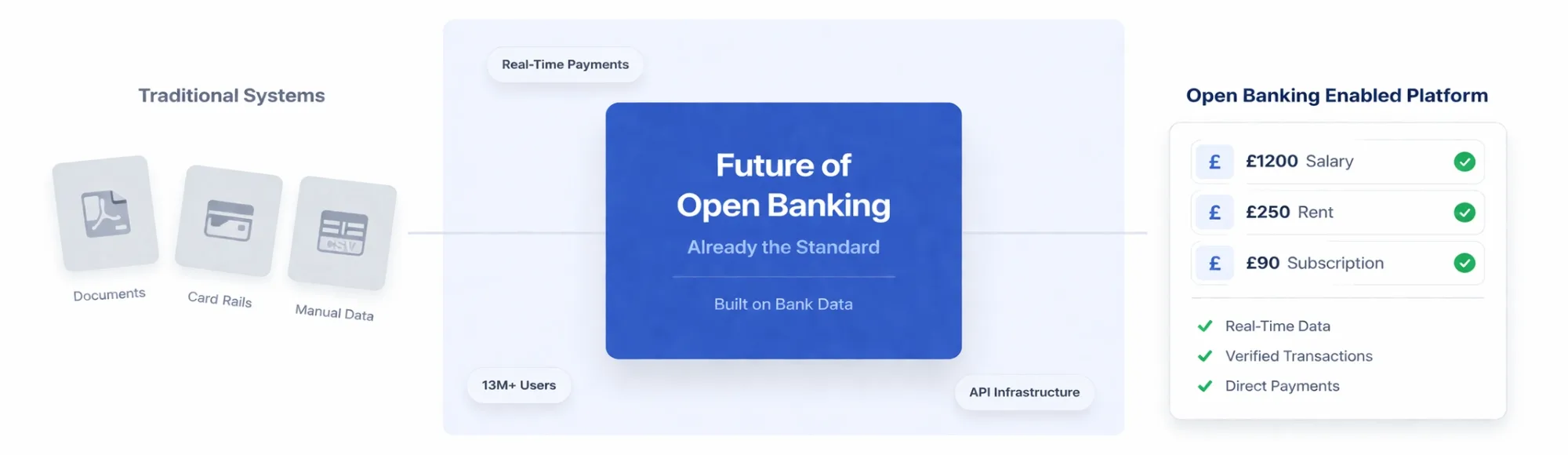
Open Banking is already the core financial infrastructure. The question is whether your platform is built on it.
Finexer provides FCA-authorised Open Banking infrastructure for platforms building the next generation of financial products.
The future of open banking is not a prediction. It is already here.
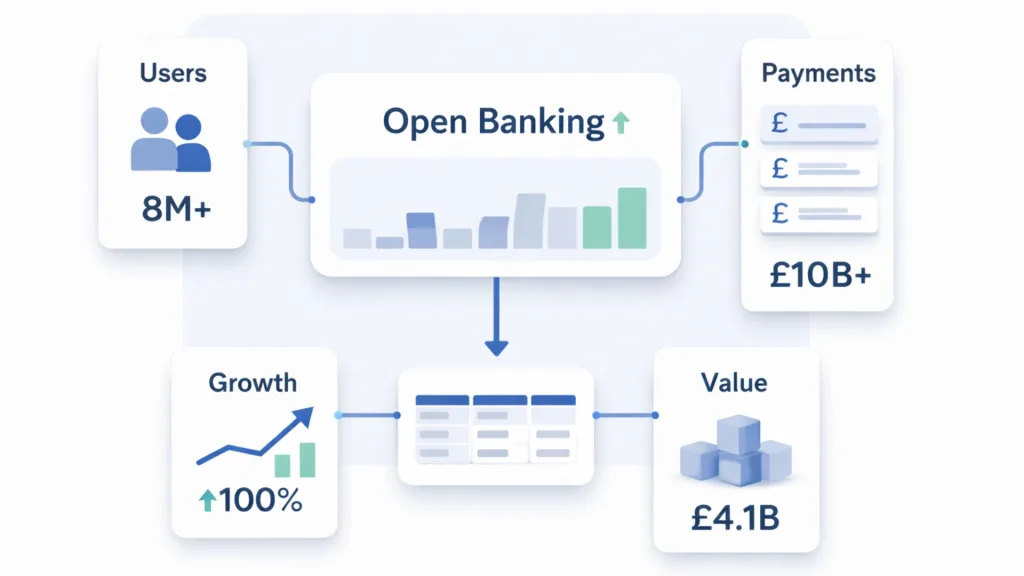
Open Banking in the UK has delivered £8.3bn in economic value. Over 13 million users are active on it today. Payments processed through Open Banking grew 67% year-on-year. The infrastructure has moved from regulatory experiment to core financial infrastructure – quietly, and faster than most platforms anticipated.
At Finexer, I work with founders and product heads who are still treating Open Banking as a future consideration. The platforms that made this decision three years ago are operating with structural advantages their competitors cannot close quickly.
This blog covers what the economic data shows, whether open banking is mandatory, and why the infrastructure shift decision is the same type of decision cloud adoption was – and carries the same cost of delay.
TL;DR
The future of open banking is already present. UK Open Banking has delivered £8.3bn in economic value, serves over 13 million users, and processes a growing share of UK Faster Payments. Is open banking mandatory? For the CMA9 banks, yes. For platforms, it is not yet compulsory – but it is becoming the infrastructure standard that defines competitive positioning. Finexer provides FCA-authorised AIS and PIS infrastructure for platforms building on this layer now.
Key Takeaways
What does the economic data say about the future of open banking?
Open Banking has delivered £8.3bn in economic value so far. Annual benefits are now £2bn. Projected value reaches £7.4bn within five years and up to £43bn at full maturity. This is not a growth stage technology – it is a delivering technology.
Is open banking mandatory in the UK?
For the CMA9 banks – the nine largest UK institutions – yes. The Competition and Markets Authority mandated Open Banking API access in 2018. For platforms and fintechs, open banking is not yet legally compulsory. It is, however, becoming the baseline infrastructure that competitive financial products are built on.
Why is the future of open banking compared to the cloud adoption shift?
Both are infrastructure shifts, not feature additions. Early cloud adopters gained cost, speed, and scalability advantages that late adopters could not close with effort alone. Open Banking adoption is following the same curve – platforms that delay are not just behind on a feature, they are building on a less capable foundation.
What happens to platforms that delay Open Banking adoption?
Platforms that delay inherit the limitations of document-based and card-based financial infrastructure – higher costs, slower workflows, data that cannot be independently verified, and increasing distance from competitors who have already built on bank-native data and payment rails.
What Does the Economic Data Show About Open Banking Today?
How Much Value Has Open Banking Already Delivered?
The future of open banking is easier to understand in context of what it has already delivered.
Open Banking Limited’s Impact Report puts the numbers plainly:
- £8.3bn in economic value delivered to date
- £2bn in annual benefits currently being realised
- £7.4bn projected within the next five years
- Up to £43bn at full economic maturity
- Over 13 million active users in the UK
Full breakdown of the 2025 Open Banking Impact Report covers the adoption data, payment volumes, and ecosystem growth in detail.
These are not projections for an emerging technology. They are outcomes from a live infrastructure that is already embedded in payment flows, financial products, and consumer behaviour across the UK.
Why Does Payment Volume Growth Matter for Platforms?
Open Banking payments grew 67% year-on-year. In January 2025 alone, over 1.3 million HMRC self-assessment payments were made via Open Banking – settling £4.7bn in a single month.
This volume reflects something structural. Consumers and businesses are not using Open Banking because it is new. They are using it because it works better than the alternatives at the point of payment.
For platforms, this volume creates a network dynamic. The infrastructure that processes this volume is the infrastructure that payment-native products must connect to.
“The future of open banking is already visible in payment volumes. When £4.7bn moves through the infrastructure in a single month on a single use case, that is not early adoption – that is mainstream infrastructure. Platforms still treating it as optional are misreading where the market is.” – Ravi, Finexer
Is Open Banking Mandatory – And Does That Question Matter?
What Is the Regulatory Position?
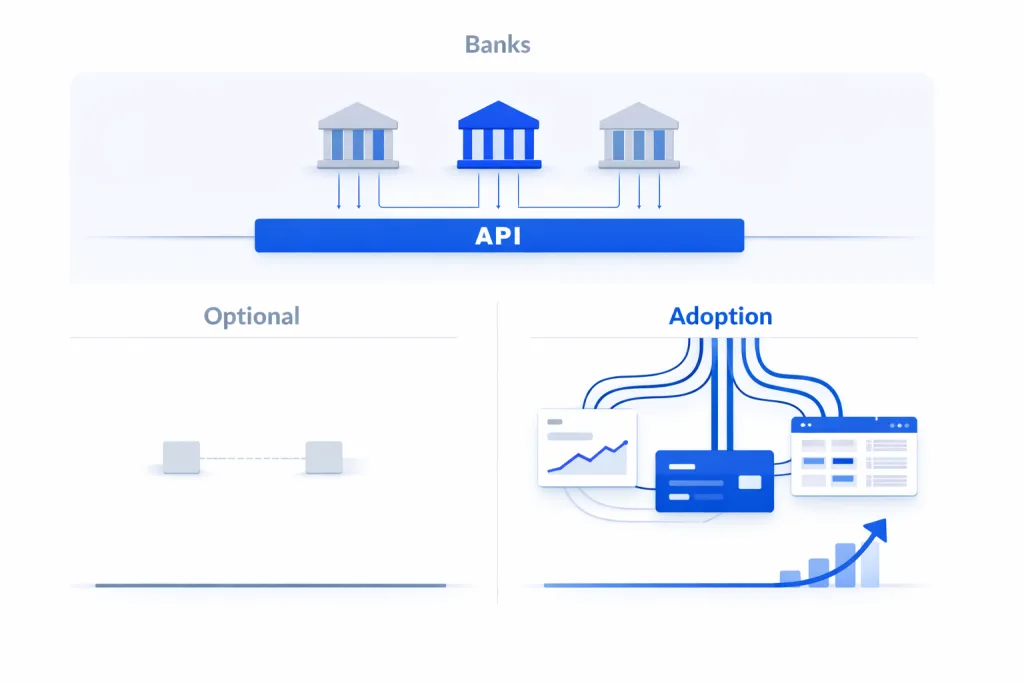
Is open banking mandatory in the UK? The direct answer is: for banks, yes. For platforms, not yet.
The Competition and Markets Authority mandated Open Banking in 2018, requiring the CMA9 – HSBC, Barclays, Lloyds, NatWest, Santander, Bank of Ireland, Allied Irish Bank, Danske Bank, and Nationwide – to open standardised APIs to FCA-authorised third parties.
This mandate covers the supply side. Banks must make the infrastructure available.
Whether platforms use it is a commercial decision – for now. But asking is open banking mandatory misses the real question: what happens to platforms that delay while competitors adopt.
Why Does the Mandatory Question Miss the Point for Platforms?
Asking whether open banking is mandatory is the wrong frame for a product decision.
Cloud computing was never mandatory. Platforms that adopted it early gained cost, speed, and scalability advantages that manual infrastructure could not match. Platforms that waited did not lose because of a regulation. They lost because their operating costs, delivery speed, and product capability fell behind competitors who had made the infrastructure shift.
Why the right time to invest in Open Banking is now covers the timing argument for platform adoption in detail.
The future of open banking is heading in the same direction. The question for founders and product heads is not whether it will become standard – the data confirms it already is. The question is how far behind adoption competitors are willing to fall before making the switch.
| Infrastructure Decision | Early Adopter Position | Late Adopter Position |
|---|---|---|
| Payment rails | Bank-native payments – no interchange, no chargebacks, real-time confirmation | Card-based processing – interchange fees, chargeback exposure, batch settlement |
| Financial data | Bank-verified transaction data – complete, structured, continuously updated | Document-based records – incomplete, unverifiable, requires manual correction |
| Reconciliation | Automated per transaction – no manual matching, no end-of-day batch | Manual or CSV-based – overhead compounds with volume |
| Income verification | Bank-authenticated salary patterns – verified at source | Payslip and PDF uploads – unverifiable, incomplete coverage |
| Operating cost | Usage-based infrastructure – costs scale with value delivered | Fixed overhead for card processing, document handling, and manual review |
What Does the Future of Open Banking Look Like for Platforms?
Where Is the Infrastructure Heading Next?
The future of open banking is not a single development. It is a layered expansion of what the infrastructure can carry.
Variable Recurring Payments are extending bank-native payment capability into subscription, utility, and variable billing workflows. Open Finance is extending data access beyond current accounts into mortgages, pensions, and insurance. The Smart Data economy is extending the consent-based data model across sectors beyond financial services.
Each layer builds on the Open Banking foundation. Platforms already integrated onto FCA-authorised infrastructure inherit access to each new capability as it becomes live.
Platforms that have not integrated yet are not just behind on current functionality. They are starting further back from each new capability that launches.
What Is Open Banking for Platforms That Have Not Yet Adopted It?
Is open banking a feature or a foundation? That framing matters.
A feature is optional. It adds value but does not define the platform’s structural capability.
A foundation determines what the platform can build. It sets the ceiling on what financial workflows are possible, at what cost, and with what data quality.
How B2B platforms are using Open Banking today covers the operational workflows already running on this infrastructure across UK financial platforms.
The future of open banking is a foundation decision. Platforms that have made it are building features on top of it. Platforms that have not are still deciding whether to build on it – while their competitors ship products.
How Does Finexer Support Platforms Building on Open Banking Infrastructure?
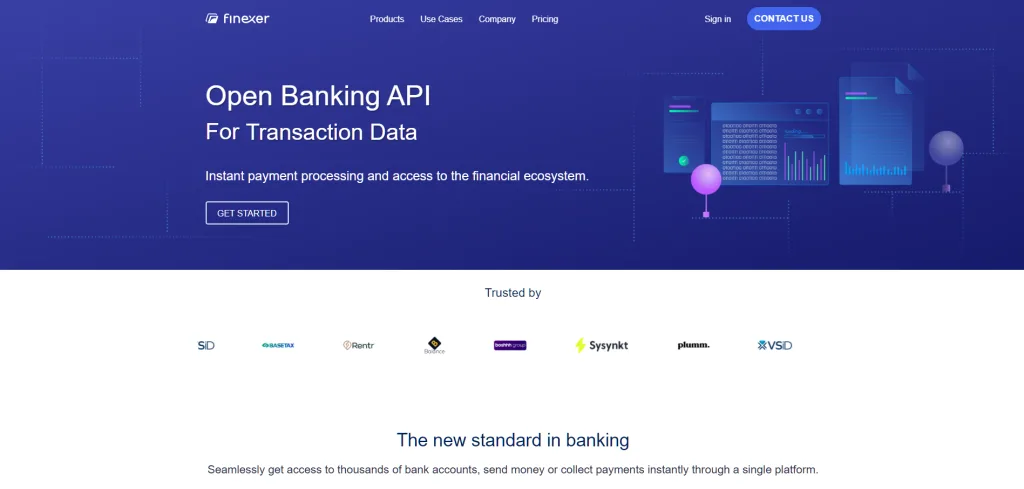
For founders, product heads, and engineering leads building the next generation of financial products – Finexer’s FCA-authorised AIS and PIS provides the Open Banking infrastructure layer that delivers bank transaction data and payment initiation through a single integration.
Open Banking infrastructure for UK platforms covers the technical architecture and workflow capabilities that this infrastructure layer provides.
What Does Finexer’s Infrastructure Provide?
- FCA-authorised AIS and PIS – verifiable on the FCA register
- Real-time webhooks for transaction events and payment confirmation
- Standardised JSON output across virtually every UK bank
- Up to 7 years of transaction history for compliance and onboarding workflows
- Merchant identifiers and category codes per transaction
- Variable Recurring Payments for subscription and variable billing workflows
- White-label consent flows under the platform’s own brand
- Usage-based pricing – no fixed monthly minimums, scales with volume
- 3-5 weeks onboarding support to reach production deployment
- Platforms typically save up to 90% on transaction costs versus card-based processing
What I Feel
The question founders ask me most often about the future of open banking is whether now is the right time to commit to the infrastructure.
My answer is always the same. The platforms I work with that made this decision 18 months ago are not asking that question anymore. They are building product features.
The ones still evaluating are spending that same time on the evaluation itself – while the window of early-adopter advantage closes.
The future of open banking is not a feature decision. It is a foundation decision. And foundation decisions have a compounding cost of delay that is significantly higher than the cost of the integration itself.
“I have not worked with a single platform that regretted making the Open Banking infrastructure decision early. I have worked with several that regretted delaying it.” – Ravi, Finexer
Common Use Cases
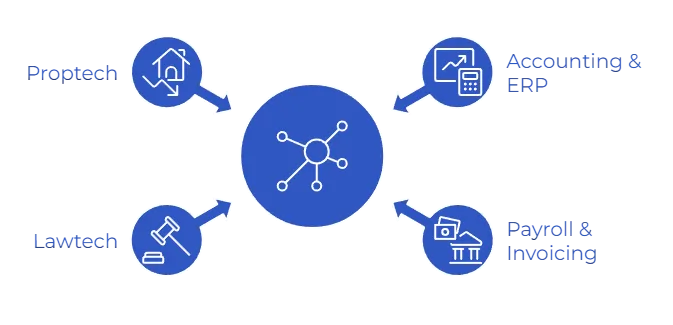
Accounting & ERP Platforms
Open Banking replaces CSV imports and document-based bank feeds with real-time, bank-verified transaction data. Platforms adopting this infrastructure now build reconciliation workflows that run automatically – without the manual correction overhead that document-based data requires.
Payroll & Invoicing Platforms
Bank-native payment initiation via Open Banking removes card processing fees and chargeback exposure from salary disbursements and invoice collection. Platforms on this infrastructure operate at structurally lower costs than those still routing through card rails.
Lawtech Platforms
Source-of-funds and AML workflows built on Open Banking data retrieve bank-authenticated transaction history directly – with consent logs and access timestamps that document-based records cannot provide. The compliance infrastructure is stronger from day one.
Proptech & Real Estate Platforms
Rental income verification, tenant affordability assessment, and property payment collection all run more reliably on Open Banking infrastructure than on uploaded statements. The data is current, complete, and independently verifiable.
Is open banking mandatory in the UK?
For the CMA9 banks, yes – mandated by the Competition and Markets Authority in 2018. For platforms and fintechs, open banking is not yet legally required. It is, however, becoming the baseline infrastructure for competitive financial products.
What is the future of open banking in the UK?
Variable Recurring Payments are expanding recurring payment capabilities. Open Finance will extend data access to mortgages, pensions, and insurance. The Smart Data economy will extend the consent model across sectors. Each development builds on the existing Open Banking foundation.
How long does it take to integrate Open Banking infrastructure?
With FCA-authorised infrastructure providers like Finexer, platforms typically reach production in 3-5 weeks with onboarding support. The integration complexity is significantly lower than building direct bank connections independently.
The future of open banking is not a decision to defer. Build on the infrastructure that is already delivering.
About the Author

Ravi Ranjan
Ravi Ranjan is Co founder & CEO of Finexer